Anticorps Monoclonal anti-SMYD3
SMYD3 Monoclonal Antibody for WB, IHC, IF/ICC, Indirect ELISA
Hôte / Isotype
Mouse / IgG1
Réactivité testée
Humain
Applications
WB, IHC, IF/ICC, Indirect ELISA
Conjugaison
Non conjugué
CloneNo.
1B5C10
N° de cat : 66330-1-PBS
Synonymes
Galerie de données de validation
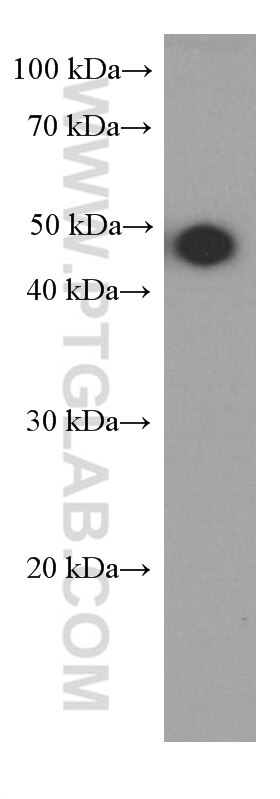
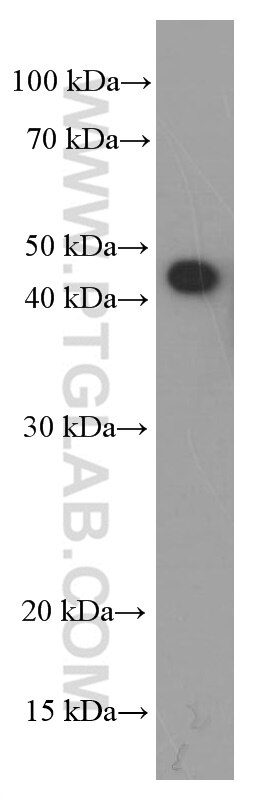
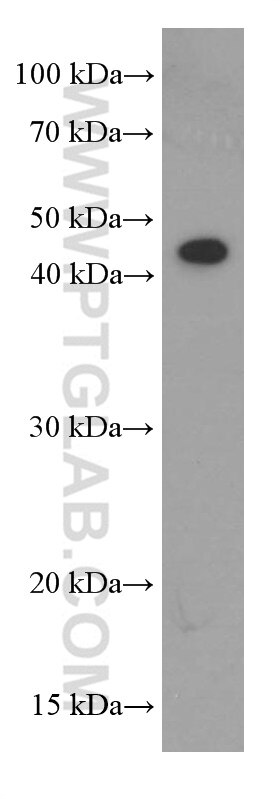
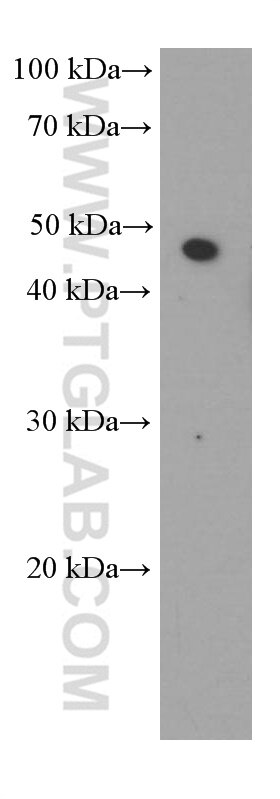
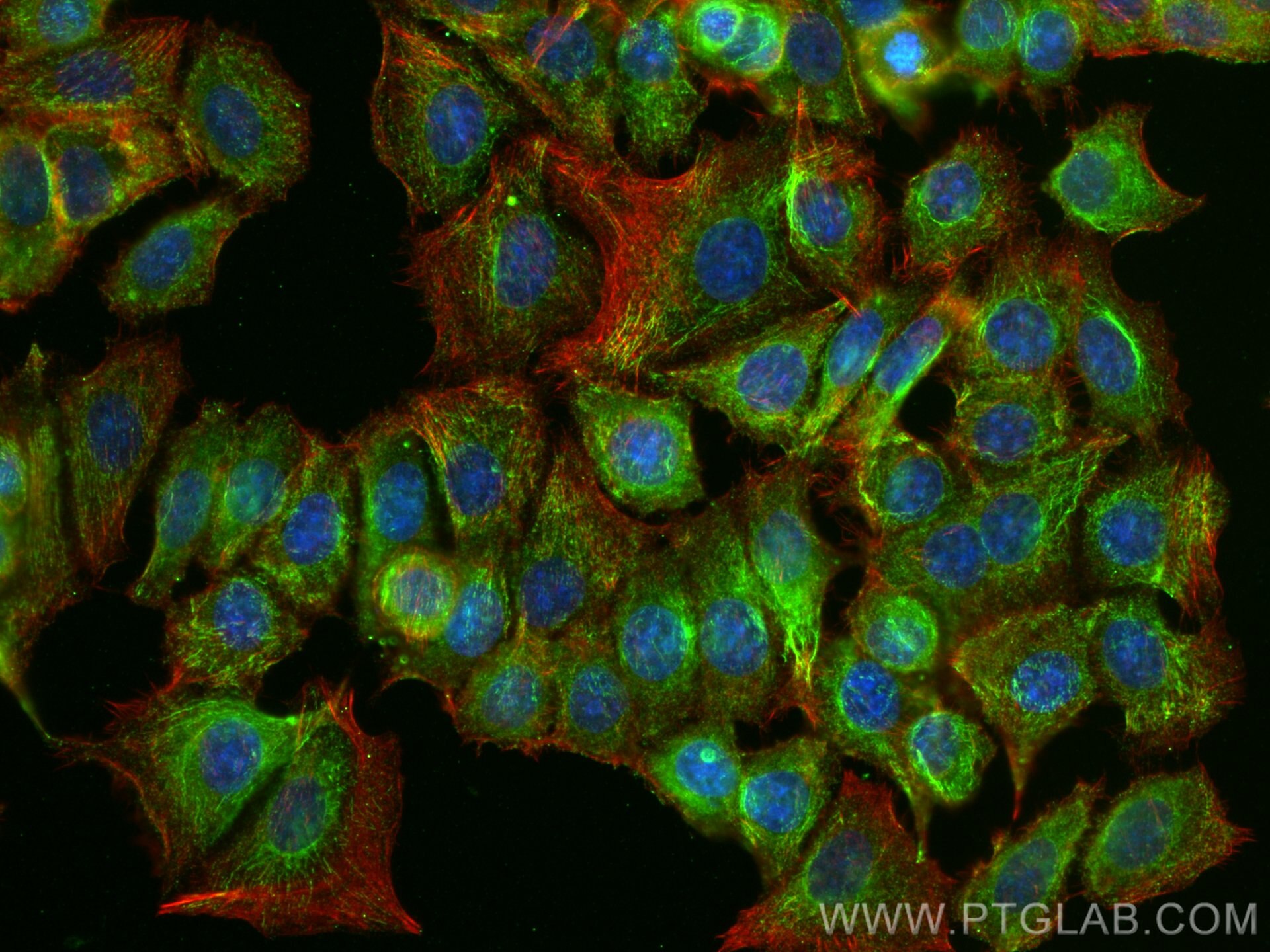
Informations sur le produit
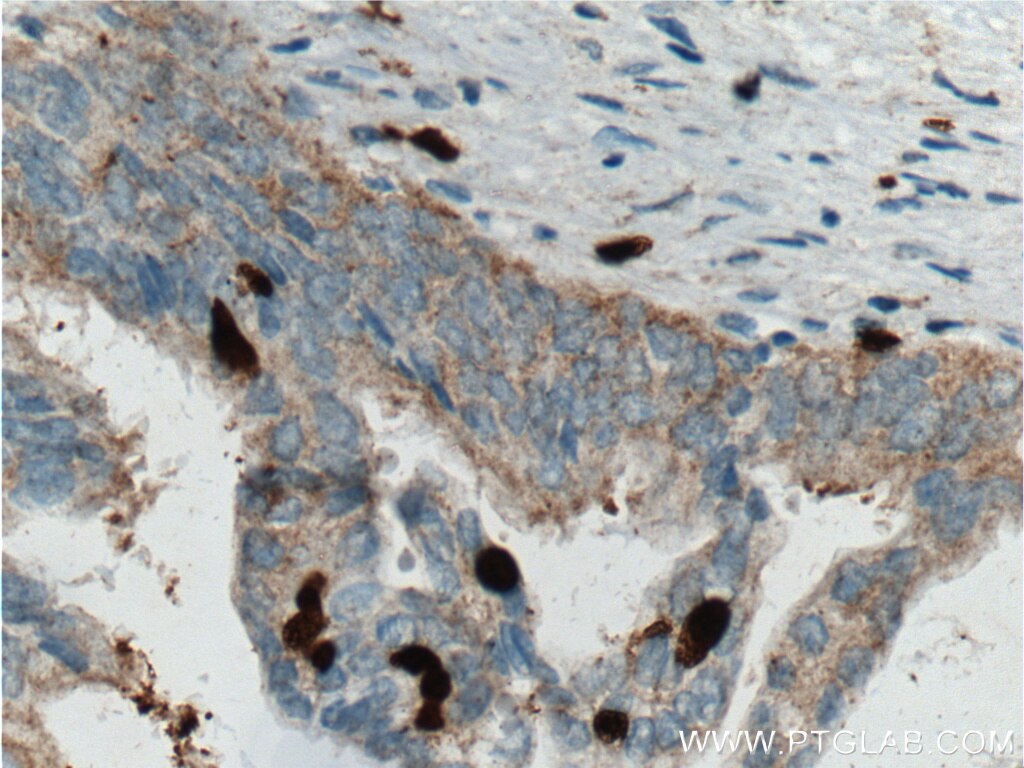
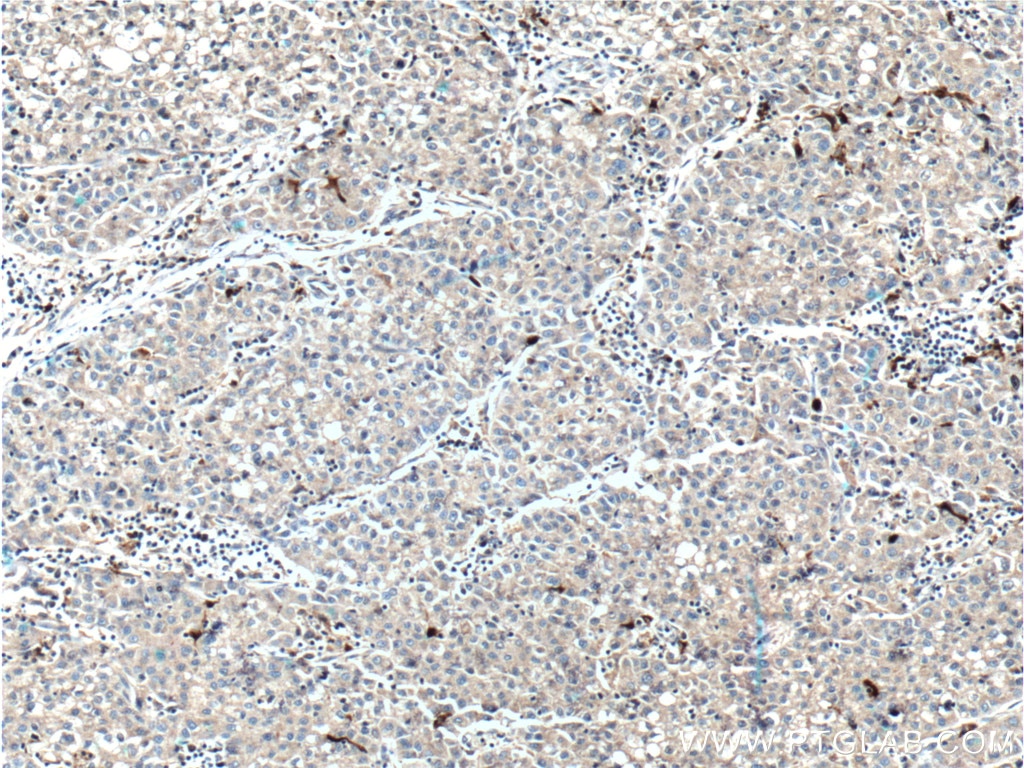
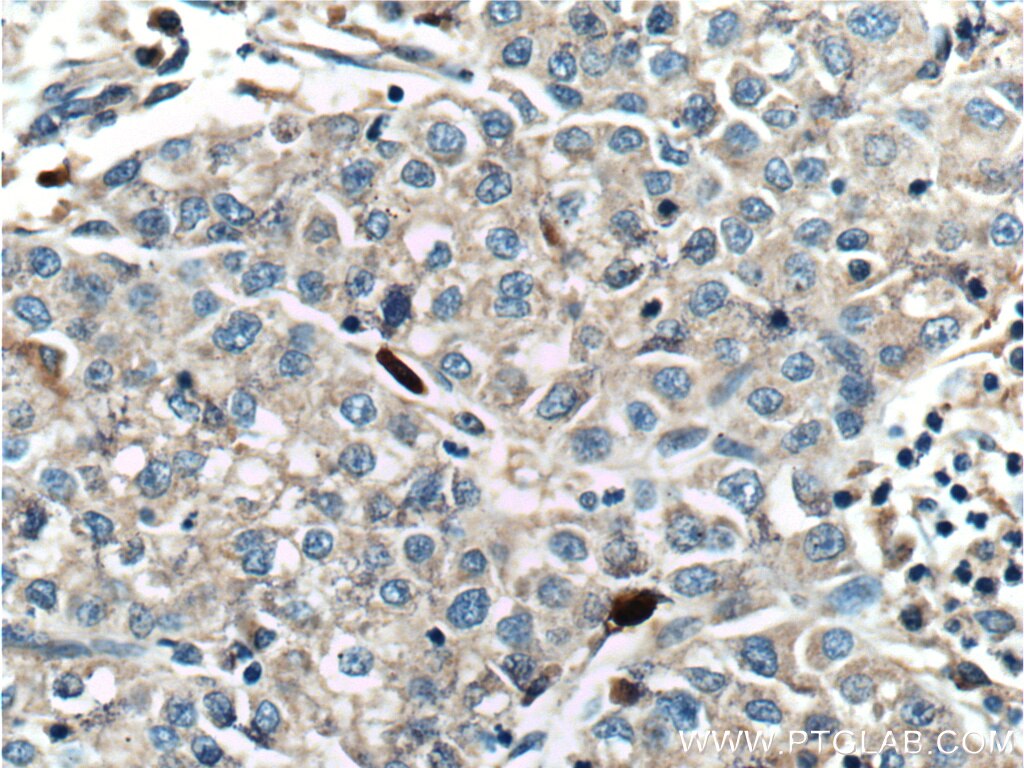
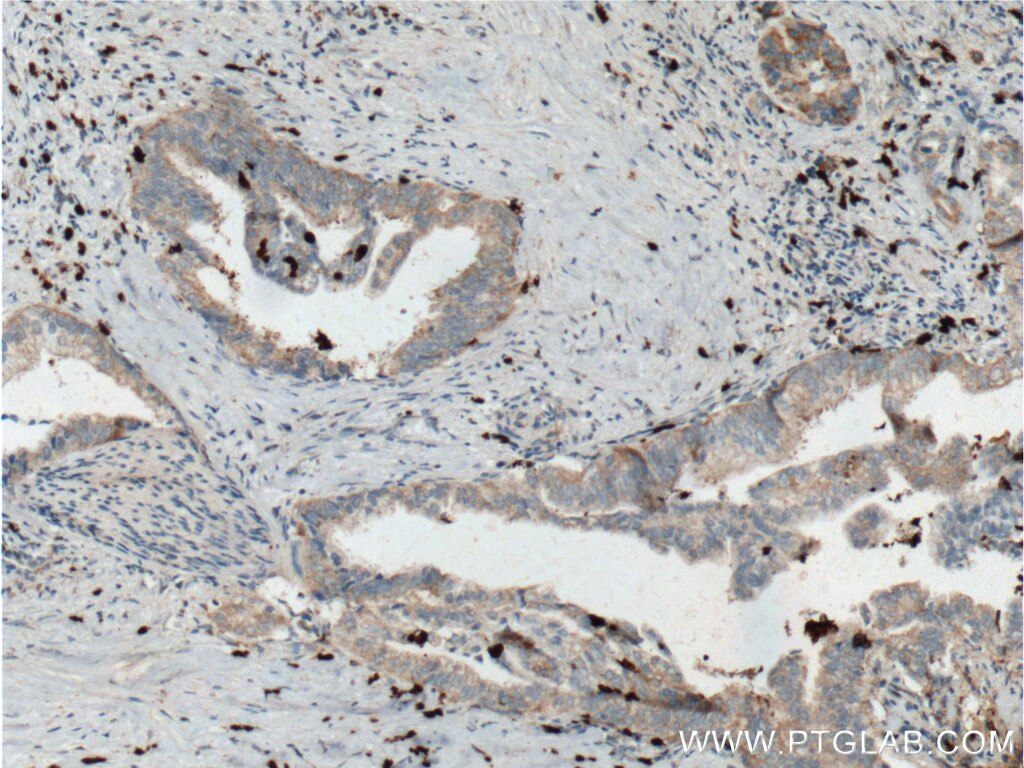
66330-1-PBS cible SMYD3 dans les applications de WB, IHC, IF/ICC, Indirect ELISA et montre une réactivité avec des échantillons Humain
| Réactivité | Humain |
| Hôte / Isotype | Mouse / IgG1 |
| Clonalité | Monoclonal |
| Type | Anticorps |
| Immunogène | SMYD3 Protéine recombinante Ag2624 |
| Nom complet | SET and MYND domain containing 3 |
| Masse moléculaire calculée | 428aa,49 kDa; 369aa,42 kDa |
| Poids moléculaire observé | 49 kDa |
| Numéro d’acquisition GenBank | BC031010 |
| Symbole du gène | SMYD3 |
| Identification du gène (NCBI) | 64754 |
| Conjugaison | Non conjugué |
| Forme | Liquide |
| Méthode de purification | Purification par protéine G |
| Tampon de stockage | PBS only |
| Conditions de stockage | Store at -80°C. 20ul contiennent 0,1% de BSA. |
Informations générales
SMYD3,also name as ZMYND1 and ZNFN3A1, belongs to the histone-lysine methyltransferase family.It is a histone methyltransferase that plays an important role in transcriptional regulation in human carcinogenesis. It can specifically methylate histone H3 at lysine 4 and activate the transcription of a set of downstream genes, including several oncogenes (e.g., N-myc, CrkL, Wnt10b, RIZ and hTERT) and genes involved in the control of cell cycle.(PMID: 20957523). It plays an important role in transcriptional activation as a member of an RNA polymerase complex. SMYD3 is frequently overexpressed in different types of cancer cells. It functions as a coactivator of Era and potentiates Era activity in response to ligand. SMYD3 as a new coactivator for ER-mediated transcription, providing a possible link between SMYD3 overexpression and breast cancer. (PMID: 19509295) The common variable number of tandem repeats polymorphism in SMYD3 is a susceptibility factor for some types of human cancer(PMID:16155568). Mainly cytoplasmic when cells are arrested at G0/G1, accumulates in the nucleus at S phase and G2/M(Uniprot).


