- Phare
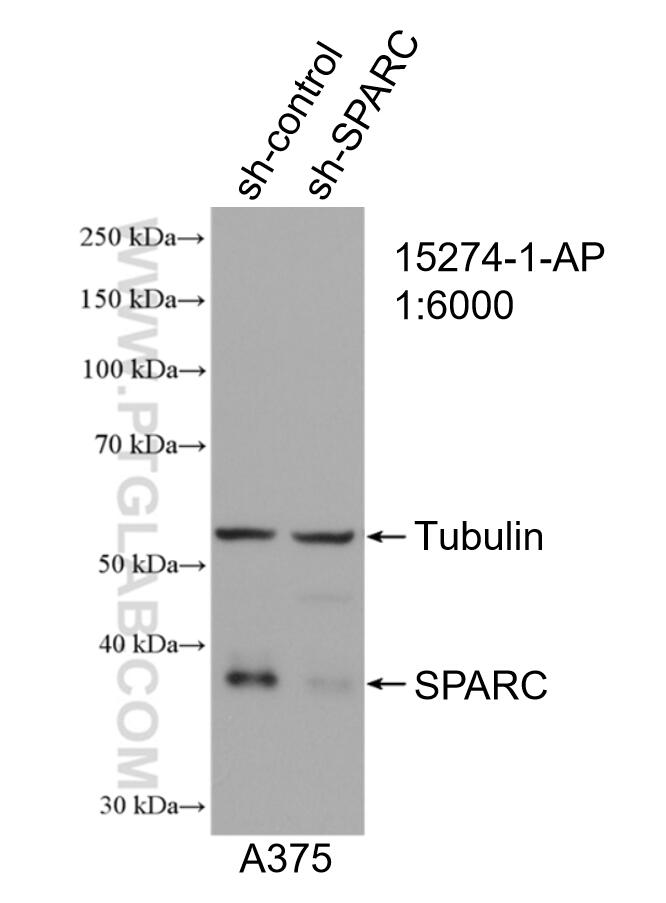
- Validé par KD/KO
Anticorps Polyclonal de lapin anti-SPARC
SPARC Polyclonal Antibody for WB, IHC, Indirect ELISA
Hôte / Isotype
Lapin / IgG
Réactivité testée
Humain, porc, rat, souris
Applications
WB, IHC, Indirect ELISA
Conjugaison
Non conjugué
N° de cat : 15274-1-PBS
Synonymes
Galerie de données de validation
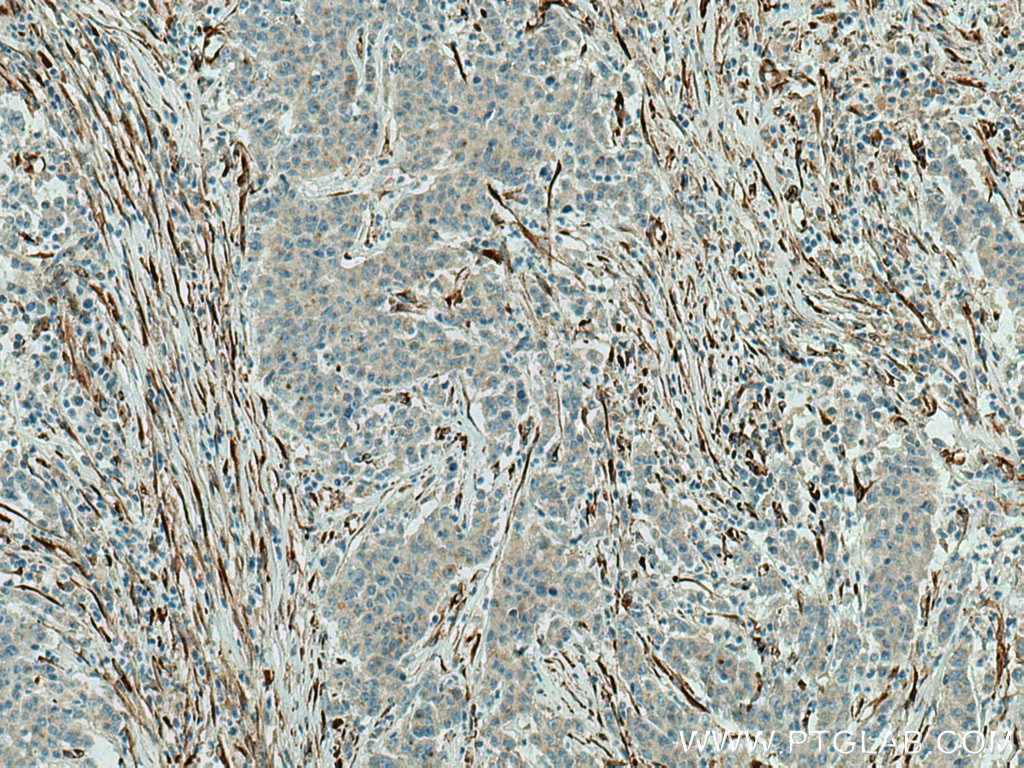
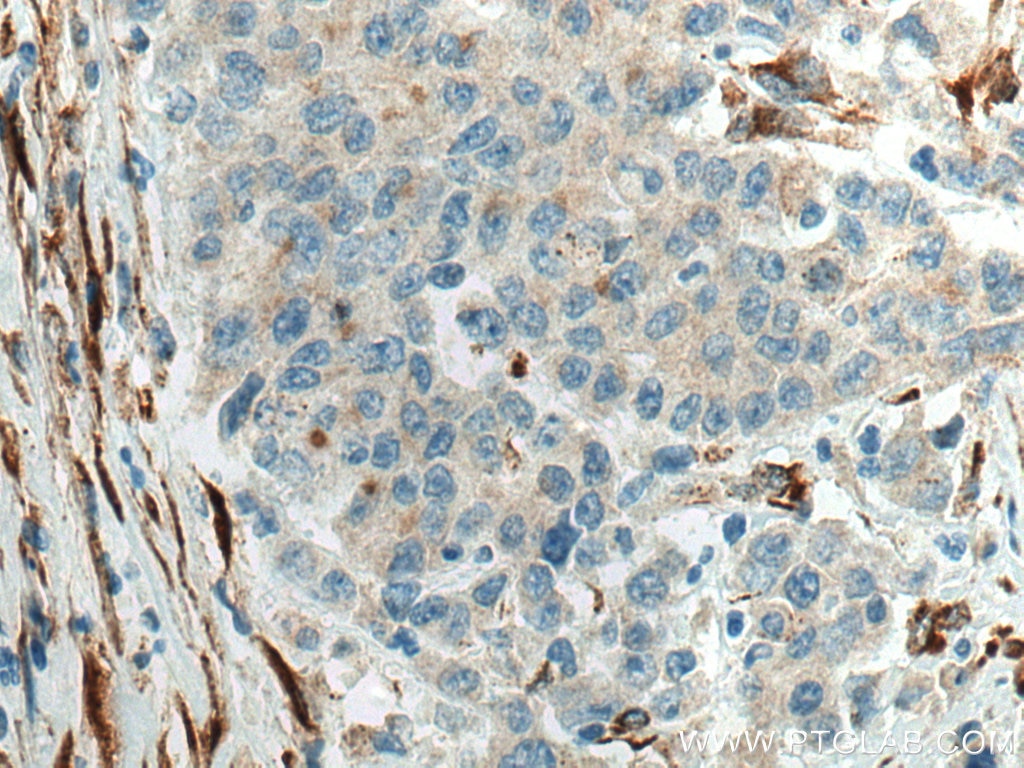
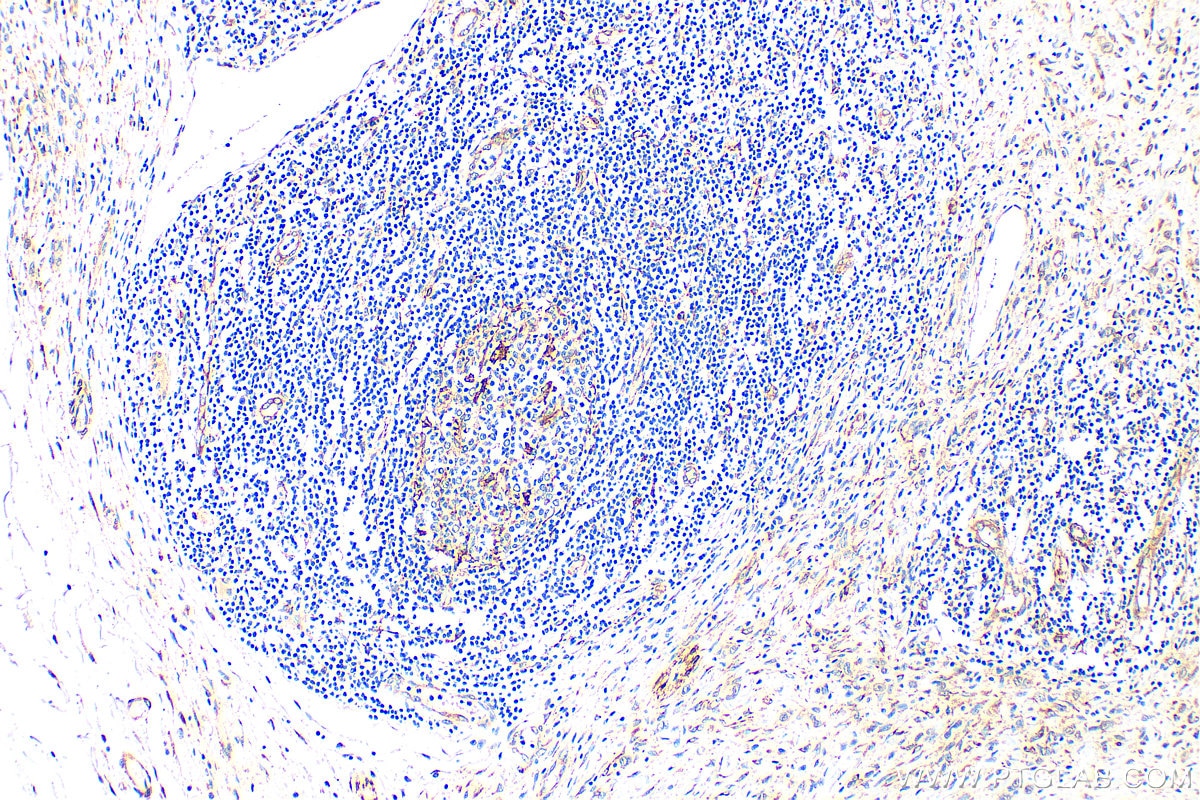
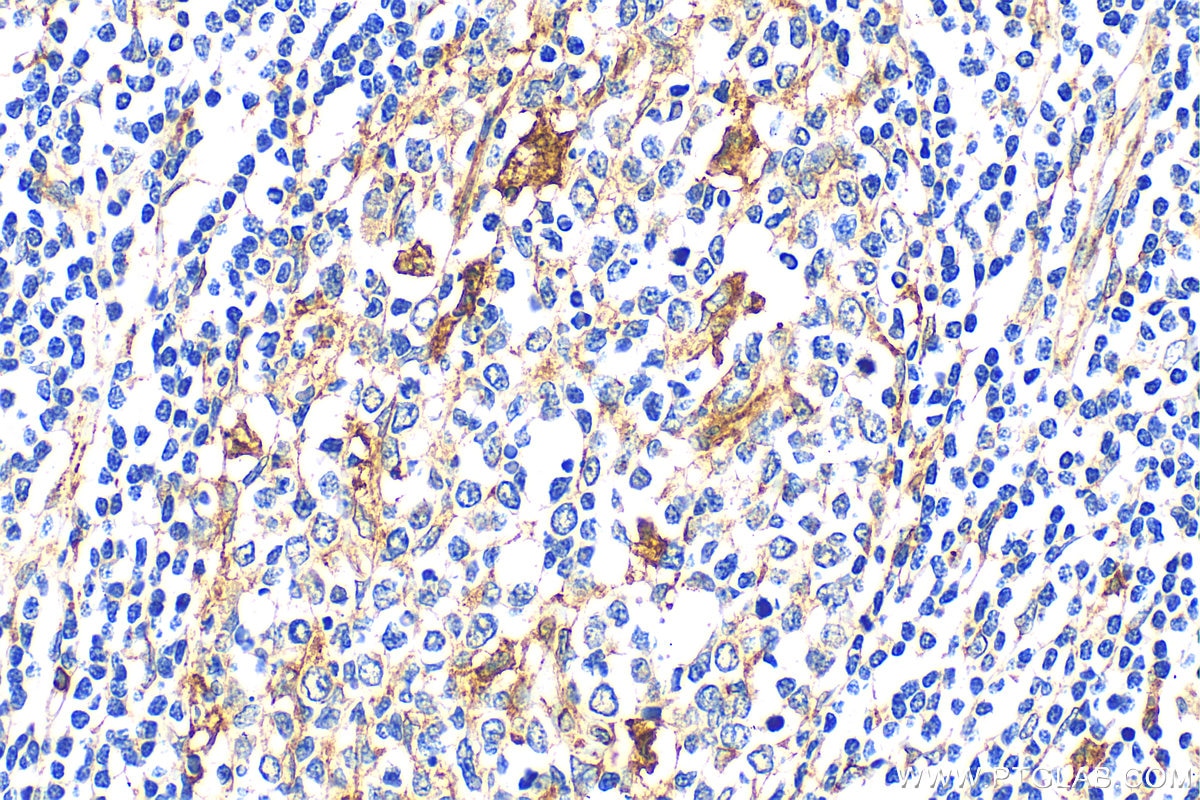
Informations sur le produit
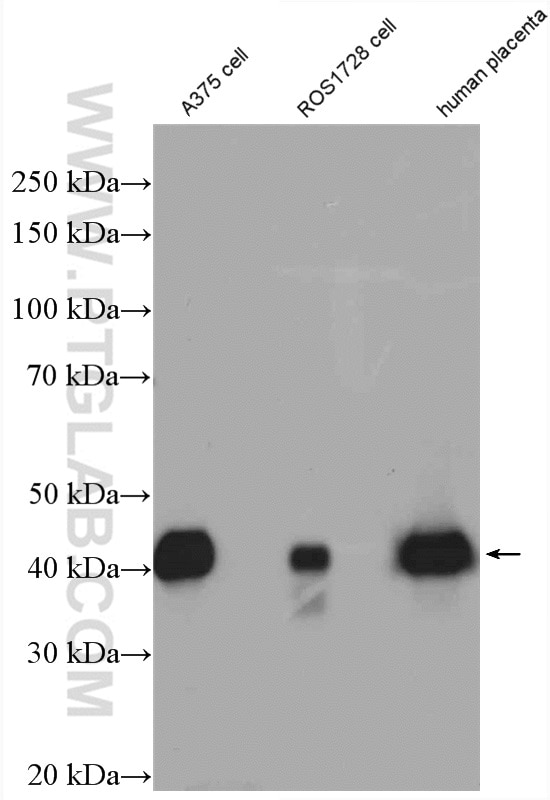
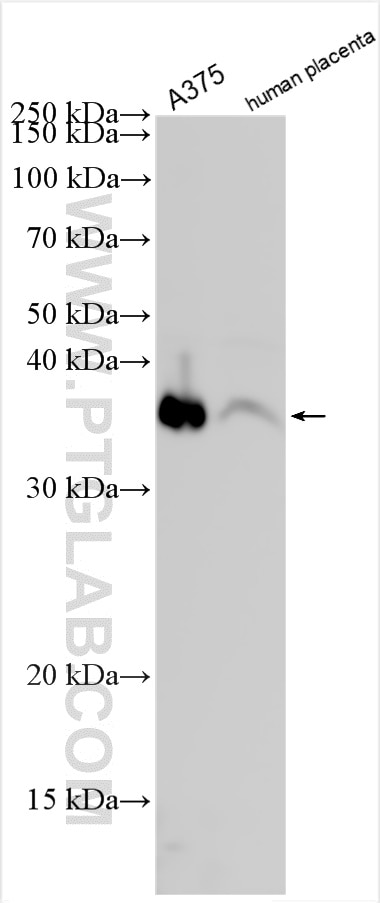
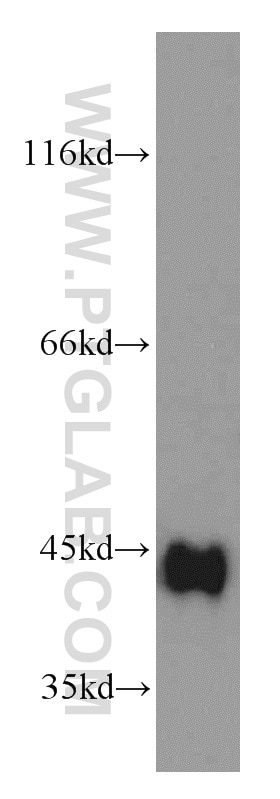
15274-1-PBS cible SPARC dans les applications de WB, IHC, Indirect ELISA et montre une réactivité avec des échantillons Humain, porc, rat, souris
| Réactivité | Humain, porc, rat, souris |
| Hôte / Isotype | Lapin / IgG |
| Clonalité | Polyclonal |
| Type | Anticorps |
| Immunogène | SPARC Protéine recombinante Ag7390 |
| Nom complet | secreted protein, acidic, cysteine-rich (osteonectin) |
| Masse moléculaire calculée | 35 kDa |
| Poids moléculaire observé | 35-43 kDa |
| Numéro d’acquisition GenBank | BC004974 |
| Symbole du gène | SPARC |
| Identification du gène (NCBI) | 6678 |
| Conjugaison | Non conjugué |
| Forme | Liquide |
| Méthode de purification | Purification par affinité contre l'antigène |
| Tampon de stockage | PBS only |
| Conditions de stockage | Store at -80°C. 20ul contiennent 0,1% de BSA. |
Informations générales
Secreted Protein Acidic And Cysteine Rich (SPARC), also known as osteonectin or basement-membrane protein 40 (BM-40), is a secreted protein essential in the calcification of bone.
What is the molecular weight of SPARC?
The calculated molecular mass of SPARC is 35 kDa. SPARC is a glycoprotein consisting of 303 amino acids in the cytoplasm and 286 amino acids after the signal sequence is cleaved in secretion.
Where is SPARC expressed?
Osteoblasts secrete SPARC during bone formation, with high levels found in immature bone compared to mature bone that is in homeostasis (PMID: 2440898). SPARC is also secreted in adult mineralized tissues that have high turnover, such as osteoid and dentin, by cells other than osteoblasts. This includes bone marrow progenitor cells and hypertrophic chondrocytes but also endothelial cells and fibroblasts.
Though previously described as being exclusively expressed in mineralized tissue, it is now understood that SPARC is more widely expressed and is associated with high levels of collagen deposition, found in the extracellular matrix (ECM) of a number of tissues.
What is the function of SPARC?
SPARC contains both a collagen-binding domain and a hydroxyapatite (HA) binding region, so is thought to enhance mineralization by binding both collagen and HA crystals, causing the release of calcium ions (PMID: 26851678).
SPARC can bind to a number of different ECM proteins, particularly collagen, and may even influence the assembly of these proteins (PMID: 19798598). It is known to regulate interactions between cells and the ECM, meaning it plays a role in many important processes such as cell migration and proliferation.
What diseases are associated with SPARC?
Overexpression of SPARC has been identified in a number of different types of cancers (PMID: 18849185), although its role may vary. For example, in neuroblastomas SPARC acts as a suppressor but in gliomas, it causes greater invasion of the tumor. Mutations in SPARC can also lead to Osteogenesis Imperfecta, also known as brittle bone disease (PMID: 26027498).


