Anticorps Polyclonal de lapin anti-SPEG
SPEG Polyclonal Antibody for IHC, Indirect ELISA
Hôte / Isotype
Lapin / IgG
Réactivité testée
Humain, souris
Applications
IHC, Indirect ELISA
Conjugaison
Non conjugué
N° de cat : 18716-1-PBS
Synonymes
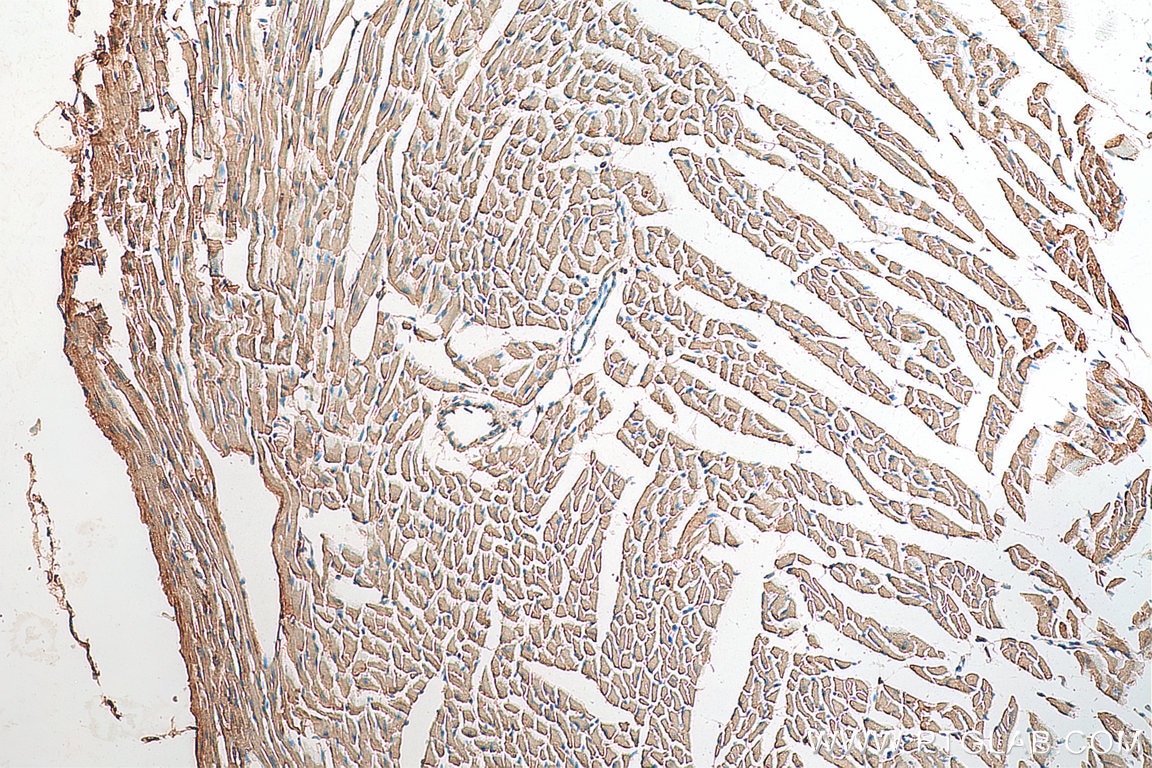
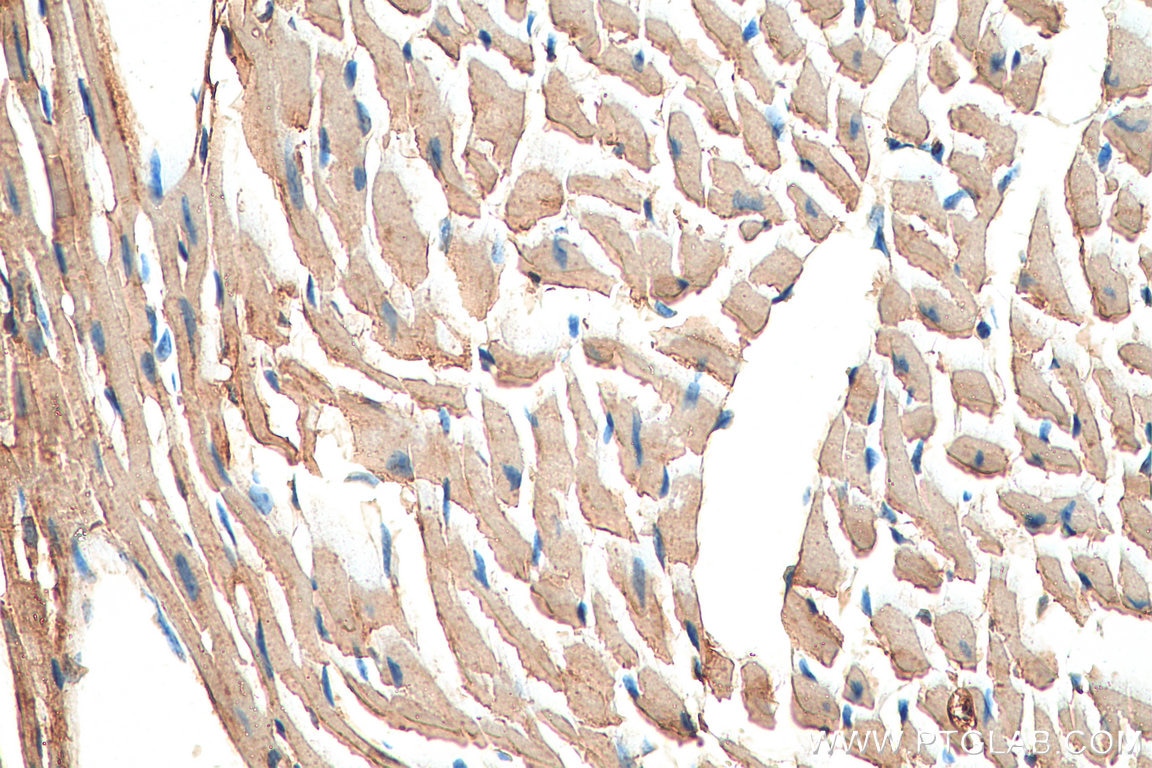
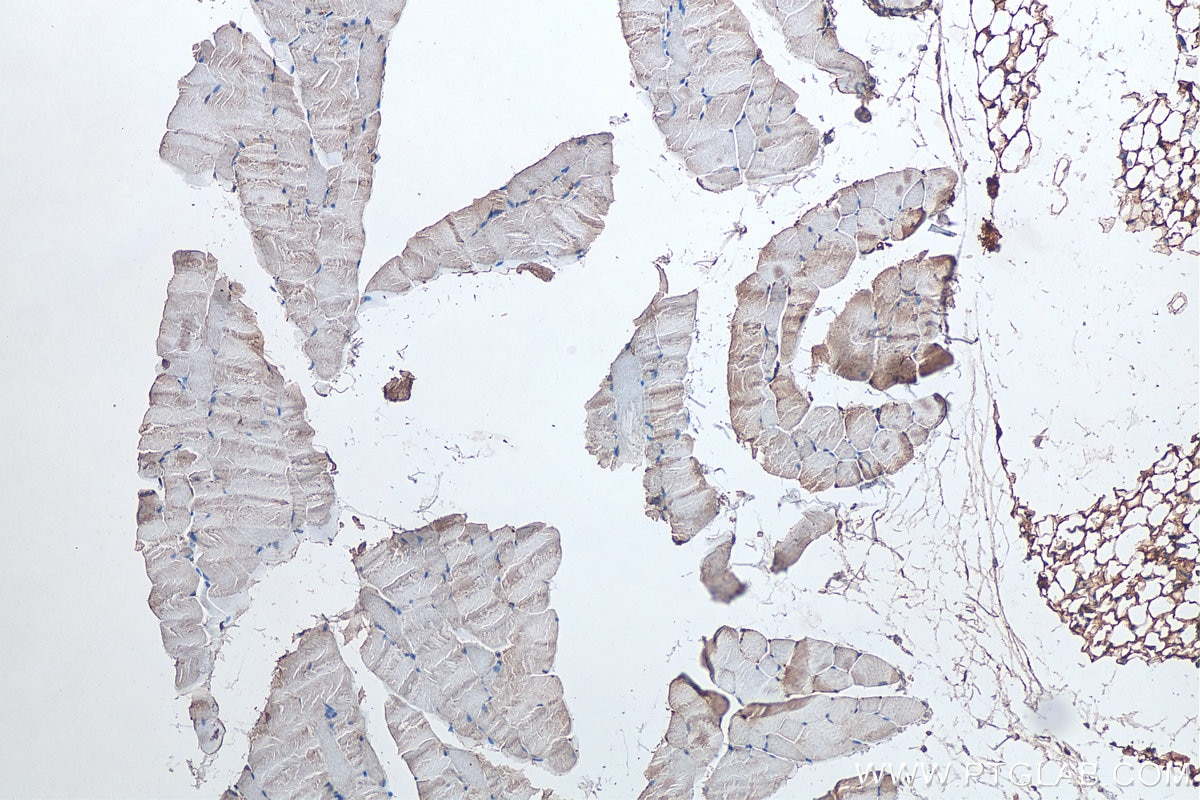
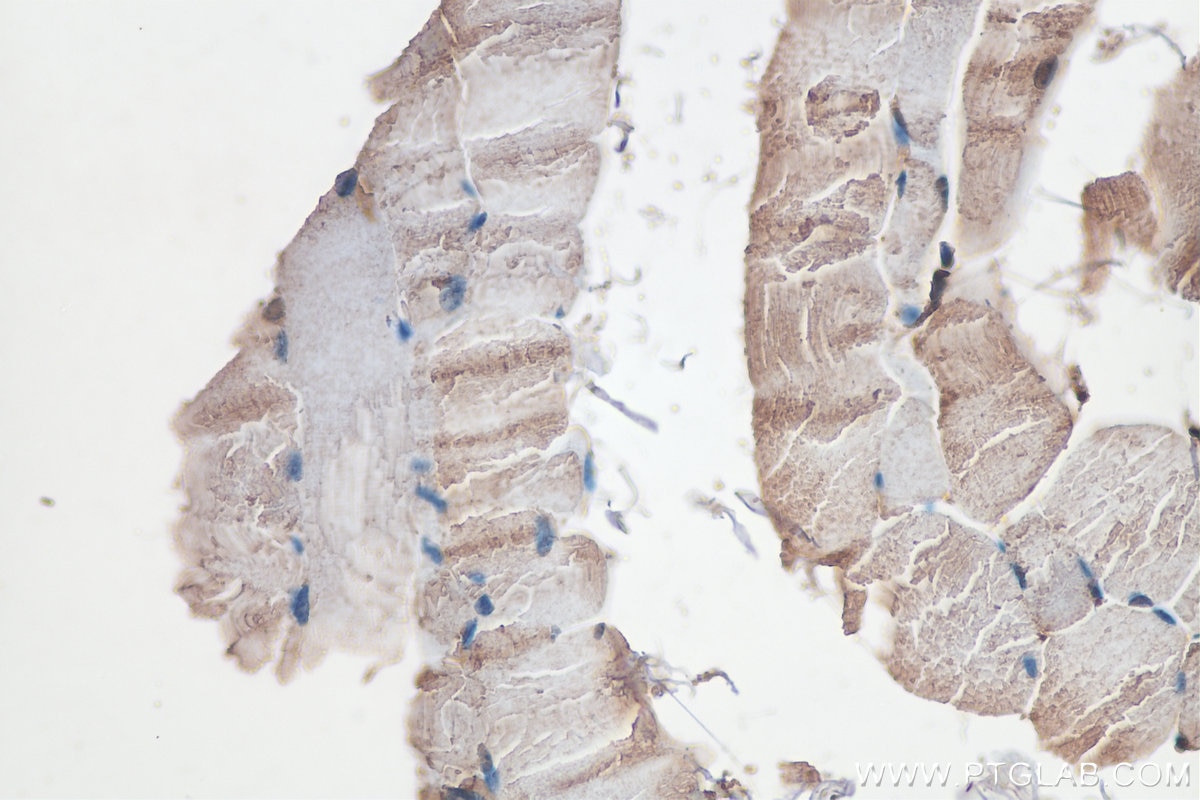
Galerie de données de validation
Informations sur le produit
18716-1-PBS cible SPEG dans les applications de IHC, Indirect ELISA et montre une réactivité avec des échantillons Humain, souris
| Réactivité | Humain, souris |
| Hôte / Isotype | Lapin / IgG |
| Clonalité | Polyclonal |
| Type | Anticorps |
| Immunogène | Peptide |
| Nom complet | SPEG complex locus |
| Masse moléculaire calculée | 354 kDa |
| Numéro d’acquisition GenBank | NM_005876 |
| Symbole du gène | SPEG |
| Identification du gène (NCBI) | 10290 |
| Conjugaison | Non conjugué |
| Forme | Liquide |
| Méthode de purification | Purification par affinité contre l'antigène |
| Tampon de stockage | PBS only |
| Conditions de stockage | Store at -80°C. 20ul contiennent 0,1% de BSA. |
Informations générales
SPEG, also named as BPEG, APEG1 and KIAA1297, is highly similar to the corresponding rat and mouse proteins. Expression of SPEG is thought to serve as a marker for differentiated vascular smooth muscle cells which may have a role in regulating growth and differentiation of this cell type. SPEG is expressed in vascular smooth muscle cells and is down-regulated by vascular injury. Multiple transcripts are produced from the SPEG complex locus by alternative splicing and alternative promoter usage. The antibody recognizes the C-term of SPEG.


