- Phare
- Validé par KD/KO
Anticorps Polyclonal de lapin anti-SRRT
SRRT Polyclonal Antibody for WB, IF/ICC, IP, Indirect ELISA
Hôte / Isotype
Lapin / IgG
Réactivité testée
Humain, souris
Applications
WB, IF/ICC, IP, Indirect ELISA
Conjugaison
Non conjugué
N° de cat : 20353-1-PBS
Synonymes
Galerie de données de validation
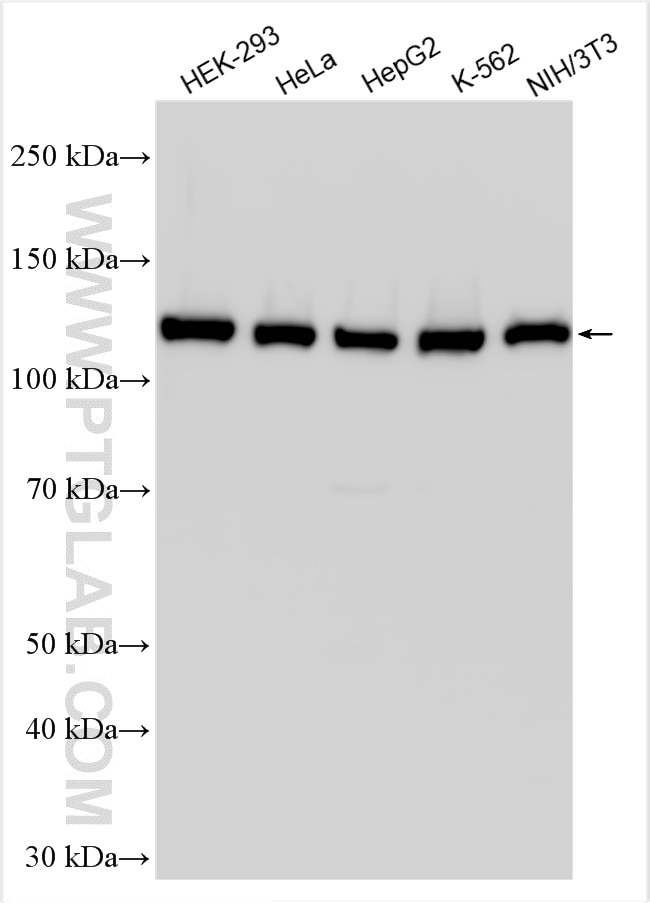
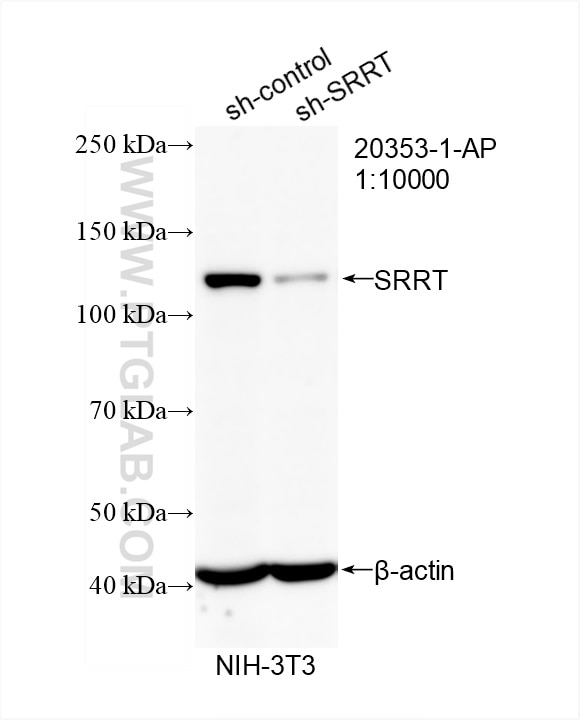
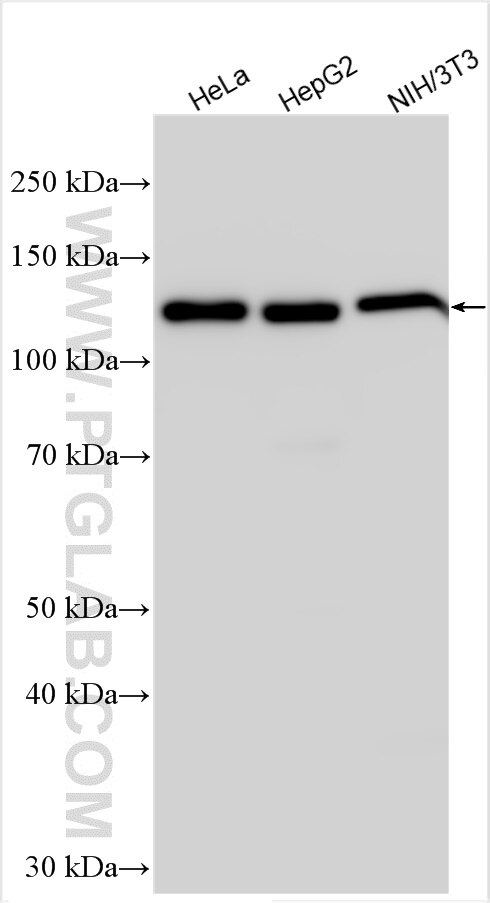
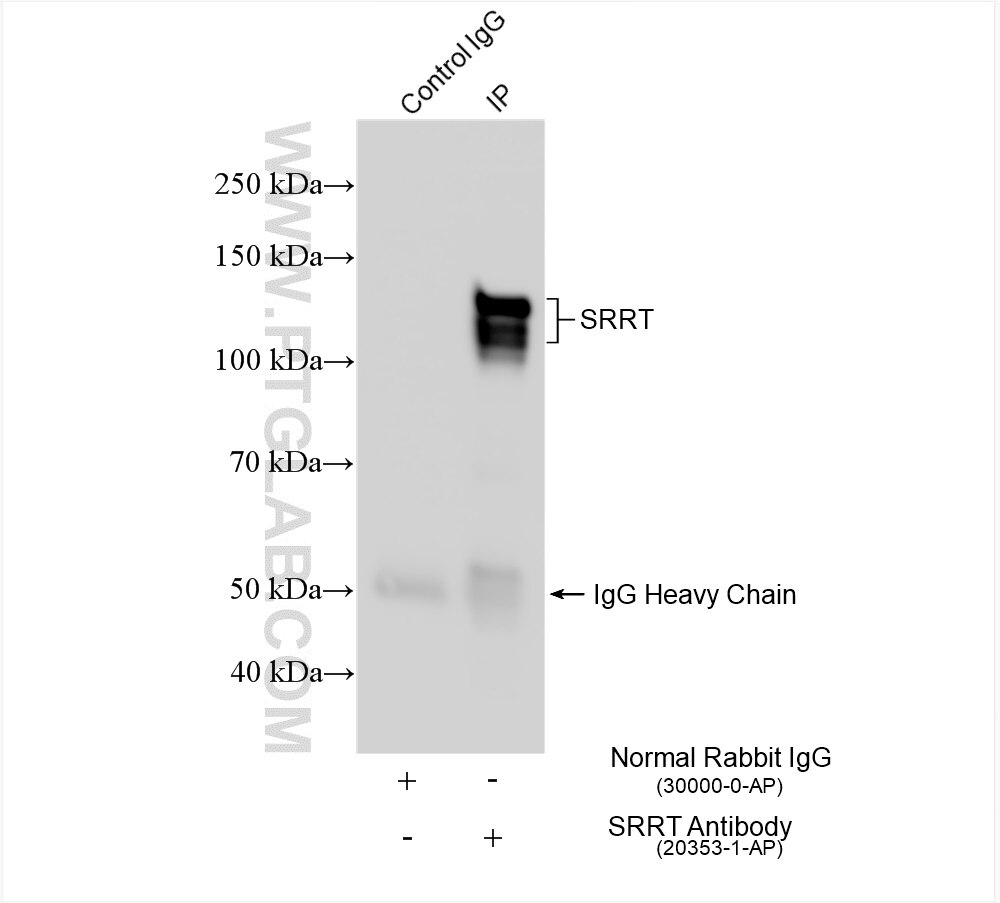
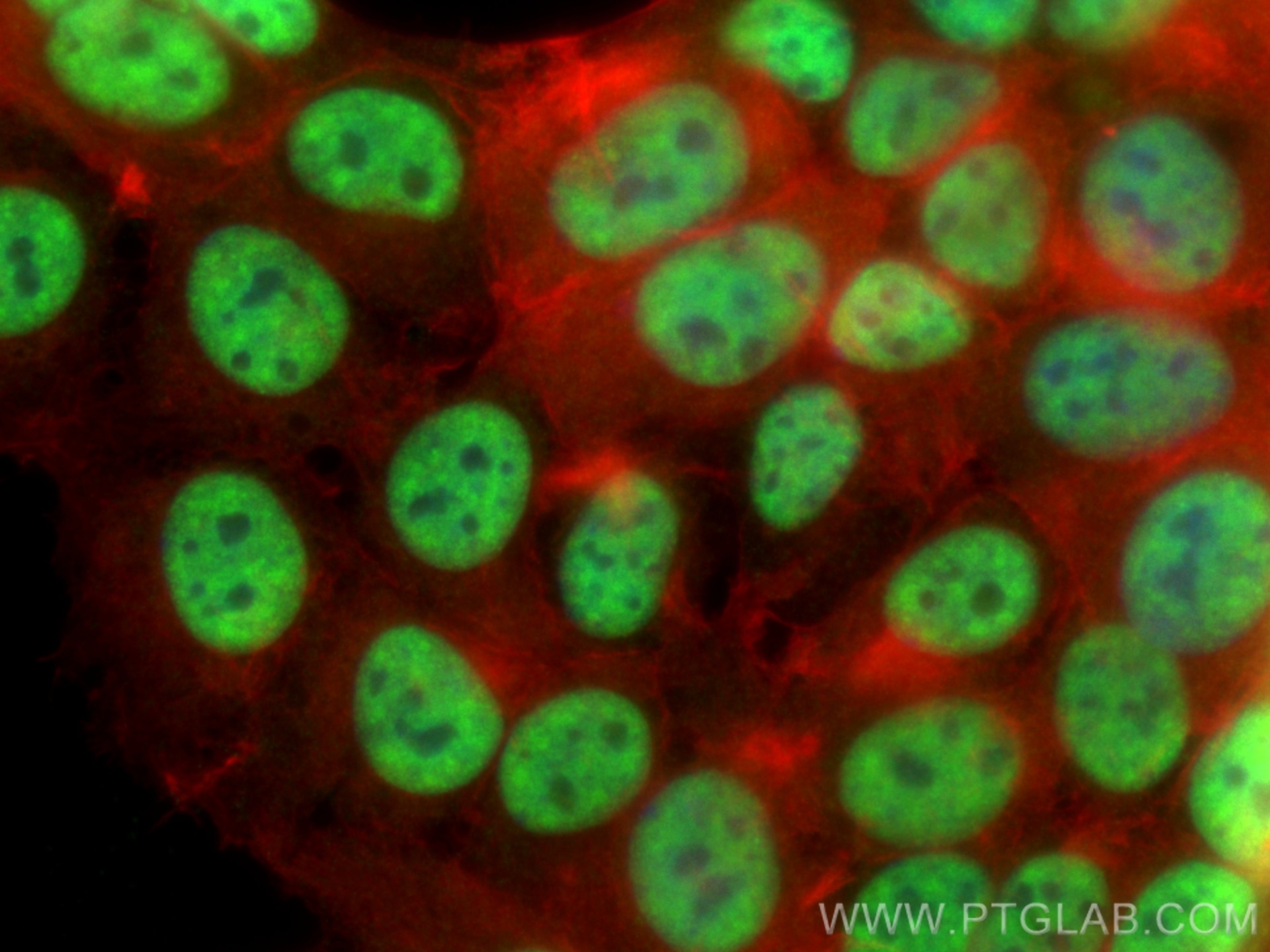
Informations sur le produit
20353-1-PBS cible SRRT dans les applications de WB, IF/ICC, IP, Indirect ELISA et montre une réactivité avec des échantillons Humain, souris
| Réactivité | Humain, souris |
| Hôte / Isotype | Lapin / IgG |
| Clonalité | Polyclonal |
| Type | Anticorps |
| Immunogène | SRRT Protéine recombinante Ag14196 |
| Nom complet | serrate RNA effector molecule homolog (Arabidopsis) |
| Masse moléculaire calculée | 876 aa, 101 kDa |
| Poids moléculaire observé | 120 kDa |
| Numéro d’acquisition GenBank | BC000082 |
| Symbole du gène | SRRT |
| Identification du gène (NCBI) | 51593 |
| Conjugaison | Non conjugué |
| Forme | Liquide |
| Méthode de purification | Purification par affinité contre l'antigène |
| Tampon de stockage | PBS only |
| Conditions de stockage | Store at -80°C. 20ul contiennent 0,1% de BSA. |
Informations générales
SRRT (Serrate RNA effector molecule homolog) is also named as ARS2 (Arsenite-resistance protein 2). ARS2/SRRT is an essential eukaryotic protein that has emerged as a critical factor in the sorting of functional from non-functional RNA polymerase II (Pol II) transcripts (PMID: 34060620). SRRT protein is a key component of the nuclear cap-binding complex (CBC), which allows it to modulate the expression of various miRNAs. The SRRT protein is widely expressed throughout the eukaryotes, but not in budding yeast. SRRT has been shown to play a vital role in stem-cell renewal, proliferation, hematopoiesis, and RNA-mediated gene silencing and regulation of miRNA biogenesis (PMID: 37345203). SRRT is involved in cellular proliferation and colony formation (tumorigenicity). Similarly, high SRRT expression has been found in cholangiocarcinoma. ARS2 showed ubiquitous expression, with the highest levels in mouse testes, heart, and liver and human heart and skeletal muscle (PMID: 18086880).


