- Phare
- Validé par KD/KO
Anticorps Polyclonal de lapin anti-Sam68
Sam68 Polyclonal Antibody for WB, IHC, IF-P, IP, Indirect ELISA
Hôte / Isotype
Lapin / IgG
Réactivité testée
Humain, rat, souris
Applications
WB, IHC, IF-P, IP, Indirect ELISA
Conjugaison
Non conjugué
N° de cat : 10222-1-PBS
Synonymes
Galerie de données de validation
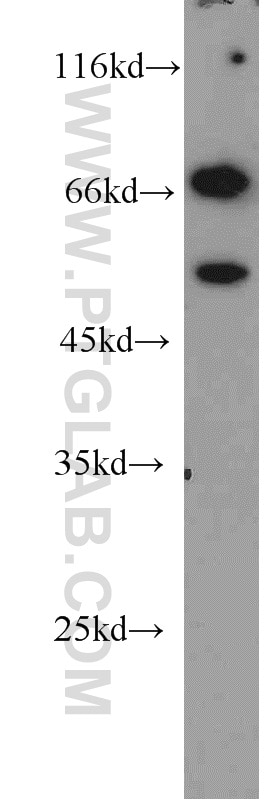
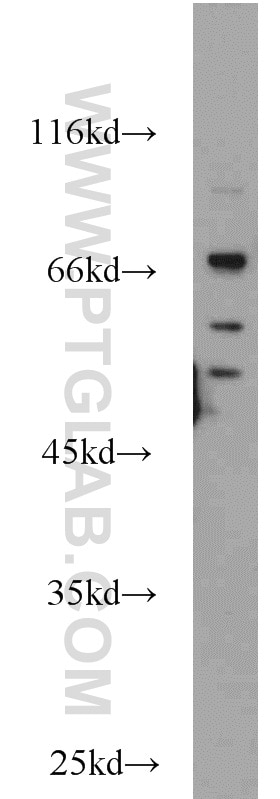
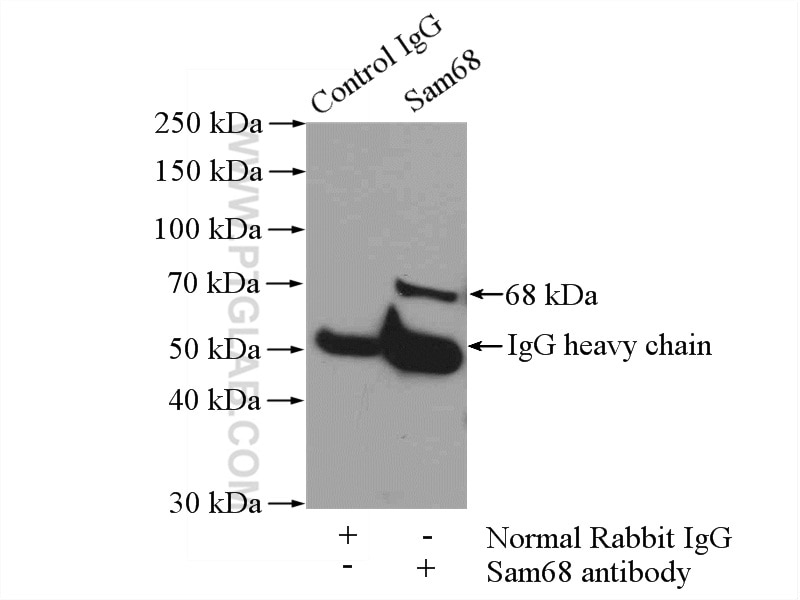
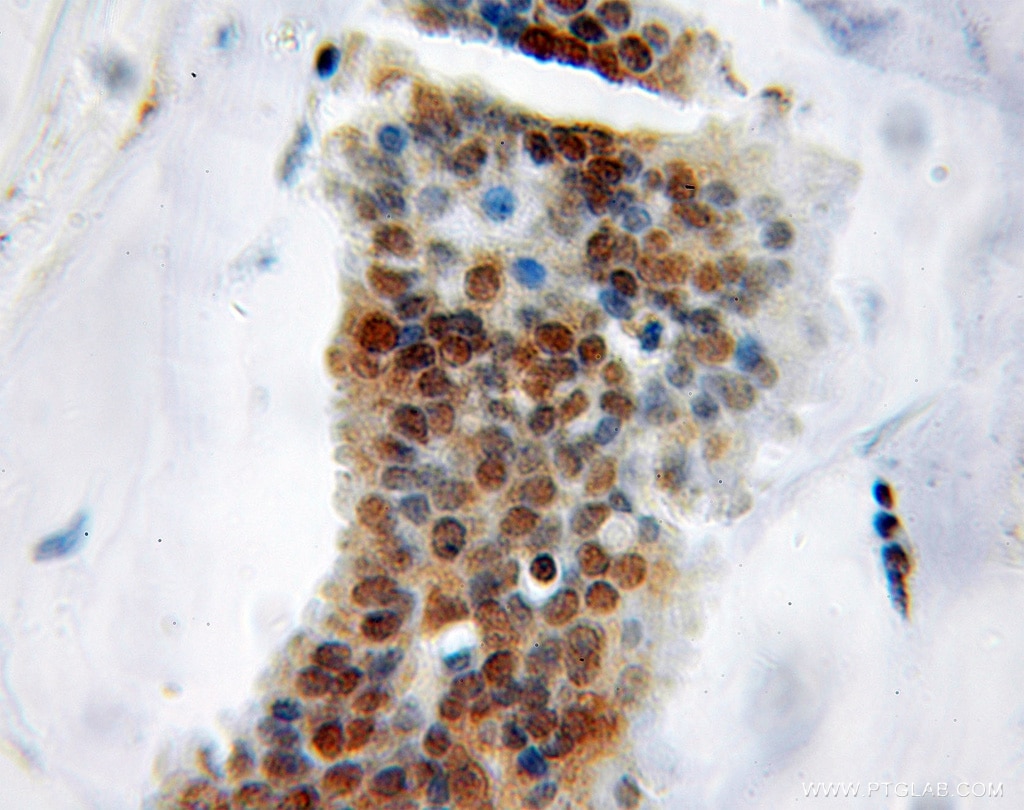
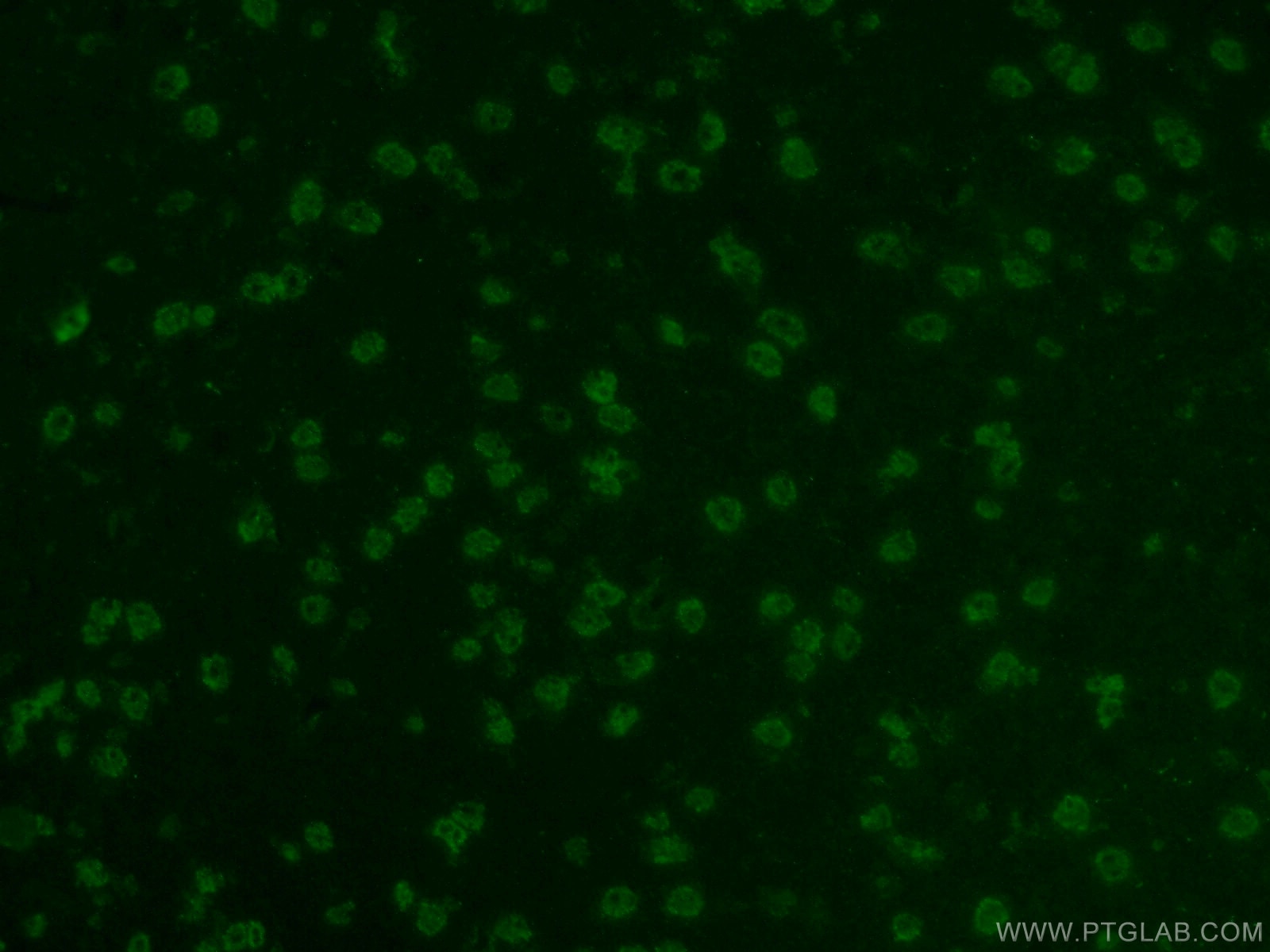
Informations sur le produit
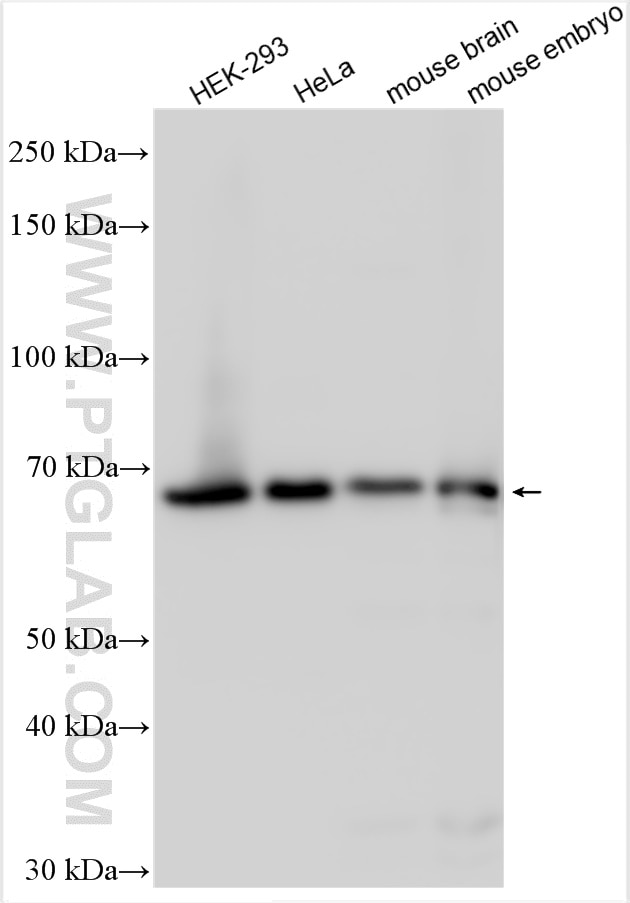
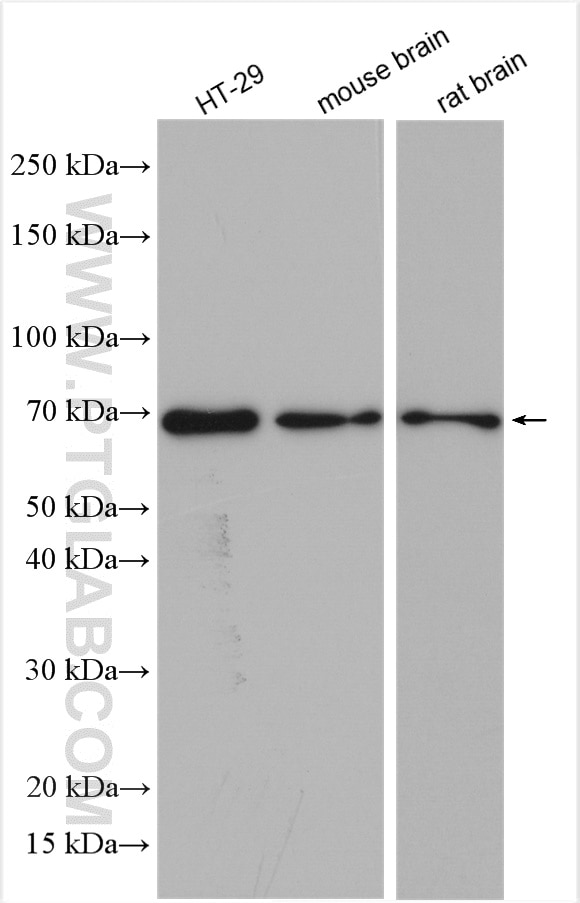
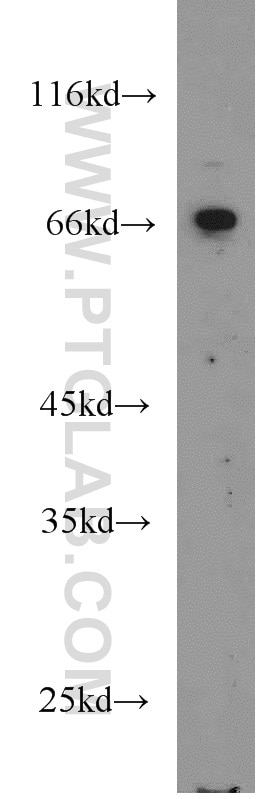
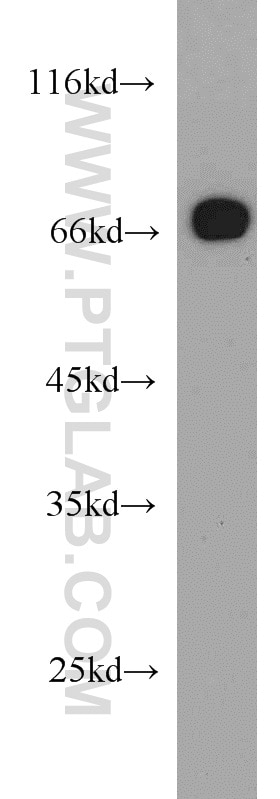
10222-1-PBS cible Sam68 dans les applications de WB, IHC, IF-P, IP, Indirect ELISA et montre une réactivité avec des échantillons Humain, rat, souris
| Réactivité | Humain, rat, souris |
| Hôte / Isotype | Lapin / IgG |
| Clonalité | Polyclonal |
| Type | Anticorps |
| Immunogène | Sam68 Protéine recombinante Ag0235 |
| Nom complet | KH domain containing, RNA binding, signal transduction associated 1 |
| Masse moléculaire calculée | 48 kDa |
| Poids moléculaire observé | 68 kDa |
| Numéro d’acquisition GenBank | BC000717 |
| Symbole du gène | Sam68 |
| Identification du gène (NCBI) | 10657 |
| Conjugaison | Non conjugué |
| Forme | Liquide |
| Méthode de purification | Purification par affinité contre l'antigène |
| Tampon de stockage | PBS only |
| Conditions de stockage | Store at -80°C. 20ul contiennent 0,1% de BSA. |
Informations générales
KHDRBS1, also named as SAM68, p62and p68, belongs to the KHDRBS family. It is recruited and tyrosine phosphorylated by several receptor systems, for example the T-cell, leptin and INS receptors. Once phosphorylated, KHDRBS1 functions as an adapter protein in signal transduction cascades by binding to SH2 and SH3 domain-containing proteins. It represses CBP-dependent transcriptional activation apparently by competing with other nuclear factors for binding to CBP. KHDRBS1 also acts as a putative regulator of mRNA stability and/or translation rates and mediates mRNA nuclear export. KHDRBS1 has three isoforms with calculated MW of 44-48kd. For isoform with a calculated MW of 48.2 kD, it migrated as a 68kD protein on SDS-PAGE gels[PMID: 10564820]. This ia a rabbit polyclonal antibody raised against residues near the N terminus of human KHDRBS1.


