Anticorps Polyclonal de lapin anti-TAF1-Specific
TAF1-Specific Polyclonal Antibody for WB, IHC, Indirect ELISA
Hôte / Isotype
Lapin / IgG
Réactivité testée
Humain, souris
Applications
WB, IHC, Indirect ELISA
Conjugaison
Non conjugué
N° de cat : 20260-1-PBS
Synonymes
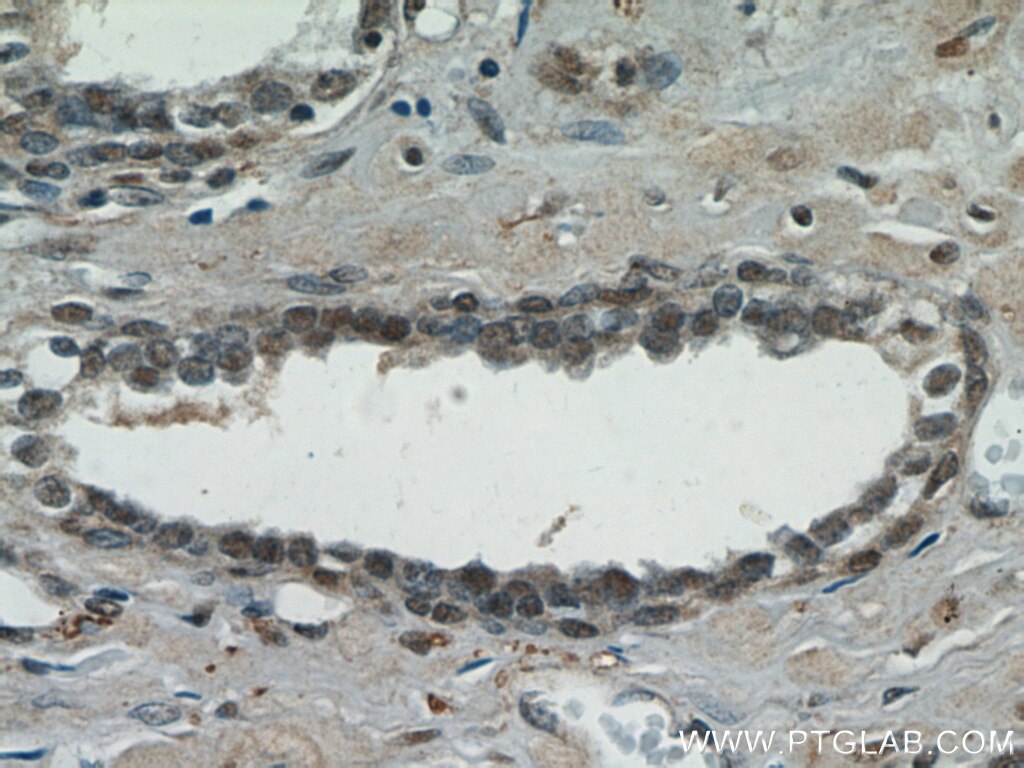
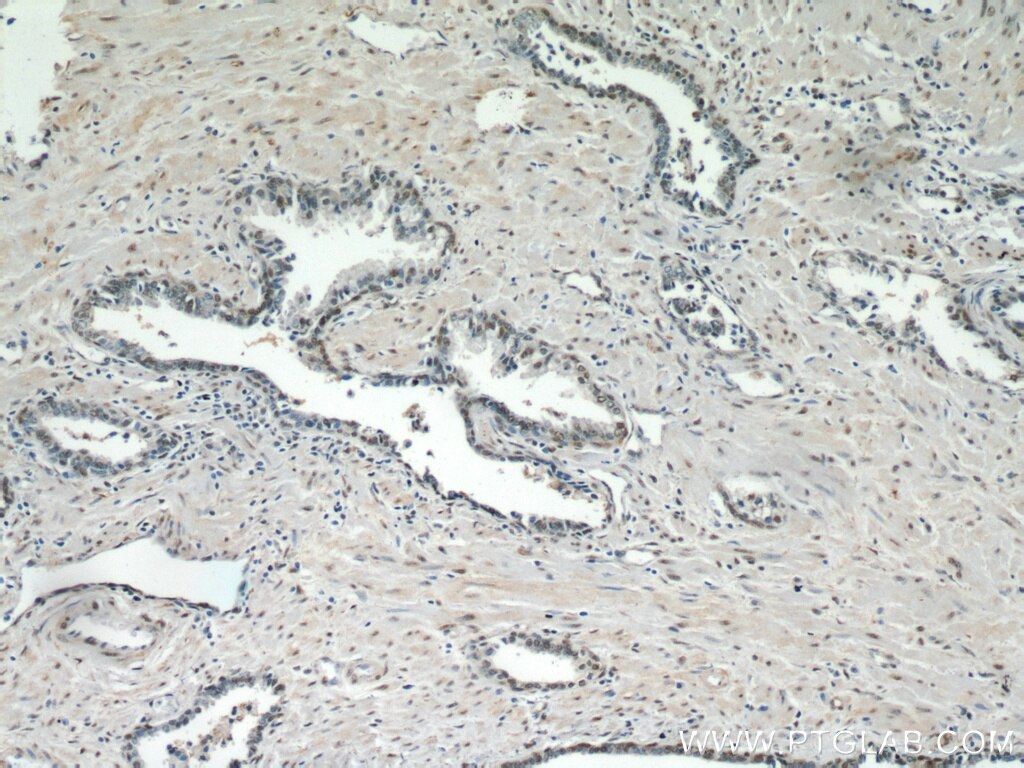
Galerie de données de validation
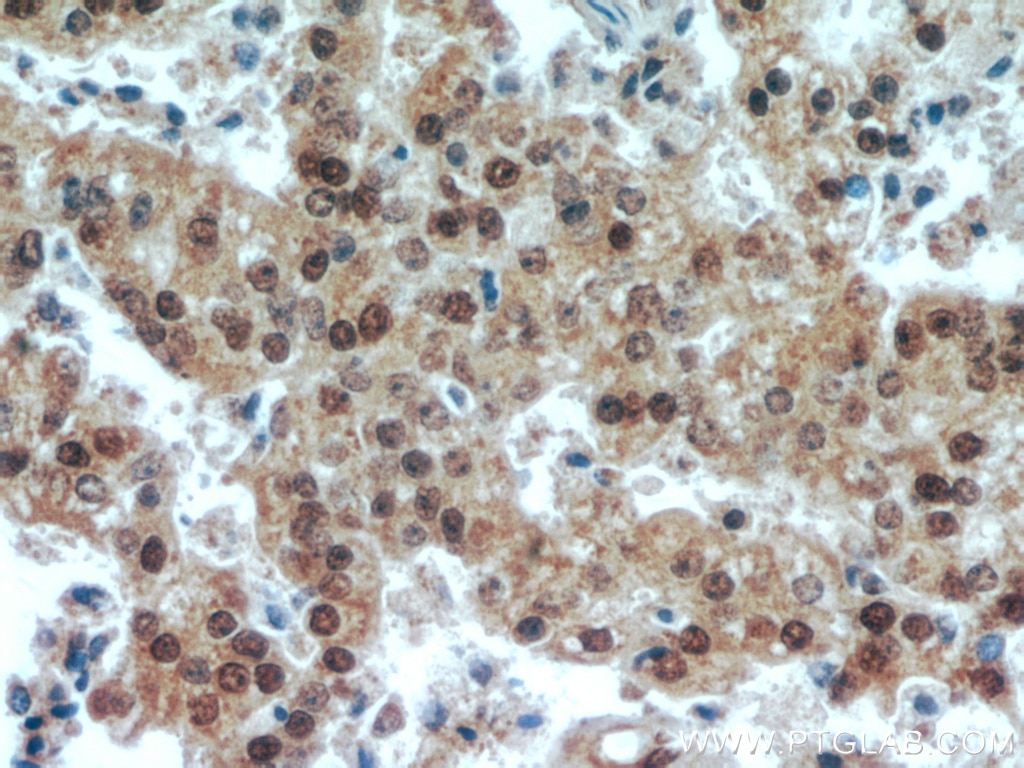
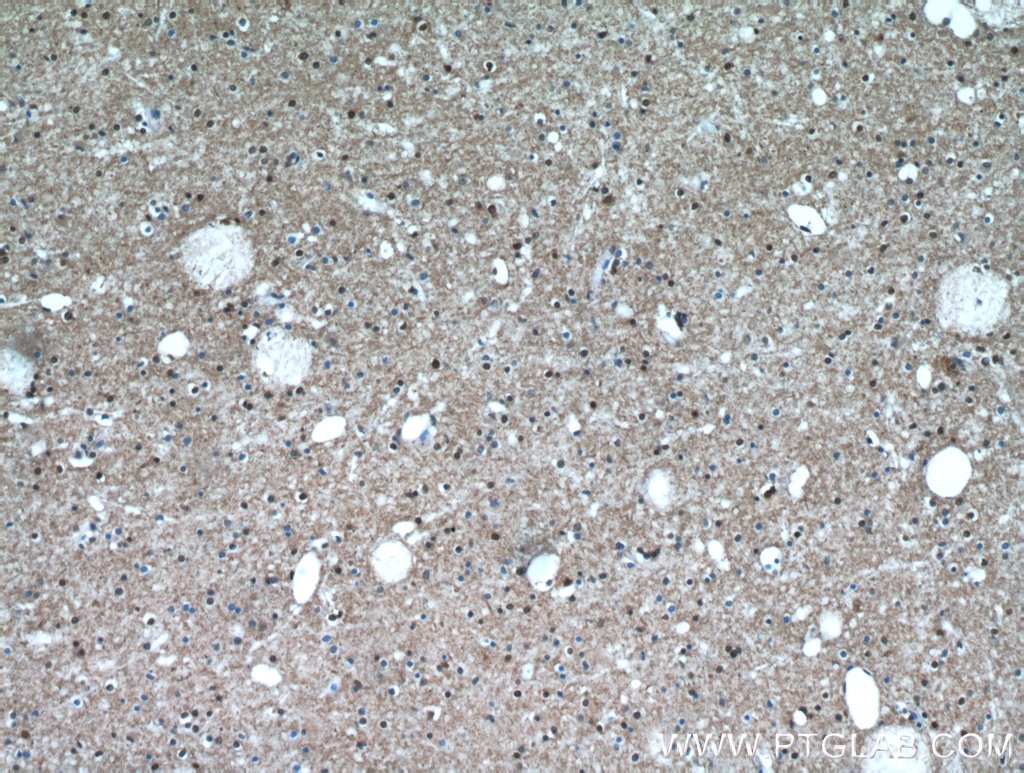
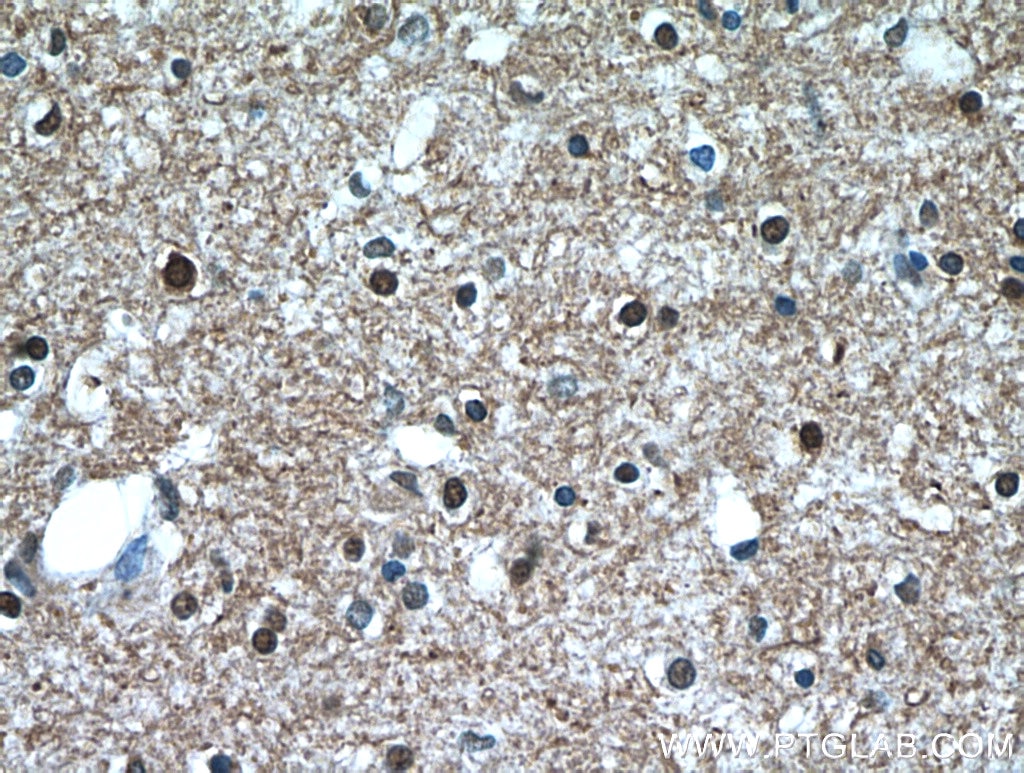
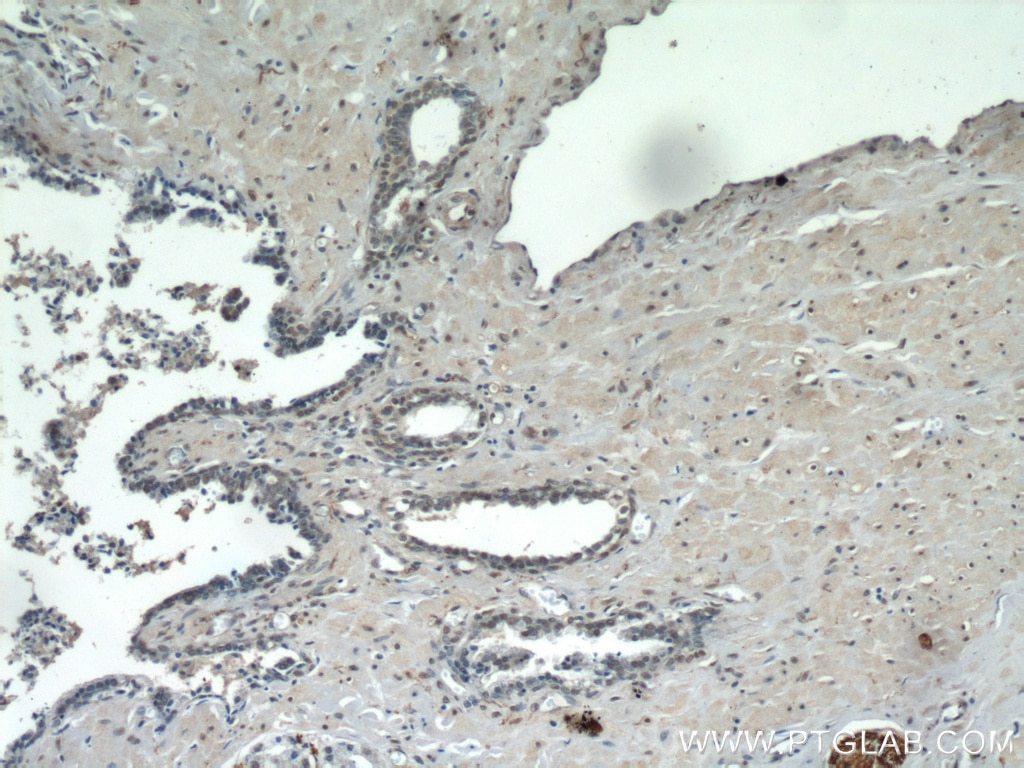
Informations sur le produit
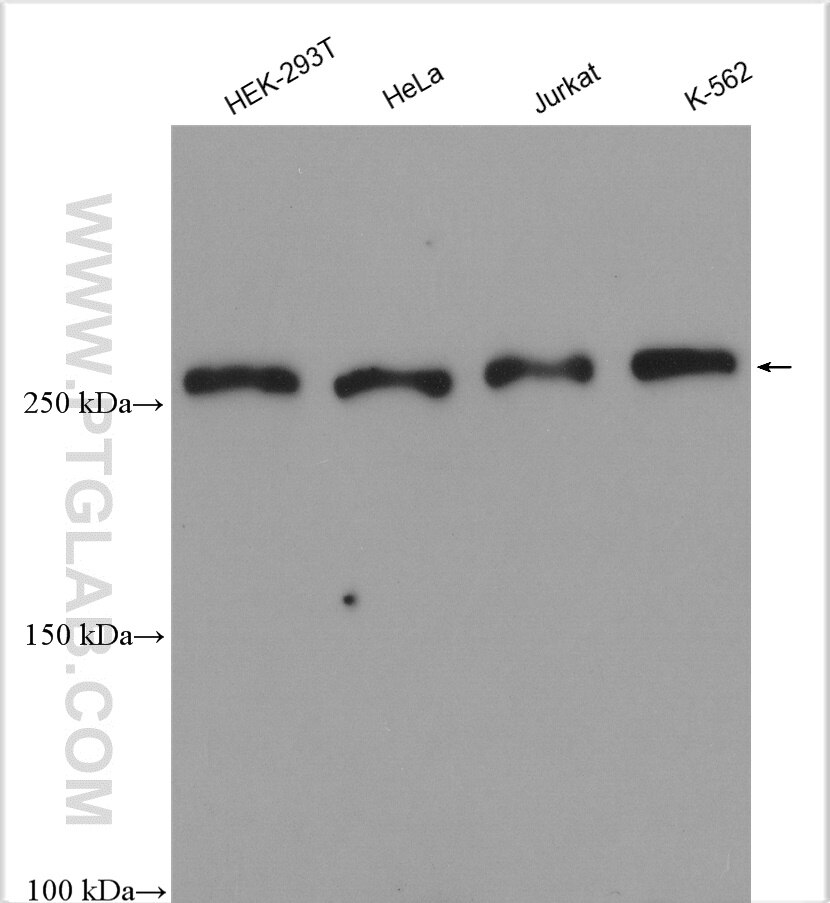
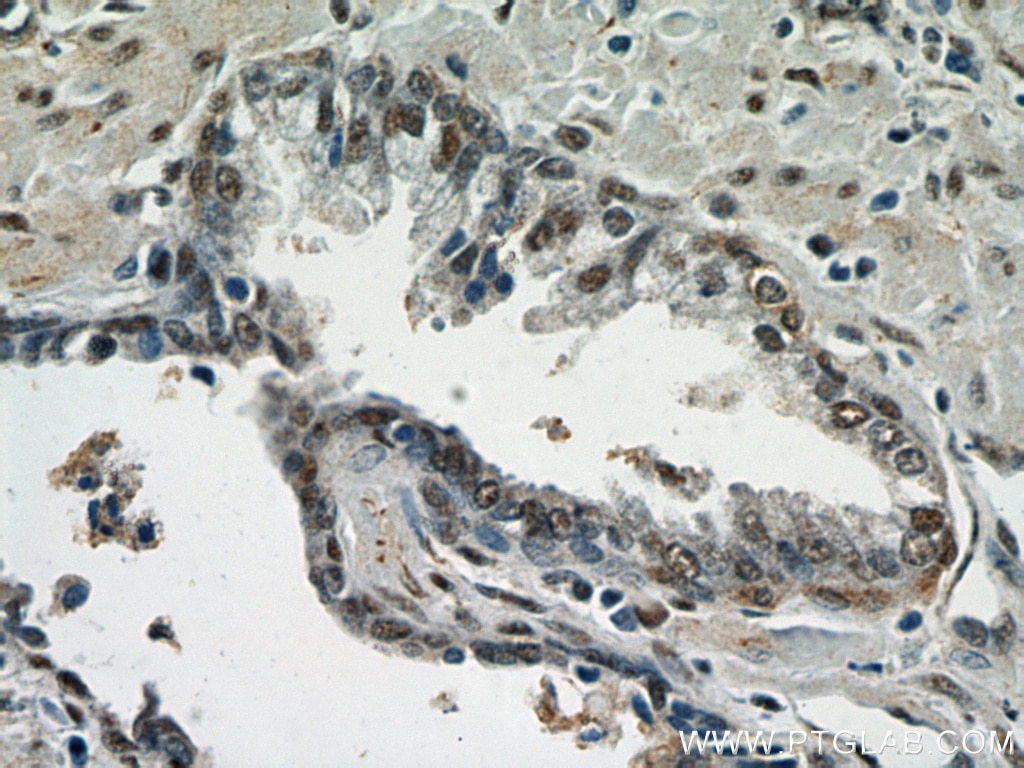
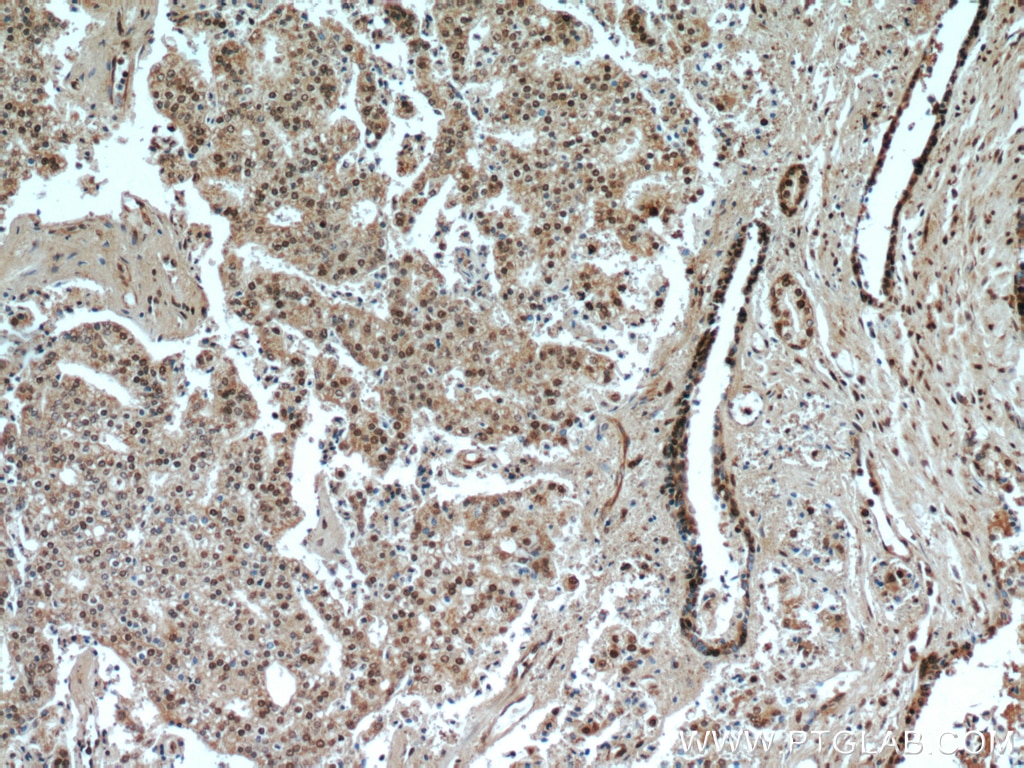
20260-1-PBS cible TAF1-Specific dans les applications de WB, IHC, Indirect ELISA et montre une réactivité avec des échantillons Humain, souris
| Réactivité | Humain, souris |
| Hôte / Isotype | Lapin / IgG |
| Clonalité | Polyclonal |
| Type | Anticorps |
| Immunogène | Peptide |
| Nom complet | TAF1 RNA polymerase II, TATA box binding protein (TBP)-associated factor, 250kDa |
| Masse moléculaire calculée | 213 kDa |
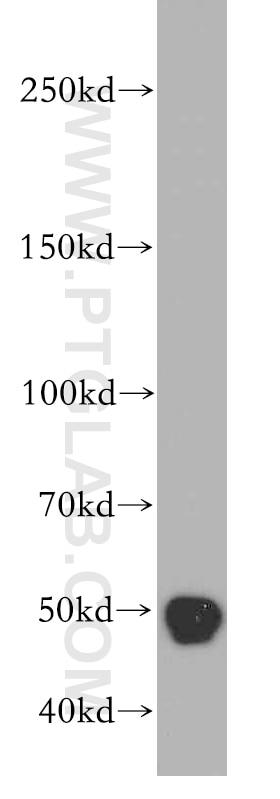
| Poids moléculaire observé | 250-260 kDa, 50 kDa |
| Numéro d’acquisition GenBank | NM_138923 |
| Symbole du gène | TAF1 |
| Identification du gène (NCBI) | 6872 |
| Conjugaison | Non conjugué |
| Forme | Liquide |
| Méthode de purification | Purification par affinité contre l'antigène |
| Tampon de stockage | PBS only |
| Conditions de stockage | Store at -80°C. 20ul contiennent 0,1% de BSA. |
Informations générales
TAF1, also named as BA2R, CCG1, CCGS, TAF2A, p250, Cell cycle gene 1 protein, TAFII250 and DYT3, belongs to the TAF1 family. TAF1 is the largest component and core scaffold of the TFIID basal transcription factor complex. It contains novel N- and C-terminal Ser/Thr kinase domains which can autophosphorylate or transphosphorylate other transcription factors. TAF1 phosphorylates TP53 on 'Thr-55' which leads to MDM2-mediated degradation of TP53. TAF1 phosphorylates GTF2A1 and GTF2F1 on Ser residues. It possesses DNA-binding activity. It is essential for progression of the G1 phase of the cell cycle. Defects in TAF1 are the cause of dystonia type 3 (DYT3) which also called X-linked dystonia-parkinsonism (XDP). The antibody is specific to TAF1. It has several isoforms with predicted MW's of 200-250 kDa and 170-180 kDa, it also could get about 50 kDa band which is caused by the lysate preparation.


