Anticorps Recombinant de lapin anti-TNF-alpha
TNF-alpha Recombinant Antibody for IHC, ELISA
Hôte / Isotype
Lapin / IgG
Réactivité testée
souris
Applications
IHC, ELISA
Conjugaison
Non conjugué
CloneNo.
240702A5
N° de cat : 80260-2-RR
Synonymes
Galerie de données de validation
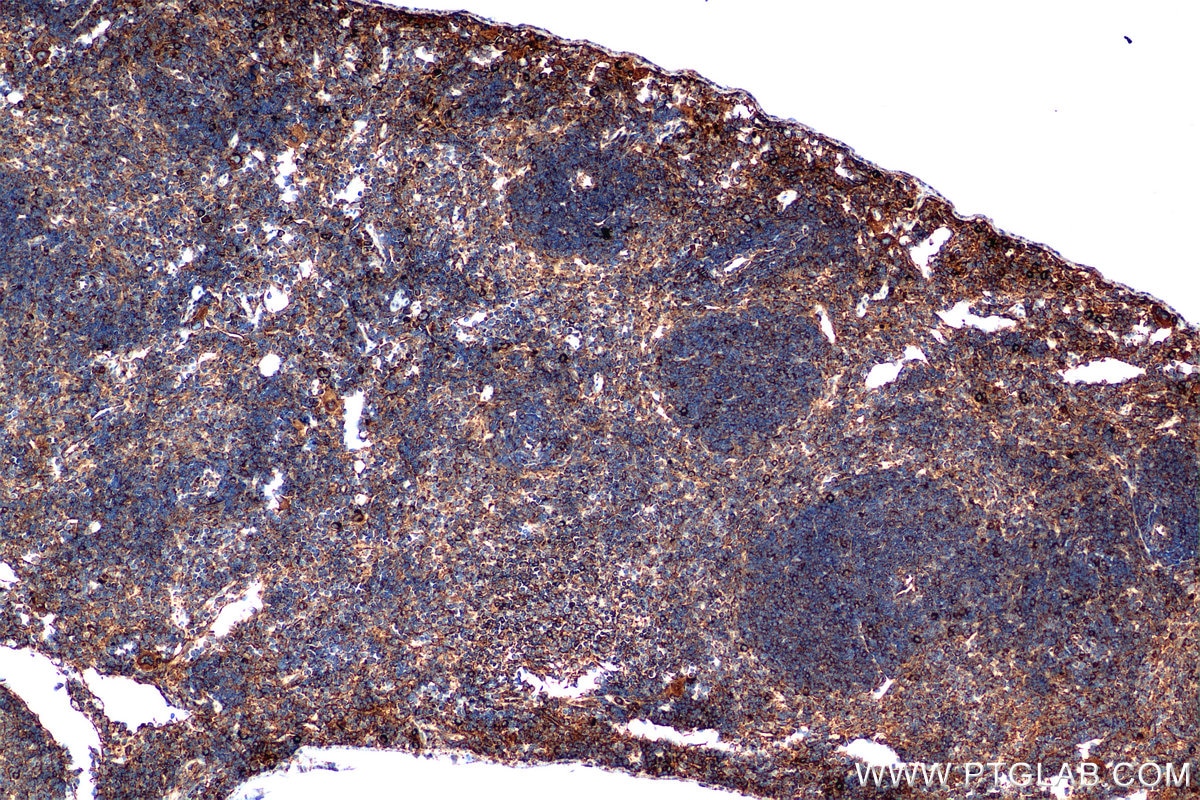
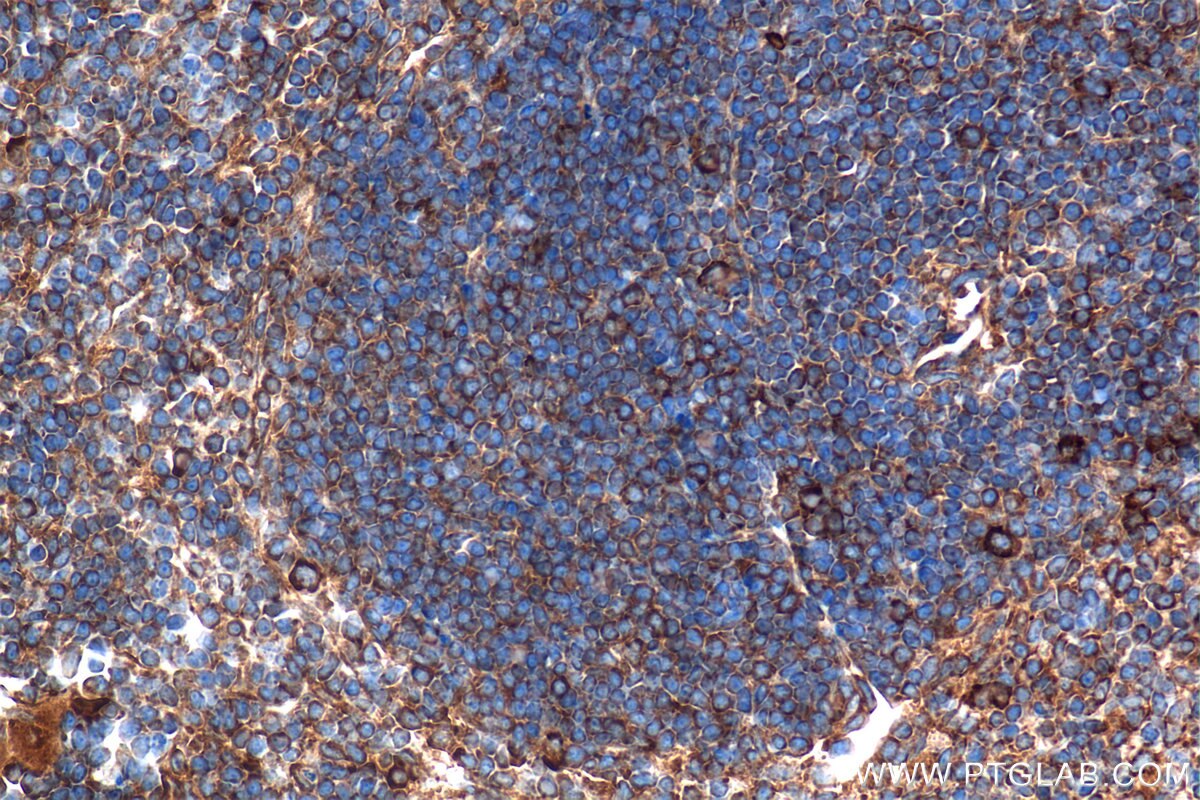
Applications testées
| Résultats positifs en IHC | tissu splénique de souris, il est suggéré de démasquer l'antigène avec un tampon de TE buffer pH 9.0; (*) À défaut, 'le démasquage de l'antigène peut être 'effectué avec un tampon citrate pH 6,0. |
Dilution recommandée
| Application | Dilution |
|---|---|
| Immunohistochimie (IHC) | IHC : 1:1000-1:4000 |
| It is recommended that this reagent should be titrated in each testing system to obtain optimal results. | |
| Sample-dependent, check data in validation data gallery | |
Informations sur le produit
80260-2-RR cible TNF-alpha dans les applications de IHC, ELISA et montre une réactivité avec des échantillons souris
| Réactivité | souris |
| Hôte / Isotype | Lapin / IgG |
| Clonalité | Recombinant |
| Type | Anticorps |
| Immunogène | TNF-alpha Protéine recombinante Eg31366 |
| Nom complet | tumor necrosis factor |
| Numéro d’acquisition GenBank | NM-013693 |
| Symbole du gène | TNF-alpha |
| Identification du gène (NCBI) | 21926 |
| Conjugaison | Non conjugué |
| Forme | Liquide |
| Méthode de purification | Purification par protéine A |
| Tampon de stockage | PBS with 0.02% sodium azide and 50% glycerol |
| Conditions de stockage | Stocker à -20°C. Stable pendant un an après l'expédition. L'aliquotage n'est pas nécessaire pour le stockage à -20oC Les 20ul contiennent 0,1% de BSA. |
Informations générales
TNF, as also known as TNF-alpha, or cachectin, is a multifunctional proinflammatory cytokine that belongs to the tumor necrosis factor (TNF) superfamily. It is expressed as a 26 kDa membrane bound protein and is then cleaved by TNF-alpha converting enzyme (TACE) to release the soluble 17 kDa monomer, which forms homotrimers in circulation. It is produced chiefly by activated macrophages, although it can be produced by many other cell types such as CD4+ lymphocytes, NK cells, neutrophils, mast cells, eosinophils, and neurons. It can bind to, and thus functions through its receptors TNFRSF1A/TNFR1 and TNFRSF1B/TNFBR. This cytokine is involved in the regulation of a wide spectrum of biological processes including cell proliferation, differentiation, apoptosis, lipid metabolism, and coagulation. Mouse and human TNF-alpha share 79% amino acid sequence identity. Unlike human TNF-alpha, the mouse form is glycosylated. In mouse deficiency of this gene is associated with defects in response to bacterial infection, with defects in forming organized follicular dendritic cell networks and germinal centers, and with a lack of primary B cell follicles.
Protocole
| Product Specific Protocols | |
|---|---|
| IHC protocol for TNF-alpha antibody 80260-2-RR | Download protocol |
| Standard Protocols | |
|---|---|
| Click here to view our Standard Protocols |

