Anticorps Recombinant de lapin anti-TNFR1/CD120a
TNFR1/CD120a Recombinant Antibody for FC
Hôte / Isotype
Lapin / IgG
Réactivité testée
souris
Applications
FC
Conjugaison
Non conjugué
CloneNo.
250007H7
N° de cat : 98498-1-PBS
Synonymes
Galerie de données de validation
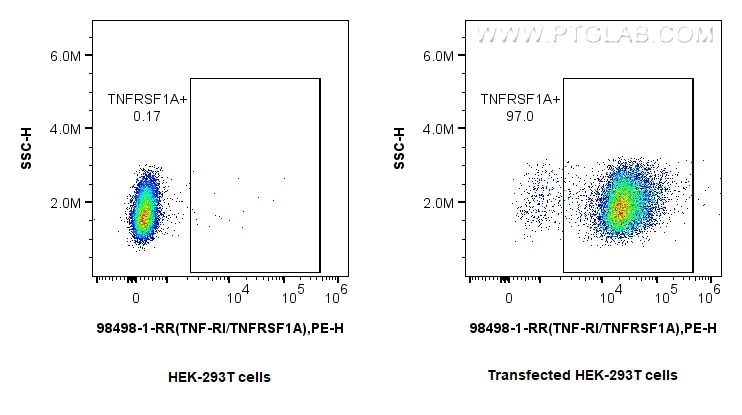
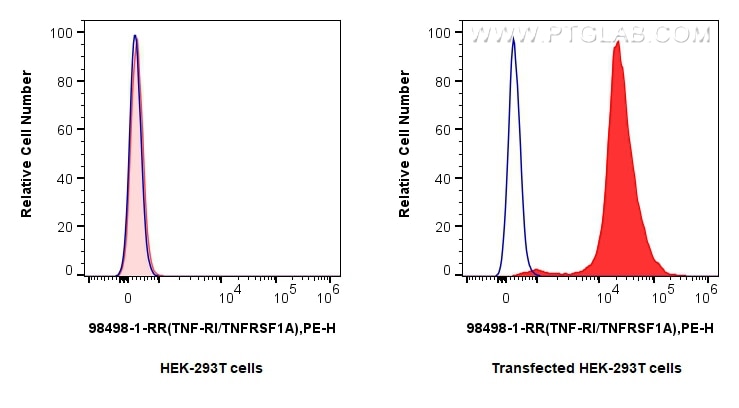
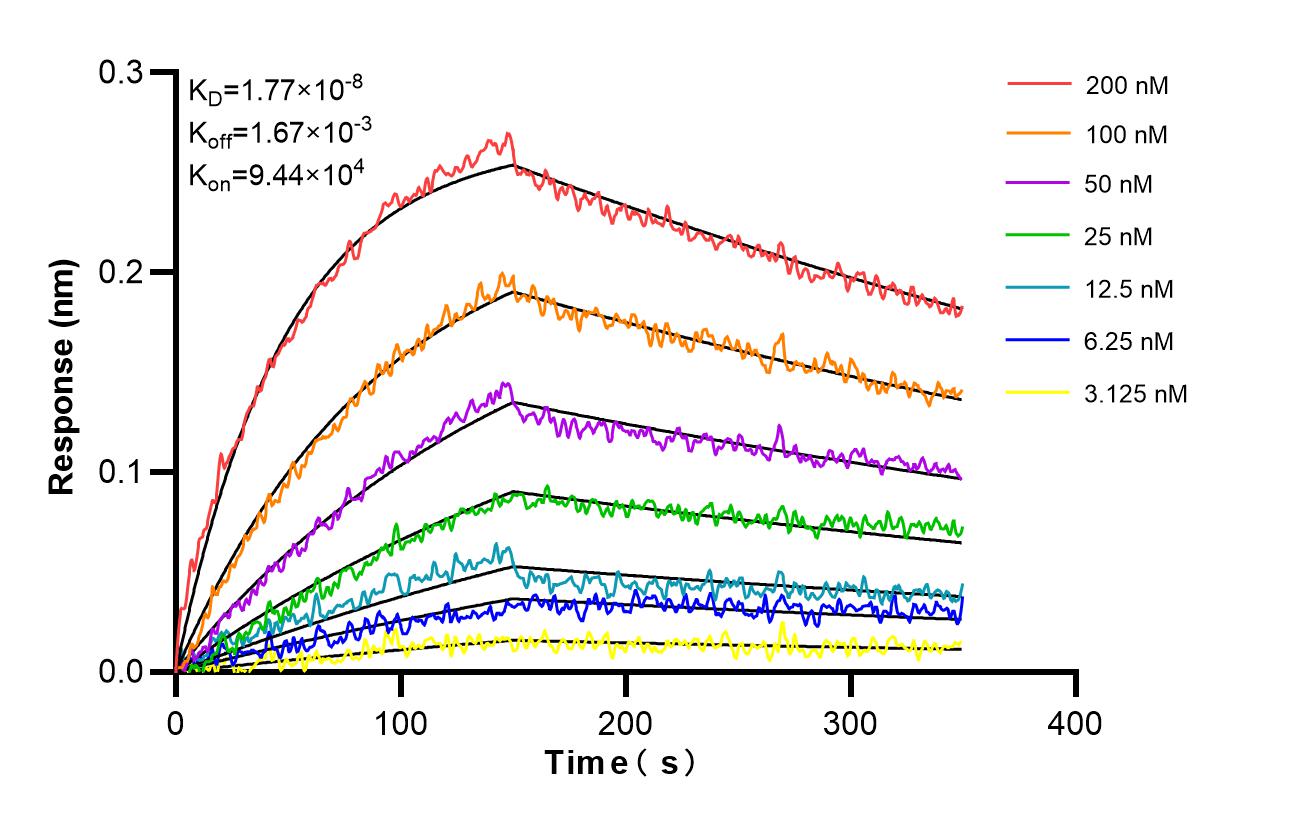
Informations sur le produit
98498-1-PBS cible TNFR1/CD120a dans les applications de FC et montre une réactivité avec des échantillons souris
| Réactivité | souris |
| Hôte / Isotype | Lapin / IgG |
| Clonalité | Recombinant |
| Type | Anticorps |
| Immunogène | TNFR1/CD120a Protéine recombinante Eg0733 |
| Nom complet | tumor necrosis factor receptor superfamily, member 1a |
| Masse moléculaire calculée | 50KDa |
| Numéro d’acquisition GenBank | NM_011609.4 |
| Symbole du gène | Tnfrsf1a |
| Identification du gène (NCBI) | 21937 |
| Conjugaison | Non conjugué |
| Forme | Liquide |
| Méthode de purification | Purification par protéine A |
| Tampon de stockage | PBS only |
| Conditions de stockage | Store at -80°C. |
Informations générales
Tumor necrosis factor (TNF) is a multifunctional cytokine that plays a key role in regulating inflammation, immune functions, host defense, and apoptosis (PMID: 16407280). TNF exists in soluble and membrane-bound forms. TNF signals through two distinct cell surface receptors, TNFR1 (TNFRSF1A, CD120a) and TNFR2 (TNFRSF1B, CD120b). Whereas TNFR1 is widely expressed, expression of TNFR2 is limited to cells of the immune system, endothelial cells, and nerve cells (PMID: 22053109). TNFR1, which contains a death domain (DD) within its intracytoplasmic region, is thought to be the key receptor for TNF signaling (PMID: 16407280). This receptor can activate NF-kappaB, mediate apoptosis, and function as a regulator of inflammation. Antiapoptotic protein BCL2-associated athanogene 4 (BAG4/SODD) and adaptor proteins TRADD and TRAF2 have been shown to interact with this receptor, and thus play regulatory roles in the signal transduction mediated by the receptor.


