Anticorps Polyclonal de lapin anti-Tenascin-R
Tenascin-R Polyclonal Antibody for WB, IHC, Indirect ELISA
Hôte / Isotype
Lapin / IgG
Réactivité testée
Humain
Applications
WB, IHC, Indirect ELISA
Conjugaison
Non conjugué
N° de cat : 19730-1-PBS
Synonymes
Galerie de données de validation
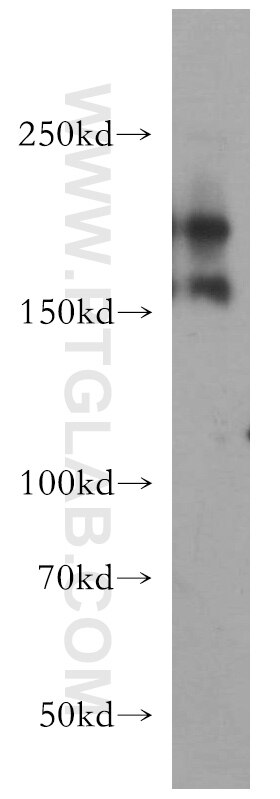
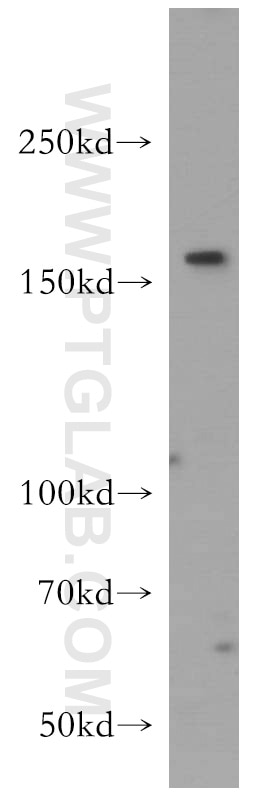
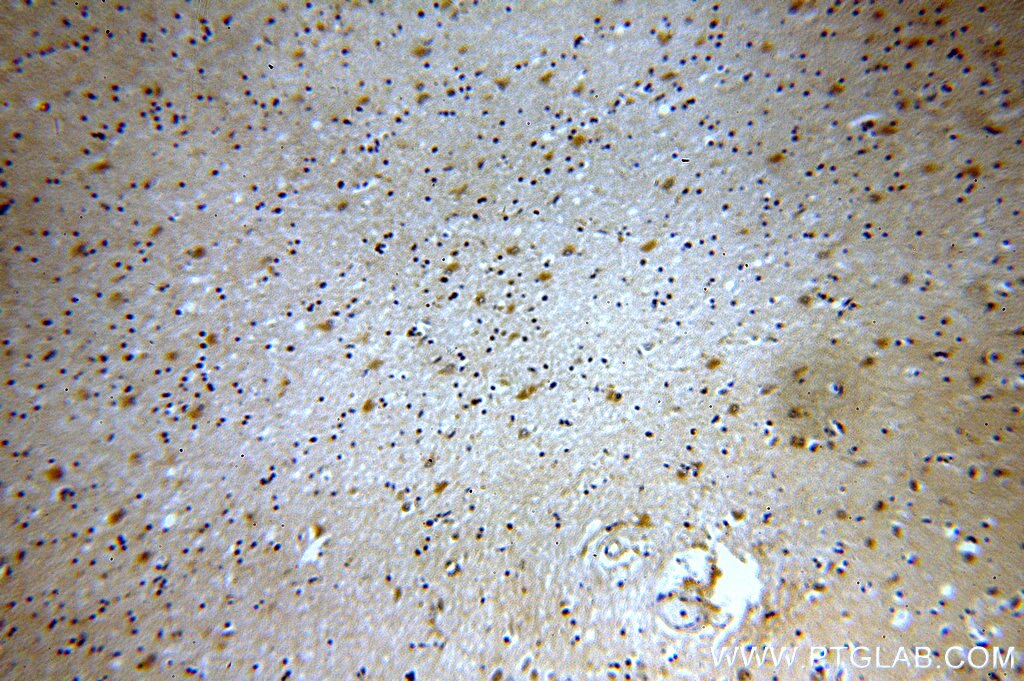
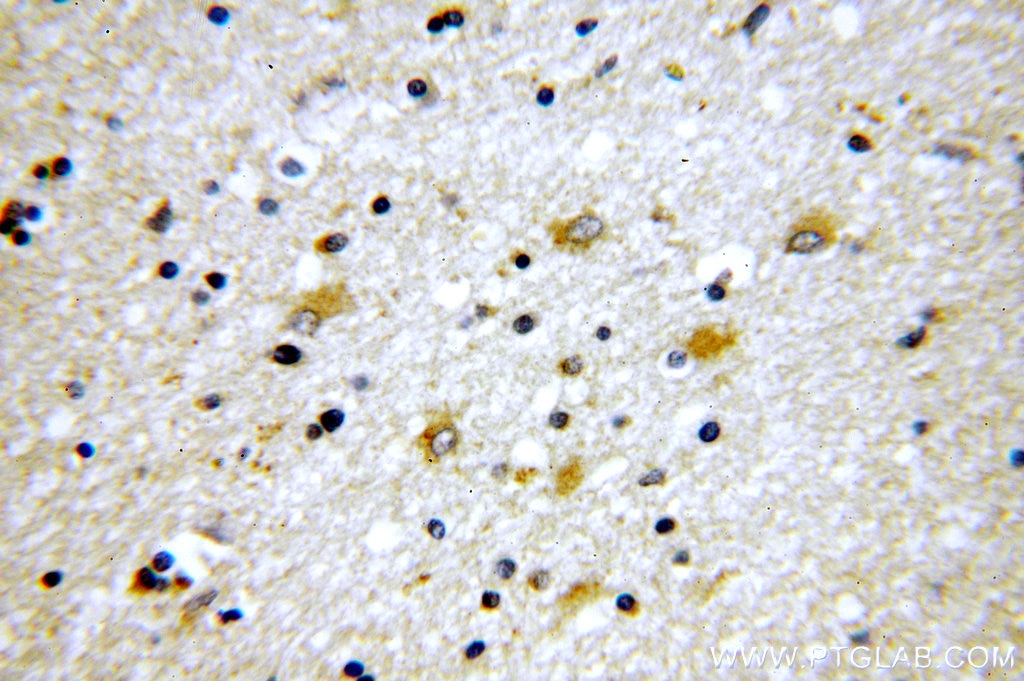
Informations sur le produit
19730-1-PBS cible Tenascin-R dans les applications de WB, IHC, Indirect ELISA et montre une réactivité avec des échantillons Humain
| Réactivité | Humain |
| Hôte / Isotype | Lapin / IgG |
| Clonalité | Polyclonal |
| Type | Anticorps |
| Immunogène | Peptide |
| Nom complet | tenascin R (restrictin, janusin) |
| Masse moléculaire calculée | 150 kDa |
| Poids moléculaire observé | 180 kDa, 160 kDa |
| Numéro d’acquisition GenBank | NM_003285 |
| Symbole du gène | TNR |
| Identification du gène (NCBI) | 7143 |
| Conjugaison | Non conjugué |
| Forme | Liquide |
| Méthode de purification | Purification par affinité contre l'antigène |
| Tampon de stockage | PBS only |
| Conditions de stockage | Store at -80°C. 20ul contiennent 0,1% de BSA. |
Informations générales
TNR, also named as Restrictin and Janusin, belongs to the tenascin family. Neural extracellular matrix (ECM) protein involved in interactions with different cells and matrix components. These interactions can influence cellular behavior by either evoking a stable adhesion and differentiation, or repulsion and inhibition of neurite growth. Binding to cell surface gangliosides, TNR inhibits RGD-dependent integrin-mediated cell adhesion and results in an inhibition of PTK2 (FAK) phosphorylation and cell detachment. Binding to membrane surface sulfatides, TNR results in a oligodendrocyte adhesion and differentiation. Interaction with CNTN1, TNR induces a repulsion of neurons and an inhibition of neurite outgrowth. Interacts with SCN2B, TNR may play a crucial role in clustering and regulation of activity of sodium channels at nodes of Ranvier. TNR-linked chondroitin sulfate glycosaminoglycans are involved in the interaction with FN1 and mediate inhibition of cell adhesion and neurite outgrowth. The highly regulated addition of sulfated carbohydrate structure may modulate the adhesive properties of TNR over the course of development and during synapse maintenance. The antibody is specific to TNR.


