- Phare
- Validé par KD/KO
Anticorps Polyclonal de lapin anti-Transferrin/TF
Transferrin/TF Polyclonal Antibody for WB, IHC, IF/ICC, IF-P, Indirect ELISA
Hôte / Isotype
Lapin / IgG
Réactivité testée
Humain, rat, souris
Applications
WB, IHC, IF/ICC, IF-P, Indirect ELISA
Conjugaison
Non conjugué
N° de cat : 17435-1-PBS
Synonymes
Galerie de données de validation
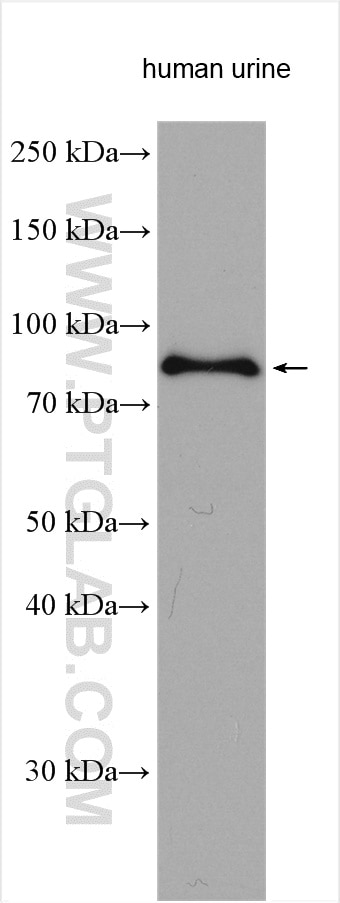
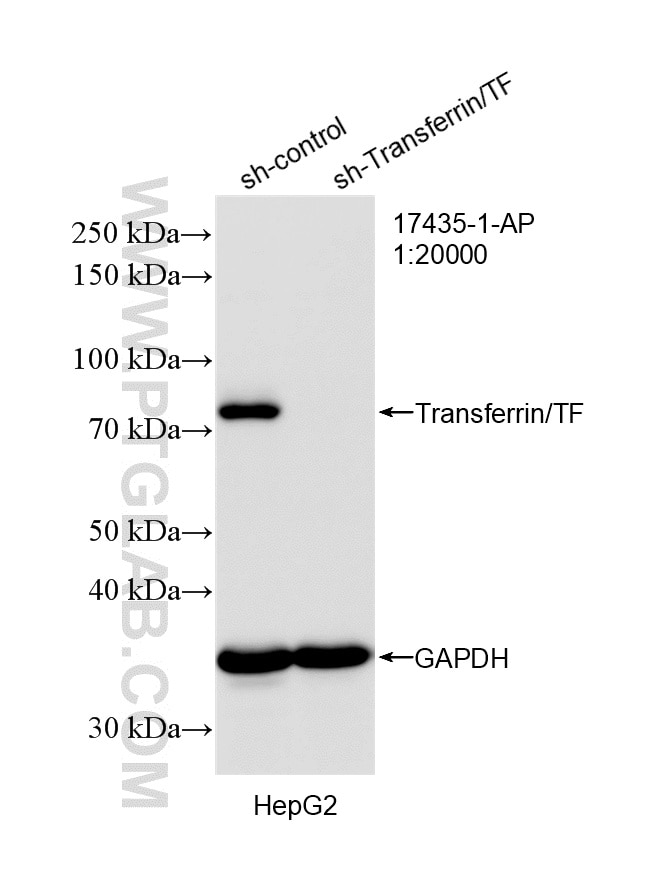
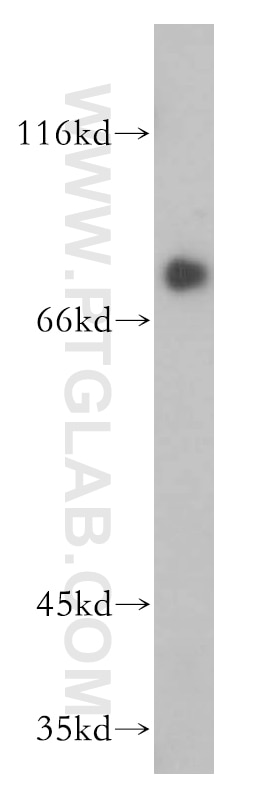
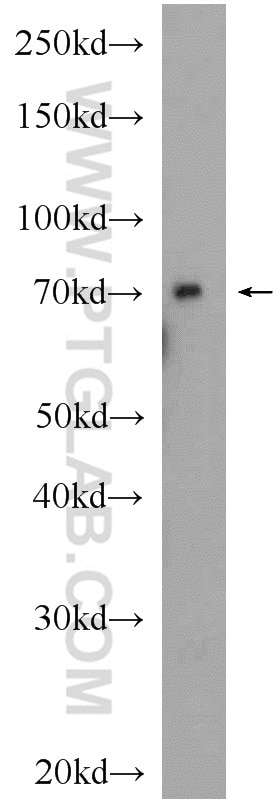
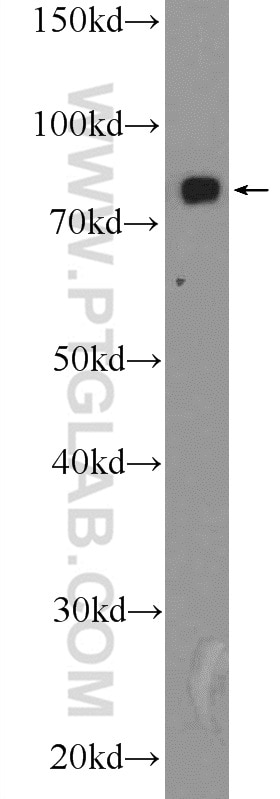
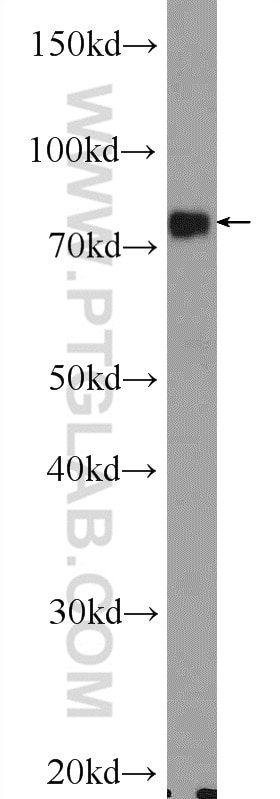
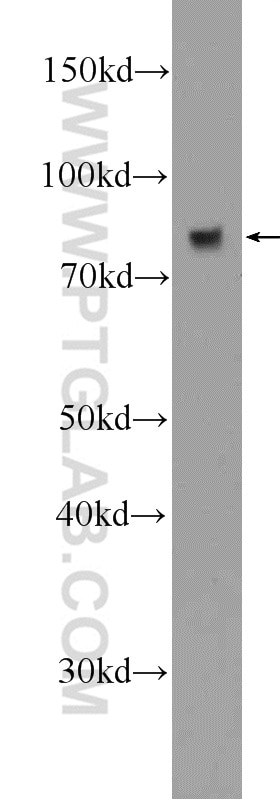
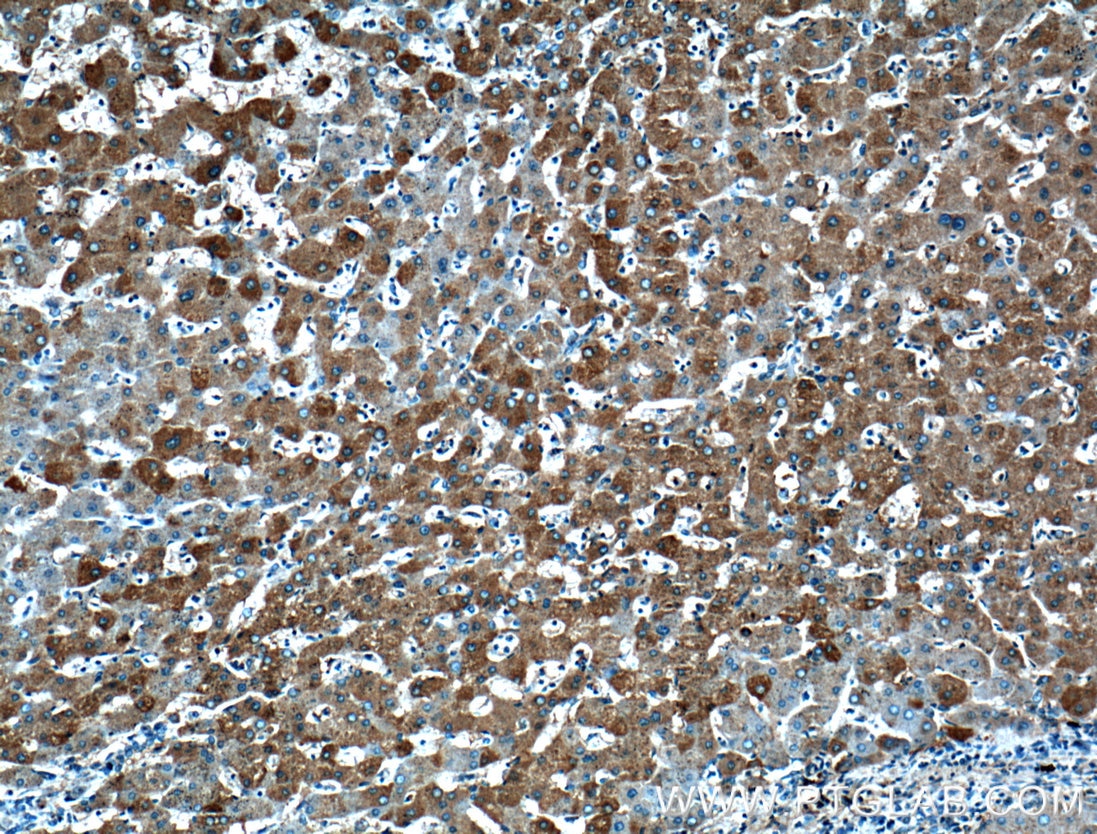
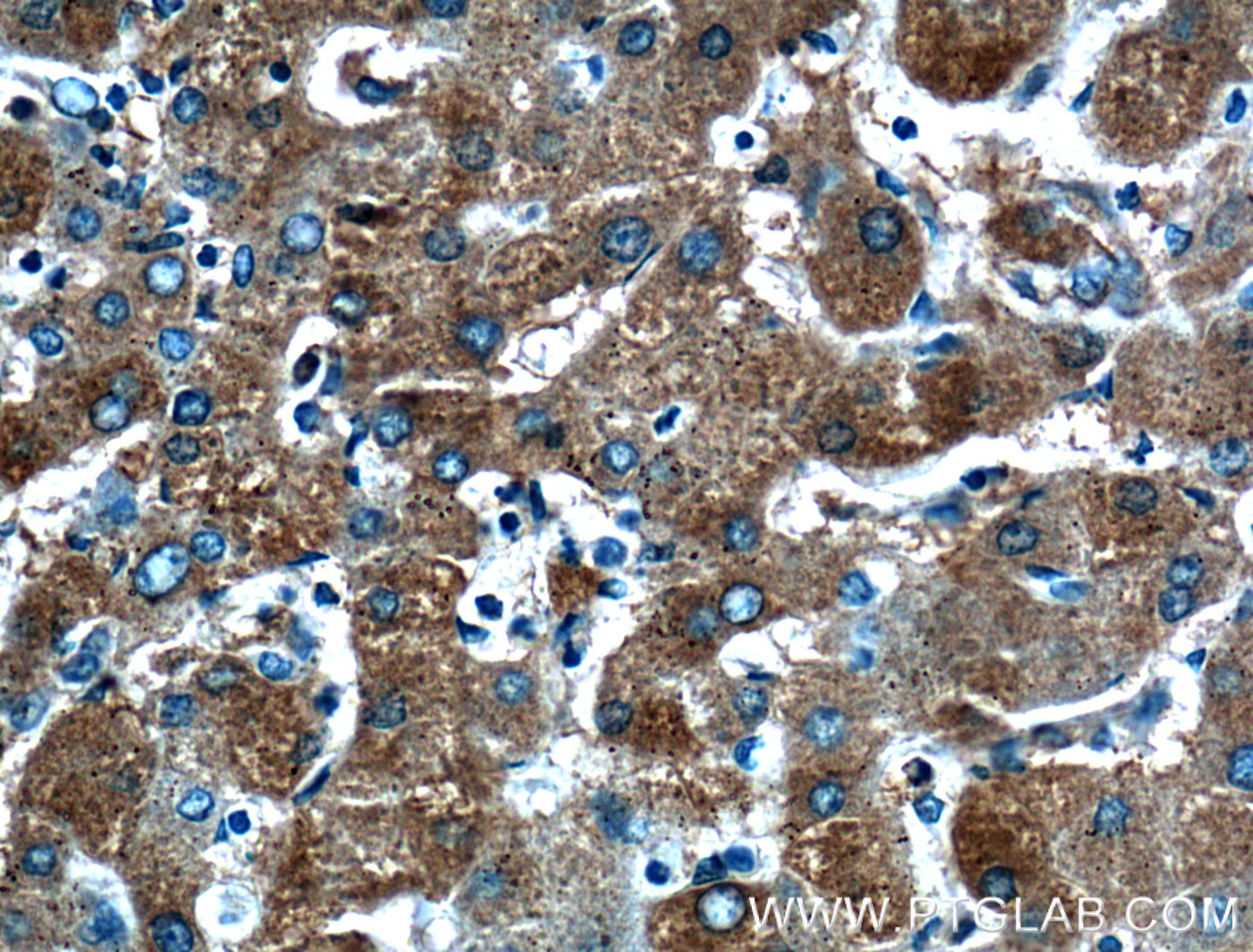
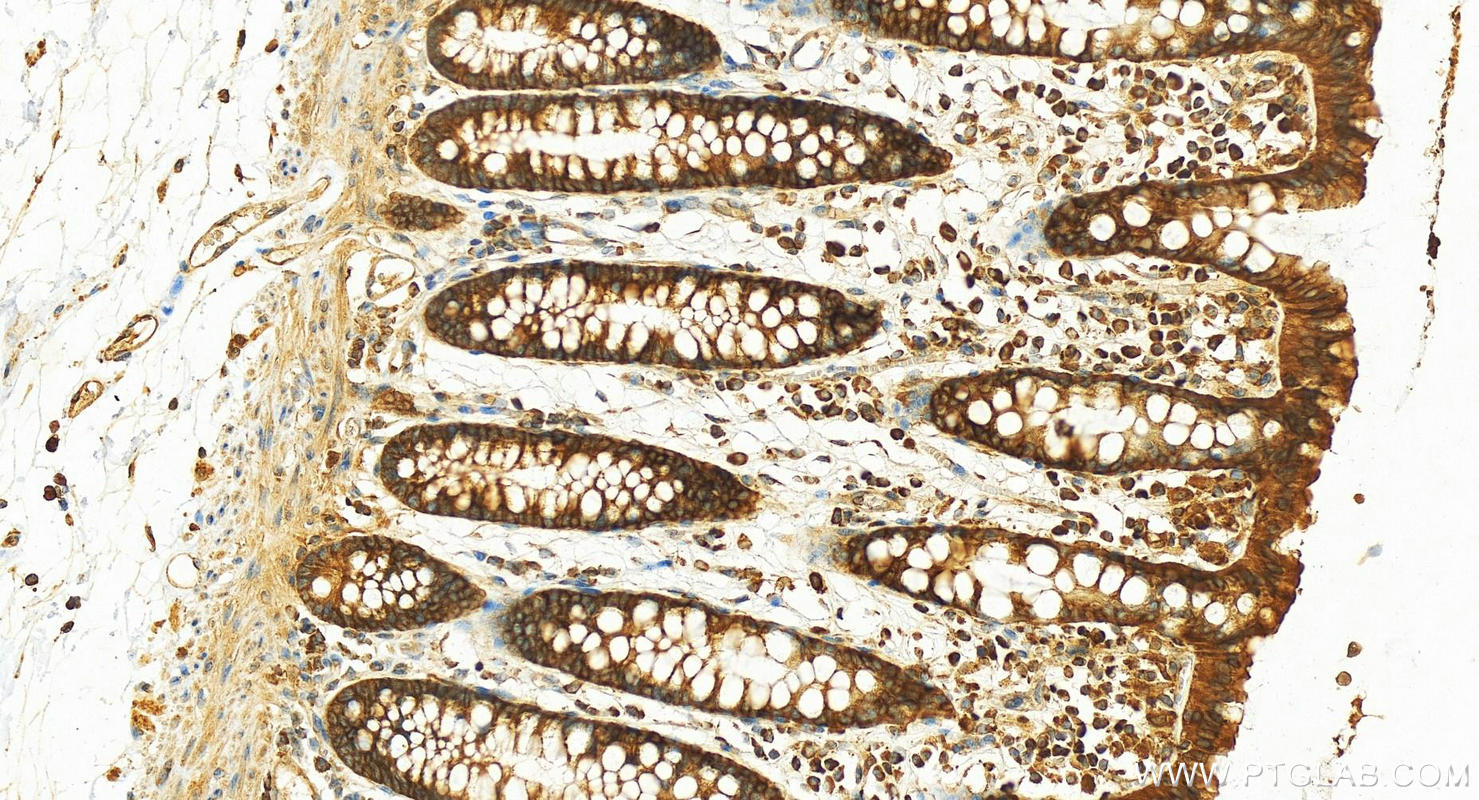
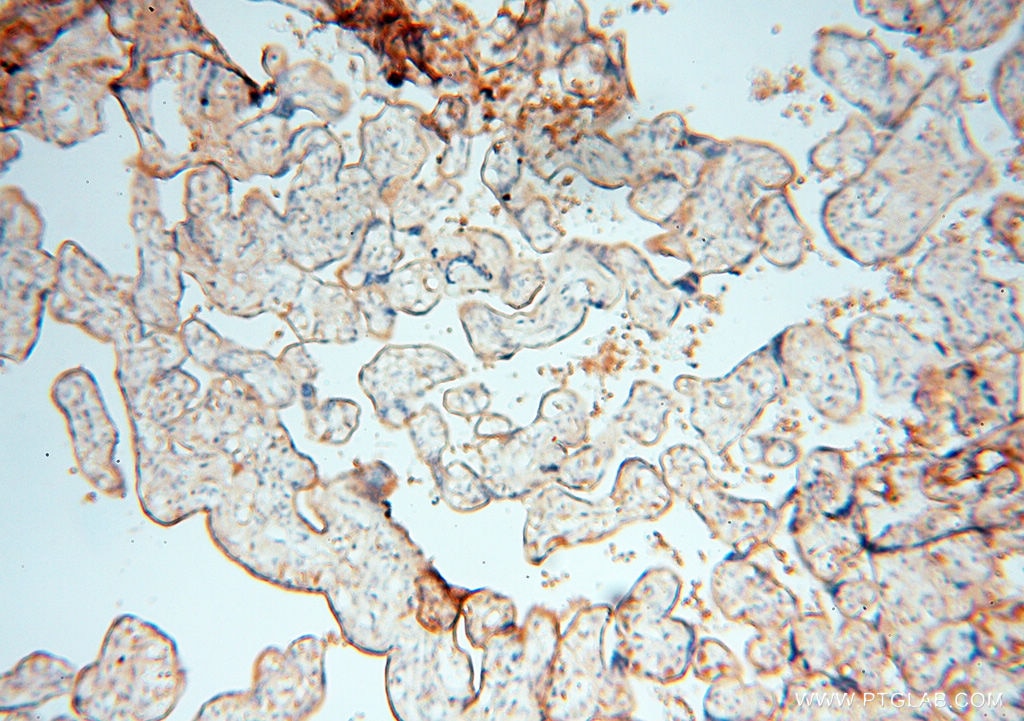
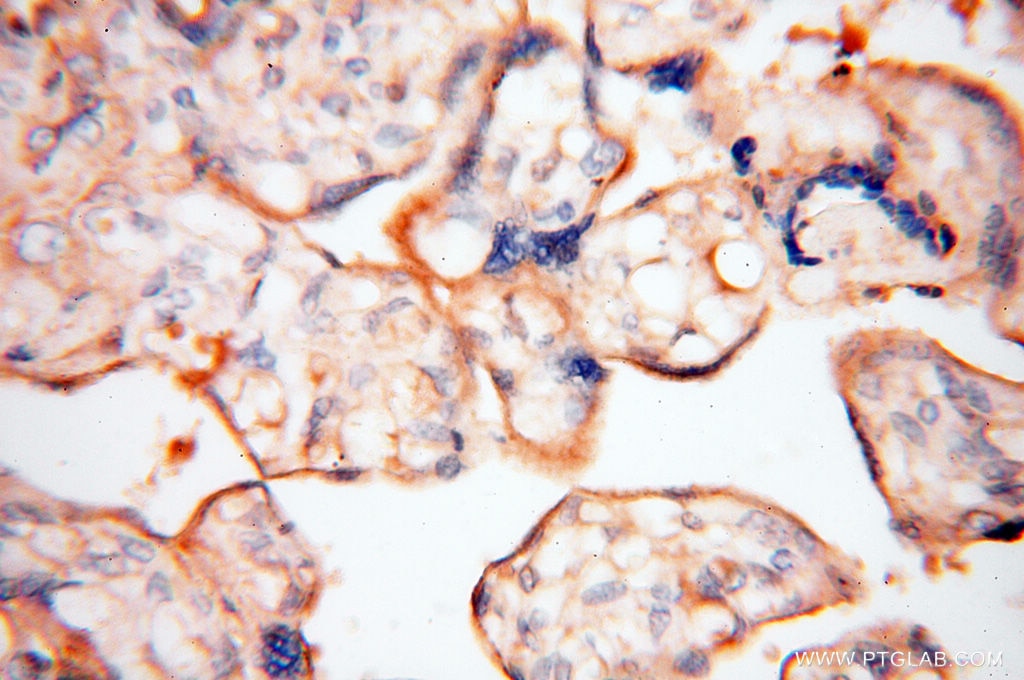
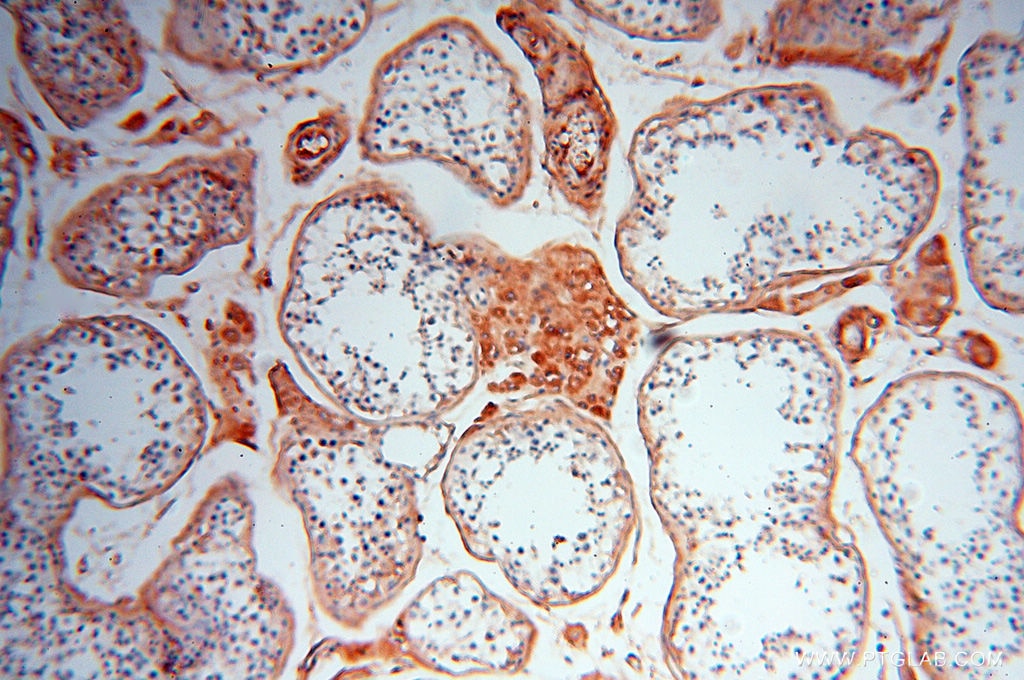
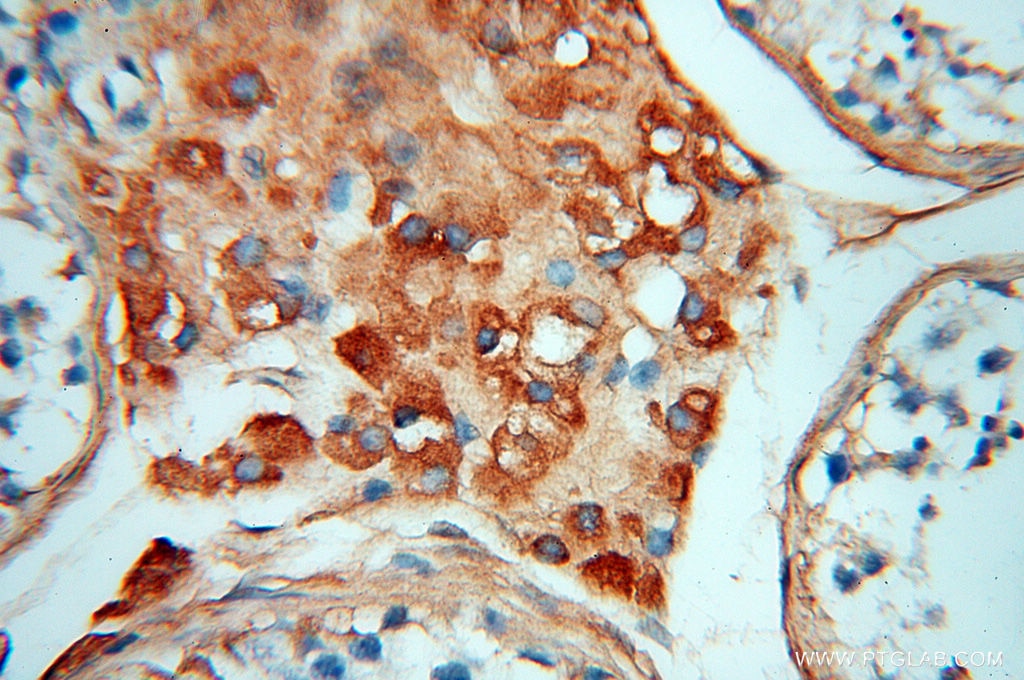
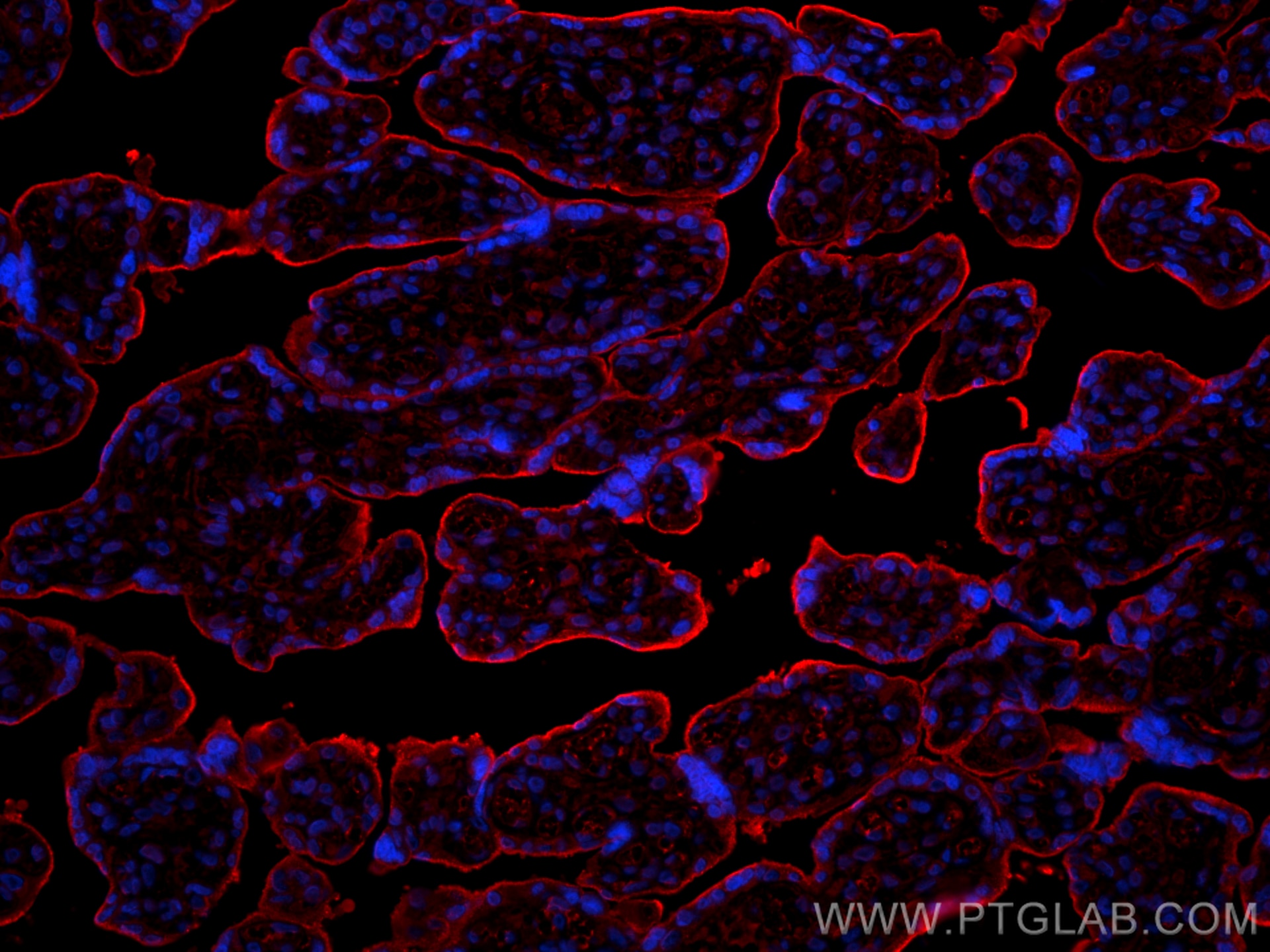
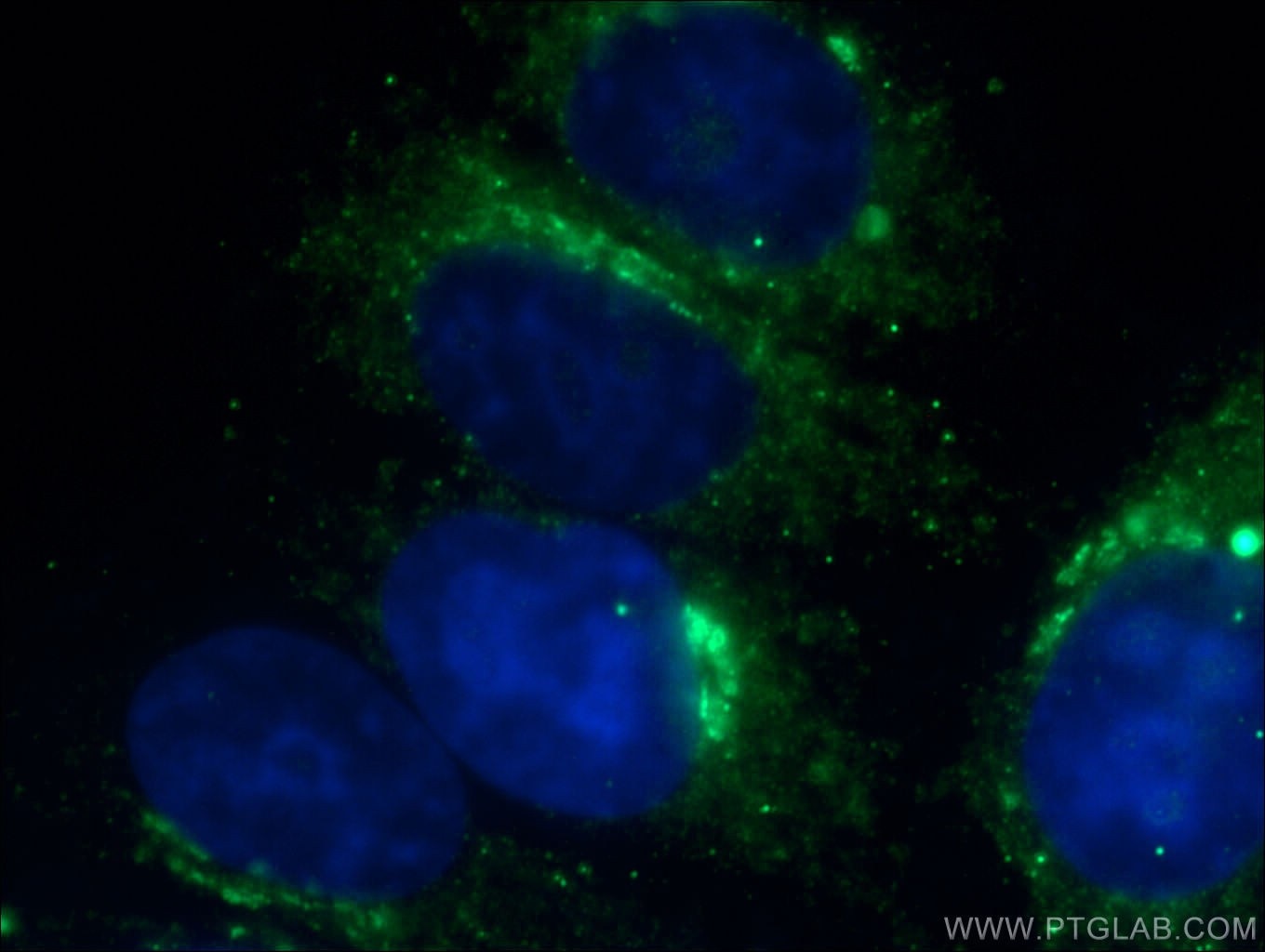
Informations sur le produit
17435-1-PBS cible Transferrin/TF dans les applications de WB, IHC, IF/ICC, IF-P, Indirect ELISA et montre une réactivité avec des échantillons Humain, rat, souris
| Réactivité | Humain, rat, souris |
| Hôte / Isotype | Lapin / IgG |
| Clonalité | Polyclonal |
| Type | Anticorps |
| Immunogène | Transferrin/TF Protéine recombinante Ag11504 |
| Nom complet | transferrin |
| Masse moléculaire calculée | 698 aa, 77 kDa |
| Poids moléculaire observé | 77 kDa |
| Numéro d’acquisition GenBank | BC059367 |
| Symbole du gène | TF |
| Identification du gène (NCBI) | 7018 |
| Conjugaison | Non conjugué |
| Forme | Liquide |
| Méthode de purification | Purification par affinité contre l'antigène |
| Tampon de stockage | PBS only |
| Conditions de stockage | Store at -80°C. 20ul contiennent 0,1% de BSA. |
Informations générales
What is the tissue specificity of TF?
Transferrin is synthesized mainly in the liver.
What is the calculated molecular weight of TF?
77 kDa
How many iron atoms can bind to TF?
Each of the two lobes of TF has one high-affinity Fe(III) binding site. Since binding of iron and bicarbonate
releases free H+ ions, affinity decreases in acidic conditions, in which TF also remains bound to its receptor.
What is the primary role of TF?
TF serves as a serum metal-binding protein, playing a key role in iron metabolism and delivery for erythropoiesis.
What is the role of TF in human diseases?
TF deficiency results in an exhibition of congenital atransferrinemia (hypotransferrinemia) in which there is a
decrease in hepcidin expression, causing increased iron levels.
Is TF essential for iron delivery?
Congenital atransferrinemia results in an iron overload in some tissues, such as the liver, suggesting that while TF is not essential for iron delivery to all organs, it is needed for iron level regulation.
In what circumstances do TF levels decrease?
Inflammation and iron overload both can cause a decline in TF levels.
How does TF affect hormonal balance?
TF positively regulates expression of hepcidin, a peptide hormone synthesized by the liver.
How does TF deficiency cause increased iron levels?
TF regulates hepcidin, which in turn is a negative regulator of intestinal iron absorption, resulting in TF
deficiency causing both anemia, and, paradoxically, increased iron levels in some tissues.
PMIDs: 23046645, 9635730, 22294463, 24589273


