Anticorps Polyclonal de lapin anti-UFM1
UFM1 Polyclonal Antibody for WB, IHC, Indirect ELISA
Hôte / Isotype
Lapin / IgG
Réactivité testée
Humain, souris
Applications
WB, IHC, Indirect ELISA
Conjugaison
Non conjugué
N° de cat : 15883-1-PBS
Synonymes
Galerie de données de validation
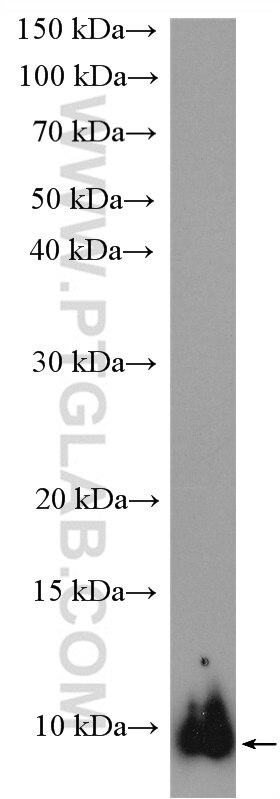
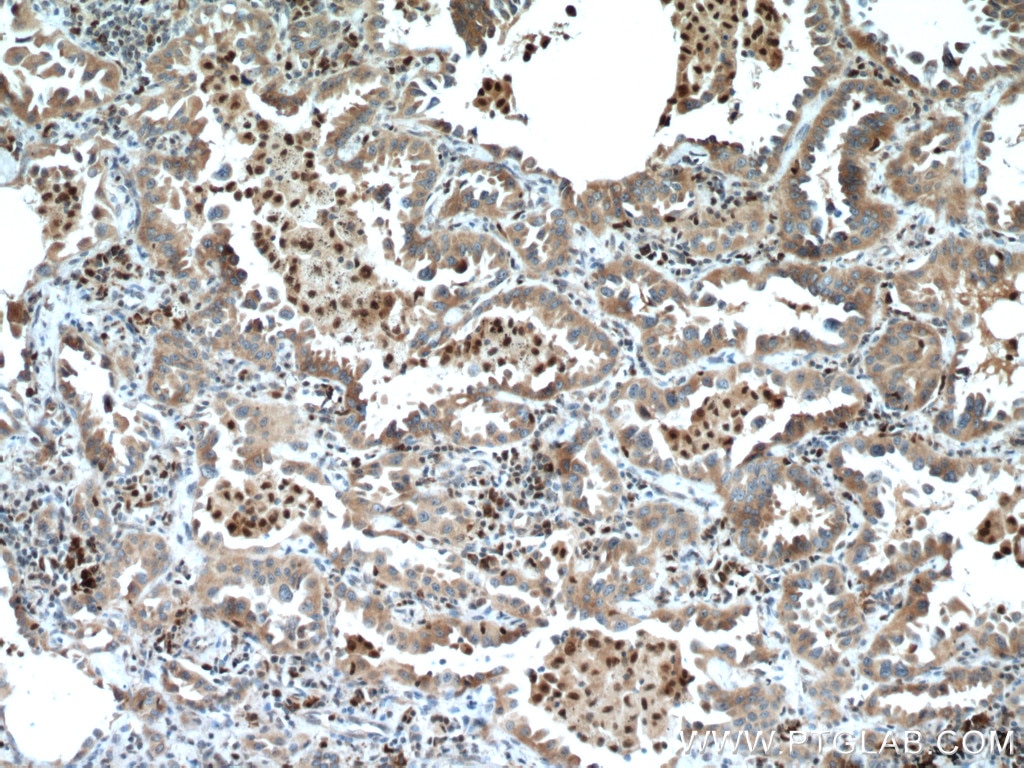
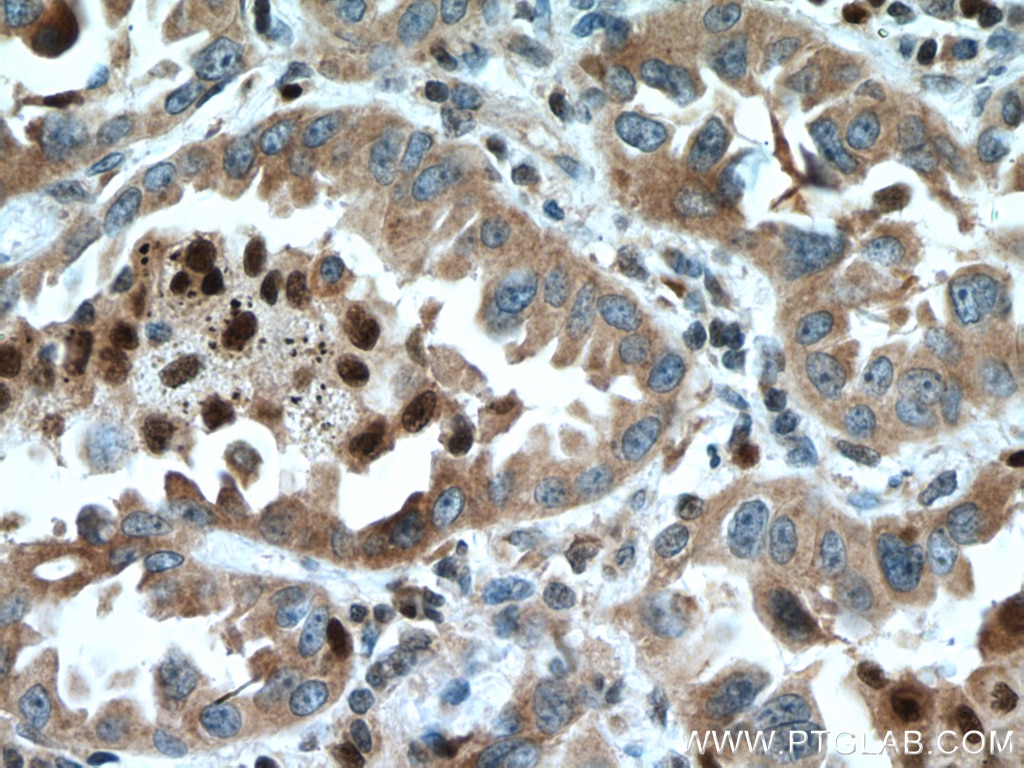
Informations sur le produit
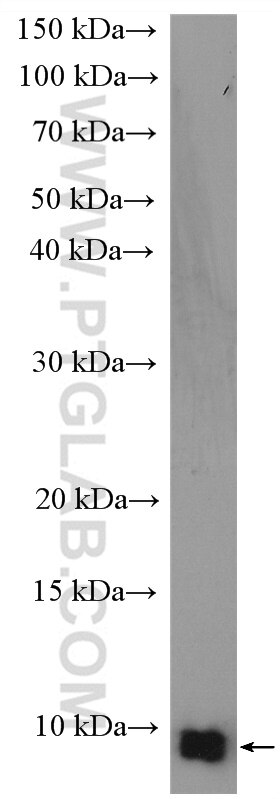
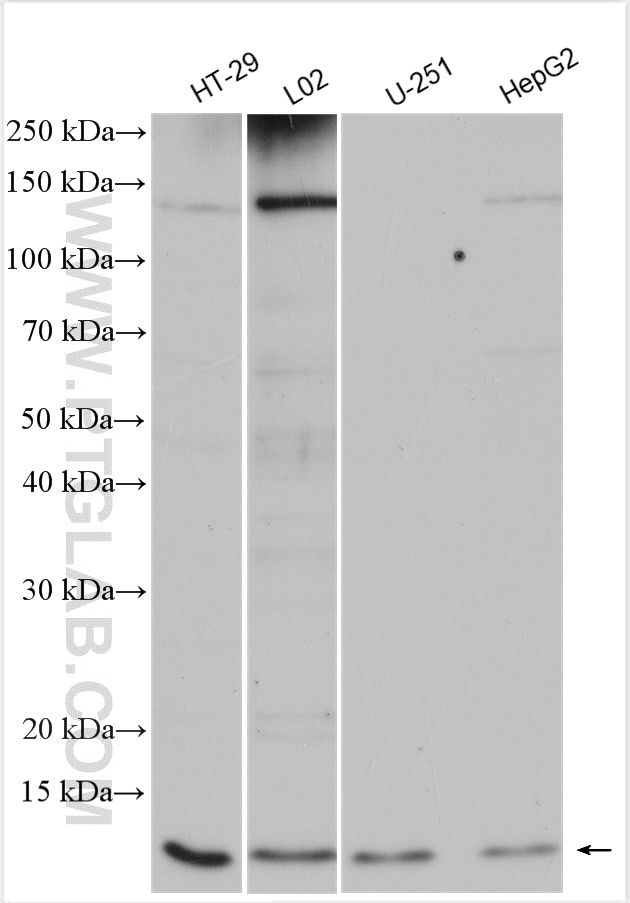
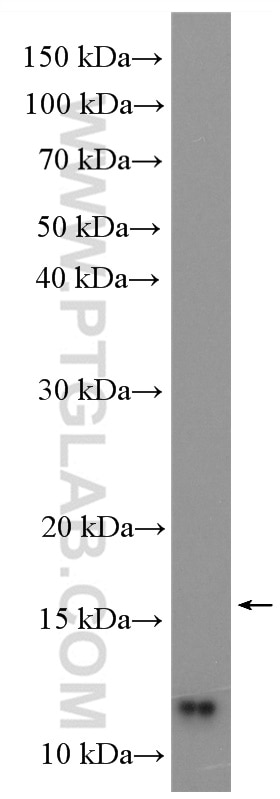
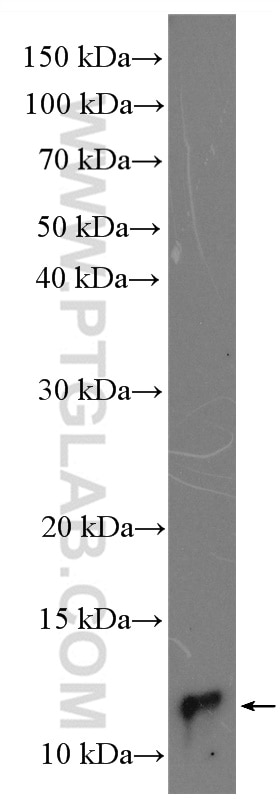
15883-1-PBS cible UFM1 dans les applications de WB, IHC, Indirect ELISA et montre une réactivité avec des échantillons Humain, souris
| Réactivité | Humain, souris |
| Hôte / Isotype | Lapin / IgG |
| Clonalité | Polyclonal |
| Type | Anticorps |
| Immunogène | UFM1 Protéine recombinante Ag8667 |
| Nom complet | ubiquitin-fold modifier 1 |
| Masse moléculaire calculée | 85 aa, 9 kDa |
| Poids moléculaire observé | 9-12 kDa |
| Numéro d’acquisition GenBank | BC005193 |
| Symbole du gène | UFM1 |
| Identification du gène (NCBI) | 51569 |
| Conjugaison | Non conjugué |
| Forme | Liquide |
| Méthode de purification | Purification par affinité contre l'antigène |
| Tampon de stockage | PBS only |
| Conditions de stockage | Store at -80°C. 20ul contiennent 0,1% de BSA. |
Informations générales
UFM1 (Ubiquitin-fold modifier 1) is a ubiquitin-like protein covalently conjugated with intracellular proteins through UFMylation (modification by UFM1), a process similar to ubiquitylation (PMID: 38141606). UFM1 is conjugated to its target proteins by E1-like activating enzyme UBE1DC1 and E2-like conjugating enzyme UFC1 in a manner analogous to ubiquitylation (PMID: 28234446; 33066455). At the molecular level, UFMylation is an important mediator of the protein function. Dysregulation of the UFM1 system, e.g., the knockout of UFMylation components, disturbs proteome homeostasis and triggers endoplasmic reticulum stress. Such changes are linked to developmental disorders, tumorigenesis, tissue injury, inflammation, and several hereditary neurological syndromes (PMID: 36932998). Western blot images showed that bands larger than 100kd may be proteins modified by UFM1.


