Anticorps Monoclonal anti-uPAR/CD87
uPAR/CD87 Monoclonal Antibody for WB, IHC, Indirect ELISA
Hôte / Isotype
Mouse / IgG2b
Réactivité testée
Humain
Applications
WB, IHC, Indirect ELISA
Conjugaison
Non conjugué
CloneNo.
2A3E8
N° de cat : 68727-1-PBS
Synonymes
Galerie de données de validation
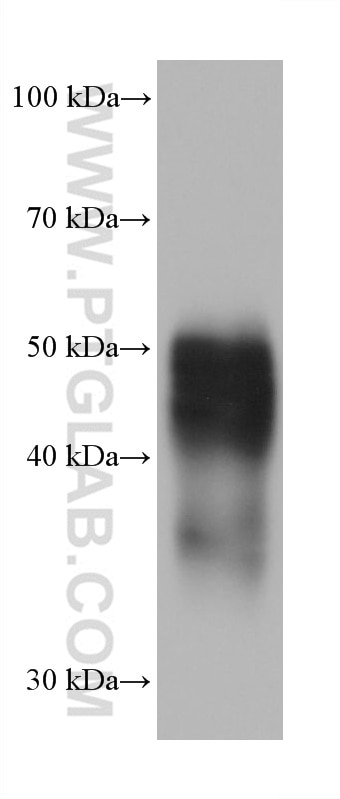
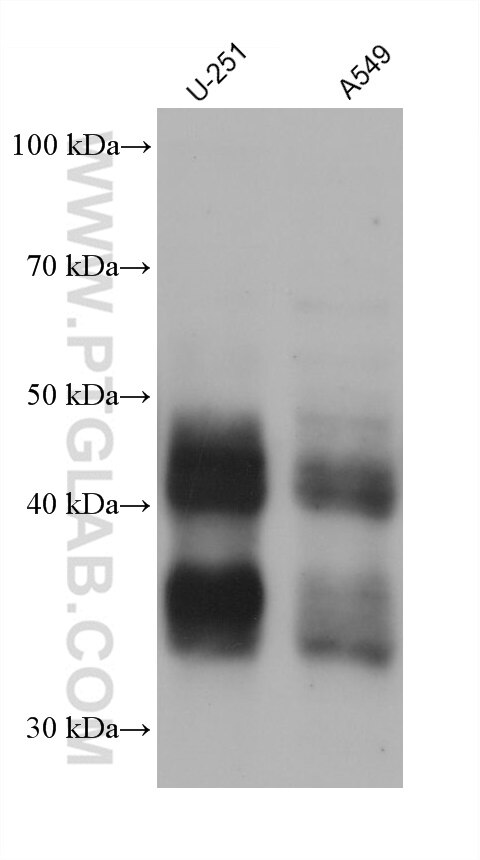
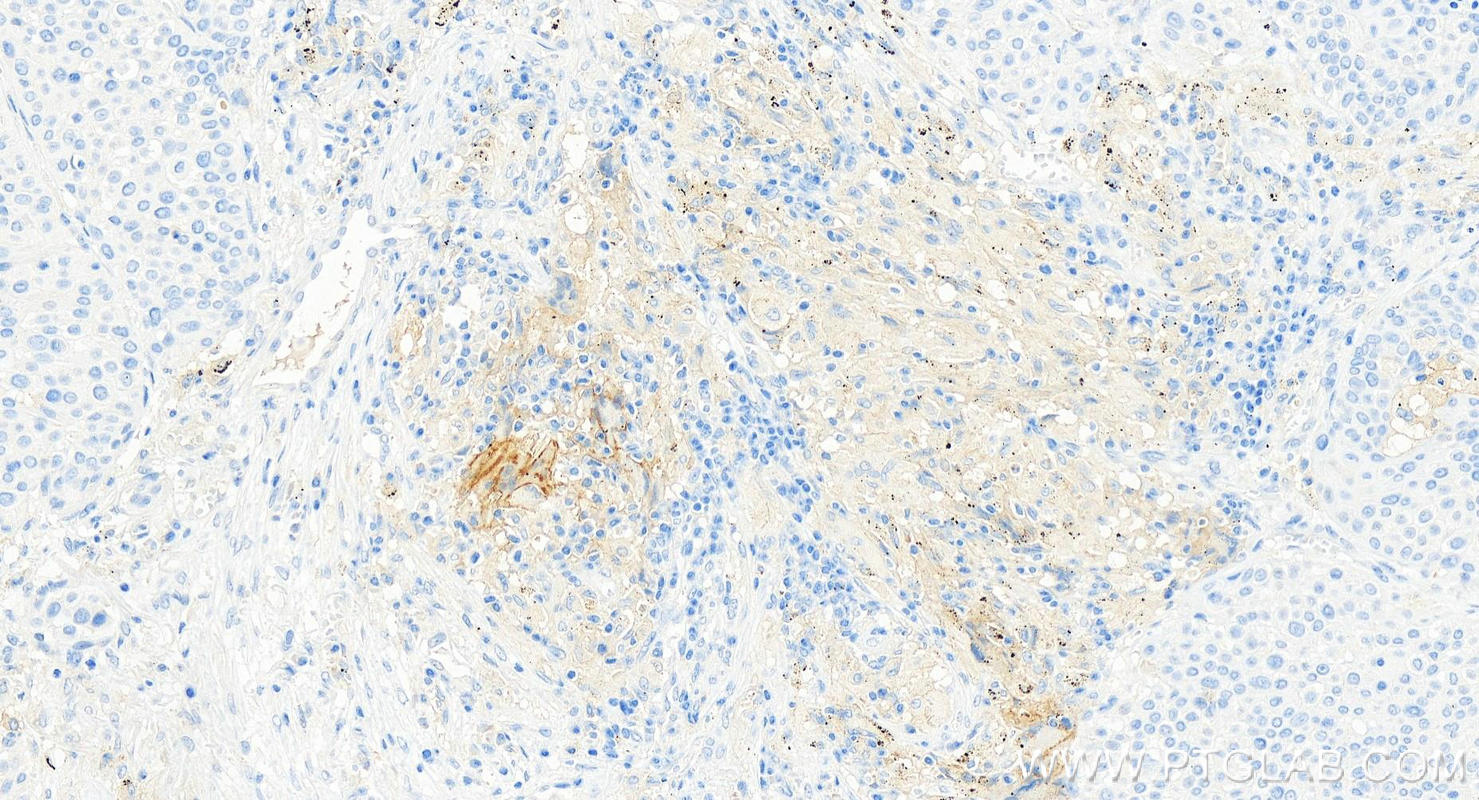
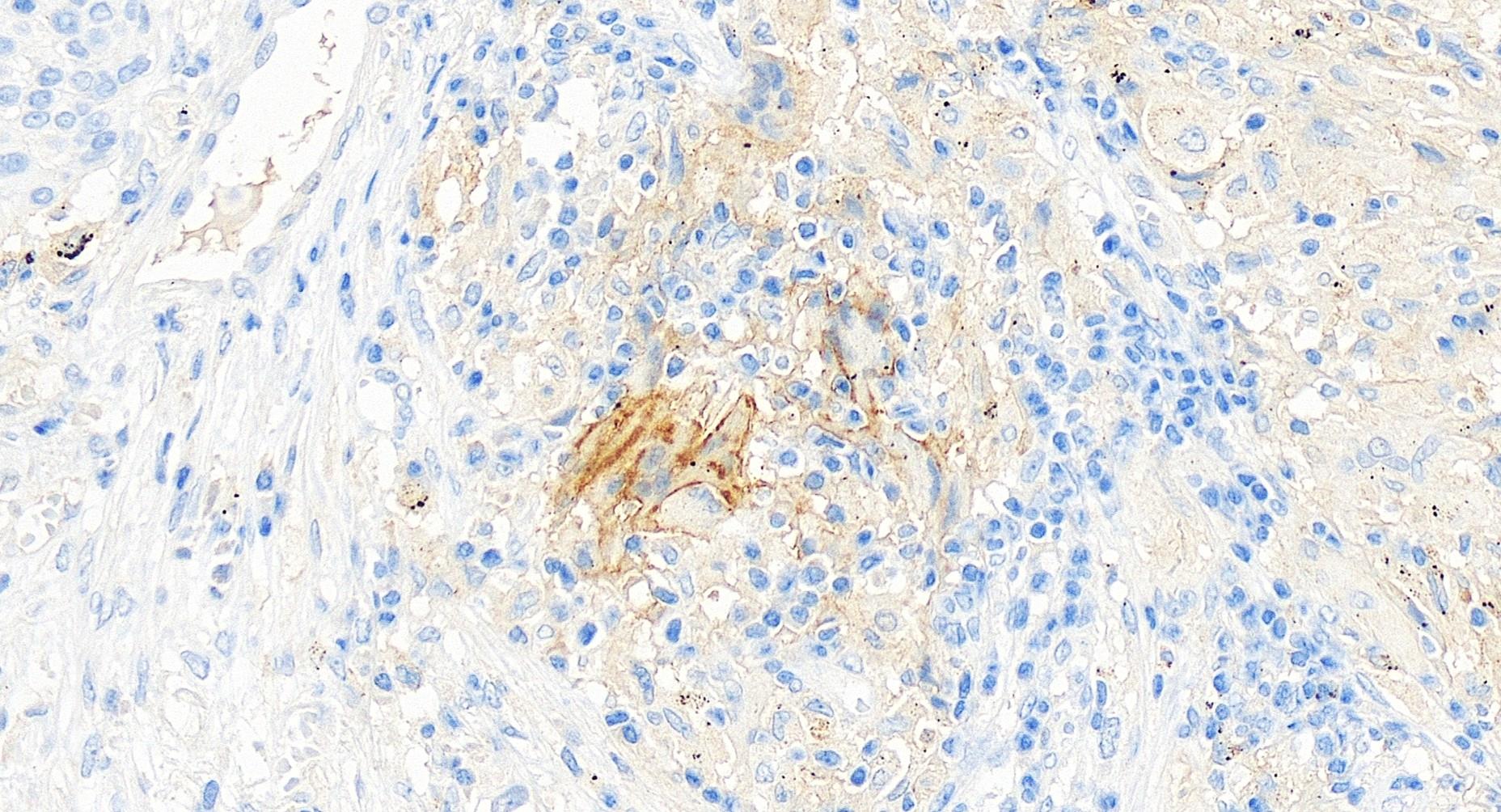
Informations sur le produit
68727-1-PBS cible uPAR/CD87 dans les applications de WB, IHC, Indirect ELISA et montre une réactivité avec des échantillons Humain
| Réactivité | Humain |
| Hôte / Isotype | Mouse / IgG2b |
| Clonalité | Monoclonal |
| Type | Anticorps |
| Immunogène | uPAR/CD87 Protéine recombinante Ag28056 |
| Nom complet | PLAUR |
| Masse moléculaire calculée | 37 kDa |
| Poids moléculaire observé | 35-50 kDa |
| Numéro d’acquisition GenBank | BC002788 |
| Symbole du gène | uPAR |
| Identification du gène (NCBI) | 5329 |
| Conjugaison | Non conjugué |
| Forme | Liquide |
| Méthode de purification | Purification par protéine A |
| Tampon de stockage | PBS only |
| Conditions de stockage | Store at -80°C. 20ul contiennent 0,1% de BSA. |
Informations générales
uPAR is a highly glycosylated, GPI-anchored membrane protein. In addition to the membrane-anchored form, uPAR is released from the plasma membrane by cleavage of the GPI anchor and can be found as a soluble form (suPAR). uPAR contains three homologous domains (D1-D3) of which the N-terminal one (D1) represents the uPA-binding domain. After binding to uPAR, uPA cleaves plasminogen, generating the active protease plasmin which is involved in a wide variety of physiologic and pathologic processes. In addition to regulating proteolysis, uPAR has important function in cell adhesion, migration and proliferation. Studies reveal that uPAR expression is elevated during inflammation and tissue remodeling and in many human cancers, in which it frequently indicates poor prognosis. (PMID 20027185; 12461559)


