

Tested Applications
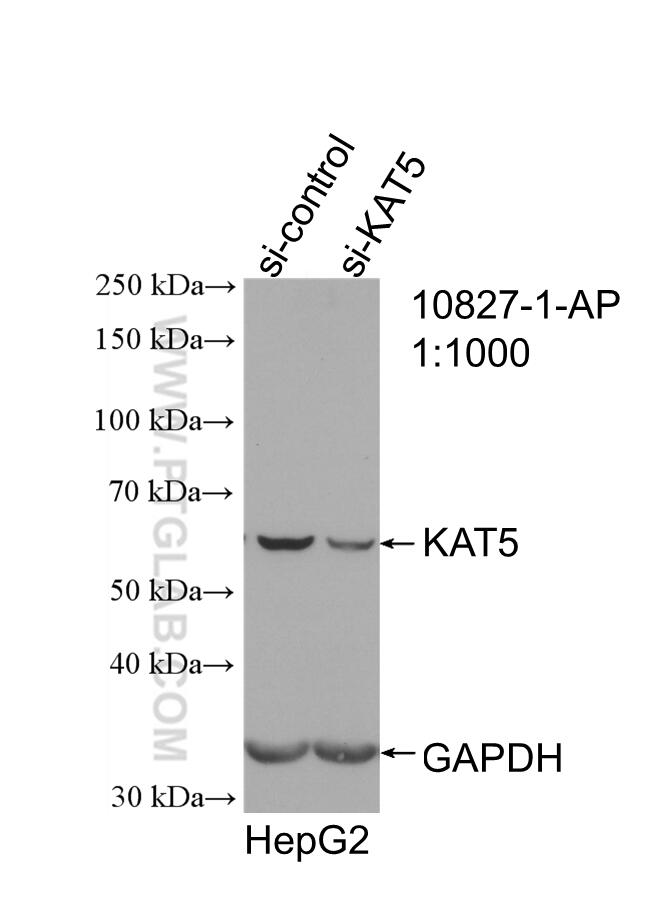
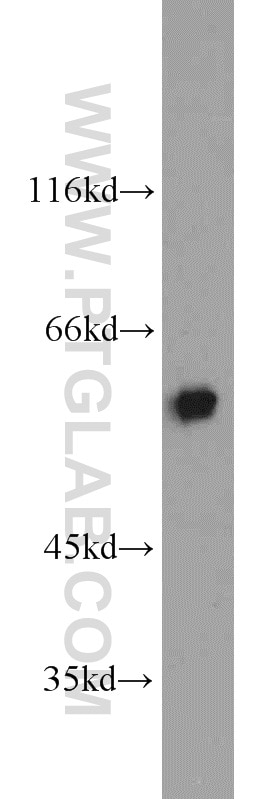
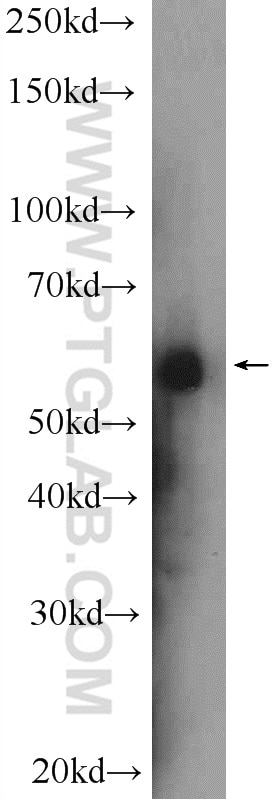
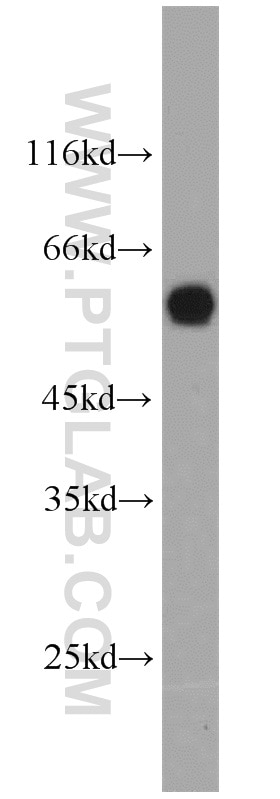
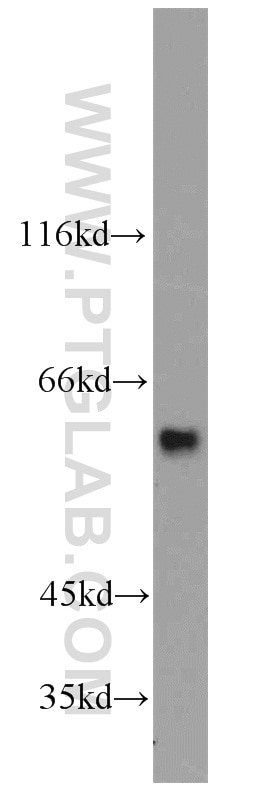
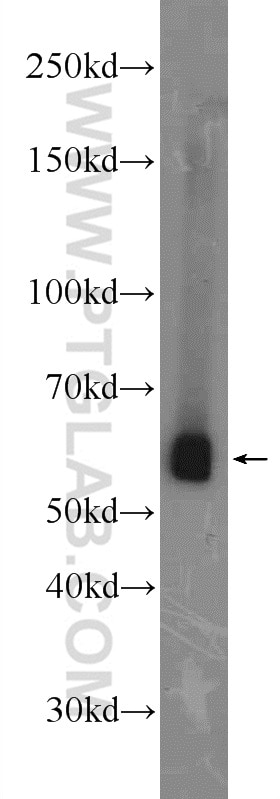
| Positive WB detected in | PC-3 cells, rat liver tissue, HepG2 cells, Jurkat cells, HeLa cells, mouse liver tissue |
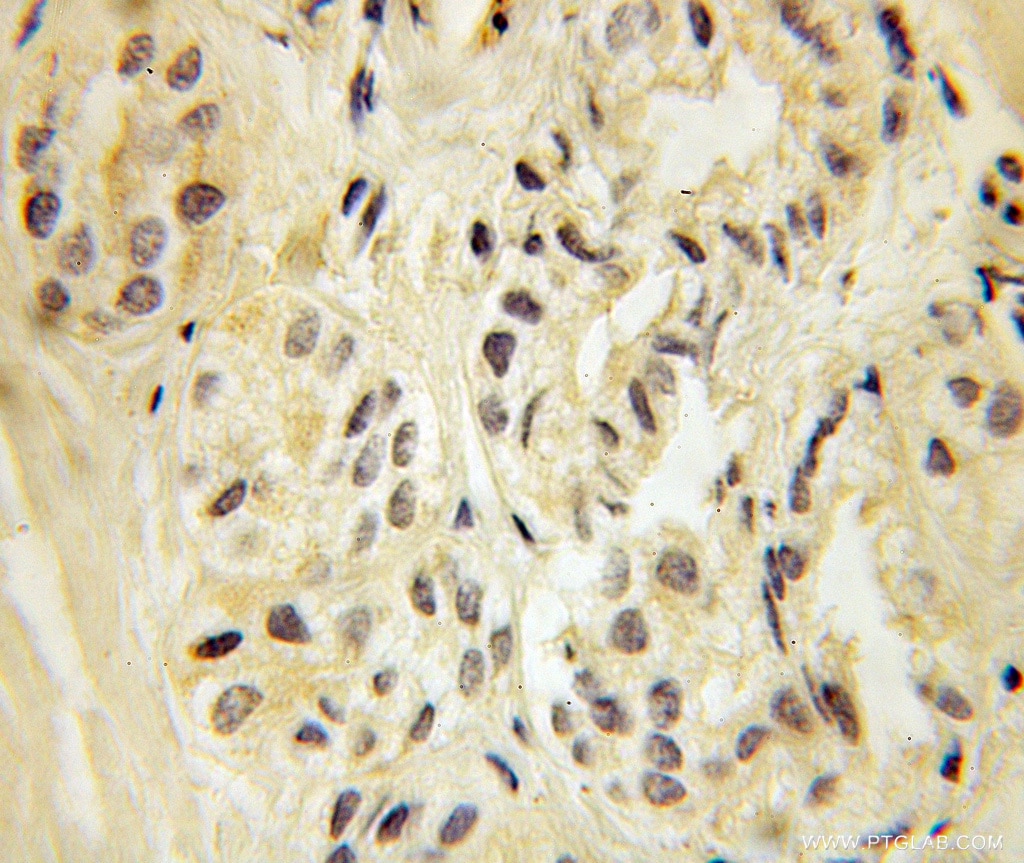
| Positive IHC detected in | human prostate cancer tissue Note: suggested antigen retrieval with TE buffer pH 9.0; (*) Alternatively, antigen retrieval may be performed with citrate buffer pH 6.0 |
Recommended dilution
| Application | Dilution |
|---|---|
| Western Blot (WB) | WB : 1:500-1:2000 |
| Immunohistochemistry (IHC) | IHC : 1:20-1:200 |
| It is recommended that this reagent should be titrated in each testing system to obtain optimal results. | |
| Sample-dependent, Check data in validation data gallery. | |
Product Information
10827-1-AP targets TIP60/KAT5 in WB, IHC, ELISA applications and shows reactivity with human, mouse, rat samples.
| Tested Reactivity | human, mouse, rat |
| Cited Reactivity | human, mouse, rat |
| Host / Isotype | Rabbit / IgG |
| Class | Polyclonal |
| Type | Antibody |
| Immunogen |
CatNo: Ag1261 Product name: Recombinant human KAT5 protein Source: e coli.-derived, PGEX-4T Tag: GST Domain: 101-457 aa of BC000166 Sequence: ATPVPSETAPASVFPQNGAARRAVAAQPGRKRKSNCLGTDEDSQDSSDGIPSAPRMTGSLVSDRSHDDIVTRMKNIECIELGRHRLKPWYFSPYPQELTTLPVLYLCEFCLKYGRSLKCLQRHLTKCDLRHPPGNEIYRKGTISFFEIDGRKNKSYSQNLCLLAKCFLDHKTLYYDTDPFLFYVMTEYDCKGFHIVGYFSKEKESTEDYNVACILTLPPYQRRGYGKLLIEFSYELSKVEGKTGTPEKPLSDLGLLSYRSYWSQTILEILMGLKSESGERPQITINEISEITSIKKEDVISTLQYLNLINYYKGQYILTLSEDIVDGHERAMLKRLLRIDSKCLHFTPKDWSKRGKW Predict reactive species |
| Full Name | K(lysine) acetyltransferase 5 |
| Calculated Molecular Weight | 60 kDa |
| Observed Molecular Weight | 58 kDa, 70 kDa |
| GenBank Accession Number | BC000166 |
| Gene Symbol | KAT5 |
| Gene ID (NCBI) | 10524 |
| RRID | AB_2128431 |
| Conjugate | Unconjugated |
| Form | Liquid |
| Purification Method | Antigen affinity purification |
| UNIPROT ID | Q92993 |
| Storage Buffer | PBS with 0.02% sodium azide and 50% glycerol, pH 7.3. |
| Storage Conditions | Store at -20°C. Stable for one year after shipment. Aliquoting is unnecessary for -20oC storage. 20ul sizes contain 0.1% BSA. |
Background Information
KAT5, also named as The histone acetyltransferase (HAT) Tat interactive protein 60 kD belongs to the MYST protein family that contains atypical zinc finger and histone acetyltransferase domains. Also, KAT5 contains a chromodomain. KAT5 is a catalytic subunit of the NuA4 histone acetyltransferase complex. The NuA4 HAT complex plays a role in transcriptional activation of select genes mainly by acetylation of nucleosomal histone H4 and H2A, which influence nucleosome-DNA interaction and promotes interaction of the modified histones with other proteins that could regulate transcription positively. This complex also involves in the activation of transcriptional programs associated with oncogene and proto-oncogene mediated growth induction, tumor suppressor mediated growth arrest and replicative senescence, DNA repair and apoptosis. KAT5 exists some isoforms with MV 53-60 kDa
Protocols
| Product Specific Protocols | |
|---|---|
| IHC protocol for TIP60/KAT5 antibody 10827-1-AP | Download protocol |
| WB protocol for TIP60/KAT5 antibody 10827-1-AP | Download protocol |
| Standard Protocols | |
|---|---|
| Click here to view our Standard Protocols |
Publications
What published studies show
The anti-KAT5 (TIP60) antibody (Cat# 10827-1-AP) has accumulated 45 citations in prestigious journals including Nature, Cell, Nature Communications, Molecular Cell, Science Advances, Current Biology, EMBO Reports, Cell Research, and Science Translational Medicine. Associated research fields encompass epigenetics and post-translational modifications (acetylation, lactylation, crotonylation), oncology (glioblastoma, melanoma, colorectal and breast cancer), neurodegeneration (Alzheimer's, Parkinson's, stroke), immunology, cellular metabolism, reproductive biology, and DNA damage repair, demonstrating its broad applicability in chromatin and histone modification studies.
| Species | Application | Title |
|---|---|---|
Cell Dual-specificity RNA aptamers enable manipulation of target-specific O-GlcNAcylation and unveil functions of O-GlcNAc on β-catenin | ||
Cell Res Low glucose metabolite 3-phosphoglycerate switches PHGDH from serine synthesis to p53 activation to control cell fate | ||
Nat Immunol The transcriptional coactivator TAZ regulates reciprocal differentiation of TH17 cells and Treg cells. | ||
Nat Commun Kat5 deficiency in alveolar type II cells licenses STAT6-driven glycolytic reprogramming and pulmonary fibrosis. |








