

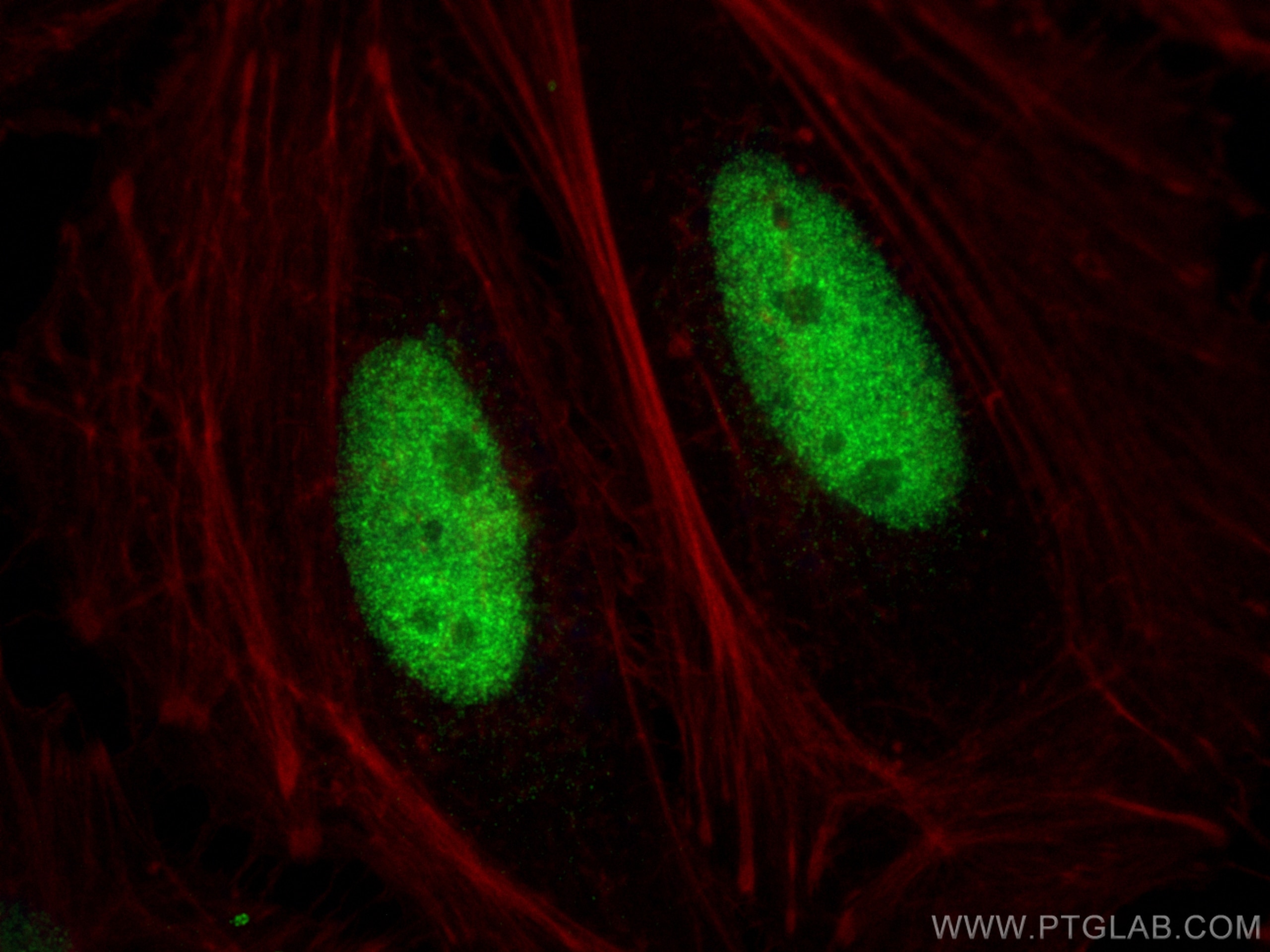

Tested Applications
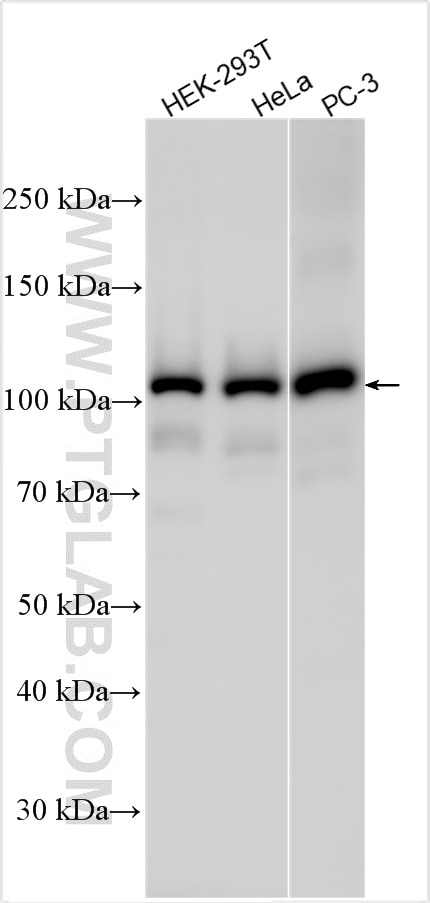
| Positive WB detected in | HEK-293T cells, HeLa cells, PC-3 cells, HepG2 cells |
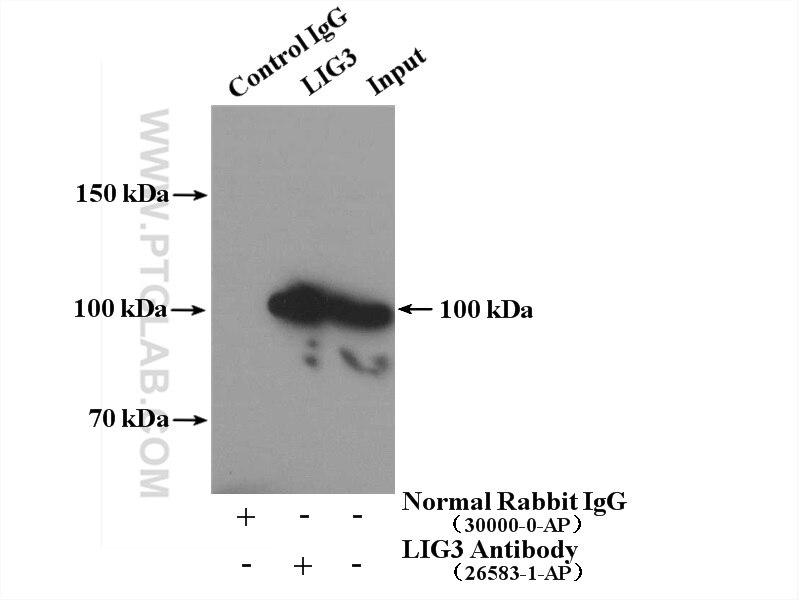
| Positive IP detected in | HEK-293T cells |
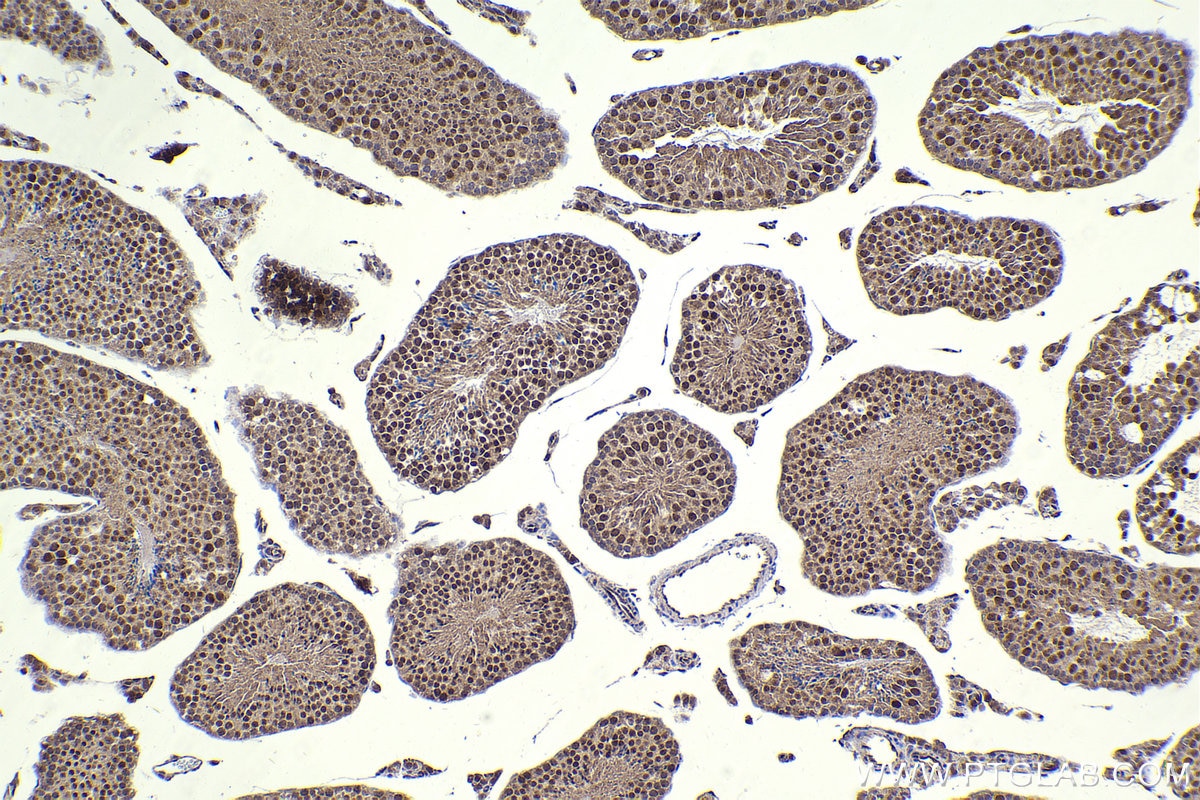
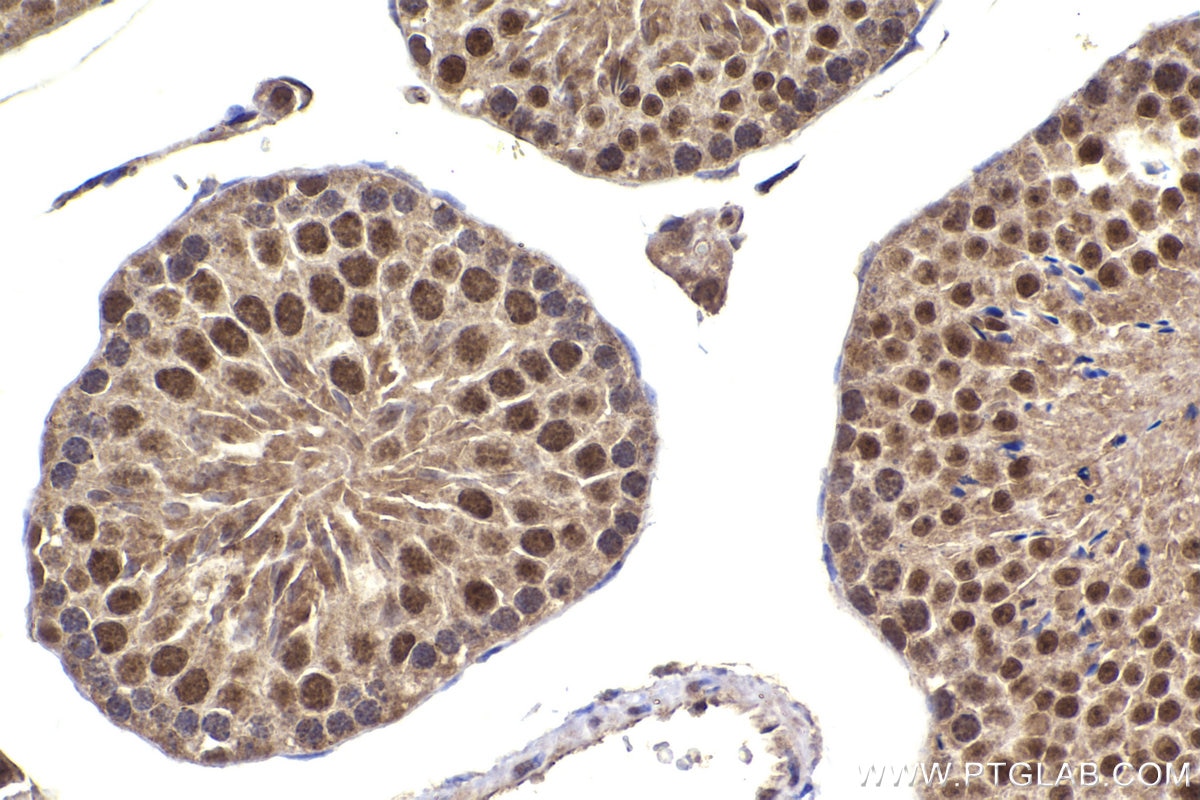
| Positive IHC detected in | mouse testis tissue Note: suggested antigen retrieval with TE buffer pH 9.0; (*) Alternatively, antigen retrieval may be performed with citrate buffer pH 6.0 |
| Positive IF/ICC detected in | HeLa cells |
Recommended dilution
| Application | Dilution |
|---|---|
| Western Blot (WB) | WB : 1:5000-1:50000 |
| Immunoprecipitation (IP) | IP : 0.5-4.0 ug for 1.0-3.0 mg of total protein lysate |
| Immunohistochemistry (IHC) | IHC : 1:250-1:1000 |
| Immunofluorescence (IF)/ICC | IF/ICC : 1:400-1:1600 |
| It is recommended that this reagent should be titrated in each testing system to obtain optimal results. | |
| Sample-dependent, Check data in validation data gallery. | |
Product Information
26583-1-AP targets DNA ligase III/LIG3 in WB, IHC, IF/ICC, IP, ELISA applications and shows reactivity with human, mouse samples.
| Tested Reactivity | human, mouse |
| Cited Reactivity | human, mouse, pig |
| Host / Isotype | Rabbit / IgG |
| Class | Polyclonal |
| Type | Antibody |
| Immunogen |
CatNo: Ag24998 Product name: Recombinant human LIG3 protein Source: e coli.-derived, PET30a Tag: 6*His Domain: 254-390 aa of BC068005 Sequence: CDPRHKDCLLREFRKLCAMVADNPSYNTKTQIIQDFLRKGSAGDGFHGDVYLTVKLLLPGVIKTVYNLNDKQIVKLFSRIFNCNPDDMARDLEQGDVSETIRVFFEQSKSFPPAAKSLLTIQEVDEFLLRLSKLTKE Predict reactive species |
| Full Name | ligase III, DNA, ATP-dependent |
| Calculated Molecular Weight | 100-110 kDa |
| Observed Molecular Weight | 100 kDa |
| GenBank Accession Number | BC068005 |
| Gene Symbol | LIG3 |
| Gene ID (NCBI) | 3980 |
| RRID | AB_2880562 |
| Conjugate | Unconjugated |
| Form | Liquid |
| Purification Method | Antigen affinity purification |
| UNIPROT ID | P49916 |
| Storage Buffer | PBS with 0.02% sodium azide and 50% glycerol, pH 7.3. |
| Storage Conditions | Store at -20°C. Stable for one year after shipment. Aliquoting is unnecessary for -20oC storage. 20ul sizes contain 0.1% BSA. |
Background Information
DNA ligase III(DNA ligase 3) is an enzyme that in humans is encoded by the LIG3 gene. The human LIG3 gene encodes ATP-dependent DNA ligases that seal interruptions in the phosphodiester backbone of duplex DNA. There are three families of ATP-dependent DNA ligases in eukaryotes. These enzymes utilize the same three step reaction mechanism; 1 formation of a covalent enzyme-adenylate intermediate; 2 transfer of the adenylate group to the 5' phosphate terminus of a DNA nick; 3 phosphodiester bond formation. Unlike LIG1 and LIG4 family members that are found in almost all eukaryotes, LIG3 family members are less widely distributed. The LIG3 gene encodes several distinct DNA ligase species by alternative translation initiation and alternative splicing mechanisms.
Protocols
| Product Specific Protocols | |
|---|---|
| IF protocol for DNA ligase III/LIG3 antibody 26583-1-AP | Download protocol |
| IHC protocol for DNA ligase III/LIG3 antibody 26583-1-AP | Download protocol |
| IP protocol for DNA ligase III/LIG3 antibody 26583-1-AP | Download protocol |
| WB protocol for DNA ligase III/LIG3 antibody 26583-1-AP | Download protocol |
| Standard Protocols | |
|---|---|
| Click here to view our Standard Protocols |
Publications
What published studies show
The 26583-1-AP DNA ligase III/LIG3 Polyclonal antibody has 12 citations. They appear in Nature, Molecular Cell, Brain, Clinical and Translational Medicine, Journal of Cellular and Molecular Medicine, International Journal of Biochemistry and Cell Biology, Journal of Alzheimer's Disease Reports, DNA and Cell Biology, and bioRxiv. Research fields span DNA repair (alt-EJ, mismatch repair, microhomology-mediated end joining), retrotransposon biology, mitochondrial neurogastrointestinal encephalomyopathy, cancer (ovarian, breast, leukemia), CRISPR/Cas9 gene editing, and Alzheimer's disease. Most applications were Western blot, with one immunofluorescence study.
| Species | Application | Title |
|---|---|---|
Nature Retrotransposons hijack alt-EJ for DNA replication and eccDNA biogenesis
| ||
Mol Cell Microhomology-mediated end joining acts directly on replication forks to repair single-ended double-strand breaks. | ||
Brain Biallelic variants in LIG3 cause a novel mitochondrial neurogastrointestinal encephalomyopathy. | ||
Clin Transl Med Extrachromosomal circular DNA expressing miRNA promotes ovarian cancer progression.
| ||
J Cell Mol Med Berberine Sensitises Breast Cancer Cells to Radiation via the Attenuation of DNA Ligase III |
Reviews
What customers say
Able is busy answering your previous question. Please try again later.
The reviews below have been submitted by verified Proteintech customers who received an incentive for providing their feedback.
MANOHAR (Verified Customer) (12-11-2019) | No nonspecific binding
|







