
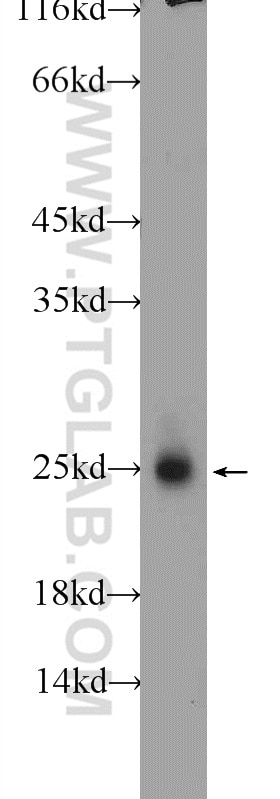
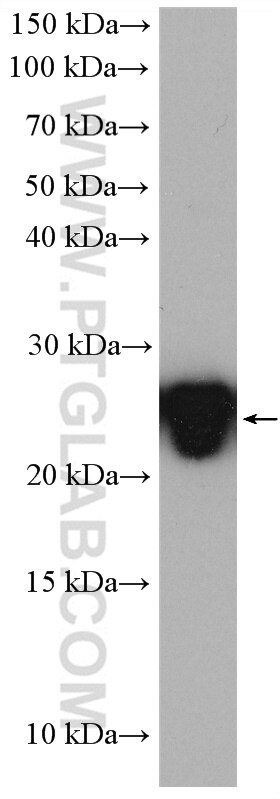
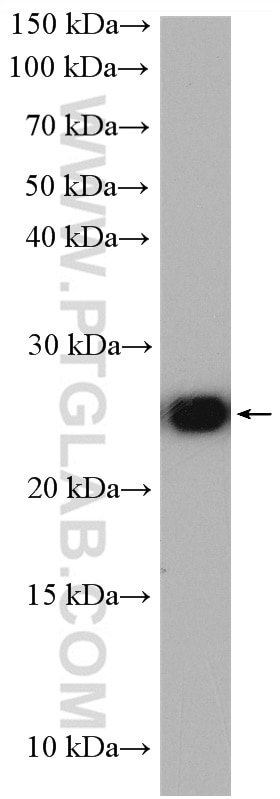
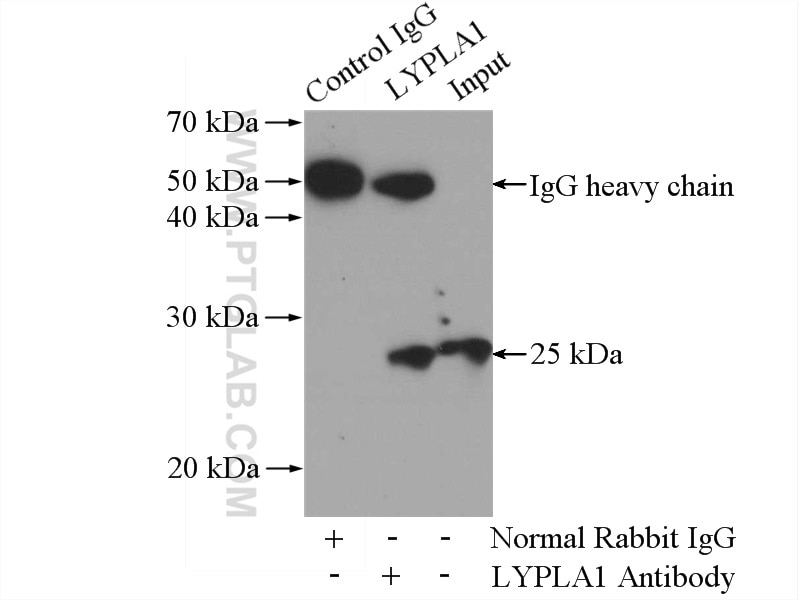

Tested Applications
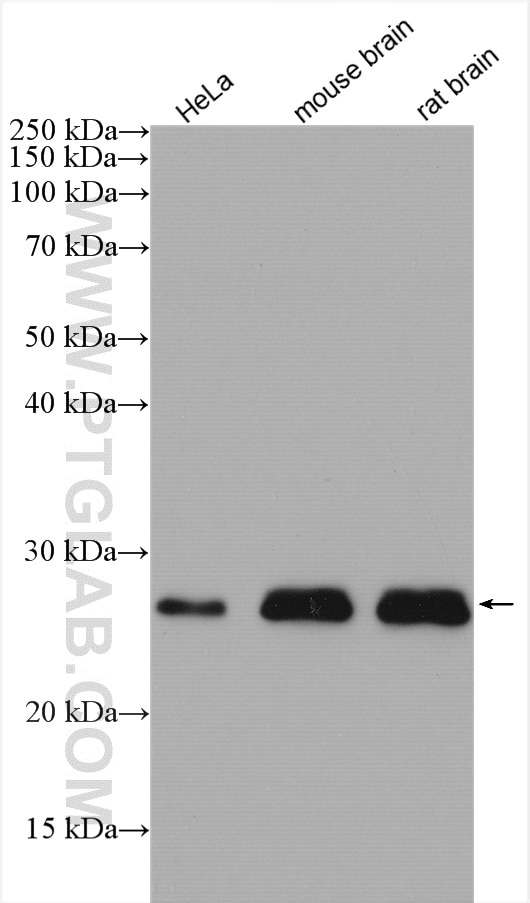
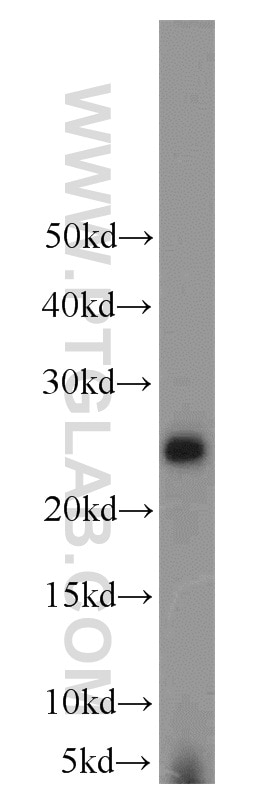
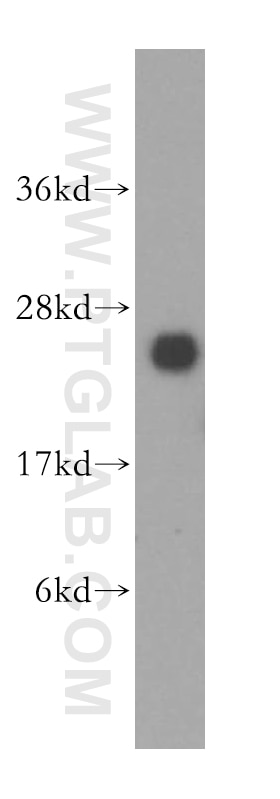
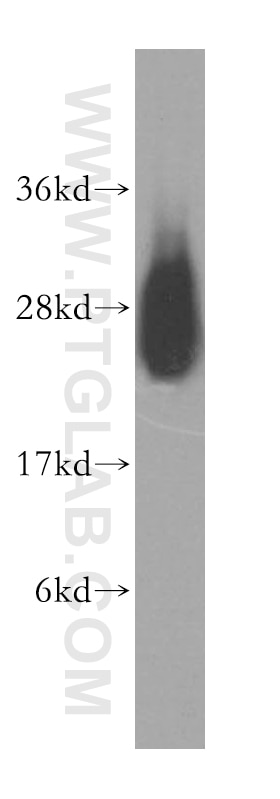
| Positive WB detected in | HeLa cells, mouse brain tissue, human brain tissue, human liver tissue, rat liver tissue, rat brain tissue |
| Positive IP detected in | mouse brain tissue |
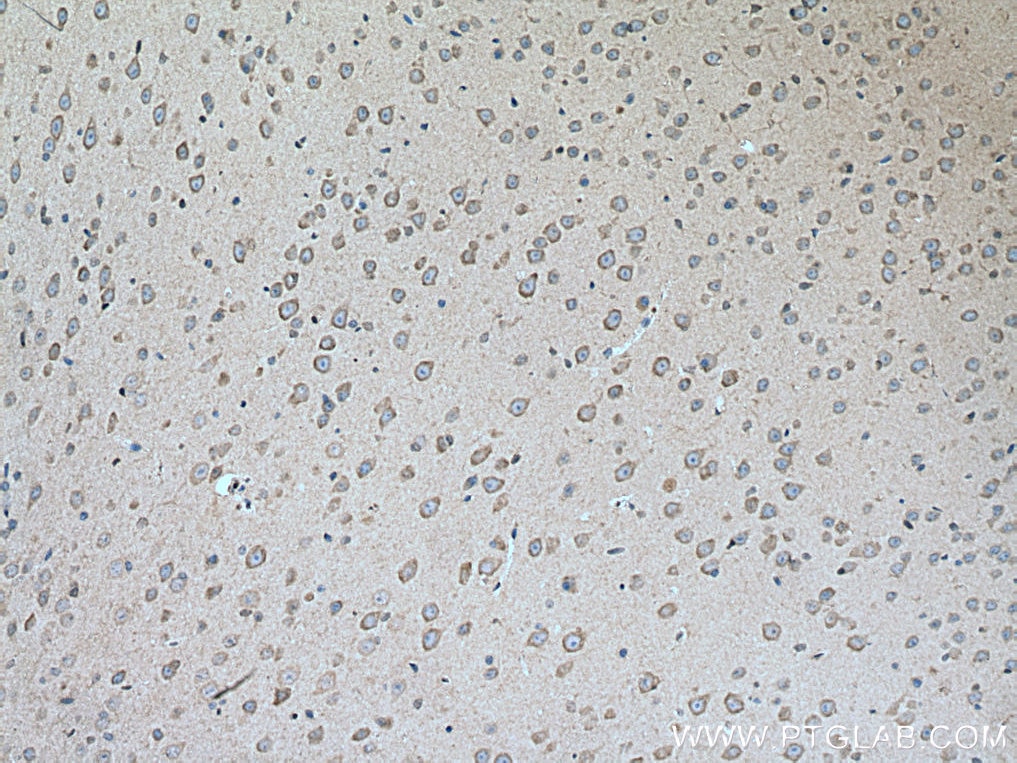
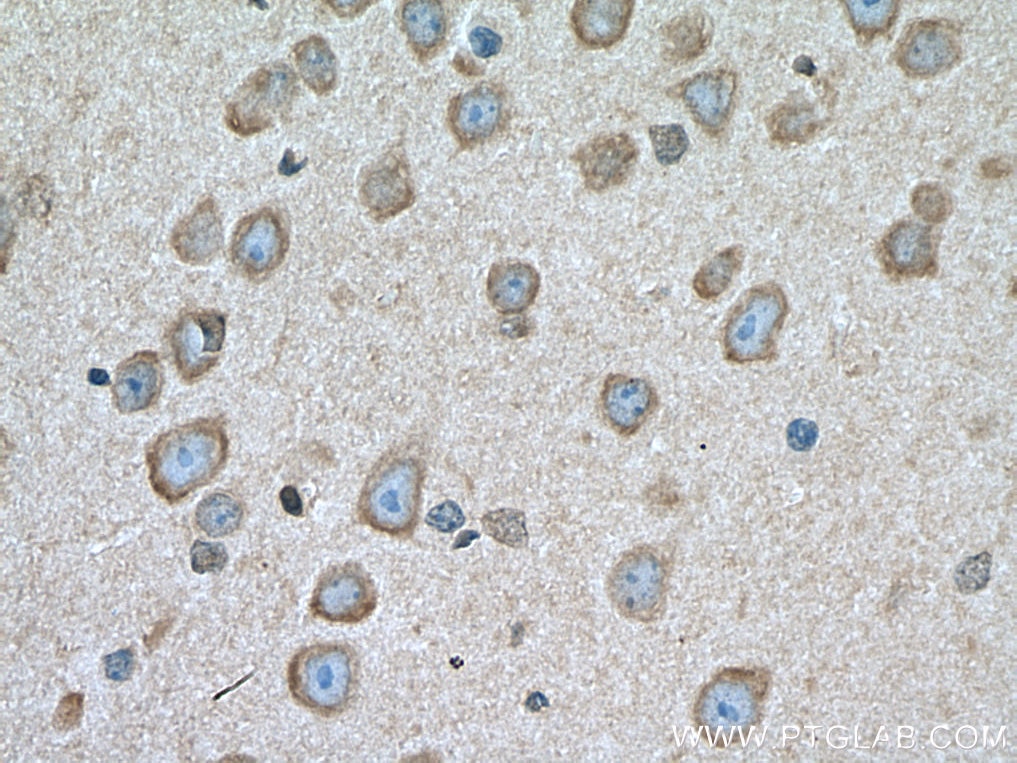
| Positive IHC detected in | mouse brain tissue Note: suggested antigen retrieval with TE buffer pH 9.0; (*) Alternatively, antigen retrieval may be performed with citrate buffer pH 6.0 |
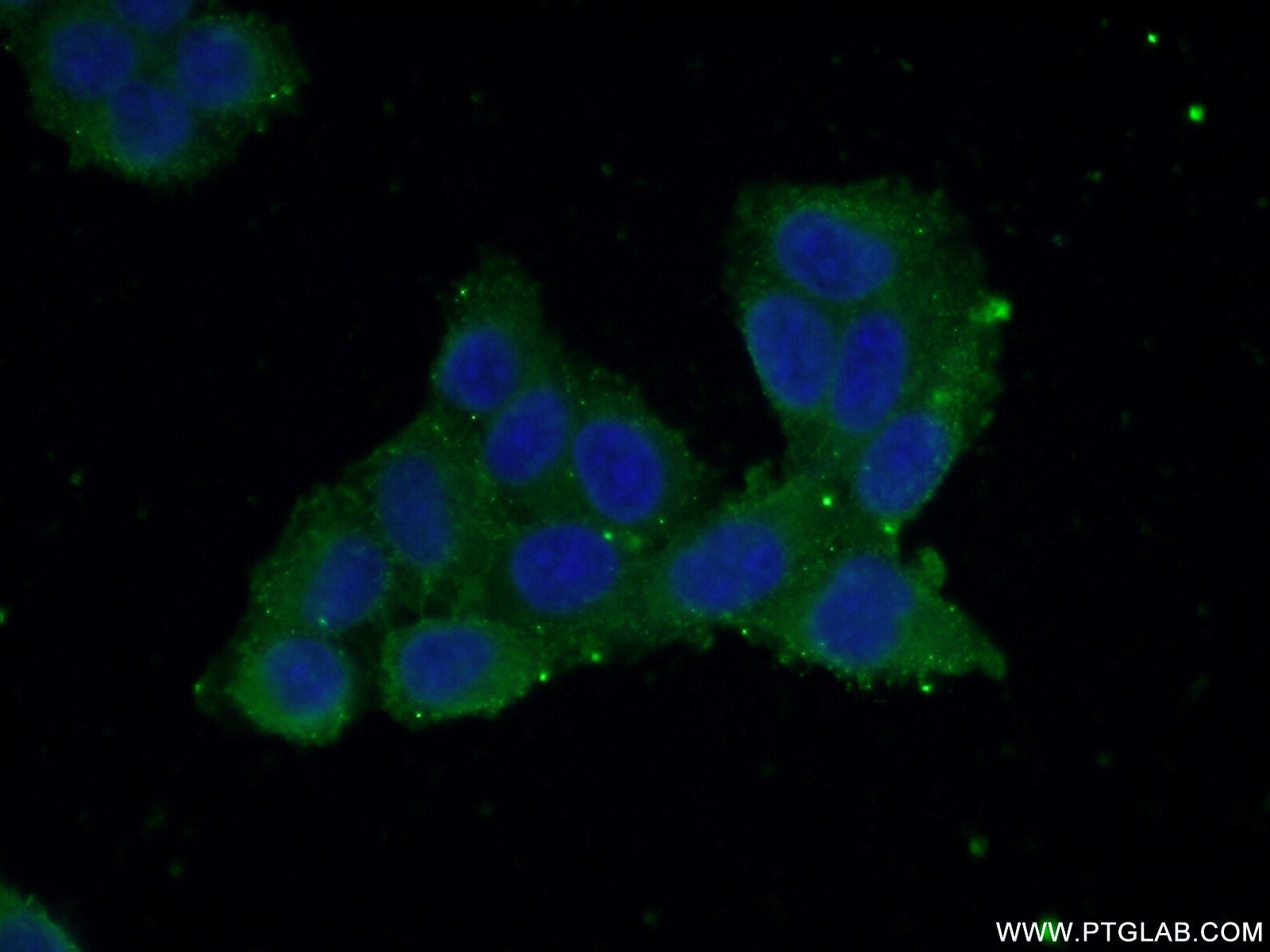
| Positive IF/ICC detected in | HeLa cells |
Recommended dilution
| Application | Dilution |
|---|---|
| Western Blot (WB) | WB : 1:1000-1:4000 |
| Immunoprecipitation (IP) | IP : 0.5-4.0 ug for 1.0-3.0 mg of total protein lysate |
| Immunohistochemistry (IHC) | IHC : 1:50-1:500 |
| Immunofluorescence (IF)/ICC | IF/ICC : 1:50-1:500 |
| It is recommended that this reagent should be titrated in each testing system to obtain optimal results. | |
| Sample-dependent, Check data in validation data gallery. | |
Product Information
16055-1-AP targets LYPLA1 in WB, IHC, IF/ICC, IP, ELISA applications and shows reactivity with human, mouse, rat samples.
| Tested Reactivity | human, mouse, rat |
| Cited Reactivity | human, mouse |
| Host / Isotype | Rabbit / IgG |
| Class | Polyclonal |
| Type | Antibody |
| Immunogen |
CatNo: Ag9022 Product name: Recombinant human LYPLA1 protein Source: e coli.-derived, PGEX-4T Tag: GST Domain: 1-230 aa of BC010397 Sequence: MCGNNMSTPLPAIVPAARKATAAVIFLHGLGDTGHGWAEAFAGIRSSHIKYICPHAPVRPVTLNMNVAMPSWFDIIGLSPDSQEDESGIKQAAENIKALIDQEVKNGIPSNRIILGGFSQGGALSLYTALTTQQKLAGVTALSCWLPLRASFPQGPIGGANRDISILQCHGDCDPLVPLMFGSLTVEKLKTLVNPANVTFKTYEGMMHSSCQQEMMDVKQFIDKLLPPID Predict reactive species |
| Full Name | lysophospholipase I |
| Calculated Molecular Weight | 230 aa, 25 kDa |
| Observed Molecular Weight | 25 kDa |
| GenBank Accession Number | BC010397 |
| Gene Symbol | LYPLA1 |
| Gene ID (NCBI) | 10434 |
| RRID | AB_2234851 |
| Conjugate | Unconjugated |
| Form | Liquid |
| Purification Method | Antigen affinity purification |
| UNIPROT ID | O75608 |
| Storage Buffer | PBS with 0.02% sodium azide and 50% glycerol, pH 7.3. |
| Storage Conditions | Store at -20°C. Stable for one year after shipment. Aliquoting is unnecessary for -20oC storage. 20ul sizes contain 0.1% BSA. |
Background Information
LYPLA1(Lysophospholipase 1) is also named as APT1(Acyl-protein thioesterase 1), LPL1 and belongs to the AB hydrolase 2 family. It is an important enzyme responsible for depalmitoylation of palmitoyl proteins and works as a thioesterase that cleaves the S-palmitoyl group of H-Ras, heterotrimeric G protein alfa subunit (Ga) , regulator of G protein signaling 4 (RGS4) and the endothelial isoform of nitric oxide synthase (eNOS) in vitro(PMID:19439193).
Protocols
| Product Specific Protocols | |
|---|---|
| IHC protocol for LYPLA1 antibody 16055-1-AP | Download protocol |
| IP protocol for LYPLA1 antibody 16055-1-AP | Download protocol |
| WB protocol for LYPLA1 antibody 16055-1-AP | Download protocol |
| IF protocol for LYPLA1 antibody 16055-1-AP | Download protocol |
| Standard Protocols | |
|---|---|
| Click here to view our Standard Protocols |
Publications
What published studies show
The APT (Acyl Protein Thioesterase) affinity purification reagent (Cat# 16055-1-AP) has 14 citations published in journals including Nature, Autophagy, EMBO Reports, Cell Reports, International Journal of Biological Sciences, Journal of Translational Medicine, Molecular Brain, Experimental Neurology, European Journal of Pharmacology, Reproductive Sciences, Lipids, Drug Metabolism and Disposition, Ecotoxicology and Environmental Safety, and PLoS ONE. Research fields span S-palmitoylation/depalmitoylation, lipid metabolism, neurobiology, inflammation, cancer, diabetes, and drug metabolism.
| Species | Application | Title |
|---|---|---|
Autophagy Hypoxia-induced GPCPD1 depalmitoylation triggers mitophagy via regulating PRKN-mediated ubiquitination of VDAC1 | ||
Int J Biol Sci APT1-derived depalmitoylation of CD36 alleviates diabetes-induced lipotoxicity in podocytes | ||
J Transl Med Identifying prognostic markers in spatially heterogeneous breast cancer microenvironment | ||
Ecotoxicol Environ Saf PM2.5 promoted lipid accumulation in macrophage via inhibiting JAK2/STAT3 signaling pathways and aggravating the inflammatory reaction. | ||












