
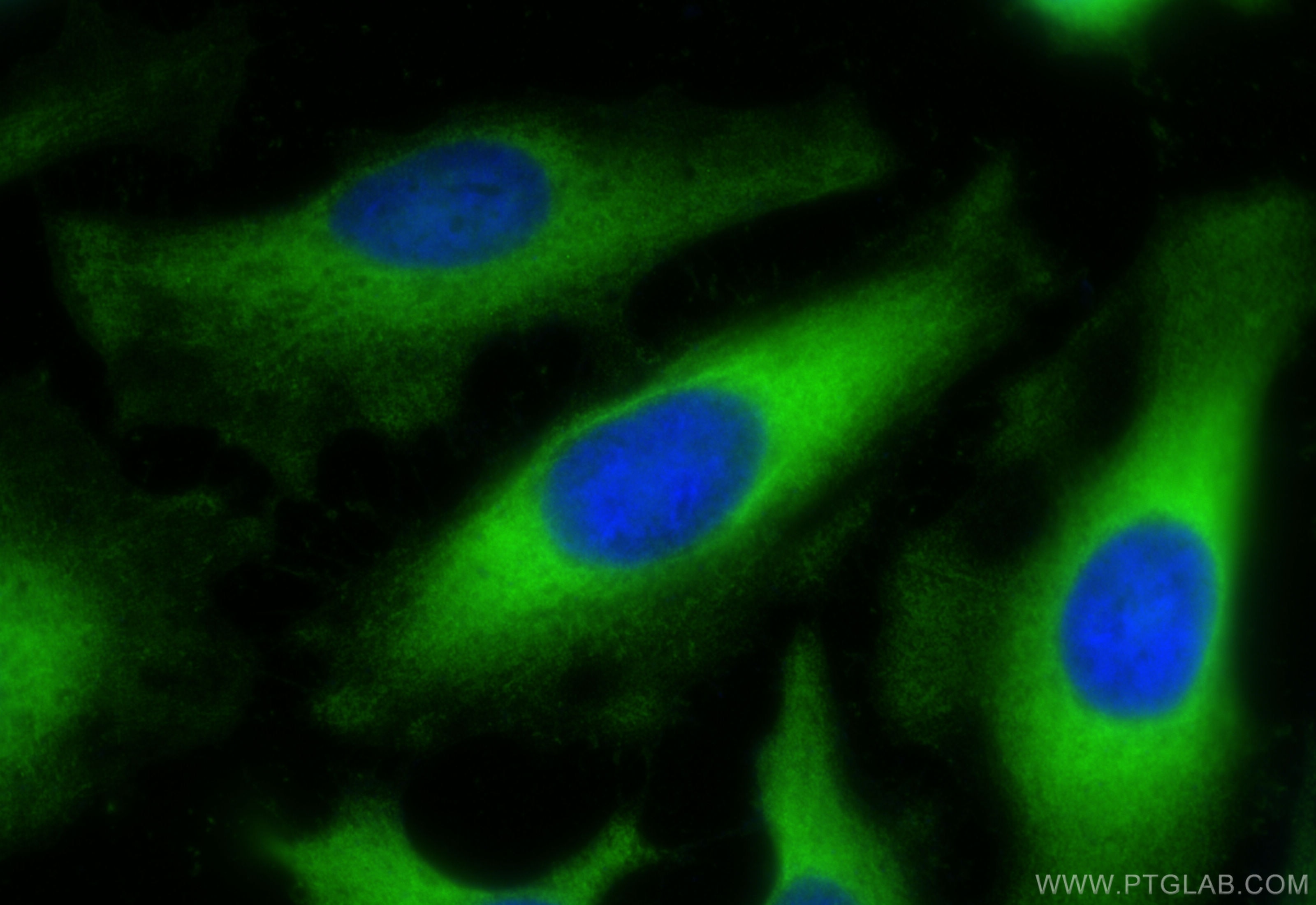
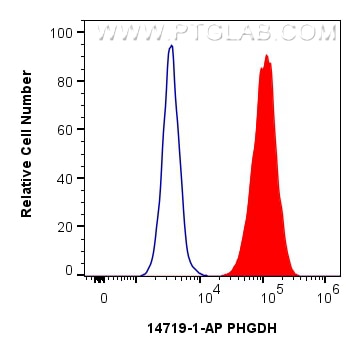

Tested Applications
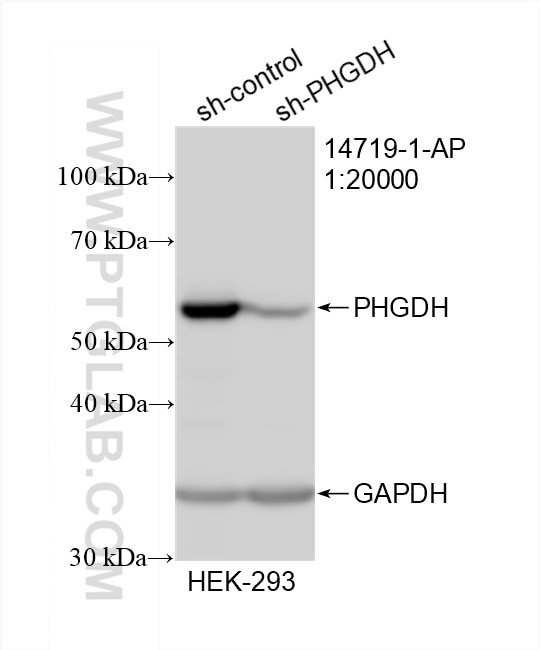
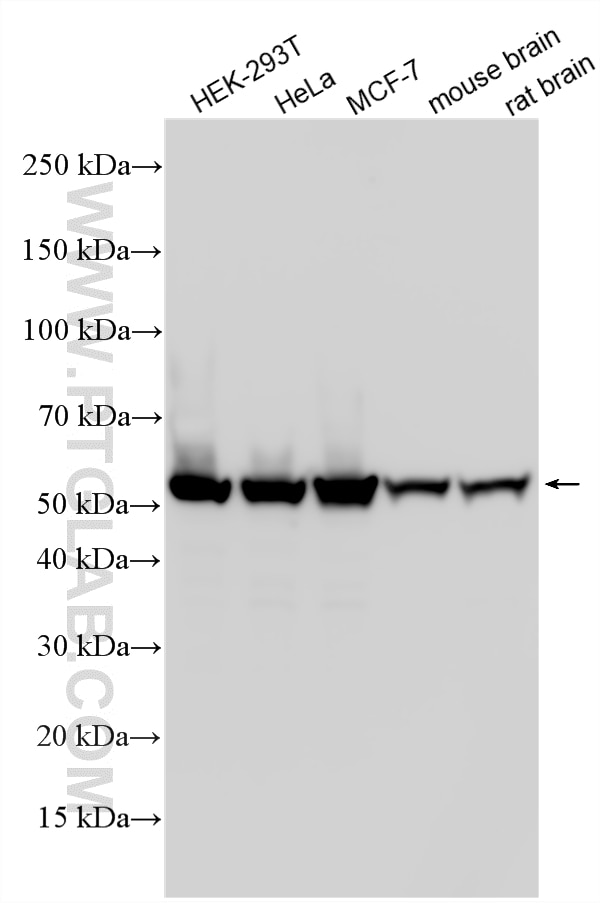
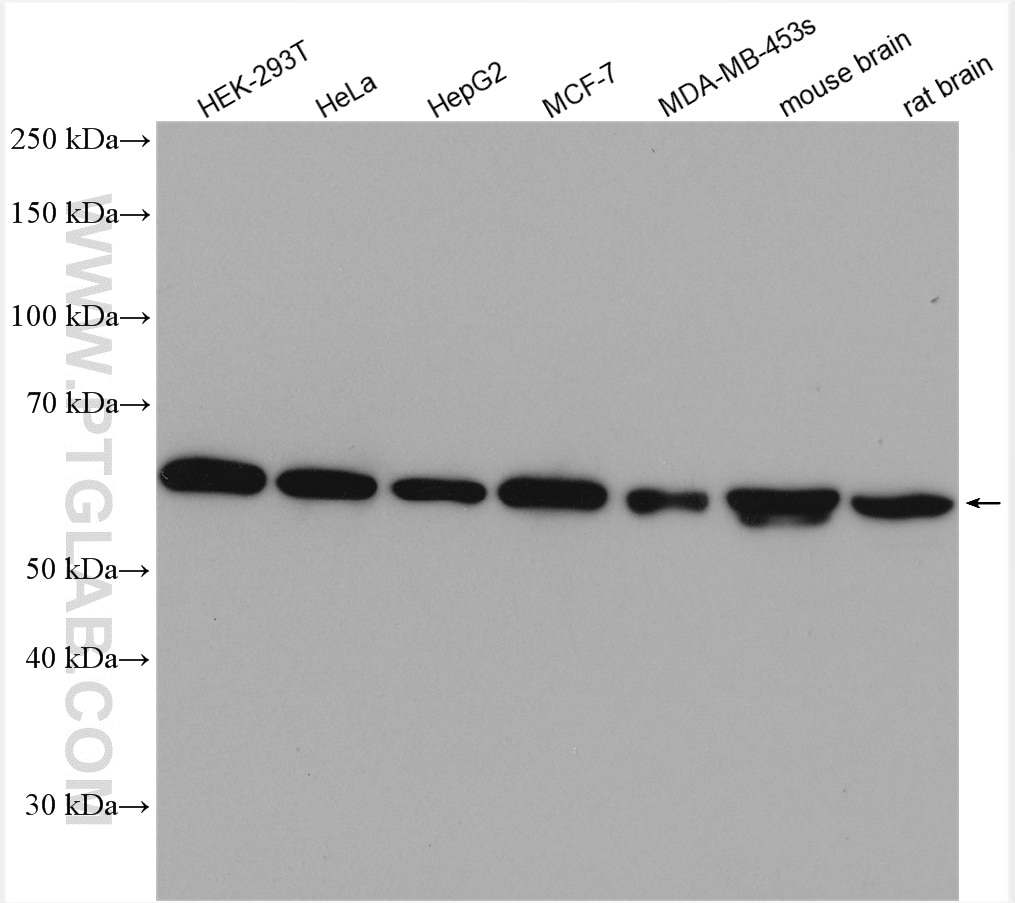
| Positive WB detected in | HEK-293T cells, HEK-293 cells, HeLa cells, MCF-7 cells, mouse brain tissue, rat brain tissue, HepG2 cells, MDA-MB-453s cells |
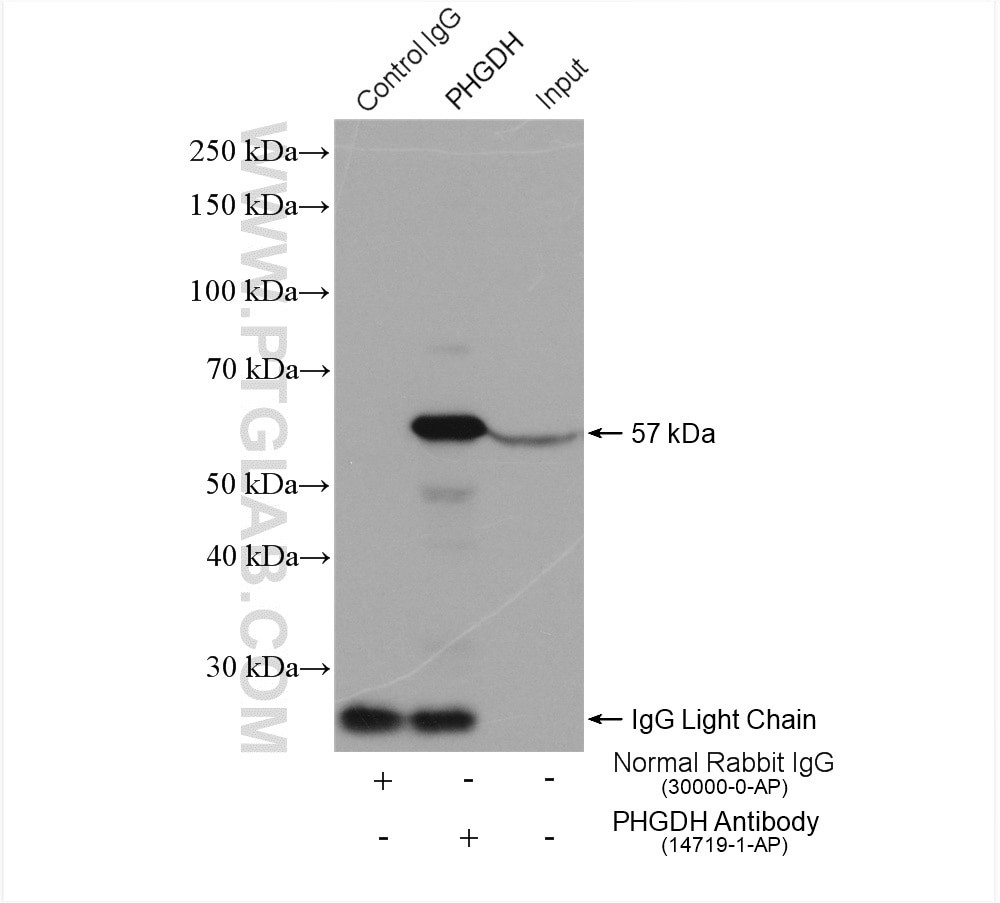
| Positive IP detected in | HeLa cells |
| Positive IF/ICC detected in | HeLa cells |
| Positive FC (Intra) detected in | HeLa cells |
Recommended dilution
| Application | Dilution |
|---|---|
| Western Blot (WB) | WB : 1:5000-1:50000 |
| Immunoprecipitation (IP) | IP : 0.5-4.0 ug for 1.0-3.0 mg of total protein lysate |
| Immunofluorescence (IF)/ICC | IF/ICC : 1:200-1:800 |
| Flow Cytometry (FC) (INTRA) | FC (INTRA) : 0.25 ug per 10^6 cells in a 100 µl suspension |
| It is recommended that this reagent should be titrated in each testing system to obtain optimal results. | |
| Sample-dependent, Check data in validation data gallery. | |
Product Information
14719-1-AP targets PHGDH in WB, IHC, IF/ICC, FC (Intra), IP, CoIP, ChIP, RIP, ELISA applications and shows reactivity with human, mouse, rat samples.
| Tested Reactivity | human, mouse, rat |
| Cited Reactivity | human, mouse, rat |
| Host / Isotype | Rabbit / IgG |
| Class | Polyclonal |
| Type | Antibody |
| Immunogen |
CatNo: Ag6445 Product name: Recombinant human PHGDH protein Source: e coli.-derived, PGEX-4T Tag: GST Domain: 186-533 aa of BC000303 Sequence: FGVQQLPLEEIWPLCDFITVHTPLLPSTTGLLNDNTFAQCKKGVRVVNCARGGIVDEGALLRALQSGQCAGAALDVFTEEPPRDRALVDHENVISCPHLGASTKEAQSRCGEEIAVQFVDMVKGKSLTGVVNAQALTSAFSPHTKPWIGLAEALGTLMRAWAGSPKGTIQVITQGTSLKNAGNCLSPAVIVGLLKEASKQADVNLVNAKLLVKEAGLNVTTSHSPAAPGEQGFGECLLAVALAGAPYQAVGLVQGTTPVLQGLNGAVFRPEVPLRRDLPLLLFRTQTSDPAMLPTMIGLLAEAGVRLLSYQTSLVSDGETWHVMGISSLLPSLEAWKQHVTEAFQFHF Predict reactive species |
| Full Name | phosphoglycerate dehydrogenase |
| Calculated Molecular Weight | 57 kDa |
| Observed Molecular Weight | 57 kDa |
| GenBank Accession Number | BC000303 |
| Gene Symbol | PHGDH |
| Gene ID (NCBI) | 26227 |
| RRID | AB_2283938 |
| Conjugate | Unconjugated |
| Form | Liquid |
| Purification Method | Antigen affinity purification |
| UNIPROT ID | O43175 |
| Storage Buffer | PBS with 0.02% sodium azide and 50% glycerol, pH 7.3. |
| Storage Conditions | Store at -20°C. Stable for one year after shipment. Aliquoting is unnecessary for -20oC storage. 20ul sizes contain 0.1% BSA. |
Background Information
PHGDH(D-3-phosphoglycerate dehydrogenase) is also named as 3-PGDH, PGDH3 and belongs to the D-isomer specific 2-hydroxyacid dehydrogenase family. It catalyzes the transition of 3-phosphoglycerate into 3-phosphohydroxypyruvate, which is the first and rate-limiting step in the phosphorylated pathway of serine biosynthesis, using NAD+/NADH as a cofactor. 3-PGDH deficiency is a rare recessive inborn error in the biosynthesis of the amino acid L-serine characterized clinically by congenital microcephaly, psychomotor retardation, and intractable seizures(PMID:19235232 ).
Protocols
| Product Specific Protocols | |
|---|---|
| FC protocol for PHGDH antibody 14719-1-AP | Download protocol |
| IF protocol for PHGDH antibody 14719-1-AP | Download protocol |
| IP protocol for PHGDH antibody 14719-1-AP | Download protocol |
| WB protocol for PHGDH antibody 14719-1-AP | Download protocol |
| Standard Protocols | |
|---|---|
| Click here to view our Standard Protocols |
Publications
What published studies show
Anti-PHGDH antibody (Cat# 14719-1-AP) has accumulated 110 citations across high-impact journals including Science, Cell, Nature Communications, Nature Immunology, Nature Biotechnology, Nature Chemical Biology, Cell Metabolism, Molecular Cell, EMBO Journal, Hepatology, Cancer Research, and Journal of Clinical Investigation. Key research fields include serine metabolism, oncology (pancreatic, colorectal, liver, lung, ovarian cancers), neurodegeneration (Alzheimer's disease), immunology, pulmonary fibrosis, viral replication, mitochondrial biology, and stem cell biology.
| Species | Application | Title |
|---|---|---|
J Hematol Oncol The LINC00623/NAT10 signaling axis promotes pancreatic cancer progression by remodeling ac4C modification of mRNA | ||
Science Spatiotemporal multiomics uncover tumor ecosystem dynamics during metastatic colonization | ||
Mol Cancer CircMYH9 drives colorectal cancer growth by regulating serine metabolism and redox homeostasis in a p53-dependent manner | ||
Cell Metab PHGDH expression increases with progression of Alzheimer's disease pathology and symptoms. |







