

Tested Applications
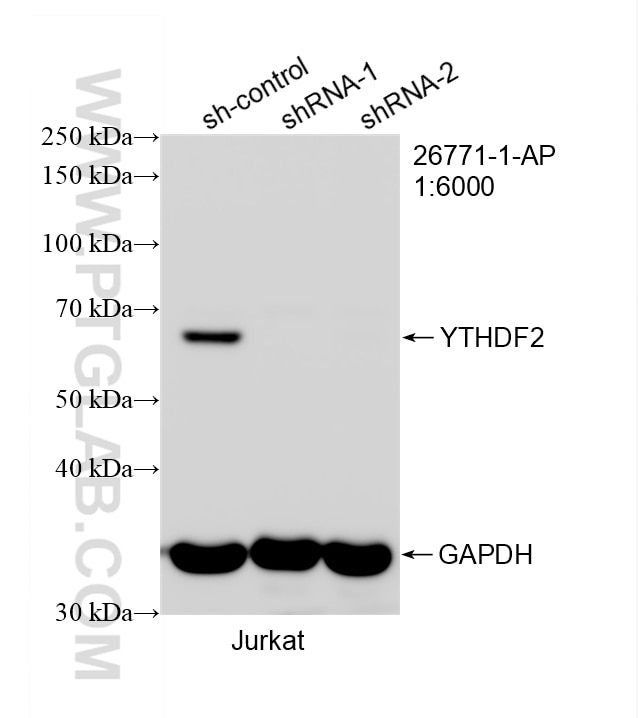
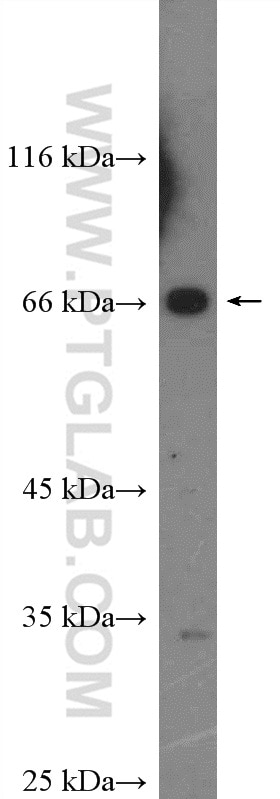
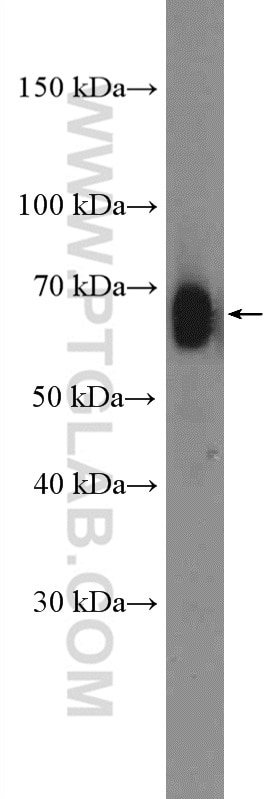
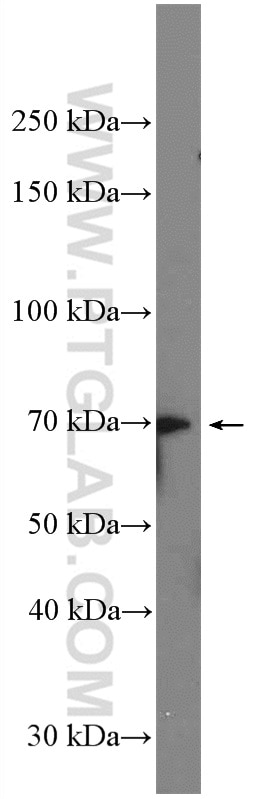
| Positive WB detected in | Raji cells, Jurkat cells, mouse brain tissue |
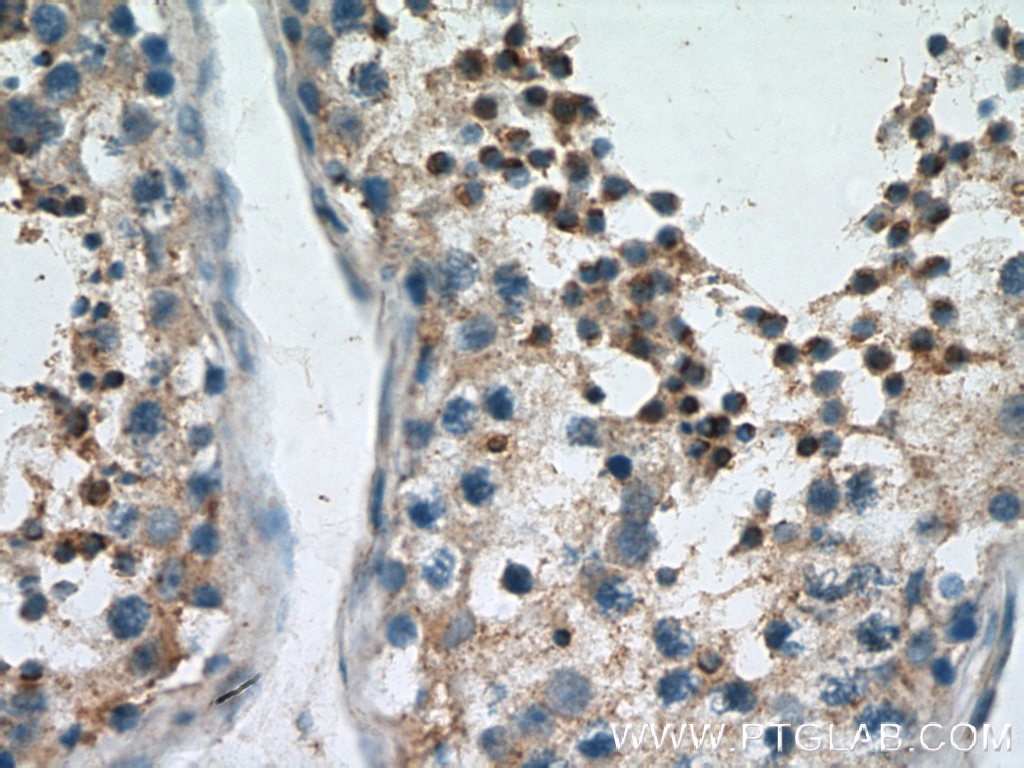
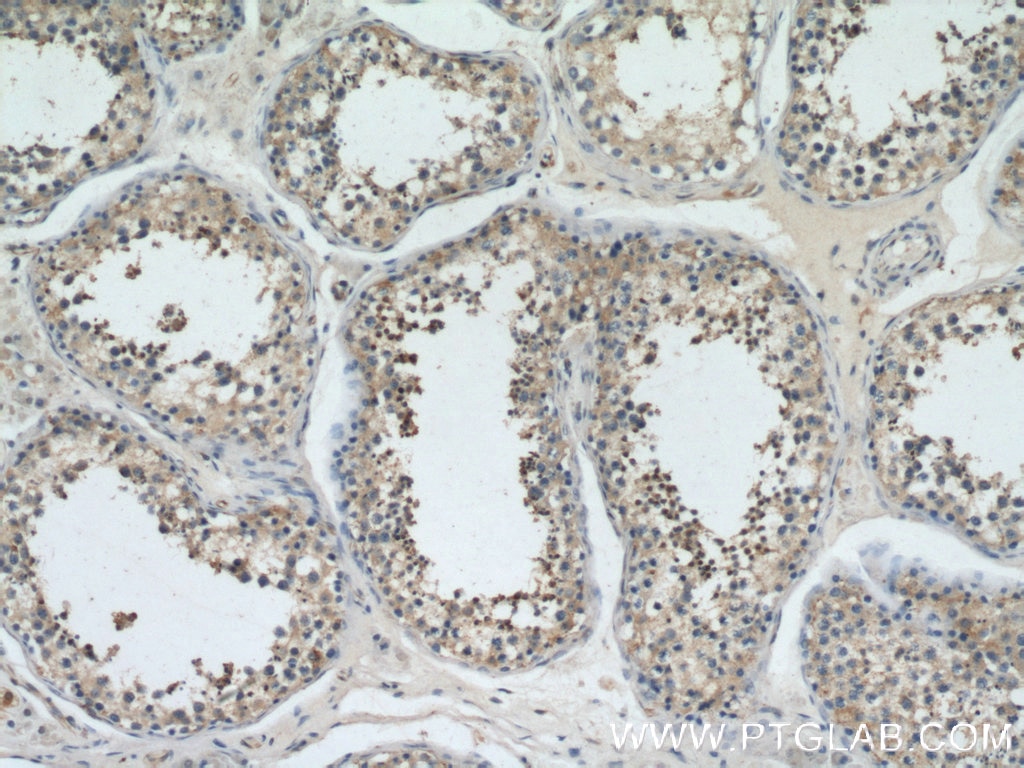
| Positive IHC detected in | human testis tissue Note: suggested antigen retrieval with TE buffer pH 9.0; (*) Alternatively, antigen retrieval may be performed with citrate buffer pH 6.0 |
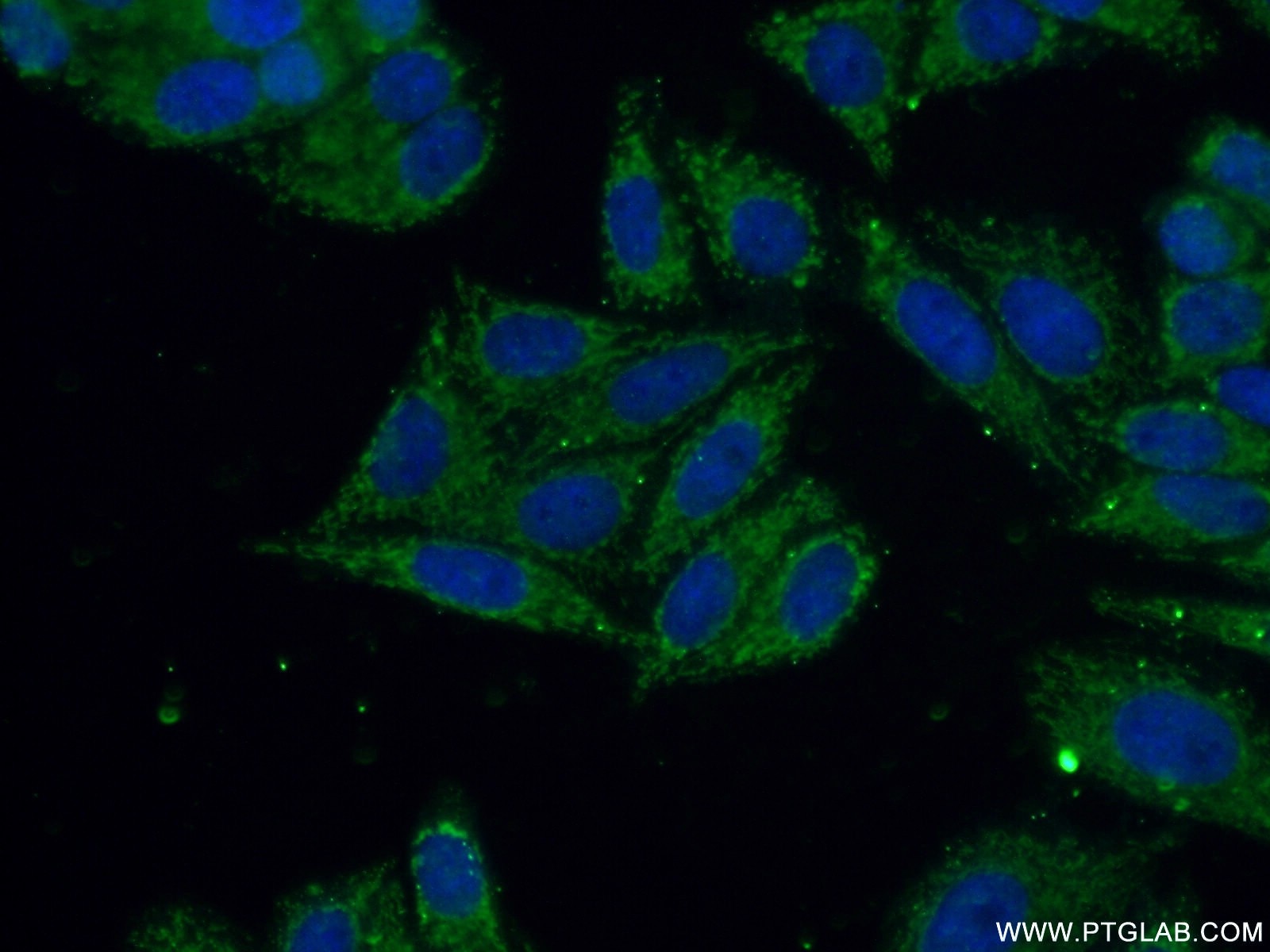
| Positive IF/ICC detected in | HepG2 cells |
Recommended dilution
| Application | Dilution |
|---|---|
| Western Blot (WB) | WB : 1:500-1:2000 |
| Immunohistochemistry (IHC) | IHC : 1:50-1:500 |
| Immunofluorescence (IF)/ICC | IF/ICC : 1:50-1:500 |
| It is recommended that this reagent should be titrated in each testing system to obtain optimal results. | |
| Sample-dependent, Check data in validation data gallery. | |
Product Information
26771-1-AP targets YTHDF2 in WB, IHC, IF/ICC, IP, ELISA applications and shows reactivity with human, mouse samples.
| Tested Reactivity | human, mouse |
| Cited Reactivity | human, mouse |
| Host / Isotype | Rabbit / IgG |
| Class | Polyclonal |
| Type | Antibody |
| Immunogen |
CatNo: Ag25348 Product name: Recombinant human YTHDF2 protein Source: e coli.-derived, PET28a Tag: 6*His Domain: 289-348 aa of BC002559 Sequence: SQALVQNIGQPTQGSPQPVGQQANNSPPVAQASVGQQTQPLPPPPPQPAQLSVQQQAAQP Predict reactive species |
| Full Name | YTH domain family, member 2 |
| Calculated Molecular Weight | 62 kDa |
| Observed Molecular Weight | 65-70 kDa |
| GenBank Accession Number | BC002559 |
| Gene Symbol | YTHDF2 |
| Gene ID (NCBI) | 51441 |
| RRID | AB_2880629 |
| Conjugate | Unconjugated |
| Form | Liquid |
| Purification Method | Antigen affinity purification |
| UNIPROT ID | Q9Y5A9 |
| Storage Buffer | PBS with 0.02% sodium azide and 50% glycerol, pH 7.3. |
| Storage Conditions | Store at -20°C. Stable for one year after shipment. Aliquoting is unnecessary for -20oC storage. 20ul sizes contain 0.1% BSA. |
Background Information
YTHDF2, also named as YTH domain-containing family protein 2, is a 579 amino acid protein, which contains 1 YTH domain. YTHDF2 specifically recognizes and binds N6-methyladenosine (m6A)-containing RNAs, and regulates mRNA stability. M6A is a modification present at internal sites of mRNAs and some non-coding RNAs and plays a role in the efficiency of mRNA splicing, processing and stability. YTHDF2 acts as a regulator of mRNA stability: binding to m6A-containing mRNAs results in the localization to mRNA decay sites, such as processing bodies (P-bodies), leading to mRNA degradation. YTHDF2 also acts as a promoter of cap-independent mRNA translation following heat shock stress: upon stress, relocalizes to the nucleus and specifically binds mRNAs with some m6A methylation mark at their 5'-UTR, protecting demethylation of mRNAs by FTO, thereby promoting cap-independent mRNA translation. The calculated molecular weight of YTHDF2 is 62 kDa, but the phosphorylated YTHDF2 is about 65-70 kDa.
Protocols
| Product Specific Protocols | |
|---|---|
| IF protocol for YTHDF2 antibody 26771-1-AP | Download protocol |
| IHC protocol for YTHDF2 antibody 26771-1-AP | Download protocol |
| WB protocol for YTHDF2 antibody 26771-1-AP | Download protocol |
| Standard Protocols | |
|---|---|
| Click here to view our Standard Protocols |
Publications
What published studies show
The anti-YTHDF2 antibody (Cat# 26771-1-AP) has 3 total citations published in Molecular Cell (IF 16), Clinical and Translational Medicine (IF 7.9), and Journal of Neurochemistry (IF 4.6). Research fields span RNA m6A modification, tumor chemotherapy resistance, osteosarcoma, and Parkinson's disease. Applications include WB, IP, and IF in human and mouse samples.
| Species | Application | Title |
|---|---|---|
Mol Cell The RNA-stability-independent role of the RNA m6A reader YTHDF2 in promoting protein translation to confer tumor chemotherapy resistance
| ||
Clin Transl Med N6-Methyladenosine modification mediated by METTL3 promotes DNA-PKcs expression to induce anlotinib resistance in osteosarcoma | ||
J Neurochem METTL14 is decreased and regulates m6 A modification of α-synuclein in Parkinson's disease |
Reviews
What customers say
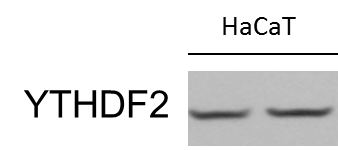
One user review was found for this product. Yanhong Cui rated it 5 out of 5 stars for Western Blot on HaCaT cells using a 1:1000 dilution (December 2018). No written comments were provided, but a representative WB image was attached demonstrating successful detection. Overall, the single reviewer reported a positive experience with the antibody performing well under standard WB conditions.
The reviews below have been submitted by verified Proteintech customers who received an incentive for providing their feedback.
Yanhong (Verified Customer) (12-04-2018) |
 |








