Anticorps Recombinant de lapin anti-CCL9
CCL9 Recombinant Antibody for FC (Intra)
Hôte / Isotype
Lapin / IgG
Réactivité testée
souris
Applications
FC (Intra)
Conjugaison
Non conjugué
CloneNo.
243103H5
N° de cat : 98475-1-RR
Synonymes
Galerie de données de validation
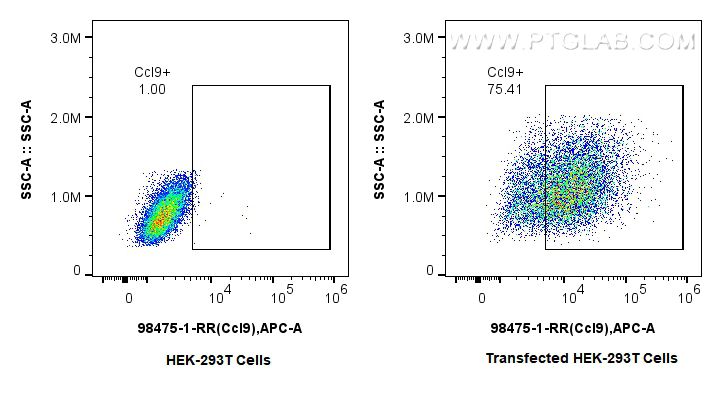
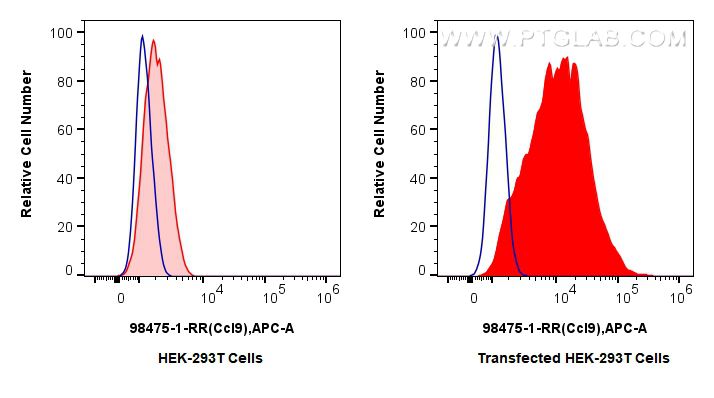
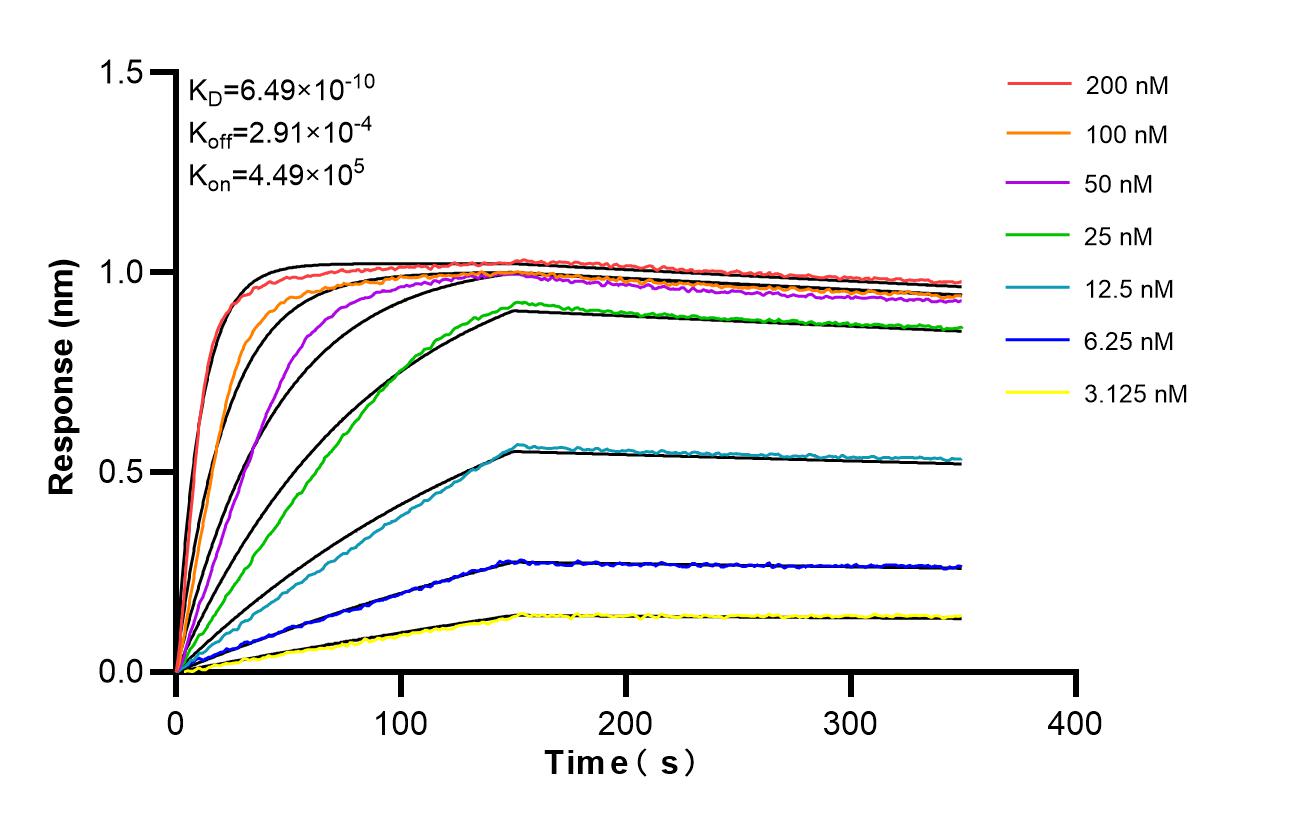
Applications testées
| Résultats positifs en FC (Intra) | Transfected HEK-293T cells, |
Dilution recommandée
| Application | Dilution |
|---|---|
| This reagent has been tested for flow cytometric analysis. It is recommended that this reagent should be titrated in each testing system to obtain optimal results. | |
| Sample-dependent, check data in validation data gallery | |
Informations sur le produit
98475-1-RR cible CCL9 dans les applications de FC (Intra) et montre une réactivité avec des échantillons souris
| Réactivité | souris |
| Hôte / Isotype | Lapin / IgG |
| Clonalité | Recombinant |
| Type | Anticorps |
| Immunogène | CCL9 Protéine recombinante Eg3336 |
| Nom complet | chemokine (C-C motif) ligand 9 |
| Masse moléculaire calculée | 14KD |
| Numéro d’acquisition GenBank | NM_011338.2 |
| Symbole du gène | Ccl9 |
| Identification du gène (NCBI) | 20308 |
| Conjugaison | Non conjugué |
| Forme | Liquide |
| Méthode de purification | Purification par protéine A |
| Tampon de stockage | PBS with 0.09% sodium azide |
| Conditions de stockage | Store at 2 - 8°C. Stable for one year after shipment. |
Informations générales
Mouse C-C motif ligand 9 (CCL9), alternatively named macrophage inflammatory protein 1γ (MIP-1γ), was identified in 1995 and is homologous to the mouse CCL6, as well as human CCL23 and CCL15. It is noted that CCL9 is also known by various names such as macrophage inflammatory protein-1 gamma (MIP-1ɣ), macrophage inflammatory protein-related protein-2 (MRP-2) and CCF18 in rodents. Monocytes and myeloid cell lines produce large quantities of CCL9, as do dendritic cells and T cells, in particular Th1 type T cells. Despite high baseline levels in circulation, it has become apparent that concentrations of CCL9 vary greatly in specific tissues with profound effects on health. For example, in the bone, CCL9 is produced at even higher levels, and is critical to osteoclast versus osteoblast differentiation of macrophages. There are also indications of a timed specific induction of CCL9 in skin wound healing and follicle-associated epithelium of the gut.
Protocole
| Product Specific Protocols | |
|---|---|
| FC protocol for CCL9 antibody 98475-1-RR | Download protocol |
| Standard Protocols | |
|---|---|
| Click here to view our Standard Protocols |


