- Phare
- Validé par KD/KO
Anticorps Polyclonal de lapin anti-FABP2
FABP2 Polyclonal Antibody for WB, IHC, ELISA
Hôte / Isotype
Lapin / IgG
Réactivité testée
Humain, rat, souris et plus (2)
Applications
WB, IHC, ELISA
Conjugaison
Non conjugué
N° de cat : 21252-1-AP
Synonymes
Galerie de données de validation
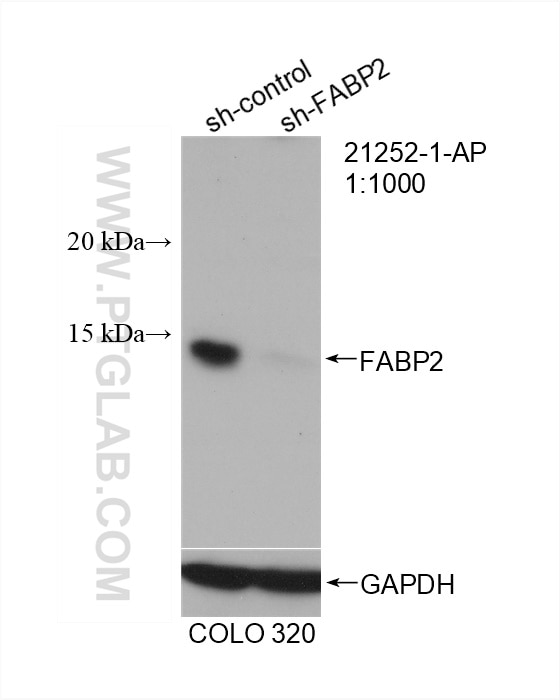
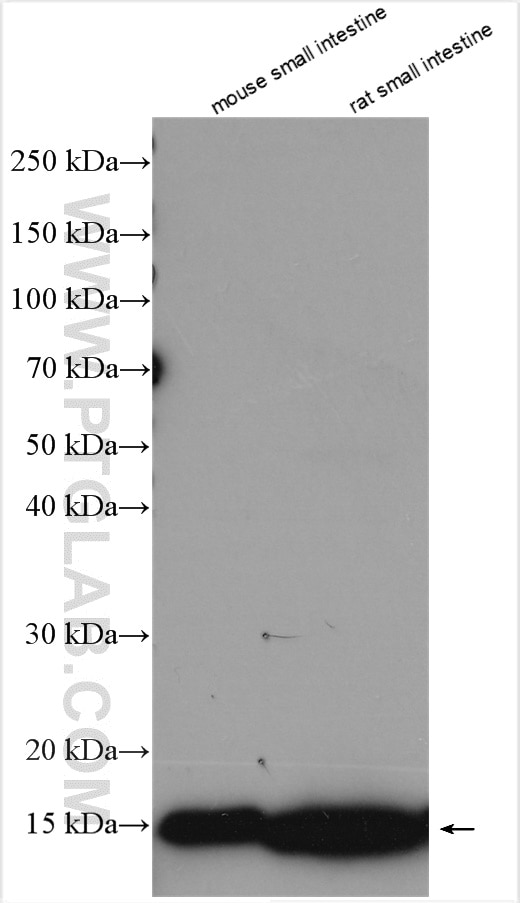
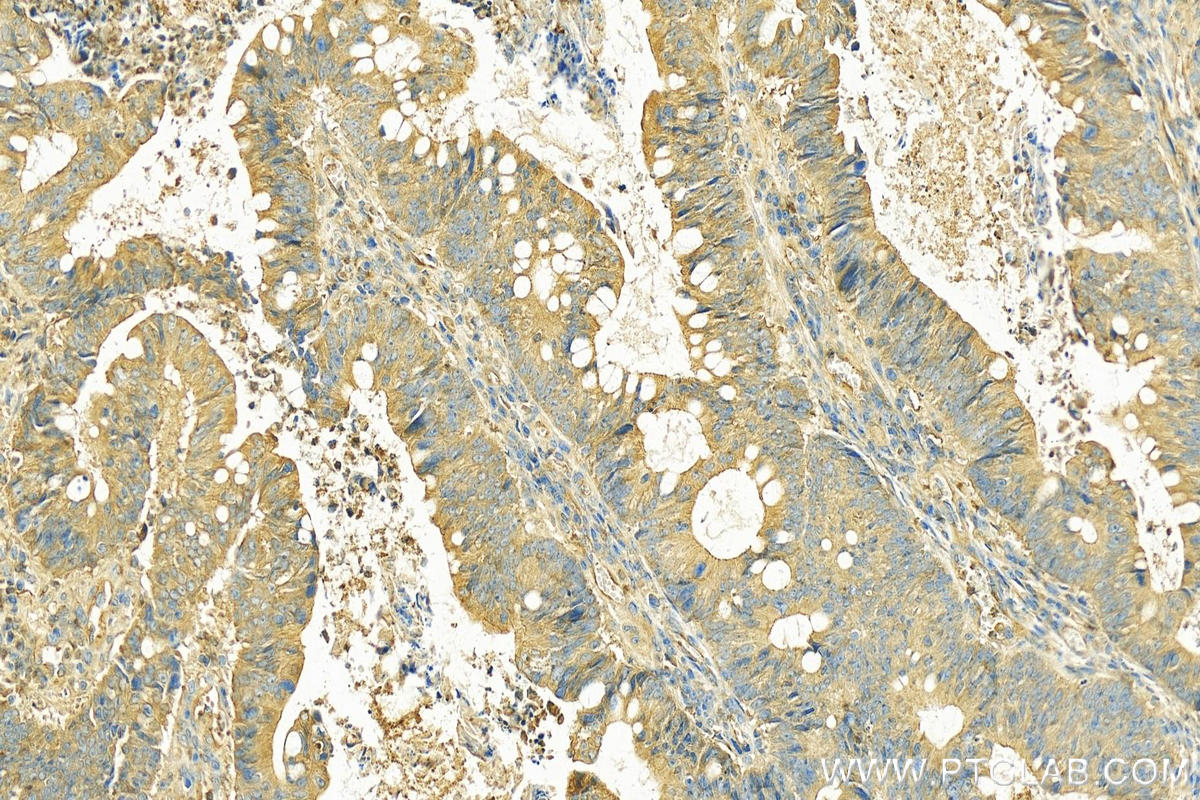
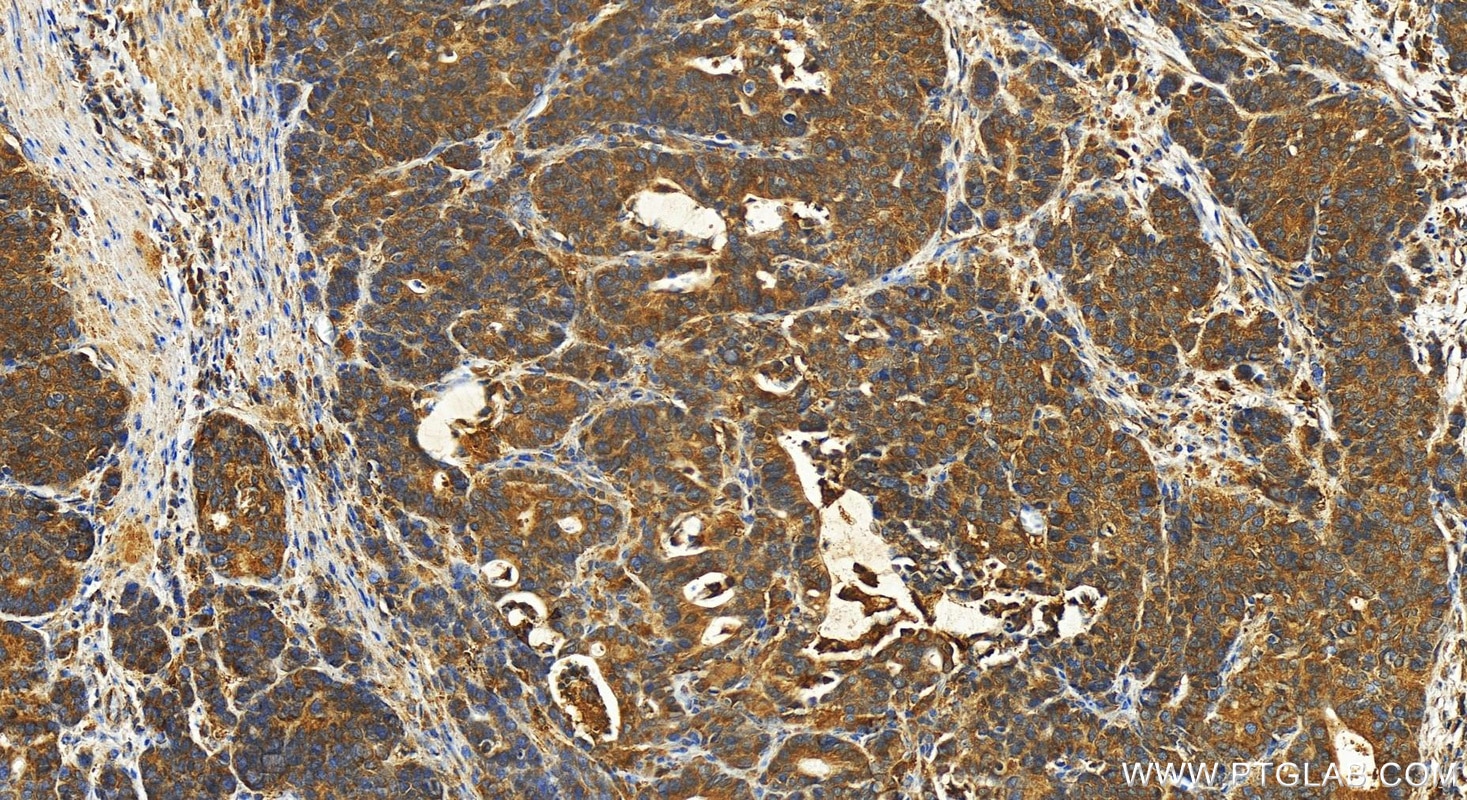
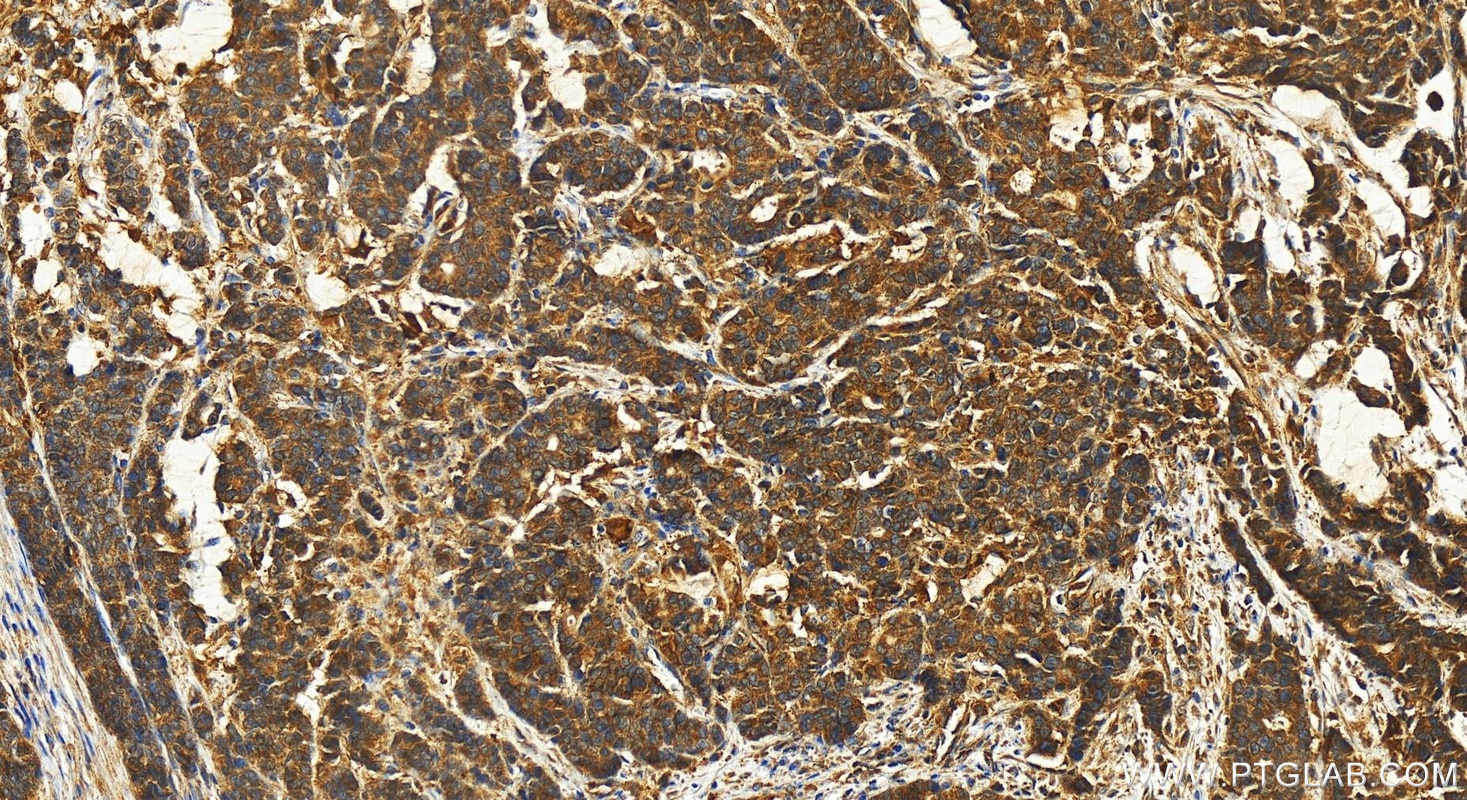
Applications testées
| Résultats positifs en WB | cellules COLO 320, tissu d'intestin grêle de rat, tissu d'intestin grêle de souris |
| Résultats positifs en IHC | tissu de cancer de l'estomac humain, tissu de cancer du côlon humain il est suggéré de démasquer l'antigène avec un tampon de TE buffer pH 9.0; (*) À défaut, 'le démasquage de l'antigène peut être 'effectué avec un tampon citrate pH 6,0. |
Dilution recommandée
| Application | Dilution |
|---|---|
| Western Blot (WB) | WB : 1:500-1:2000 |
| Immunohistochimie (IHC) | IHC : 1:50-1:500 |
| It is recommended that this reagent should be titrated in each testing system to obtain optimal results. | |
| Sample-dependent, check data in validation data gallery | |
Applications publiées
| WB | See 15 publications below |
Informations sur le produit
21252-1-AP cible FABP2 dans les applications de WB, IHC, ELISA et montre une réactivité avec des échantillons Humain, rat, souris
| Réactivité | Humain, rat, souris |
| Réactivité citée | rat, porc, poulet, souris |
| Hôte / Isotype | Lapin / IgG |
| Clonalité | Polyclonal |
| Type | Anticorps |
| Immunogène | FABP2 Protéine recombinante Ag15793 |
| Nom complet | fatty acid binding protein 2, intestinal |
| Masse moléculaire calculée | 132 aa, 15 kDa |
| Poids moléculaire observé | 15 kDa |
| Numéro d’acquisition GenBank | BC069617 |
| Symbole du gène | FABP2 |
| Identification du gène (NCBI) | 2169 |
| Conjugaison | Non conjugué |
| Forme | Liquide |
| Méthode de purification | Purification par affinité contre l'antigène |
| Tampon de stockage | PBS with 0.02% sodium azide and 50% glycerol |
| Conditions de stockage | Stocker à -20°C. Stable pendant un an après l'expédition. L'aliquotage n'est pas nécessaire pour le stockage à -20oC Les 20ul contiennent 0,1% de BSA. |
Informations générales
FABP2, also known as Intestinal Fatty Acid Binding Protein (I-FABP), is a member of the Fatty Acid Binding Proteins (FABPs) family. The cytoplasmic content of FABP2 could be delivered into the systematic circulation once the death of enterocyte happens, thus the elevated FABP2 concentration in the blood has been shown in many human intestinal diseases. FABP2 is a water soluble cytosolic protein with a small molecular weight of 14-15 kDa, and it is initially located in the mature enterocytes of the small intestine (PMID: 26547205).
Protocole
| Product Specific Protocols | |
|---|---|
| WB protocol for FABP2 antibody 21252-1-AP | Download protocol |
| IHC protocol for FABP2 antibody 21252-1-AP | Download protocol |
| Standard Protocols | |
|---|---|
| Click here to view our Standard Protocols |
Publications
| Species | Application | Title |
|---|---|---|
Cell Metab AIDA Selectively Mediates Downregulation of Fat Synthesis Enzymes by ERAD to Retard Intestinal Fat Absorption and Prevent Obesity. | ||
Biomaterials MMP-12 siRNA improves the homeostasis of the small intestine and metabolic dysfunction in high-fat diet feeding-induced obese mice. | ||
Cell Mol Gastroenterol Hepatol FACI Is a Novel CREB-H-Induced Protein That Inhibits Intestinal Lipid Absorption and Reverses Diet-Induced Obesity. | ||
Int J Mol Sci INT-767-A Dual Farnesoid-X Receptor (FXR) and Takeda G Protein-Coupled Receptor-5 (TGR5) Agonist Improves Survival in Rats and Attenuates Intestinal Ischemia Reperfusion Injury | ||
Microb Biotechnol Faecal microbiota transplantation-mediated jejunal microbiota changes halt high-fat diet-induced obesity in mice via retarding intestinal fat absorption | ||
Ecotoxicol Environ Saf Heat stress affects fetal brain and intestinal function associated with the alterations of placental barrier in late pregnant mouse. |

