Anticorps Polyclonal de lapin anti-RD3
RD3 Polyclonal Antibody for WB, IHC, IF/ICC, ELISA
Hôte / Isotype
Lapin / IgG
Réactivité testée
Humain, rat, souris
Applications
WB, IHC, IF/ICC, ELISA
Conjugaison
Non conjugué
N° de cat : 14855-1-AP
Synonymes
Galerie de données de validation
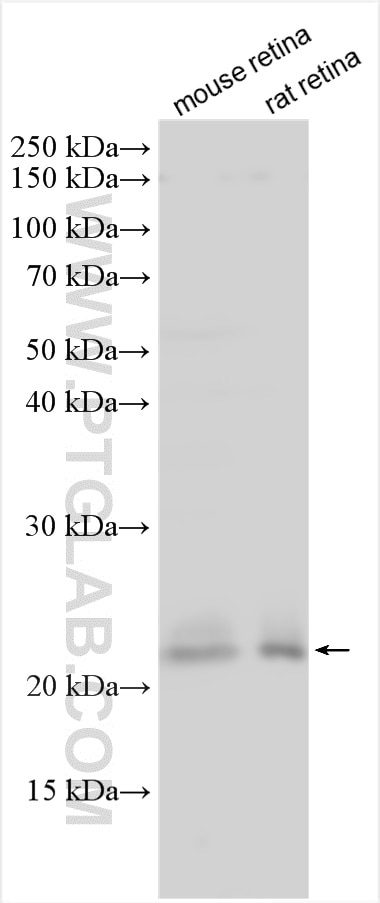
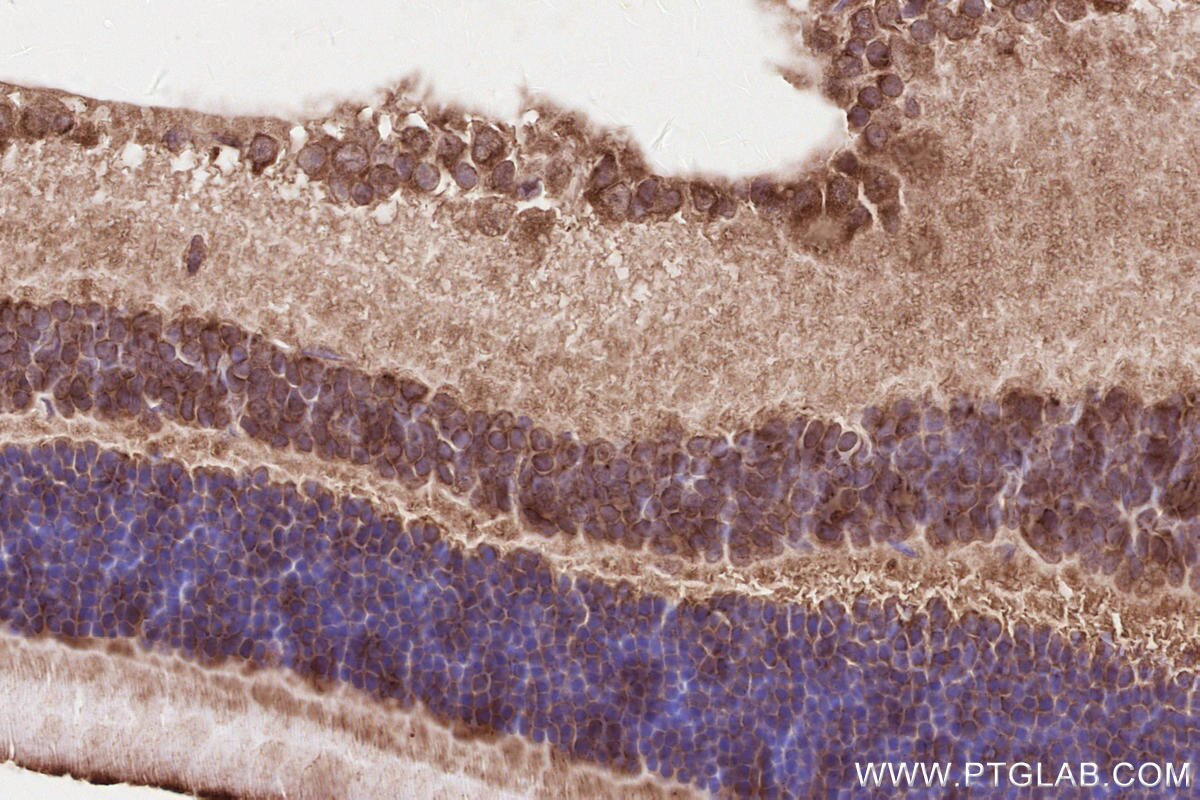
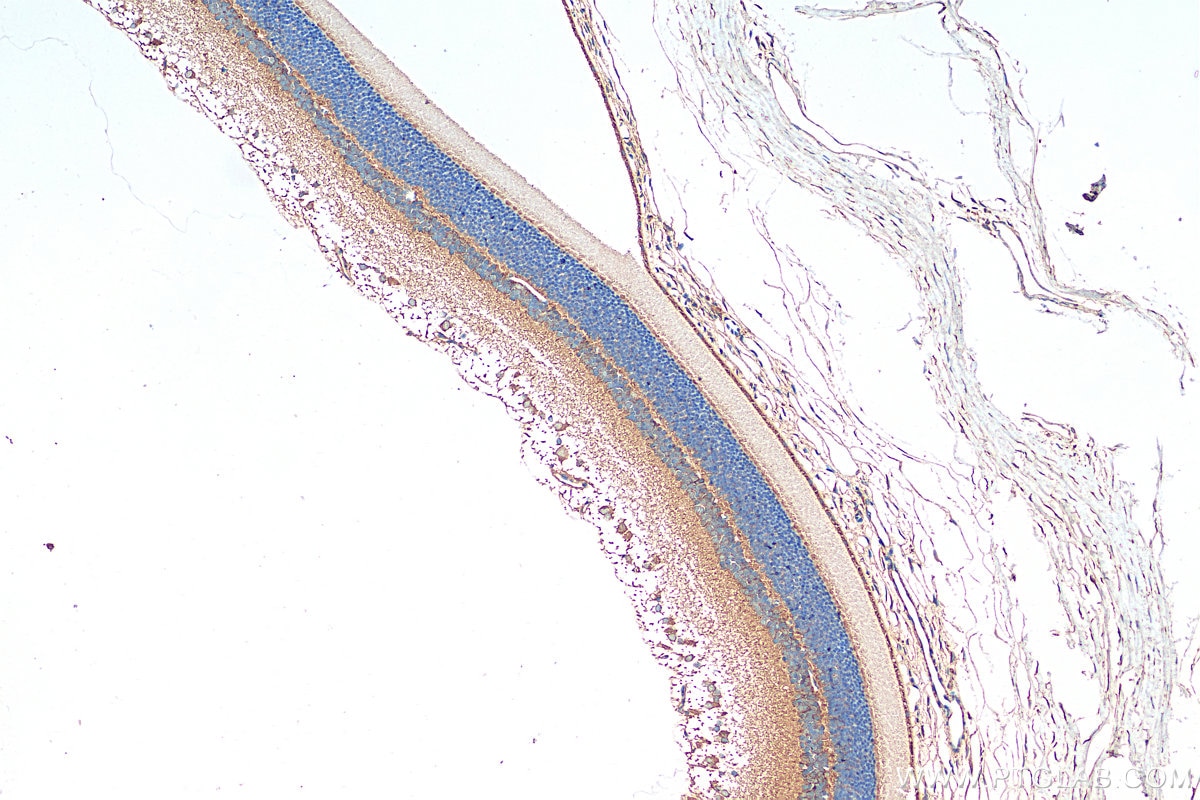
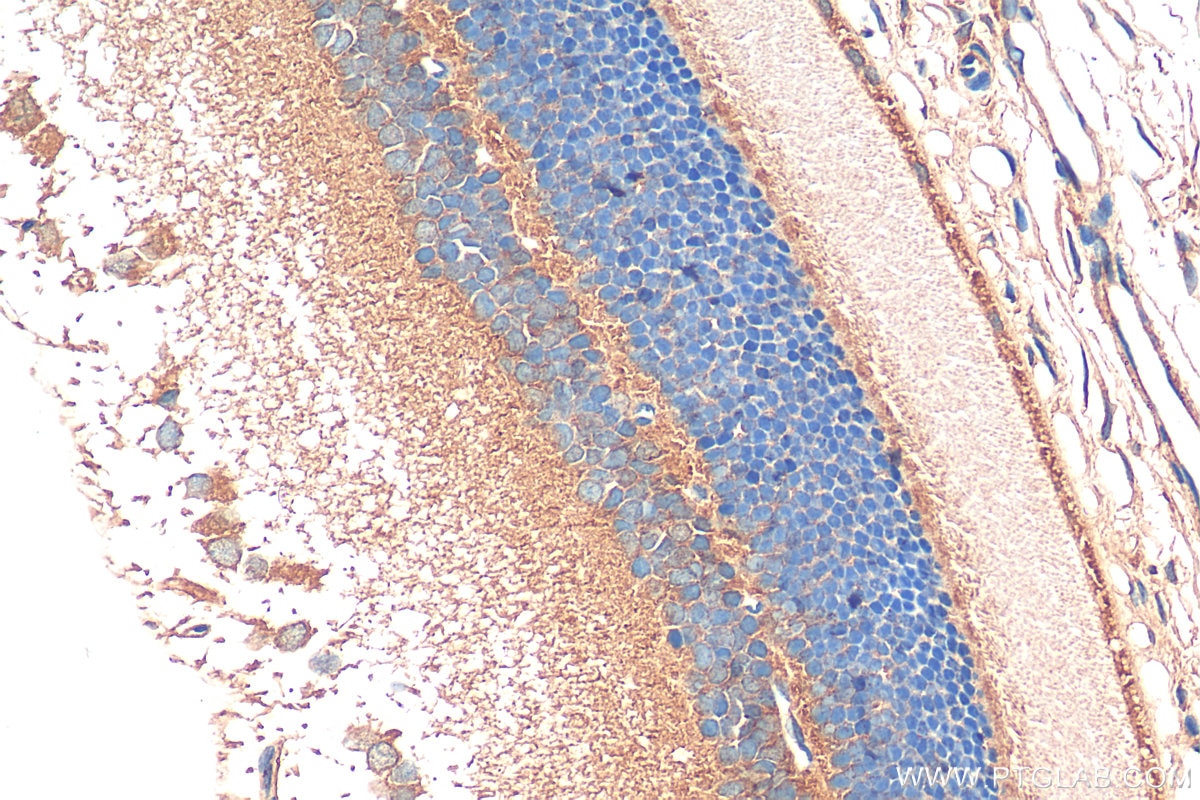
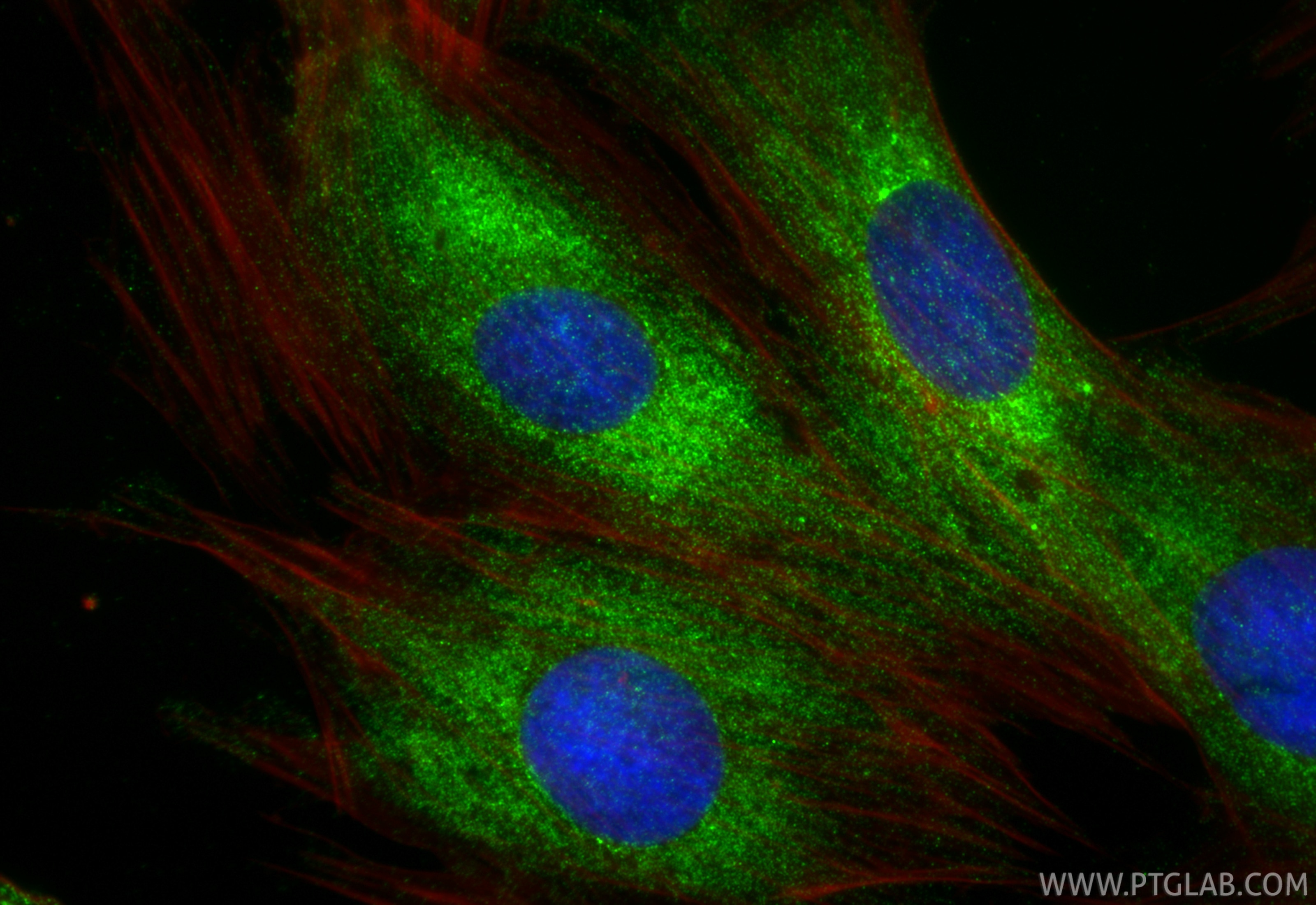
Applications testées
| Résultats positifs en WB | tissu rétinien de souris, tissu rétinien de rat |
| Résultats positifs en IHC | tissu oculaire de rat, tissu oculaire de souris il est suggéré de démasquer l'antigène avec un tampon de TE buffer pH 9.0; (*) À défaut, 'le démasquage de l'antigène peut être 'effectué avec un tampon citrate pH 6,0. |
| Résultats positifs en IF/ICC | cellules H9C2, |
Dilution recommandée
| Application | Dilution |
|---|---|
| Western Blot (WB) | WB : 1:500-1:3000 |
| Immunohistochimie (IHC) | IHC : 1:50-1:500 |
| Immunofluorescence (IF)/ICC | IF/ICC : 1:50-1:500 |
| It is recommended that this reagent should be titrated in each testing system to obtain optimal results. | |
| Sample-dependent, check data in validation data gallery | |
Informations sur le produit
14855-1-AP cible RD3 dans les applications de WB, IHC, IF/ICC, ELISA et montre une réactivité avec des échantillons Humain, rat, souris
| Réactivité | Humain, rat, souris |
| Hôte / Isotype | Lapin / IgG |
| Clonalité | Polyclonal |
| Type | Anticorps |
| Immunogène | RD3 Protéine recombinante Ag6641 |
| Nom complet | retinal degeneration 3 |
| Masse moléculaire calculée | 22.7 kDa |
| Poids moléculaire observé | 23 kDa |
| Numéro d’acquisition GenBank | BC065541 |
| Symbole du gène | RD3 |
| Identification du gène (NCBI) | 343035 |
| Conjugaison | Non conjugué |
| Forme | Liquide |
| Méthode de purification | Purification par affinité contre l'antigène |
| Tampon de stockage | PBS with 0.02% sodium azide and 50% glycerol |
| Conditions de stockage | Stocker à -20°C. Stable pendant un an après l'expédition. L'aliquotage n'est pas nécessaire pour le stockage à -20oC Les 20ul contiennent 0,1% de BSA. |
Informations générales
RD3, or Retinal Degeneration 3, plays a critical role in regulating guanylate cyclase (GC) signaling and photoreceptor cell survival (PMID: 30559291). RD3 is highly conserved across vertebrates, with the human protein sharing high sequence identity with other primates and varying degrees of identity with other species (PMID: 29030614). The main functions of RD3 include inhibiting photoreceptor-specific guanylate cyclase activity and promoting the accumulation of retinal membrane guanylyl cyclase (RetGC) in the photoreceptor outer segment (PMID: 30559291). RD3 is essential for the normal expression of RetGC in photoreceptor cells and blocks RetGC catalytic activity. Mutations in the RD3 gene can lead to Leber congenital amaurosis type 12, which results in retinal degeneration. RD3 is also involved in the trafficking of RetGC from the endoplasmic reticulum to the photoreceptor outer segments, which is crucial for maintaining the normal function and survival of photoreceptors (PMID: 34537244).
Protocole
| Product Specific Protocols | |
|---|---|
| WB protocol for RD3 antibody 14855-1-AP | Download protocol |
| IHC protocol for RD3 antibody 14855-1-AP | Download protocol |
| IF protocol for RD3 antibody 14855-1-AP | Download protocol |
| Standard Protocols | |
|---|---|
| Click here to view our Standard Protocols |

