

Tested Applications
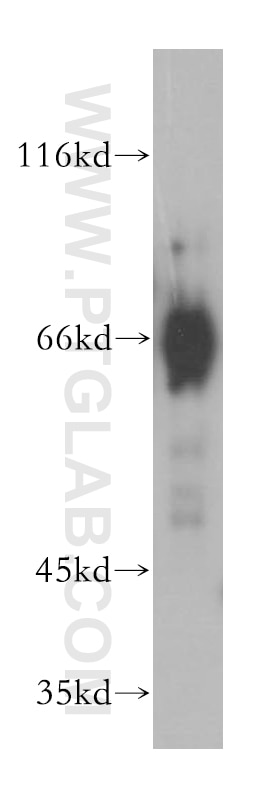
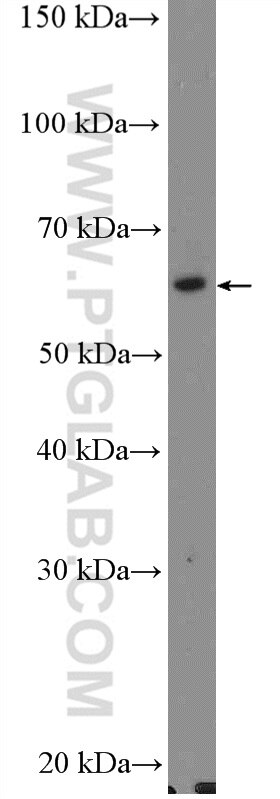
| Positive WB detected in | mouse liver tissue, HEK-293 cells |
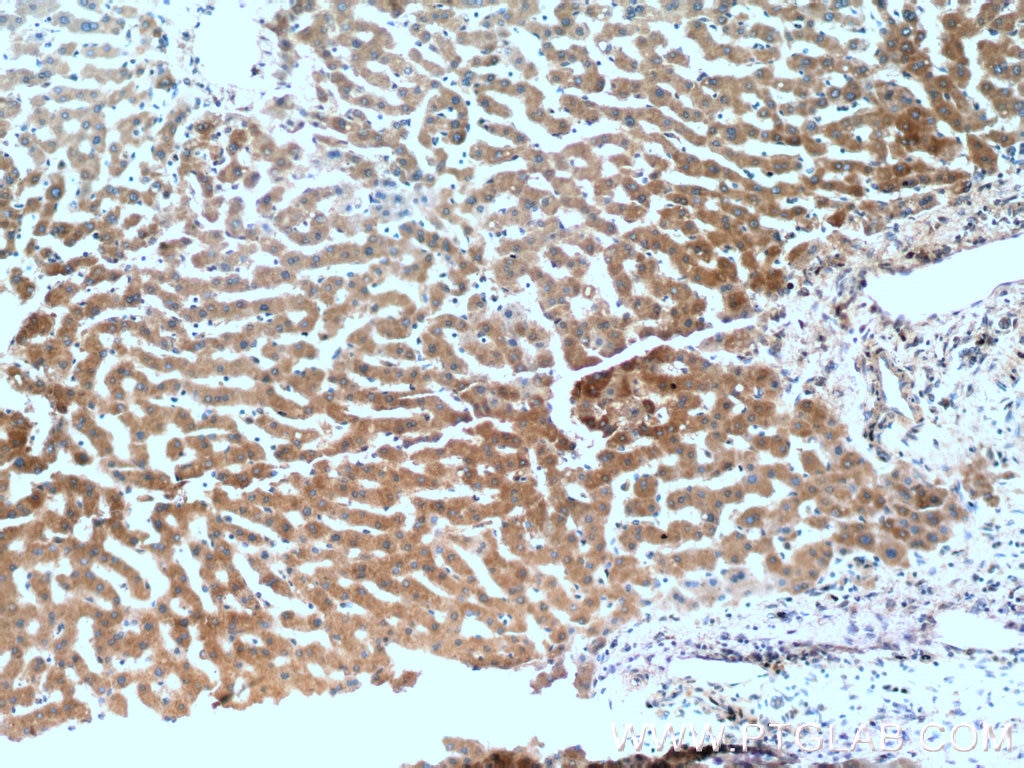
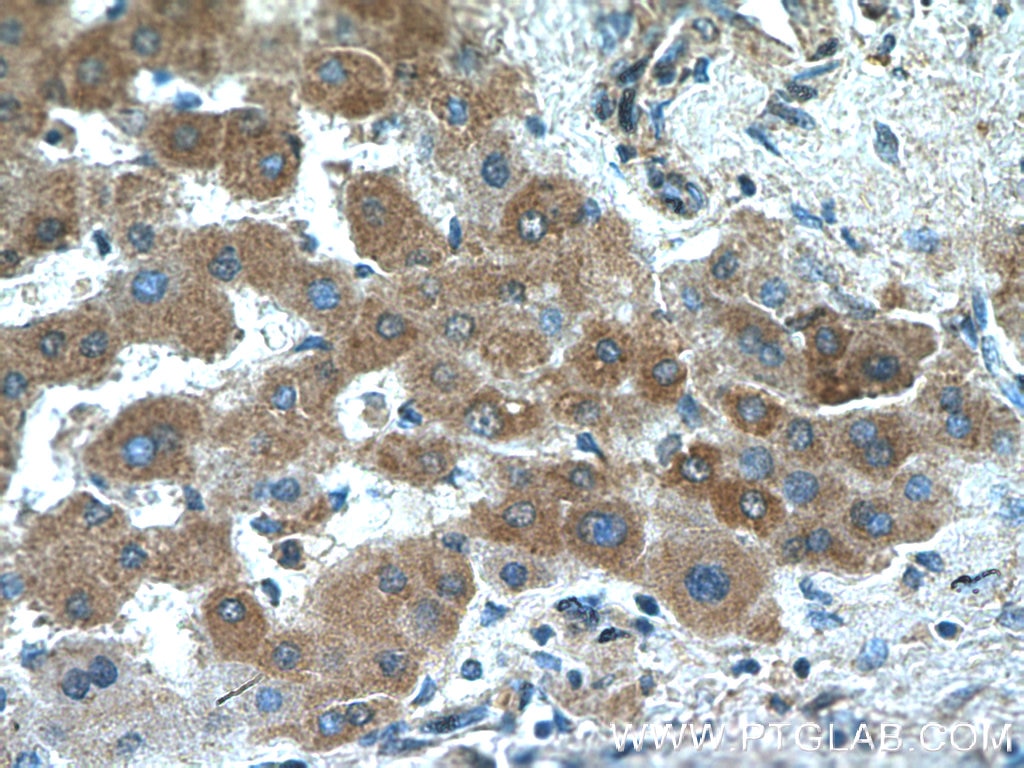
| Positive IHC detected in | human liver tissue Note: suggested antigen retrieval with TE buffer pH 9.0; (*) Alternatively, antigen retrieval may be performed with citrate buffer pH 6.0 |
Recommended dilution
| Application | Dilution |
|---|---|
| Western Blot (WB) | WB : 1:500-1:1000 |
| Immunohistochemistry (IHC) | IHC : 1:50-1:500 |
| It is recommended that this reagent should be titrated in each testing system to obtain optimal results. | |
| Sample-dependent, Check data in validation data gallery. | |
Product Information
17975-1-AP targets Acetylcholinesterase in WB, IHC, IF, ELISA applications and shows reactivity with human, mouse, rat samples.
| Tested Reactivity | human, mouse, rat |
| Cited Reactivity | human, mouse, rat |
| Host / Isotype | Rabbit / IgG |
| Class | Polyclonal |
| Type | Antibody |
| Immunogen |
CatNo: Ag12146 Product name: Recombinant human ACHE protein Source: e coli.-derived, PGEX-4T Tag: GST Domain: 1-346 aa of BC094752 Sequence: ACHAAMRPPQCLLHTPSLASPLLLLLVWLLGGGVGAEGREDAELLVTVRGGRLRGIRLKTPGGPVSAFLGIPFAEPPMGPRRFLPPEPKQPWSGVVDATTFQSVCYQYVDTLYPGFEGTEMWNPNRELSEDCLYLNVWTPYPRPTSPTPVIVWIYGGGFYSGASSLDVYDGRFLVQAERTVLVSMNYRVGAFGFLALPGSREAPGNVGLLDQRLALQWVQENVAAFGGDPTSVTLFGESAGAASVGMHLLSPPSRGLFHRAVLQSGAPNGPWATVGMGEARRRATQLAHLVGCPPGGTGGNDTELVACLRTRPAQVLVNHEWHVLPQESVFRFSFVPVVDGDFLSD Predict reactive species |
| Full Name | acetylcholinesterase (Yt blood group) |
| Calculated Molecular Weight | 614aa,68 kDa; 640aa,71 kDa |
| Observed Molecular Weight | 66-72 kDa |
| GenBank Accession Number | BC094752 |
| Gene Symbol | Acetylcholinesterase |
| Gene ID (NCBI) | 43 |
| RRID | AB_2242349 |
| Conjugate | Unconjugated |
| Form | Liquid |
| Purification Method | Antigen affinity purification |
| UNIPROT ID | P22303 |
| Storage Buffer | PBS with 0.02% sodium azide and 50% glycerol, pH 7.3. |
| Storage Conditions | Store at -20°C. Stable for one year after shipment. Aliquoting is unnecessary for -20oC storage. 20ul sizes contain 0.1% BSA. |
Background Information
The classical role of acetylcholinesterase (AChE) is to terminate cholinergic neurotransmission by rapid hydrolysis of the neurotransmitter acetylcholine (ACh) at cholinergic synapses and neuromuscular junctions(PMID:20054652). AChE activity is significantly lower in aspirates from squamous cell carcinomas and the molecular distribution of AChE in both bronchial cells and fluids consisted of amphiphilic monomers and dimers(PMID:18211261). It has 4 isoforms produced by alternative splicing.
Protocols
| Product Specific Protocols | |
|---|---|
| IHC protocol for Acetylcholinesterase antibody 17975-1-AP | Download protocol |
| WB protocol for Acetylcholinesterase antibody 17975-1-AP | Download protocol |
| Standard Protocols | |
|---|---|
| Click here to view our Standard Protocols |
Publications
What published studies show
Anti-Acetylcholinesterase antibody (Cat# 17975-1-AP) has 16 total citations published in journals including Nature Neuroscience, Cell Reports Medicine, Phytomedicine, ACS Sensors, Translational Psychiatry, Frontiers in Immunology, Aging, and Brain Research. Research fields span neuroscience (ALS, Alzheimer's disease, ischemic stroke, cognitive deficits), oncology (prostate cancer, lung adenocarcinoma, esophageal cancer), gut-brain axis, diabetic cardiomyopathy, periodontitis, ecotoxicology, and pharmacology.
| Species | Application | Title |
|---|---|---|
Nat Neurosci Mitochondrial respiratory complex IV deficiency recapitulates amyotrophic lateral sclerosis | ||
Cell Rep Med Cholinergic signaling via muscarinic M1 receptor confers resistance to docetaxel in prostate cancer | ||
Phytomedicine Zexieyin formula alleviates Alzheimer's disease via post-synaptic CaMKII modulating AMPA receptor: Involved in promoting neurogenesis to strengthen synaptic plasticity in mice hippocampus | ||
Phytomedicine Integrating serum pharmacochemistry, network pharmacology, and metabolomics to explore the protective mechanism of Hua-Feng-Dan in ischemic stroke. | ||
ACS Sens Near-Infrared Fluorescence Probe for Evaluating Acetylcholinesterase Activity in PC12 Cells and In Situ Tracing AChE Distribution in Zebrafish. | ||
Transl Psychiatry A diet high in sugar and fat influences neurotransmitter metabolism and then affects brain function by altering the gut microbiota. |
Reviews
What customers say
Both reviewers gave this antibody a perfect 5-star rating. One user reported consistent and reproducible results when using it at a 1:1000 dilution for Western Blot on mouse heart tissue. The other user found it performed well across multiple applications including immunohistochemistry, immunofluorescence, immunoprecipitation, and cell culture experiments. Overall, customers are satisfied with the antibody's reliability and versatility across different experimental setups.
The reviews below have been submitted by verified Proteintech customers who received an incentive for providing their feedback.
Zulaikha (Verified Customer) (09-21-2022) | Consistent and reproducible results.
|
Dr Shane (Verified Customer) (08-17-2020) | Very good antibody and worked ok.
|





