
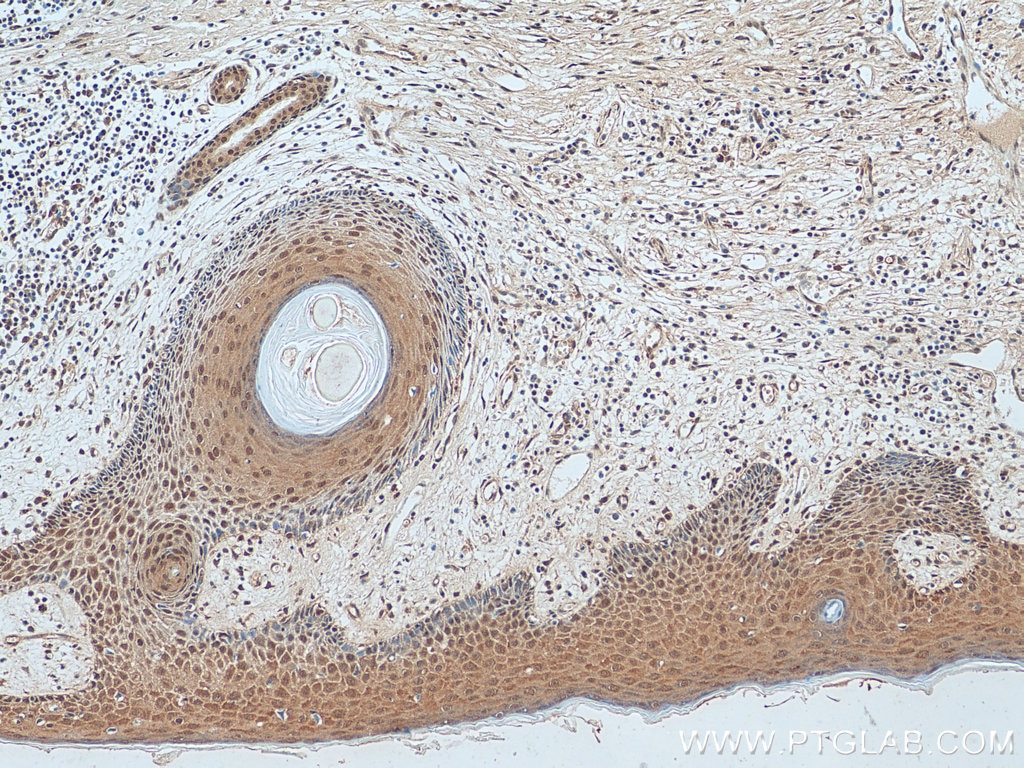

Tested Applications
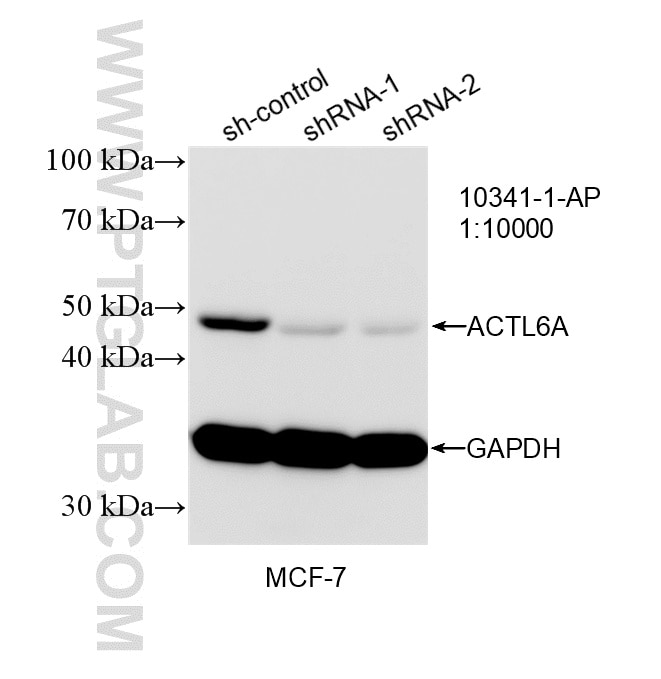
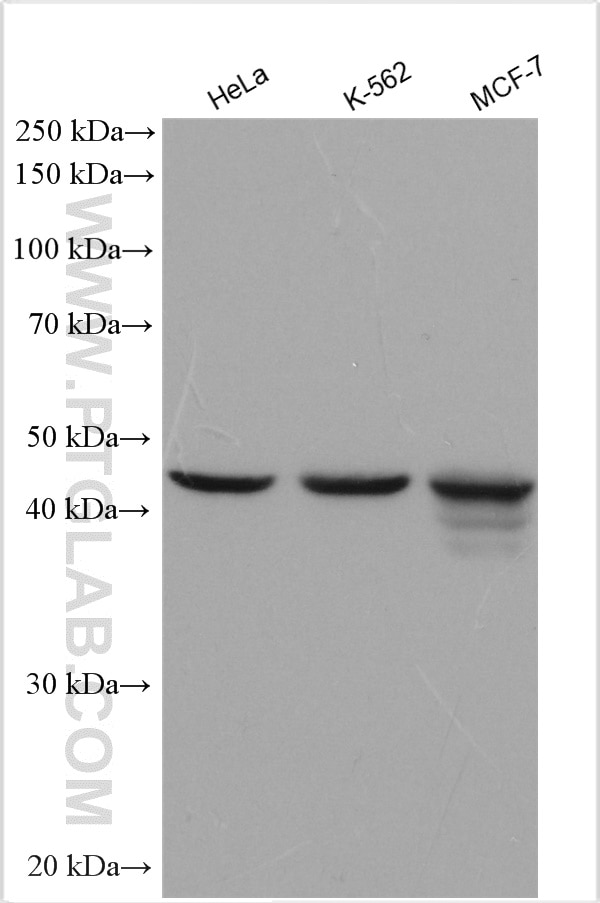
| Positive WB detected in | HeLa cells, MCF-7 cells, K-562 cells |
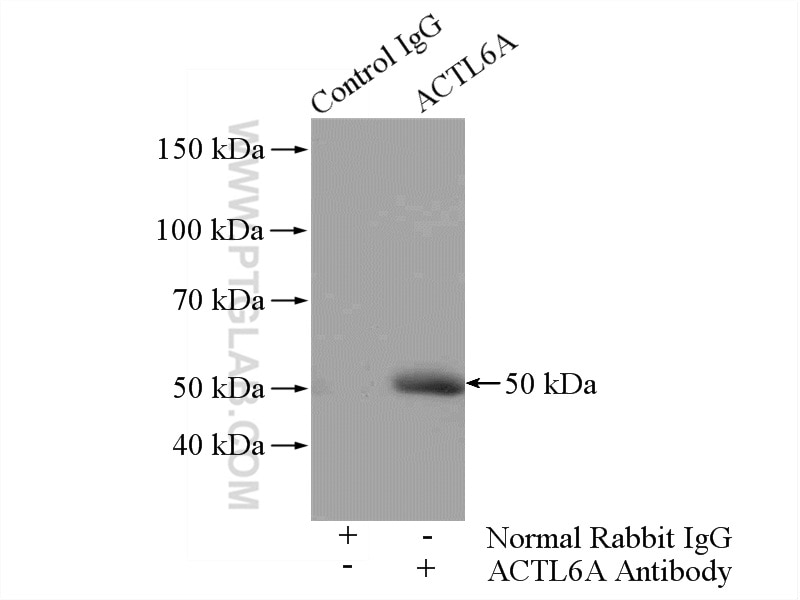
| Positive IP detected in | HeLa cells |
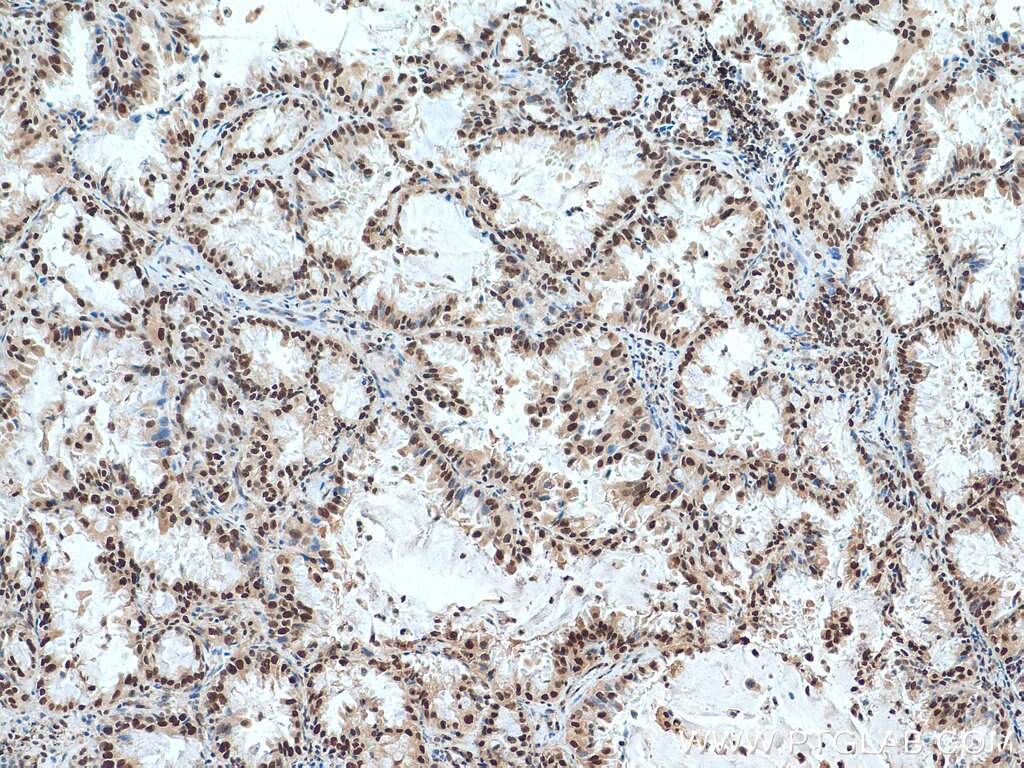
| Positive IHC detected in | human lung cancer tissue, human skin cancer tissue Note: suggested antigen retrieval with TE buffer pH 9.0; (*) Alternatively, antigen retrieval may be performed with citrate buffer pH 6.0 |
Recommended dilution
| Application | Dilution |
|---|---|
| Western Blot (WB) | WB : 1:2000-1:16000 |
| Immunoprecipitation (IP) | IP : 0.5-4.0 ug for 1.0-3.0 mg of total protein lysate |
| Immunohistochemistry (IHC) | IHC : 1:50-1:500 |
| It is recommended that this reagent should be titrated in each testing system to obtain optimal results. | |
| Sample-dependent, Check data in validation data gallery. | |
Product Information
10341-1-AP targets ACTL6A in WB, IHC, IF, IP, ELISA applications and shows reactivity with human, mouse, rat samples.
| Tested Reactivity | human, mouse, rat |
| Cited Reactivity | human, mouse |
| Host / Isotype | Rabbit / IgG |
| Class | Polyclonal |
| Type | Antibody |
| Immunogen |
CatNo: Ag0323 Product name: Recombinant human ACTL6A protein Source: e coli.-derived, PGEX-4T Tag: GST Domain: 21-286 aa of BC001391 Sequence: YTVRAGYAGEDCPKVDFPTAIGMVVERDDGSTLMEIDGDKGKQGGPTYYIDTNALRVPRENMEAISPLKNGMVEDWDSFQAILDHTYKMHVKSEASLHPVLMSEAPWNTRAKREKLTELMFEHYNIPAFFLCKTAVLTAFANGRSTGLILDSGATHTTAIPVHDGYVLQQGIVKSPLAGDFITMQCRELFQEMNIELVPPYMIASKEAVREGSPANWKRKEKLPQVTRSWHNYMCNCVIQDFQASVLQVSDSTYDEQVAAQMPTVH Predict reactive species |
| Full Name | actin-like 6A |
| Calculated Molecular Weight | 47 kDa |
| Observed Molecular Weight | 45-51 kDa |
| GenBank Accession Number | BC001391 |
| Gene Symbol | ACTL6A |
| Gene ID (NCBI) | 86 |
| RRID | AB_2289267 |
| Conjugate | Unconjugated |
| Form | Liquid |
| Purification Method | Antigen affinity purification |
| UNIPROT ID | O96019 |
| Storage Buffer | PBS with 0.02% sodium azide and 50% glycerol, pH 7.3. |
| Storage Conditions | Store at -20°C. Stable for one year after shipment. Aliquoting is unnecessary for -20oC storage. 20ul sizes contain 0.1% BSA. |
Background Information
Actin-like 6A (ACTL6A, synonyms: ACTL6, BAF53A, MGC5382) is a family member of actin-related proteins (ARPs), which share significant amino acid sequence identity to conventional actins. Both actins and ARPs have an actin fold, which is an ATP-binding cleft, as a common feature. The ARPs are involved in diverse cellular processes, including vesicular transport, spindle orientation, nuclear migration and chromatin remodeling. ACTL6A is a 53 kDa subunit protein of the BAF (BRG1/brm-associated factor) complex in mammals, which is functionally related to SWI/SNF complex in S. cerevisiae and Drosophila; the latter is thought to facilitate transcriptional activation of specific genes by antagonizing chromatin-mediated transcriptional repression. Together with beta-actin, it is required for maximal ATPase activity of BRG1, and for the association of the BAF complex with chromatin/matrix.
Protocols
| Product Specific Protocols | |
|---|---|
| IHC protocol for ACTL6A antibody 10341-1-AP | Download protocol |
| IP protocol for ACTL6A antibody 10341-1-AP | Download protocol |
| WB protocol for ACTL6A antibody 10341-1-AP | Download protocol |
| Standard Protocols | |
|---|---|
| Click here to view our Standard Protocols |
Publications
What published studies show
Anti-ACTL6A (BAF60a) antibody, catalog number 10341-1-AP, has 10 total citations. These appear in journals including Nature Medicine, Cell, Cell Metabolism, EMBO Journal, Cell Reports, Phytomedicine, International Immunopharmacology, Journal of Biological Chemistry, Stem Cells International, and Annals of Gastroenterological Surgery. Research fields span metabolic regulation (lipid/glucose homeostasis), cancer biology (hepatocellular carcinoma, lung cancer), chromatin remodeling, ferroptosis, epithelial-mesenchymal transition, and ischemia-reperfusion injury.
| Species | Application | Title |
|---|---|---|
Nat Med Baf60c drives glycolytic metabolism in the muscle and improves systemic glucose homeostasis through Deptor-mediated Akt activation. | ||
Cell Metab Genome-wide coactivation analysis of PGC-1alpha identifies BAF60a as a regulator of hepatic lipid metabolism. | ||
Phytomedicine Corilagin alleviated intestinal ischemia-reperfusion injury by modulating endoplasmic reticulum stress via bonding with Bip | ||
Cell Rep A Diet-Sensitive BAF60a-Mediated Pathway Links Hepatic Bile Acid Metabolism to Cholesterol Absorption and Atherosclerosis. |






