

Tested Applications
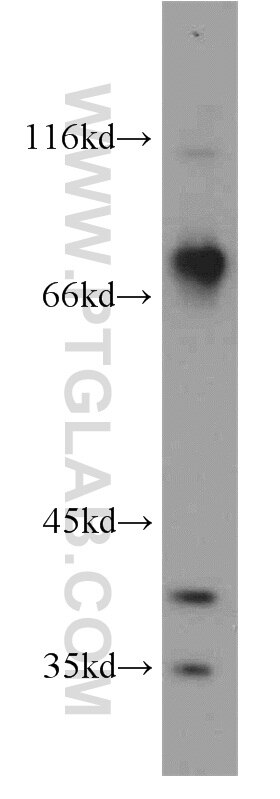
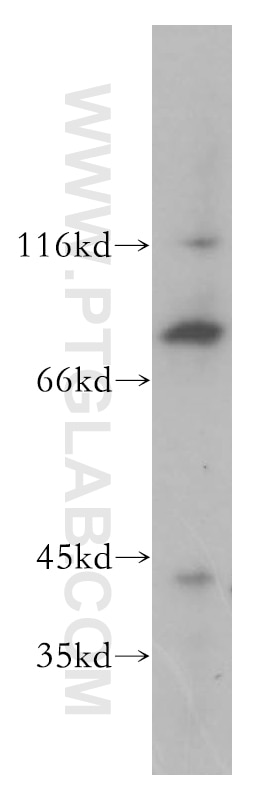
| Positive WB detected in | human brain tissue |
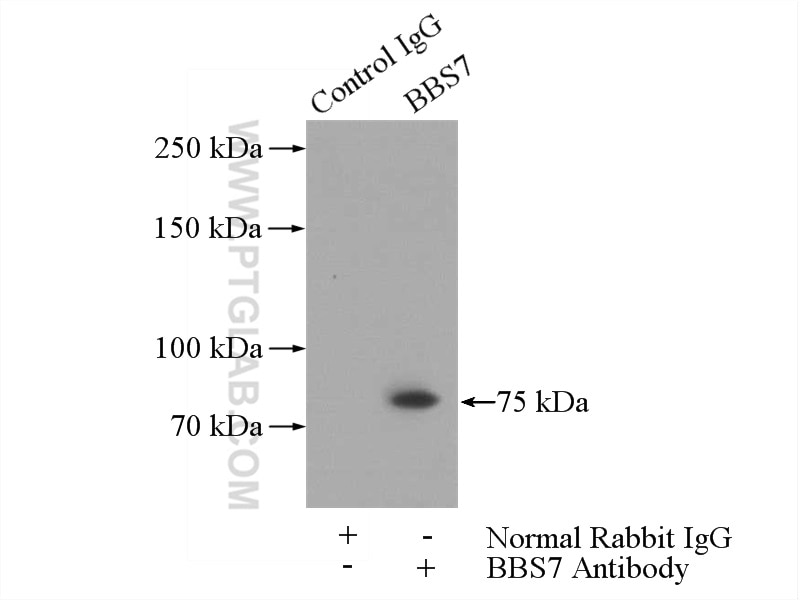
| Positive IP detected in | mouse testis tissue |
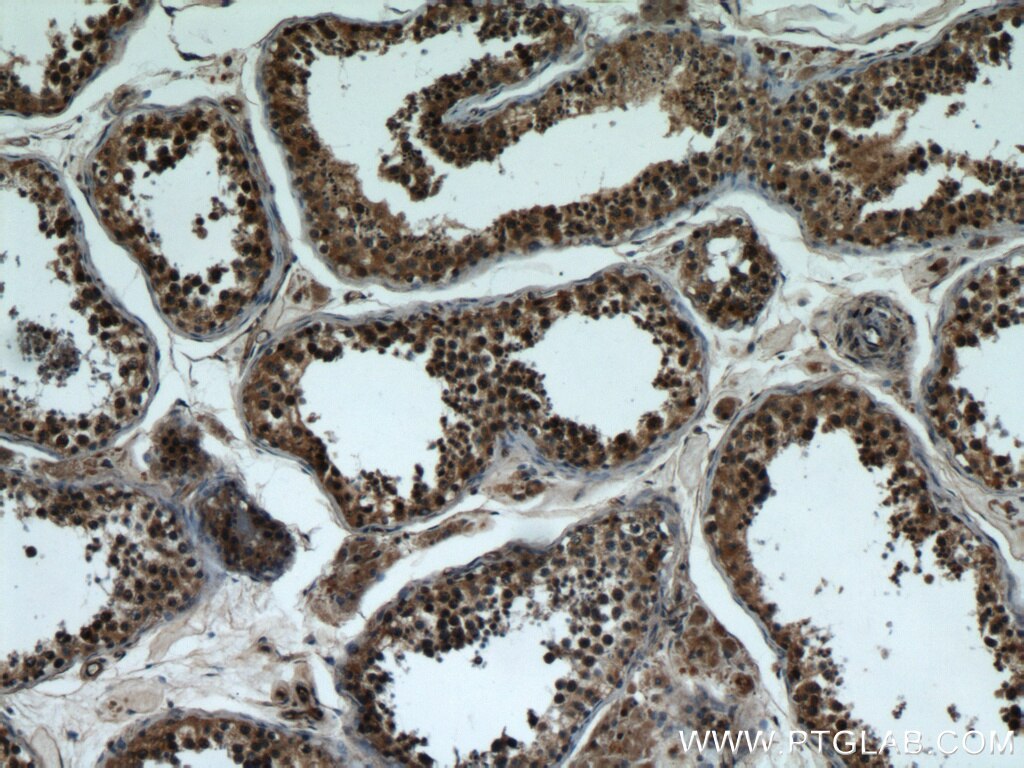
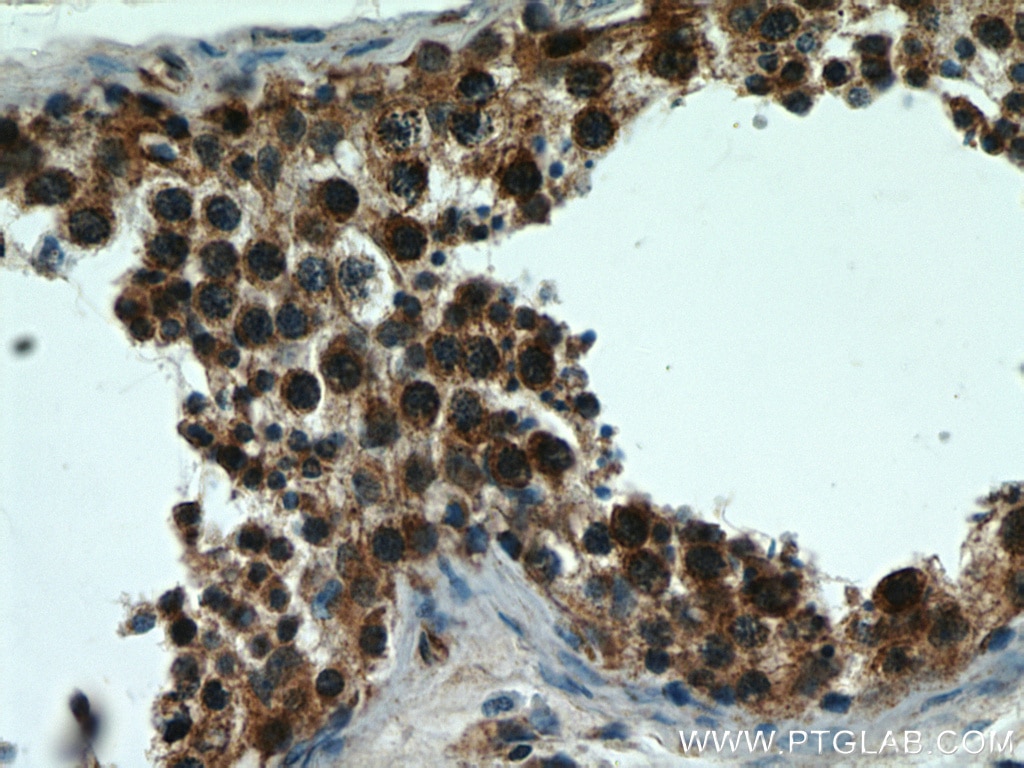
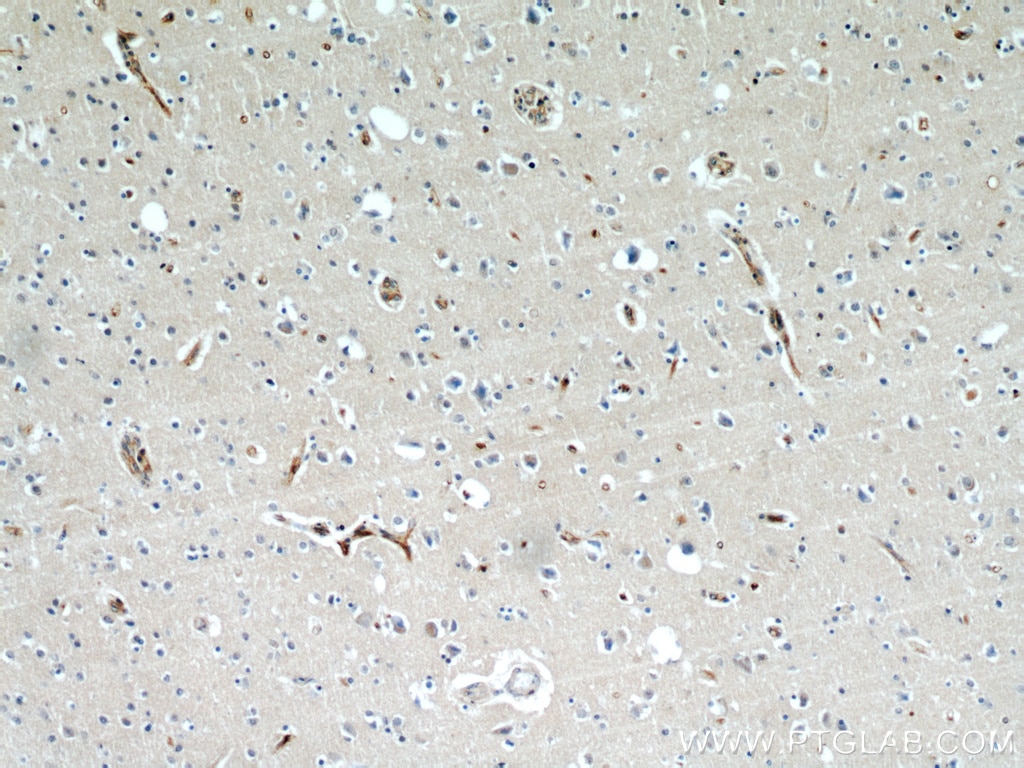
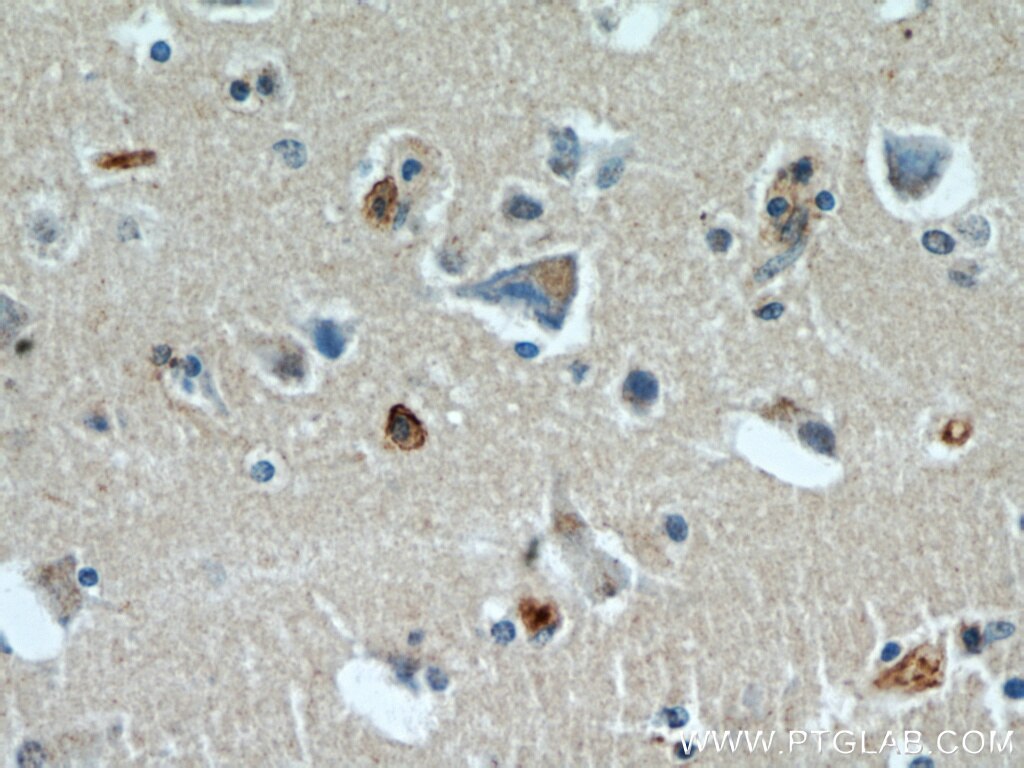
| Positive IHC detected in | human testis tissue, human brain tissue Note: suggested antigen retrieval with TE buffer pH 9.0; (*) Alternatively, antigen retrieval may be performed with citrate buffer pH 6.0 |
Recommended dilution
| Application | Dilution |
|---|---|
| Western Blot (WB) | WB : 1:500-1:3000 |
| Immunoprecipitation (IP) | IP : 0.5-4.0 ug for 1.0-3.0 mg of total protein lysate |
| Immunohistochemistry (IHC) | IHC : 1:20-1:200 |
| It is recommended that this reagent should be titrated in each testing system to obtain optimal results. | |
| Sample-dependent, Check data in validation data gallery. | |
Product Information
18961-1-AP targets BBS7 in WB, IHC, IF, IP, ELISA applications and shows reactivity with human, mouse samples.
| Tested Reactivity | human, mouse |
| Cited Reactivity | human, mouse |
| Host / Isotype | Rabbit / IgG |
| Class | Polyclonal |
| Type | Antibody |
| Immunogen |
CatNo: Ag4601 Product name: Recombinant human BBS7 protein Source: e coli.-derived, PET28a Tag: 6*His Domain: 1-350 aa of BC032691 Sequence: MDLILNRMDYLQVGVTSQKTMKLIPASRHRATQKVVIGDHDGVVMCFGMKKGEAAAVFKTLPGPKIARLELGGVINTPQEKIFIAAASEIRGFTKRGKQFLSFETNLTESIKAMHISGSDLFLSASYIYNHYCDCKDQHYYLSGDKINDVICLPVERLSRITPVLACQDRVLRVLQGSDVMYAVEVPGPPTVLALHNGNGGDSGEDLLFGTSDGKLALIQITTSKPVRKWEIQNEKKRGGILCIDSFDIVGDGVKDLLVGRDDGMVEVYSFDNANEPVLRFDQMLSESVTSIQGGCVGKDSYDEIVVSTYSGWVTGLTTEPIHKESGPGEELKINQEMQNKISSLRNELE Predict reactive species |
| Full Name | Bardet-Biedl syndrome 7 |
| Calculated Molecular Weight | 715 aa, 80 kDa |
| Observed Molecular Weight | 75 kDa |
| GenBank Accession Number | BC032691 |
| Gene Symbol | BBS7 |
| Gene ID (NCBI) | 55212 |
| RRID | AB_2064998 |
| Conjugate | Unconjugated |
| Form | Liquid |
| Purification Method | Antigen affinity purification |
| UNIPROT ID | Q8IWZ6 |
| Storage Buffer | PBS with 0.02% sodium azide and 50% glycerol, pH 7.3. |
| Storage Conditions | Store at -20°C. Stable for one year after shipment. Aliquoting is unnecessary for -20oC storage. 20ul sizes contain 0.1% BSA. |
Background Information
BBS7, also named as BBS2L1, is a component of the BBSome complex which is required for ciliogenesis but is dispensable for centriolar satellite function. BBS7 is mediated in part by the Rab8 GDP/GTP exchange factor, which localizes to the basal body and contacts the BBSome.
Protocols
| Product Specific Protocols | |
|---|---|
| IHC protocol for BBS7 antibody 18961-1-AP | Download protocol |
| IP protocol for BBS7 antibody 18961-1-AP | Download protocol |
| WB protocol for BBS7 antibody 18961-1-AP | Download protocol |
| Standard Protocols | |
|---|---|
| Click here to view our Standard Protocols |
Publications
What published studies show
The BBS7 Polyclonal antibody (Cat# 18961-1-AP) has accumulated 9 citations across journals including PNAS, Investigative Ophthalmology & Visual Science, Scientific Reports, FASEB Journal, Journal of Biological Chemistry, PLoS Genetics, and Human Molecular Genetics. Associated research fields include photoreceptor outer segment biogenesis and degeneration, Bardet-Biedl syndrome, ciliary trafficking of the BBSome complex, retinitis pigmentosa, and rhodopsin mislocalization in mouse models.
| Species | Application | Title |
|---|---|---|
Proc Natl Acad Sci U S A Accumulation of non-outer segment proteins in the outer segment underlies photoreceptor degeneration in Bardet-Biedl syndrome. | ||
Invest Ophthalmol Vis Sci Essential Role of the Chaperonin CCT in Rod Outer Segment Biogenesis. | ||
Sci Rep Proteomics identifies multiple retinitis pigmentosa associated proteins involved in retinal degeneration in a mouse model bearing a Pde6b mutation | ||
FASEB J Rhodopsin mislocalization drives ciliary dysregulation in a novel autosomal dominant retinitis pigmentosa knock-in mouse model | ||
J Biol Chem The myosin-tail homology domain of centrosomal protein 290 is essential for protein confinement between the inner and outer segments in photoreceptors. | ||
PLoS Genet BBSome function is required for both the morphogenesis and maintenance of the photoreceptor outer segment. |








