

Tested Applications
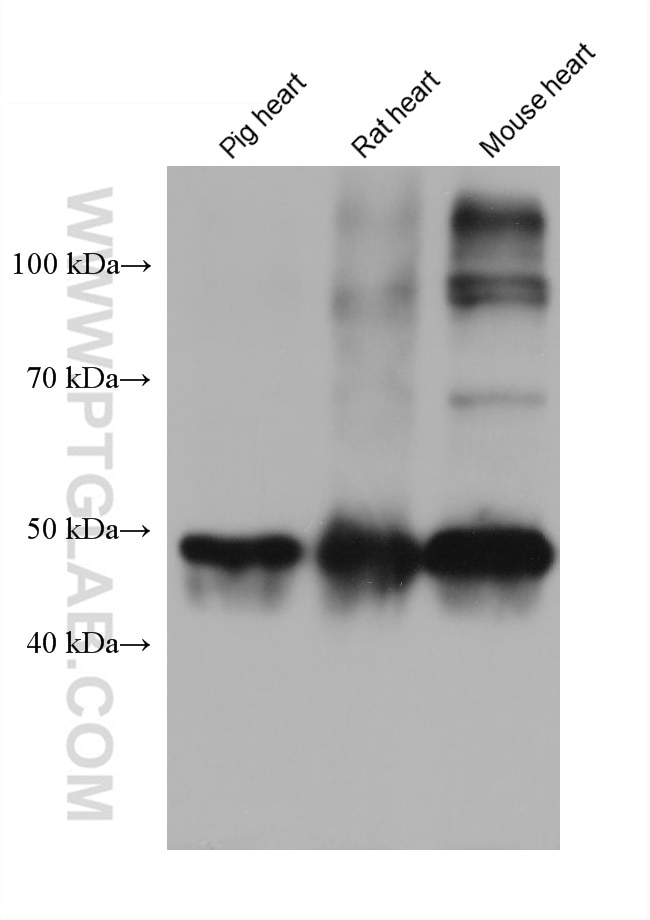
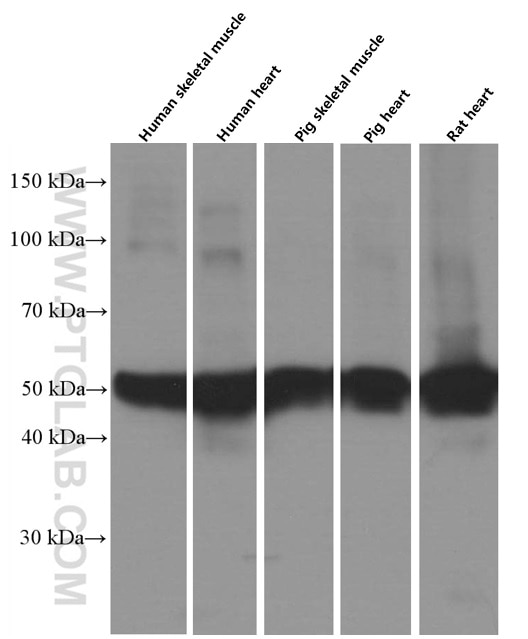
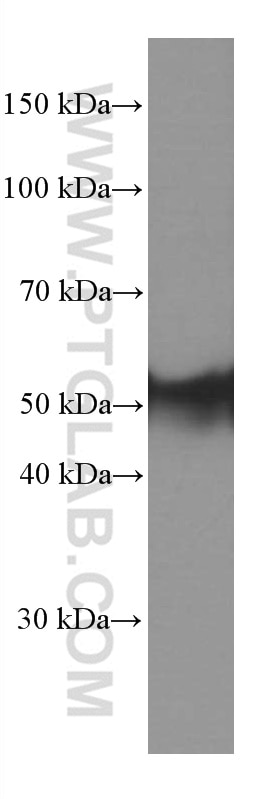
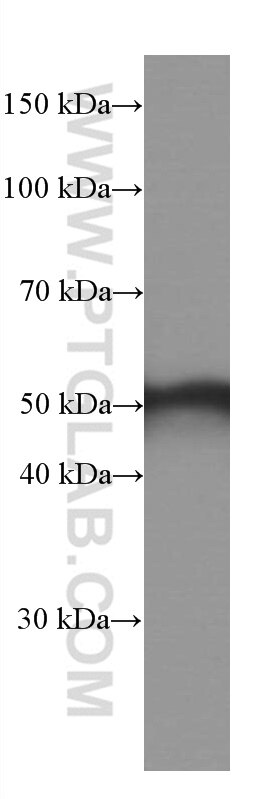
| Positive WB detected in | pig heart tissue, human skeletal muscle tissue, rat skeletal muscle tissue, mouse skeletal muscle tissue, human heart tissue, pig skeletal muscle tissue, rat heart tissue, mouse heart tissue |
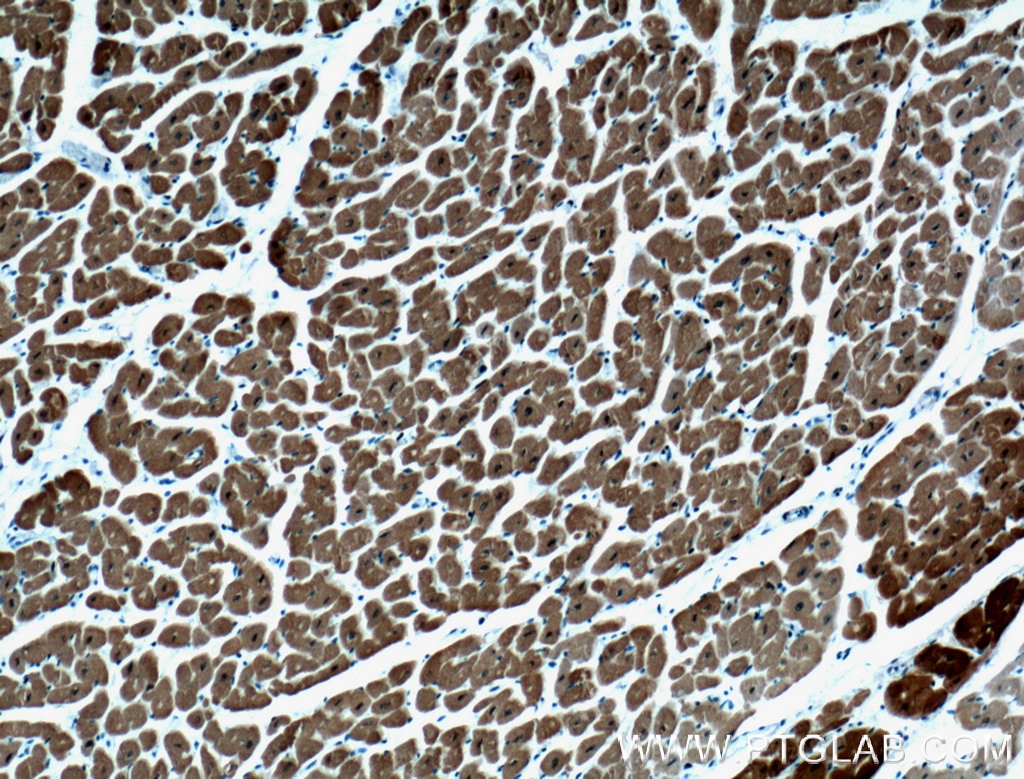
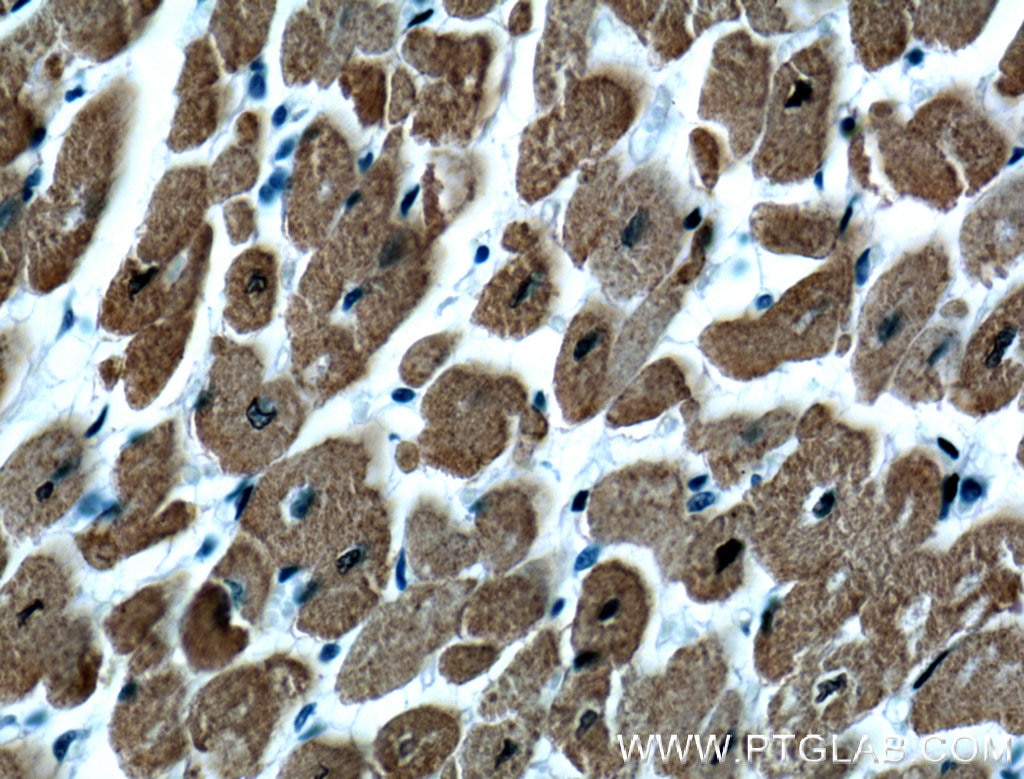
| Positive IHC detected in | human heart tissue Note: suggested antigen retrieval with TE buffer pH 9.0; (*) Alternatively, antigen retrieval may be performed with citrate buffer pH 6.0 |
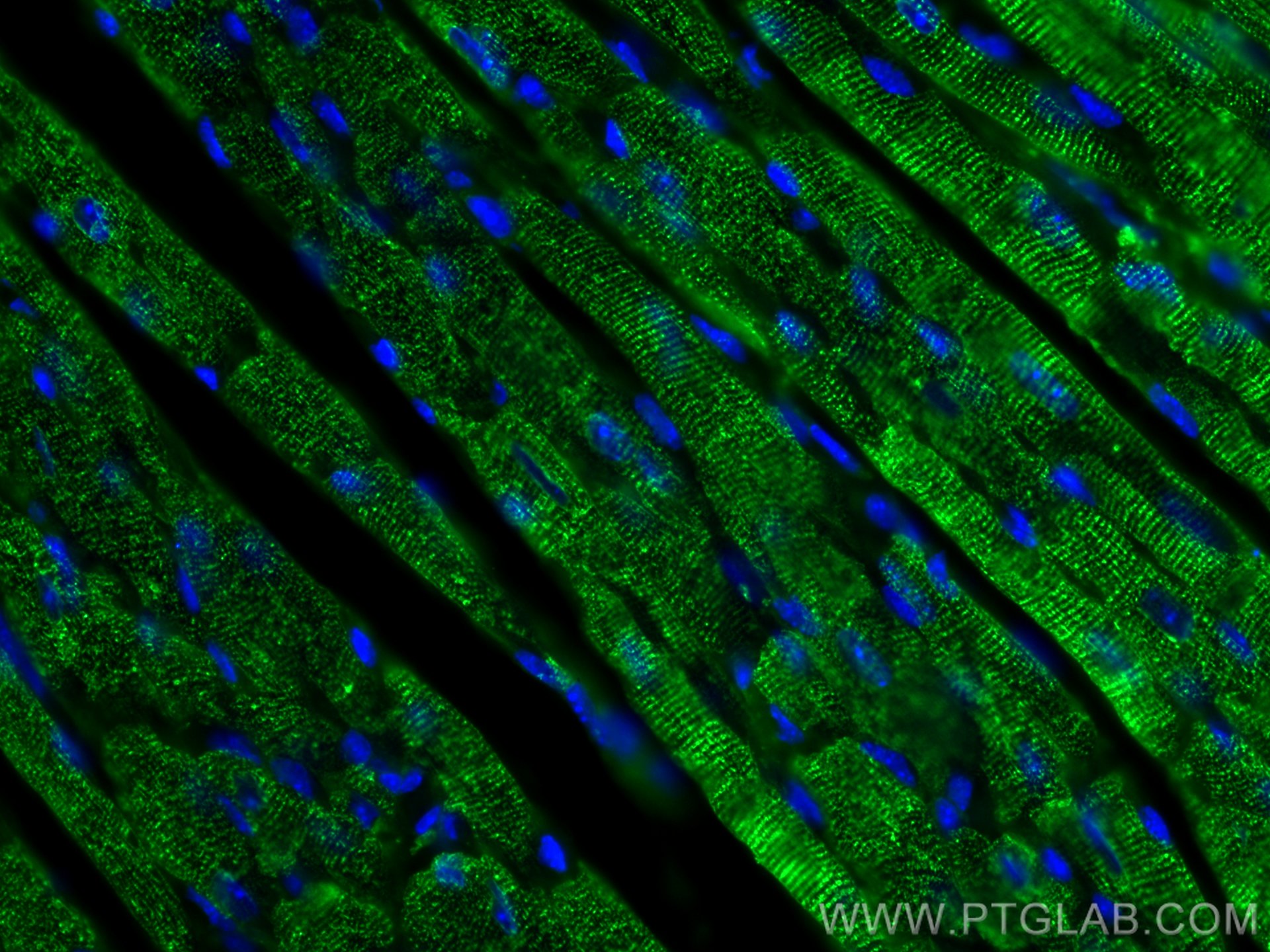
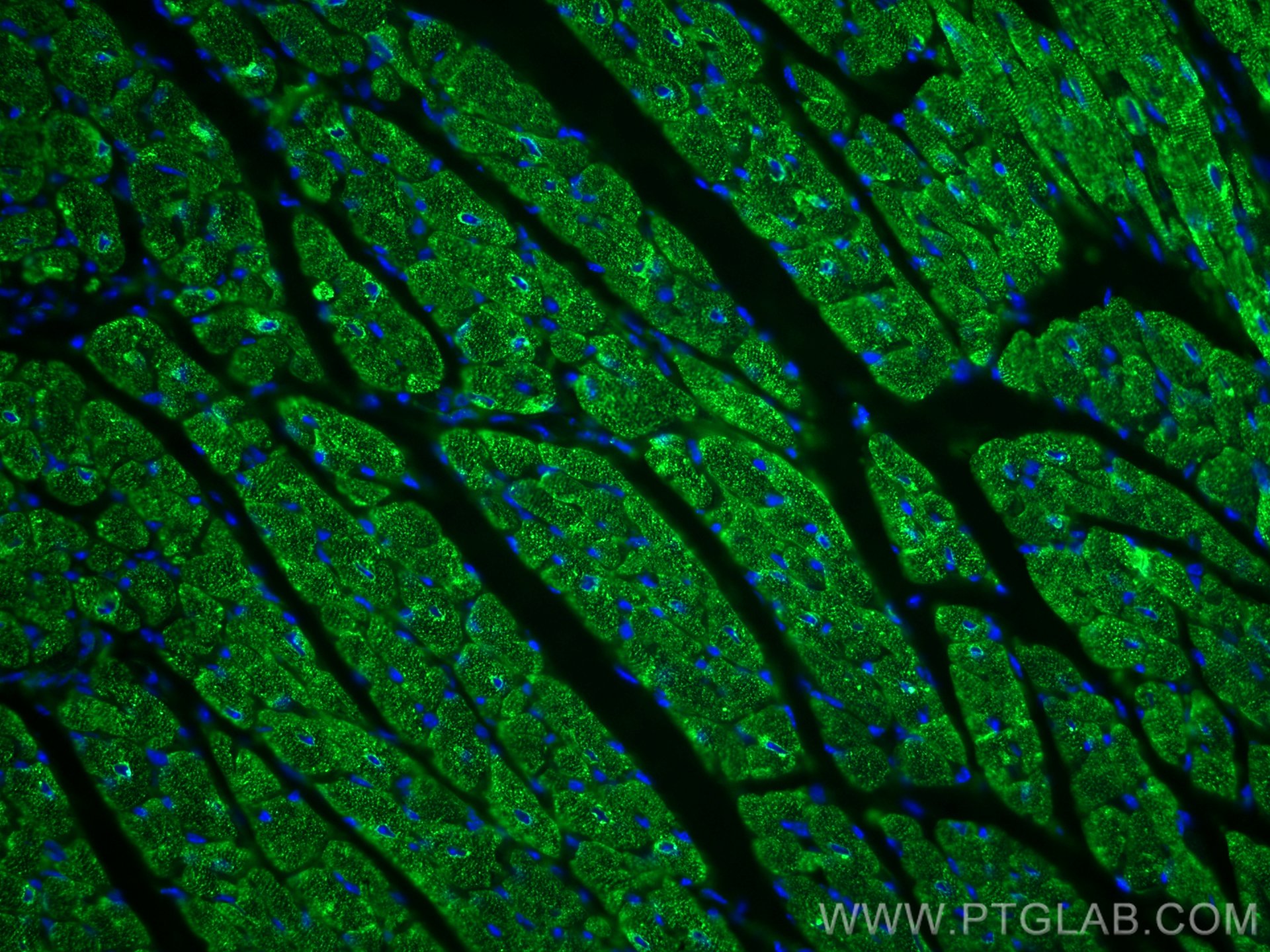
| Positive IF-P detected in | mouse heart tissue |
Recommended dilution
| Application | Dilution |
|---|---|
| Western Blot (WB) | WB : 1:5000-1:50000 |
| Immunohistochemistry (IHC) | IHC : 1:50-1:500 |
| Immunofluorescence (IF)-P | IF-P : 1:200-1:800 |
| It is recommended that this reagent should be titrated in each testing system to obtain optimal results. | |
| Sample-dependent, Check data in validation data gallery. | |
Product Information
66419-1-Ig targets Calsequestrin 2 in WB, IHC, IF-P, ELISA applications and shows reactivity with human, rat, pig, mouse samples.
| Tested Reactivity | human, rat, pig, mouse |
| Cited Reactivity | human |
| Host / Isotype | Mouse / IgG2a |
| Class | Monoclonal |
| Type | Antibody |
| Immunogen |
CatNo: Ag13246 Product name: Recombinant human CASQ2 protein Source: e coli.-derived, T-HIS Tag: 6*His Domain: 1-399 aa of BC022288 Sequence: MKRTHLFIVGIYFLSSCRAEEGLNFPTYDGKDRVVSLSEKNFKQVLKKYDLLCLYYHEPVSSDKVTQKQFQLKEIVLELVAQVLEHKAIGFVMVDAKKEAKLAKKLGFDEEGSLYILKGDRTIEFDGEFAADVLVEFLLDLIEDPVEIISSKLEVQAFERIEDYIKLIGFFKSEDSEYYKAFEEAAEHFQPYIKFFATFDKGVAKKLSLKMNEVDFYEPFMDEPIAIPNKPYTEEELVEFVKEHQRPTLRRLRPEEMFETWEDDLNGIHIVAFAEKSDPDGYEFLEILKQVARDNTDNPDLSILWIDPDDFPLLVAYWEKTFKIDLFRPQIGVVNVTDADSVWMEIPDDDDLPTAEELEDWIEDVLSGKINTEDDDEDDDDDDNSDEEDNDDSDDDDDE Predict reactive species |
| Full Name | calsequestrin 2 (cardiac muscle) |
| Calculated Molecular Weight | 46 kDa |
| Observed Molecular Weight | 50 kDa |
| GenBank Accession Number | BC022288 |
| Gene Symbol | Calsequestrin 2 |
| Gene ID (NCBI) | 845 |
| RRID | AB_2881791 |
| Conjugate | Unconjugated |
| Form | Liquid |
| Purification Method | Protein A purification |
| UNIPROT ID | O14958 |
| Storage Buffer | PBS with 0.02% sodium azide and 50% glycerol, pH 7.3. |
| Storage Conditions | Store at -20°C. Stable for one year after shipment. Aliquoting is unnecessary for -20oC storage. 20ul sizes contain 0.1% BSA. |
Background Information
Calsequestrin (CASQ) is a Ca2+-binding protein present primarily in junctional sarcoplasmic reticulum of skeletal and cardiac muscle; the cardiac form (CASQ2) is encoded by a separate gene. The primary role of CASQ2 is buffering of the sarcoplasmic reticulum Ca2+ ions, but another role for CASQ2 has emerged recently: CASQ2 regulates the open probability of ryanodine receptor 2 (RyR2). Mutations in CASQ2 cause stress-induced polymorphic ventricular tachycardia, also referred to as catecholaminergic polymorphic ventricular tachycardia 2 (CPVT2), a disease characterized by bidirectional ventricular tachycardia that may lead to cardiac arrest.
Protocols
| Product Specific Protocols | |
|---|---|
| IF protocol for Calsequestrin 2 antibody 66419-1-Ig | Download protocol |
| IHC protocol for Calsequestrin 2 antibody 66419-1-Ig | Download protocol |
| WB protocol for Calsequestrin 2 antibody 66419-1-Ig | Download protocol |
| Standard Protocols | |
|---|---|
| Click here to view our Standard Protocols |
Publications
What published studies show
The Calsequestrin 2 (CASQ2) Monoclonal antibody (1C10A1), catalog number 66419-1-Ig, has 2 total citations. These appear in Journal of Neuropathology & Experimental Neurology (2020), where it was used for IHC in studying sarcotubular system alterations in hereditary hypokalemic periodic paralysis, and Discover Oncology (2025), where it was applied in WB for constructing a multimodal esophageal cancer prognostic model. The associated research fields are neuropathology and oncology.
| Species | Application | Title |
|---|---|---|
J Neuropathol Exp Neurol Morphological Alterations of the Sarcotubular System in Permanent Myopathy of Hereditary Hypokalemic Periodic Paralysis with a Mutation in the CACNA1S Gene. | ||
Discov Oncol Construction of a multimodal esophageal cancer prognostic model with screening of key genes and investigation of their biological functions. |









