
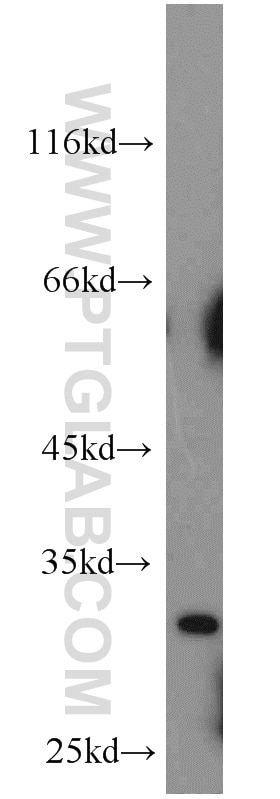
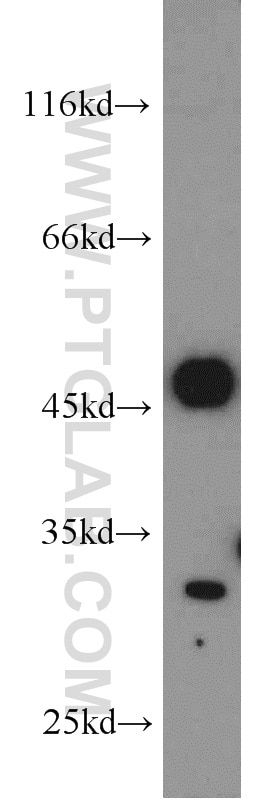
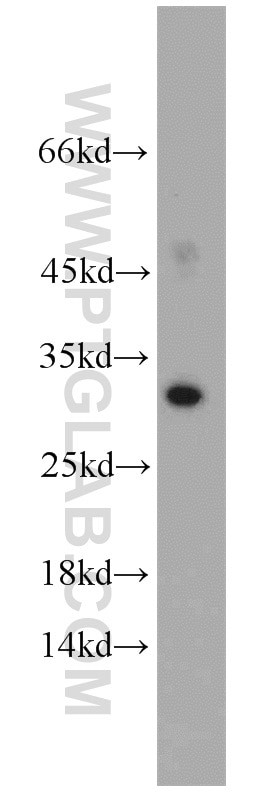
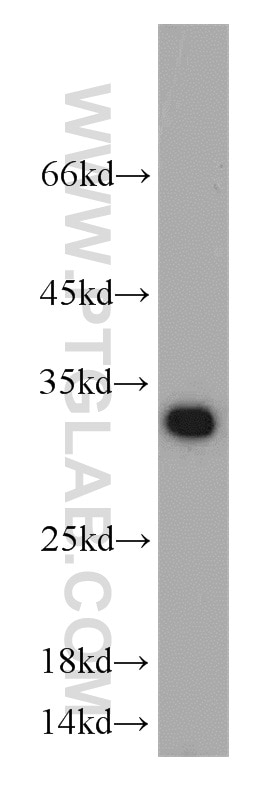

Tested Applications
| Positive WB detected in | mouse heart tissue, human heart tissue, human placenta tissue, MCF-7 cells |
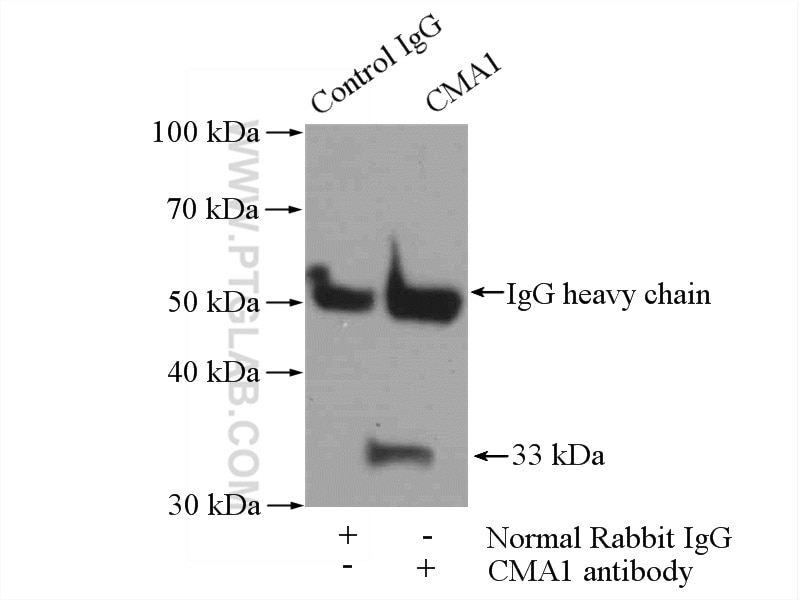
| Positive IP detected in | mouse heart tissue |
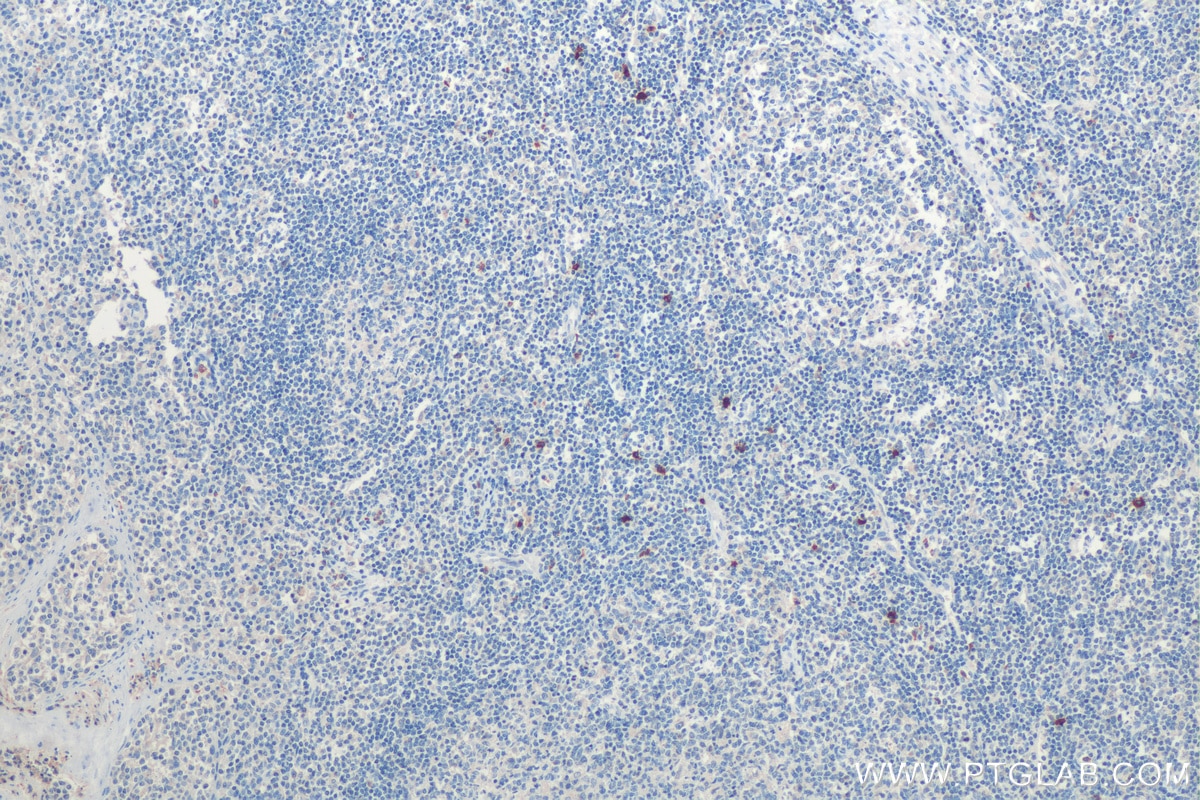
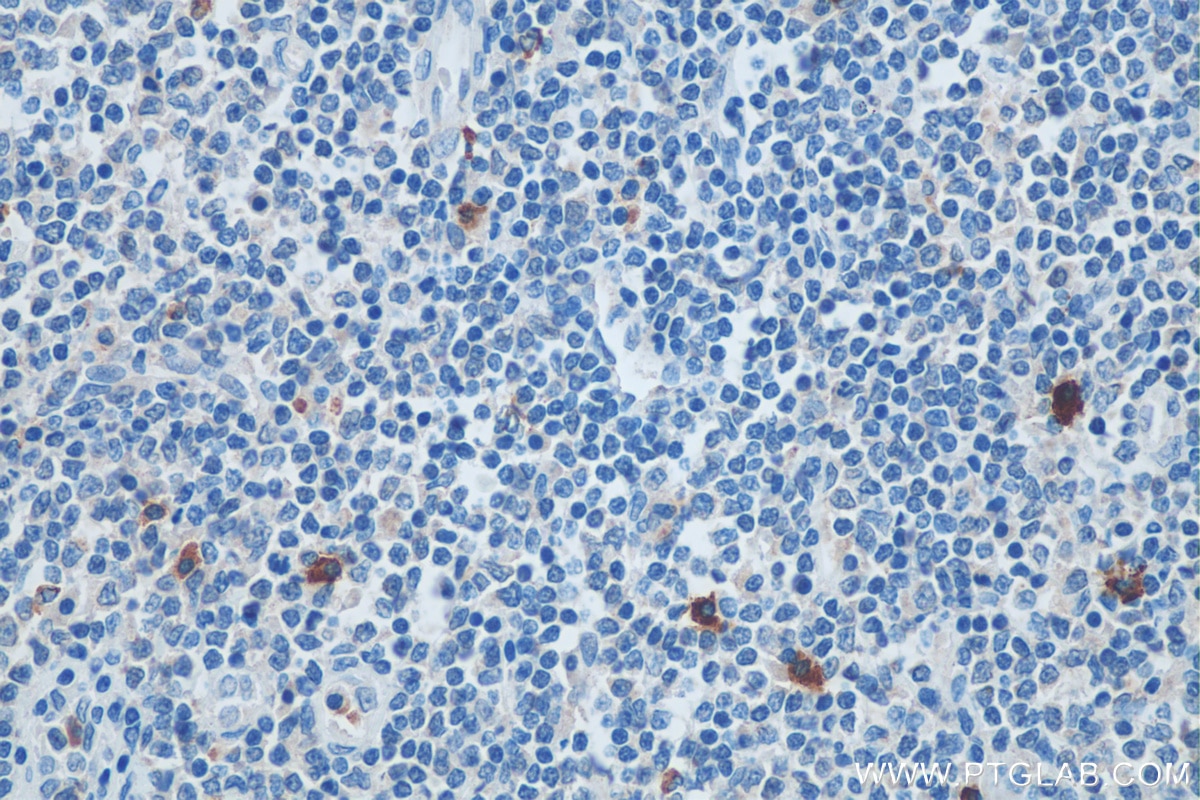
| Positive IHC detected in | human tonsillitis tissue Note: suggested antigen retrieval with TE buffer pH 9.0; (*) Alternatively, antigen retrieval may be performed with citrate buffer pH 6.0 |
Recommended dilution
| Application | Dilution |
|---|---|
| Western Blot (WB) | WB : 1:500-1:1000 |
| Immunoprecipitation (IP) | IP : 0.5-4.0 ug for 1.0-3.0 mg of total protein lysate |
| Immunohistochemistry (IHC) | IHC : 1:50-1:500 |
| It is recommended that this reagent should be titrated in each testing system to obtain optimal results. | |
| Sample-dependent, Check data in validation data gallery. | |
Product Information
18189-1-AP targets Mast Cell Chymase in WB, IF, IP, ELISA applications and shows reactivity with human, mouse, rat samples.
| Tested Reactivity | human, mouse, rat |
| Cited Reactivity | human, mouse, rat |
| Host / Isotype | Rabbit / IgG |
| Class | Polyclonal |
| Type | Antibody |
| Immunogen |
CatNo: Ag12909 Product name: Recombinant human CMA1 protein Source: e coli.-derived, PGEX-4T Tag: GST Domain: 1-247 aa of BC069370 Sequence: MLLLPLPLLLFLLCSRAEAGEIIGGTECKPHSRPYMAYLEIVTSNGPSKFCGGFLIRRNFVLTAAHCAGRSITVTLGAHNITEEEDTWQKLEVIKQFRHPKYNTSTLHHDIMLLKLKEKASLTLAVGTLPFPSQFNFVPPGRMCRVAGWGRTGVLKPGSDTLQEVKLRLMDPQACSHFRDFDHNLQLCVGNPRKTKSAFKGDSGGPLLCAGVAQGIVSYGRSDAKPPAVFTRISHYRPWINQILQAN Predict reactive species |
| Full Name | chymase 1, mast cell |
| Calculated Molecular Weight | 247 aa, 27 kDa |
| Observed Molecular Weight | 27-30 kDa |
| GenBank Accession Number | BC069370 |
| Gene Symbol | Mast Cell Chymase |
| Gene ID (NCBI) | 1215 |
| RRID | AB_2083611 |
| Conjugate | Unconjugated |
| Form | Liquid |
| Purification Method | Antigen affinity purification |
| UNIPROT ID | P23946 |
| Storage Buffer | PBS with 0.02% sodium azide and 50% glycerol, pH 7.3. |
| Storage Conditions | Store at -20°C. Stable for one year after shipment. Aliquoting is unnecessary for -20oC storage. 20ul sizes contain 0.1% BSA. |
Background Information
Mast Cell Chymase, also named as CYH, CYM and CMA1, belongs to the peptidase S1 family and Granzyme subfamily. It is the major secreted protease of mast cells with suspected roles in vasoactive peptide generation, extracellular matrix degradation, and regulation of gland secretion. CMA1 maybe a target for cardiovascular disease therapies.
Protocols
| Product Specific Protocols | |
|---|---|
| IHC protocol for Mast Cell Chymase antibody 18189-1-AP | Download protocol |
| IP protocol for Mast Cell Chymase antibody 18189-1-AP | Download protocol |
| WB protocol for Mast Cell Chymase antibody 18189-1-AP | Download protocol |
| Standard Protocols | |
|---|---|
| Click here to view our Standard Protocols |
Publications
What published studies show
The Mast Cell Chymase Polyclonal antibody (18189-1-AP) has 17 citations across journals including J Nanobiotechnology, Advanced Science, PNAS, Arterioscler Thromb Vasc Biol, Frontiers in Immunology, European Journal of Pharmacology, International Journal of Molecular Sciences, International Immunopharmacology, Mucosal Immunology, Immunology, Scientific Reports, Cell Cycle, Disease Models & Mechanisms, Shock, Biochem Biophys Res Commun, and Protein Expr Purif. Research fields span mast cell biology, immunology/allergy, cardiovascular disease, cancer, and protein expression.
| Species | Application | Title |
|---|---|---|
J Nanobiotechnology Fabrication of levofloxacin-loaded porcine acellular dermal matrix hydrogel and functional assessment in urinary tract infection | ||
Adv Sci (Weinh) Endothelial Cells Mediated by UCP2 Control the Neurogenic-to-Astrogenic Neural Stem Cells Fate Switch During Brain Development.
| ||
Proc Natl Acad Sci U S A Perinatal androgens organize sex differences in mast cells and attenuate anaphylaxis severity into adulthood. | ||
Arterioscler Thromb Vasc Biol Stabilization of Perivascular Mast Cells by Endothelial CNP (C-Type Natriuretic Peptide). | ||
Eur J Pharmacol Exploration of the effect of salvianolate on myocardial infarction in rats based on tandem mass tags. |
Reviews
What customers say
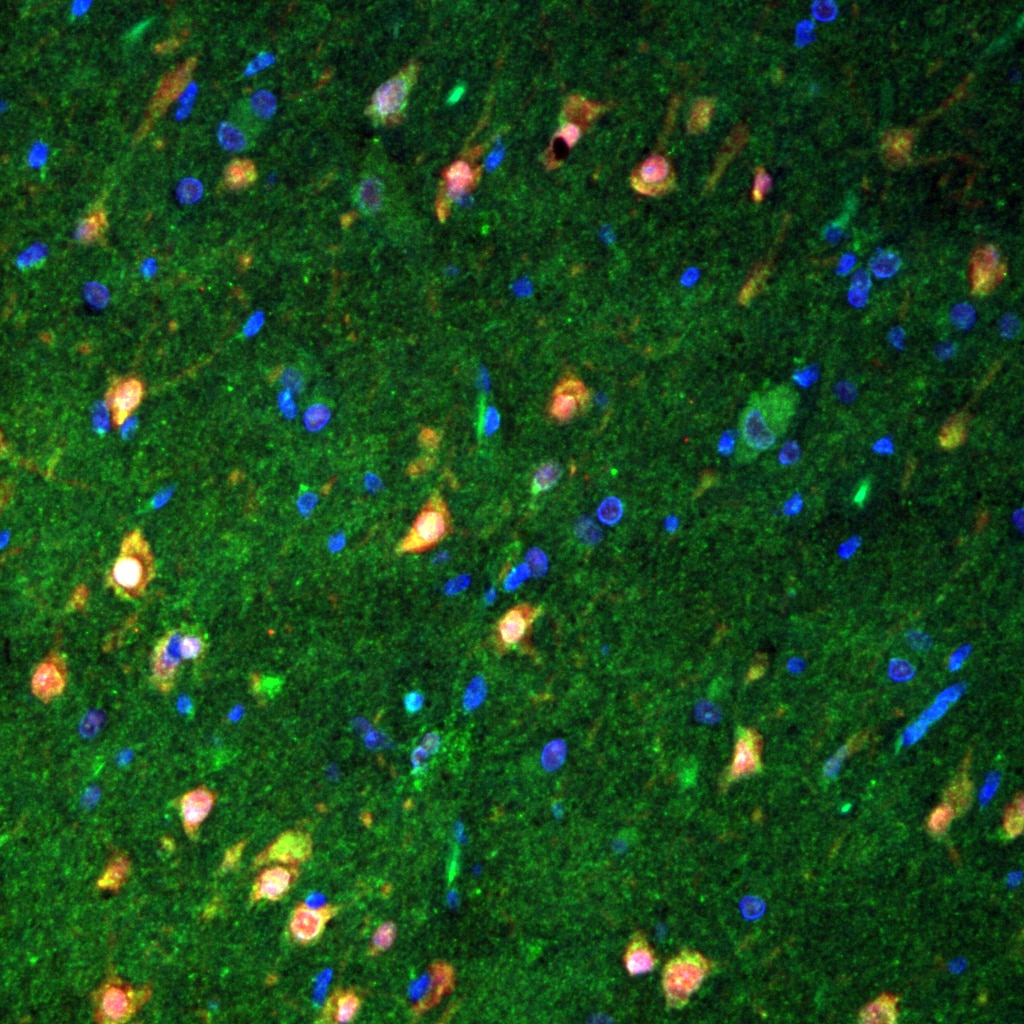
The single review for this product (rated 2/5) reports use in immunofluorescence on human brain cortex at a 1:100 dilution. The reviewer found that the antibody, intended to specifically mark mast cells, did not perform as expected on epileptic human FFPE cortex tissue. In addition to the intended mast cell signal, the reviewer observed non-specific puncta-like staining in neurons, suggesting limited specificity for the target application. Overall, the feedback indicates the antibody may not be ideal for this particular tissue and staining context.
The reviews below have been submitted by verified Proteintech customers who received an incentive for providing their feedback.
Reyes (Verified Customer) (02-14-2025) | MCC (in green) does not seem to have worked specifically on the epileptic human FFPE cortex. It is supposed to mark only mast cells, but it seems to have some puncta-like staining of the neurons (in red) too.
 |








