

Tested Applications
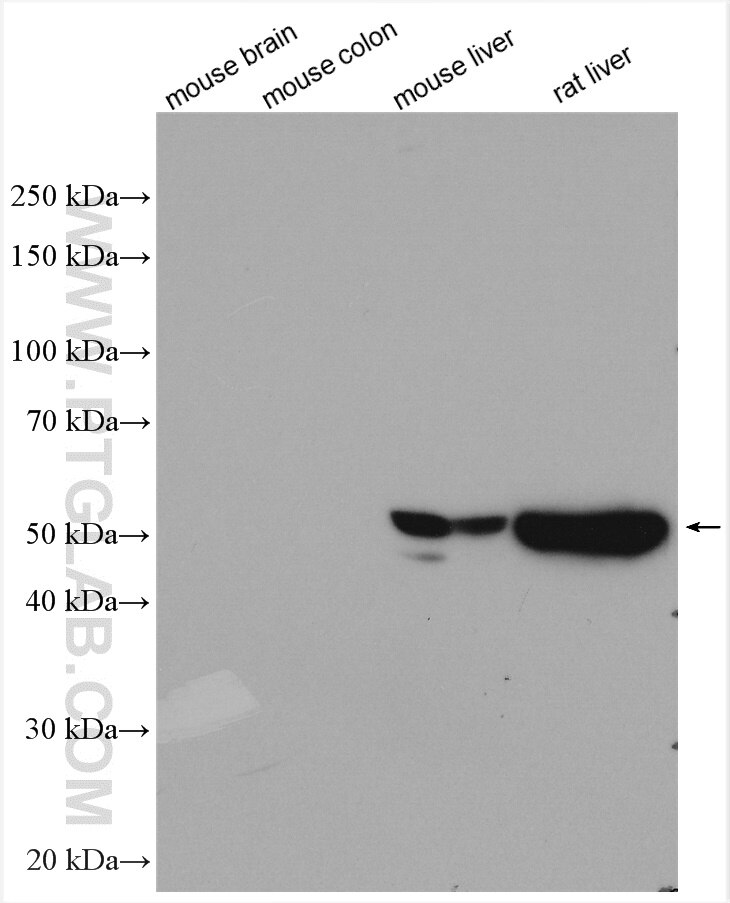
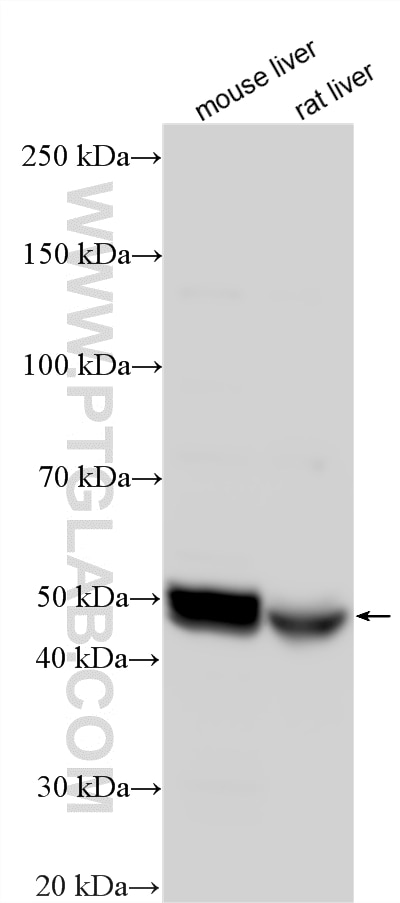
| Positive WB detected in | mouse liver tissue, rat liver tissue |
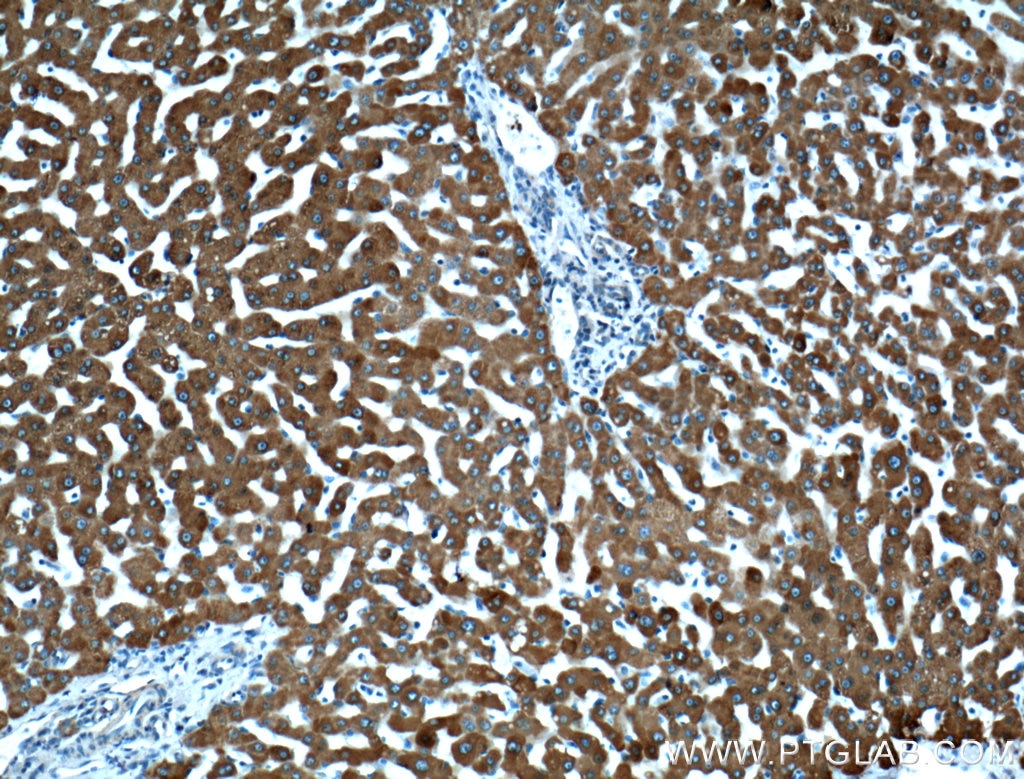
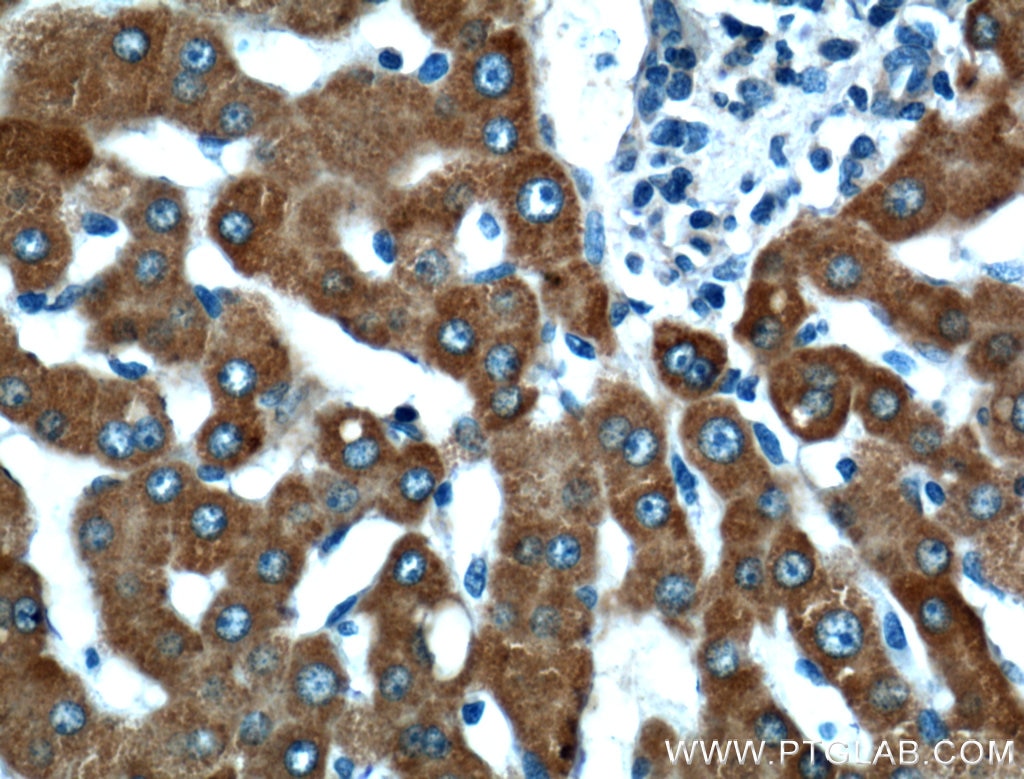
| Positive IHC detected in | human liver tissue Note: suggested antigen retrieval with TE buffer pH 9.0; (*) Alternatively, antigen retrieval may be performed with citrate buffer pH 6.0 |
Recommended dilution
| Application | Dilution |
|---|---|
| Western Blot (WB) | WB : 1:5000-1:50000 |
| Immunohistochemistry (IHC) | IHC : 1:50-1:500 |
| It is recommended that this reagent should be titrated in each testing system to obtain optimal results. | |
| Sample-dependent, Check data in validation data gallery. | |
Product Information
18227-1-AP targets CYP3A4 in WB, IHC, IF, ELISA applications and shows reactivity with human, mouse, rat samples.
| Tested Reactivity | human, mouse, rat |
| Cited Reactivity | human, mouse, rat, monkey |
| Host / Isotype | Rabbit / IgG |
| Class | Polyclonal |
| Type | Antibody |
| Immunogen |
CatNo: Ag13074 Product name: Recombinant human CYP3A4 protein Source: e coli.-derived, T-HIS Tag: 6*His Domain: 154-503 aa of BC101631 Sequence: DVLVRNLRREAETGKPVTLKDVFGAYSMDVITSTSFGVNIDSLNNPQDPFVENTKKLLRFDFLDPFFLSITVFPFLIPILEVLNICVFPREVTNFLRKSVKRMKESRLEDTQKHRVDFLQLMIDSQNSKETESHKALSDLELVAQSIIFIFAGYETTSSVLSFIMYELATHPDVQQKLQEEIDAVLPNKAPPTYDTVLQMEYLDMVVNETLRLFPIAMRLERVCKKDVEINGMFIPKGVVVMIPSYALHRDPKYWTEPEKFLPERFSKKNKDNIDPYIYTPFGSGPRNCIGMRFALMNMKLALIRVLQNFSFKPCKETQIPLKLSLGGLLQPEKPVVLKVESRDGTVSGA Predict reactive species |
| Full Name | cytochrome P450, family 3, subfamily A, polypeptide 4 |
| Calculated Molecular Weight | 503 aa, 57 kDa |
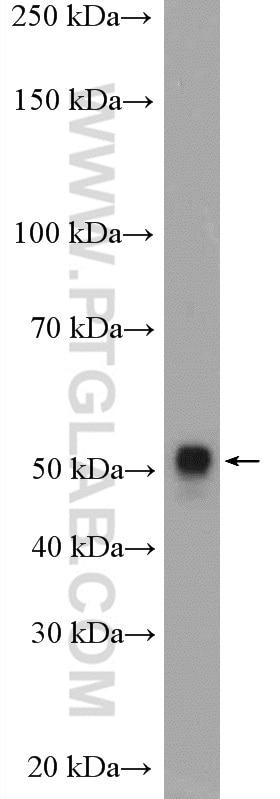
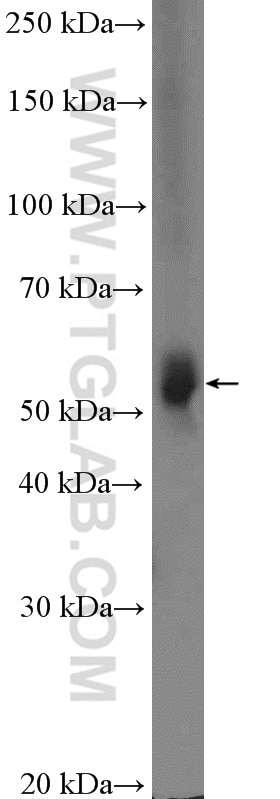
| Observed Molecular Weight | 51-57 kDa |
| GenBank Accession Number | BC101631 |
| Gene Symbol | CYP3A4 |
| Gene ID (NCBI) | 1576 |
| RRID | AB_2090329 |
| Conjugate | Unconjugated |
| Form | Liquid |
| Purification Method | Antigen affinity purification |
| UNIPROT ID | P08684 |
| Storage Buffer | PBS with 0.02% sodium azide and 50% glycerol, pH 7.3. |
| Storage Conditions | Store at -20°C. Stable for one year after shipment. Aliquoting is unnecessary for -20oC storage. 20ul sizes contain 0.1% BSA. |
Background Information
Cytochrome P450 3A(CYP3A) belongs to the cytochrome P450 family and the enzymes constitute an important detoxification system that contributes to primary metabolism of more than half of all prescribed medications.CYP3A expression determines impairment of drug absorption and efficient systemic clearance in a tissue-specific manner(PMID:17975676). The highest amounts of drug-metabolizing cytochromes P-450 are found in the liver and intestine, with lower amounts found in other organs, including the kidney, lung, and brain. LPS that has reached the circulation stimulates a TLR4-dependent mechanism in the periphery, evoking a reduction in Cyp3a11 expression and metabolism in the liver (PMID: 15878984). Human CYP3A4 is homologous to five mouse P450 isoforms, namely, Cyp3a11, Cyp3a16, Cyp3a41a, Cyp3a41b, and Cyp3a44 (PMID: 22446519). And CYP3A4 is also the human homologue of rat CYP3A1 and CYP3A2 (PMID: 27546062, PMID: 32874920).
Protocols
| Product Specific Protocols | |
|---|---|
| IHC protocol for CYP3A4 antibody 18227-1-AP | Download protocol |
| WB protocol for CYP3A4 antibody 18227-1-AP | Download protocol |
| Standard Protocols | |
|---|---|
| Click here to view our Standard Protocols |
Publications
What published studies show
The CYP3A4 Polyclonal antibody (Cat# 18227-1-AP) has 97 citations. They appear across journals including Nature Communications, Cancer Research, Hepatology, Theranostics, Acta Pharm Sin B, Biomaterials, Cell Death & Disease, iScience, PLoS Biology, PLoS One, and Xenobiotica. Research fields span drug metabolism and pharmacokinetics, hepatotoxicity and liver injury, drug–drug interactions, CYP3A4/PXR regulation, liver tissue engineering and organoids, cancer (HCC, cholangiocarcinoma), and toxicology. Applications are mainly WB, IF, and IHC.
| Species | Application | Title |
|---|---|---|
Cancer Res ANO1 reprograms cholesterol metabolism and the tumor microenvironment to promote cancer metastasis | ||
Nat Commun A transcriptome based molecular classification scheme for cholangiocarcinoma and subtype-derived prognostic biomarker | ||
Nat Commun Pregnane X receptor agonist nomilin extends lifespan and healthspan in preclinical models through detoxification functions | ||
Hepatology Self-renewal of hepatoblasts under chemically defined conditions by reiterative growth factor and chemical screening. | ||
J Adv Res Gut microbiota and host Cyp450s co-contribute to pharmacokinetic variability in mice with non-alcoholic steatohepatitis: Effects vary from drug to drug | ||
Theranostics Generation of hepatic spheroids using human hepatocyte-derived liver progenitor-like cells for hepatotoxicity screening. |
Reviews
What customers say
All three reviews are for Western Blot applications and are consistently positive. Reviewers report strong, clear signals with this antibody across multiple sample types, including human organoids, SW620/SW480 cells, and mouse liver tissue. Dilutions of 1:1000 and 1:2000 were used successfully. Ratings range from 4 to 5 stars, with two reviewers giving the highest score. Overall, customers describe the antibody as working "really well" and producing good to strong signal intensity, indicating reliable performance for WB.
The reviews below have been submitted by verified Proteintech customers who received an incentive for providing their feedback.
Yogain (Verified Customer) (12-19-2025) | Antibody works really well for western blot.
|
Hua (Verified Customer) (10-22-2025) | Very good antibody for WB. Strong signal.
 |
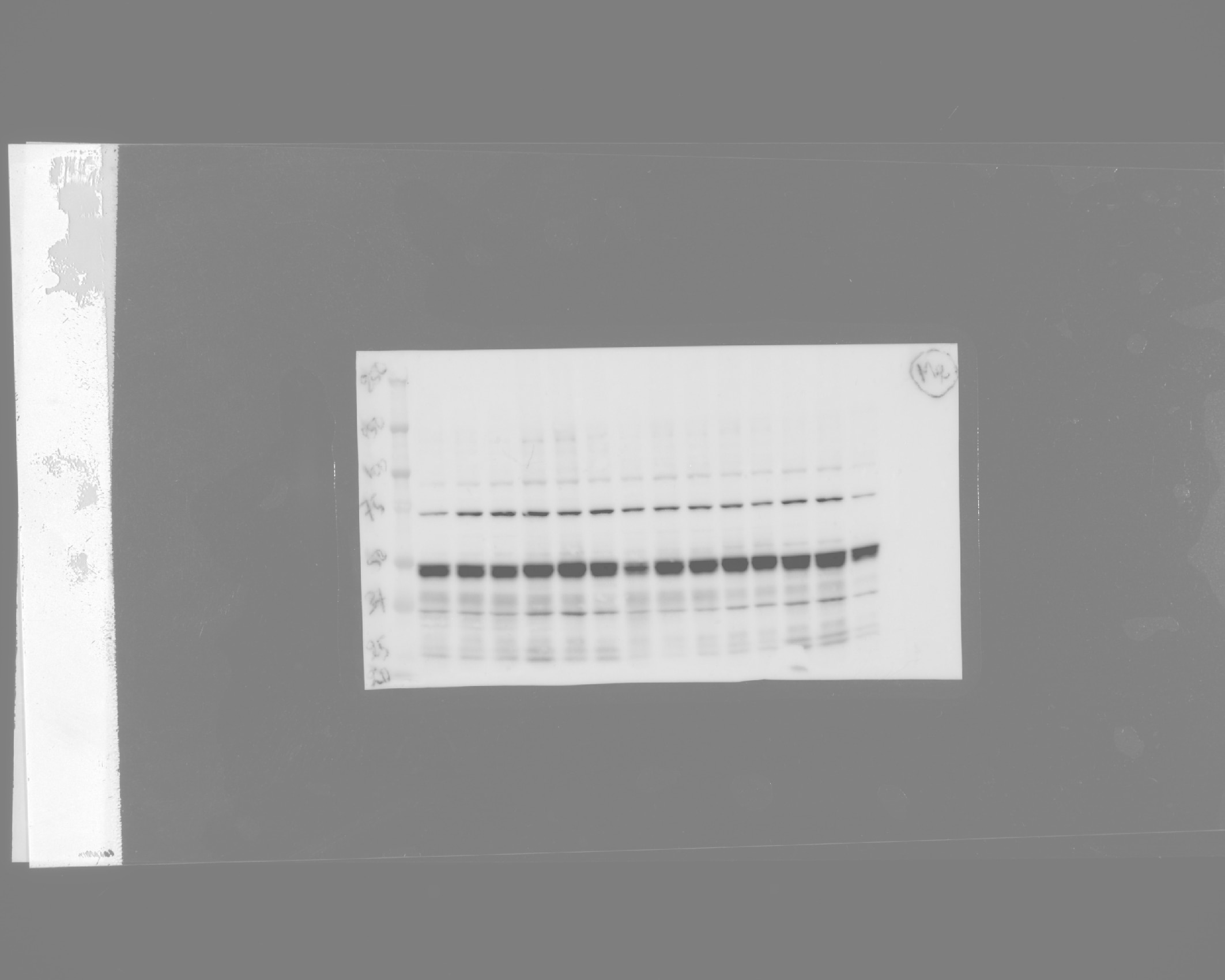
James (Verified Customer) (11-30-2022) | Good signal with this antibody
 |







