

Tested Applications
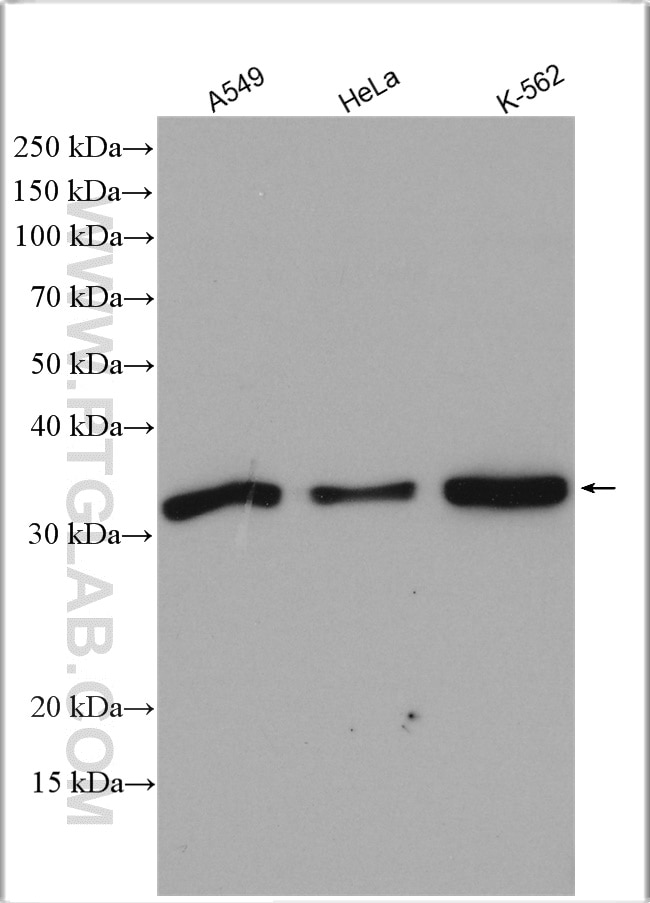
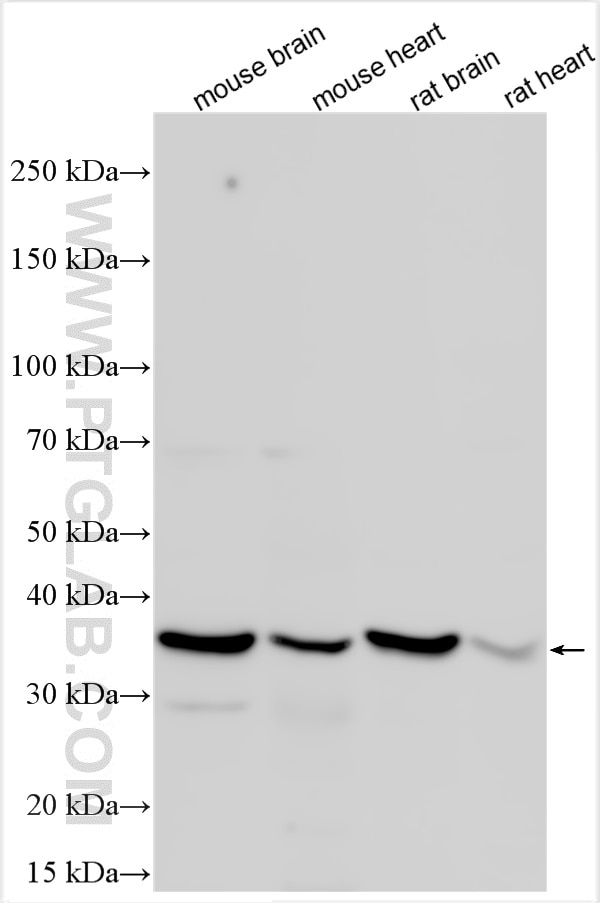
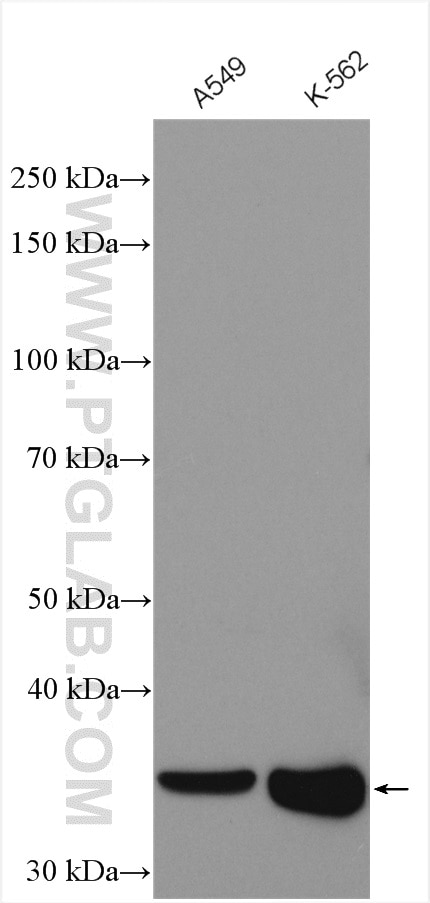
| Positive WB detected in | A549 cells, mouse brain tissue, K-562 cells, HeLa cells, mouse heart tissue, rat brain tissue, rat heart tissue |
Recommended dilution
| Application | Dilution |
|---|---|
| Western Blot (WB) | WB : 1:2000-1:16000 |
| It is recommended that this reagent should be titrated in each testing system to obtain optimal results. | |
| Sample-dependent, Check data in validation data gallery. | |
Product Information
21112-1-AP targets DKK1 in WB, IHC, IF, ELISA applications and shows reactivity with human, mouse, rat samples.
| Tested Reactivity | human, mouse, rat |
| Cited Reactivity | human, mouse, rat, rabbit |
| Host / Isotype | Rabbit / IgG |
| Class | Polyclonal |
| Type | Antibody |
| Immunogen |
CatNo: Ag15110 Product name: Recombinant human DKK1 protein Source: e coli.-derived, PGEX-4T Tag: GST Domain: 32-191 aa of BC001539 Sequence: TLNSVLNSNAIKNLPPPLGGAAGHPGSAVSAAPGILYPGGNKYQTIDNYQPYPCAEDEECGTDEYCASPTRGGDAGVQICLACRKRRKRCMRHAMCCPGNYCKNGICVSSDQNHFRGEIEETITESFGNDHSTLDGYSRRTTLSSKMYHTKGQEGSVCLR Predict reactive species |
| Full Name | dickkopf homolog 1 (Xenopus laevis) |
| Calculated Molecular Weight | 266 aa, 29 kDa |
| Observed Molecular Weight | 30-35 kDa |
| GenBank Accession Number | BC001539 |
| Gene Symbol | DKK1 |
| Gene ID (NCBI) | 22943 |
| RRID | AB_10733097 |
| Conjugate | Unconjugated |
| Form | Liquid |
| Purification Method | Antigen affinity purification |
| UNIPROT ID | O94907 |
| Storage Buffer | PBS with 0.02% sodium azide and 50% glycerol, pH 7.3. |
| Storage Conditions | Store at -20°C. Stable for one year after shipment. Aliquoting is unnecessary for -20oC storage. 20ul sizes contain 0.1% BSA. |
Background Information
DKK1, also named a SK and Dickkopf-1, belongs to the dickkopf family. DKKs play an important role in vertebrate development, where they locally inhibit Wnt regulated processes such as antero-posterior axial patterning, limb development, somitogenesis and eye formation. In the adult, Dkks are implicated in bone formation and bone disease, cancer and Alzheimer disease. SDS-PAGE and Western blot analysis demonstrated that DKK1 is expressed as a 35-kDa doublet protein, which is larger than the deduced molecular mass of 26 kDa. Sometime DKK1 is expressed as a 42- to 50-kDa secreted protein, with little change observed after glycanase treatment.
Protocols
| Product Specific Protocols | |
|---|---|
| WB protocol for DKK1 antibody 21112-1-AP | Download protocol |
| Standard Protocols | |
|---|---|
| Click here to view our Standard Protocols |
Publications
What published studies show
I'll look up the citation information for this antibody.DKK1 (21112-1-AP) Polyclonal Antibody – Citation Summary
This rabbit polyclonal antibody has 81 citations published across leading journals including Cell Metabolism, Nature Communications, Theranostics, Cell Death & Disease, and Journal of Experimental & Clinical Cancer Research. The research spans oncology (gastric, lung, breast, colorectal, renal, and head & neck cancers), bone biology and osteoporosis, Wnt/β-catenin signaling, fibrosis, neurobiology, dental and hair follicle research, and drug-resistance/ferroptosis mechanisms. Applications include Western blot, immunohistochemistry, and immunofluorescence, using mostly human and mouse, with rat and rabbit models also documented.
| Species | Application | Title |
|---|---|---|
Cell Metab Gut microbial alterations in arginine metabolism determine bone mechanical adaptation | ||
Nat Commun Stroma-derived Dickkopf-1 contributes to the suppression of NK cell cytotoxicity in breast cancer | ||
Nat Commun Rescuing SERCA2 pump deficiency improves bone mechano-responsiveness in type 2 diabetes by shaping osteocyte calcium dynamics | ||
Nat Commun Cancer stem cell regulated phenotypic plasticity protects metastasized cancer cells from ferroptosis.
| ||
Theranostics BPI-9016M, a c-Met inhibitor, suppresses tumor cell growth, migration and invasion of lung adenocarcinoma via miR203-DKK1.
| ||
J Exp Clin Cancer Res Depleting PTOV1 sensitizes non-small cell lung cancer cells to chemotherapy through attenuating cancer stem cell traits. |
Reviews
What customers say
Able is busy answering your previous question. Please try again later.
The reviews below have been submitted by verified Proteintech customers who received an incentive for providing their feedback.
Sai Sindhura (Verified Customer) (01-08-2026) | Very good antibody
|




