
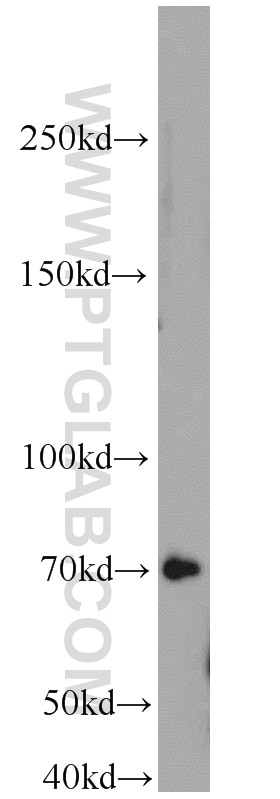
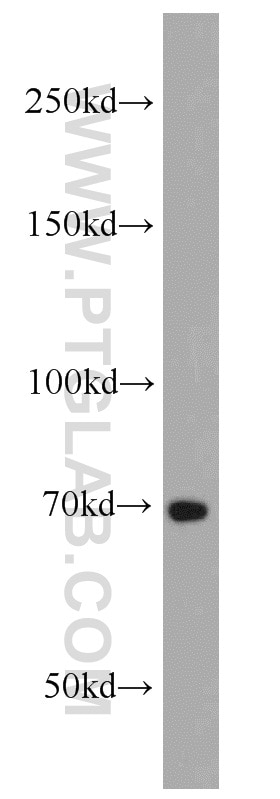
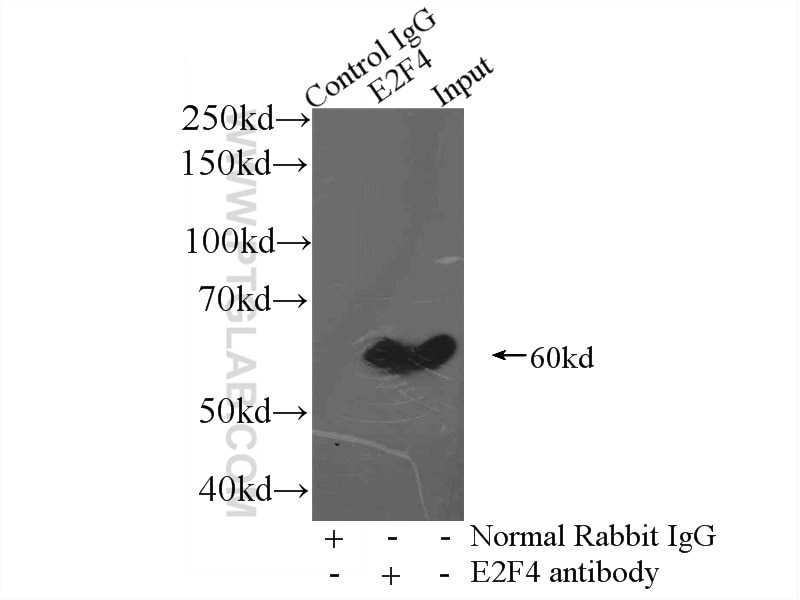

Tested Applications
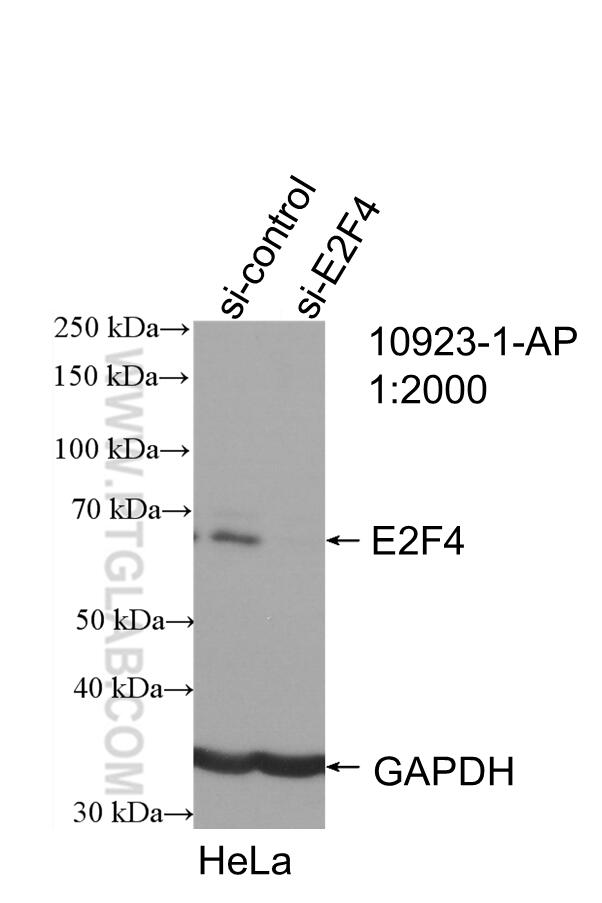
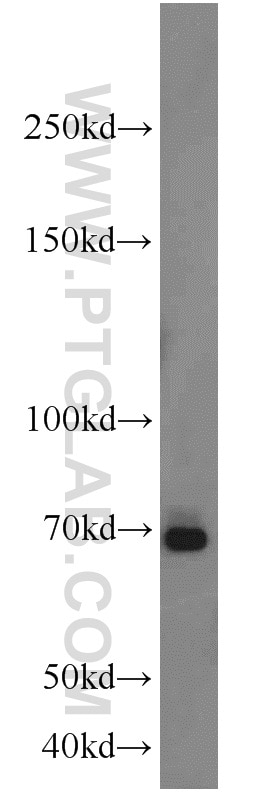
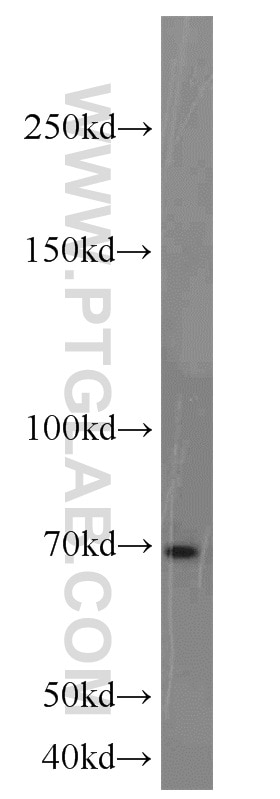
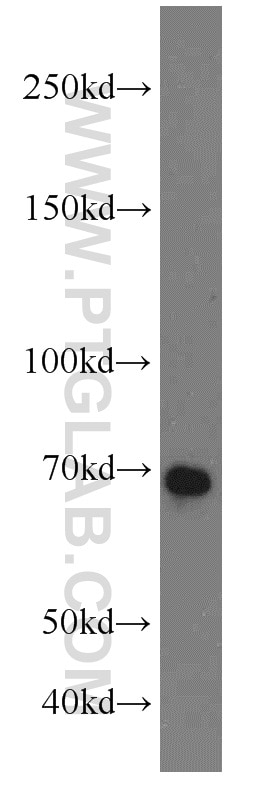
| Positive WB detected in | A431 cells, Jurkat cells, HL-60 cells, Raji cells, HeLa cells, NIH/3T3 cells |
| Positive IP detected in | mouse brain tissue |
Recommended dilution
| Application | Dilution |
|---|---|
| Western Blot (WB) | WB : 1:500-1:2000 |
| Immunoprecipitation (IP) | IP : 0.5-4.0 ug for 1.0-3.0 mg of total protein lysate |
| It is recommended that this reagent should be titrated in each testing system to obtain optimal results. | |
| Sample-dependent, Check data in validation data gallery. | |
Product Information
10923-1-AP targets E2F4 in WB, IHC, IF, IP, CoIP, ChIP, ELISA applications and shows reactivity with human, mouse, rat samples.
| Tested Reactivity | human, mouse, rat |
| Cited Reactivity | human, mouse, rabbit |
| Host / Isotype | Rabbit / IgG |
| Class | Polyclonal |
| Type | Antibody |
| Immunogen |
CatNo: Ag1365 Product name: Recombinant human E2F4 protein Source: e coli.-derived, PGEX-4T Tag: GST Domain: 1-413 aa of BC033180 Sequence: MAEAGPQAPPPPGTPSRHEKSLGLLTTKFVSLLQEAKDGVLDLKLAADTLAVRQKRRIYDITNVLEGIGLIEKKSKNSIQWKGVGPGCNTREIADKLIELKAEIEELQQREQELDQHKVWVQQSIRNVTEDVQNSCLAYVTHEDICRCFAGDTLLAIRAPSGTSLEVPIPEGLNGQKKYQIHLKSVSGPIEVLLVNKEAWSSPPVAVPVPPPEDLLQSPSAVSTPPPLPKPALAQSQEASRPNSPQLTPTAVPGSAEVQGMAGPAAEITVSGGPGTDSKDSGELSSLPLGPTTLDTRPLQSSALLDSSSSSSSSSSSSSNSNSSSSSGPNPSTSFEPIKADPTGVLELPKELSEIFDPTRECMSSELLEELMSSEVFAPLLRLSPPPGDHDYIYNLDESEGVCDLFDVPVLNL Predict reactive species |
| Full Name | E2F transcription factor 4, p107/p130-binding |
| Calculated Molecular Weight | 44 kDa |
| Observed Molecular Weight | 60-70 kDa |
| GenBank Accession Number | BC033180 |
| Gene Symbol | E2F4 |
| Gene ID (NCBI) | 1874 |
| RRID | AB_2097096 |
| Conjugate | Unconjugated |
| Form | Liquid |
| Purification Method | Antigen affinity purification |
| UNIPROT ID | Q16254 |
| Storage Buffer | PBS with 0.02% sodium azide and 50% glycerol, pH 7.3. |
| Storage Conditions | Store at -20°C. Stable for one year after shipment. Aliquoting is unnecessary for -20oC storage. 20ul sizes contain 0.1% BSA. |
Background Information
Transcription factor E2F4 (E2F4) is a transcription activator that binds DNA cooperatively with DP proteins through the E2 recognition site 5'-TTTC[CG]CGC-3' found in the promoter region of a number of genes whose products are involved in cell cycle regulation or in DNA replication. The DRTF1/E2F complex functions in the control of cell-cycle progression from G1 to S phase. E2F-4 binds with high affinity to RBL1 and RBL2. In some instances, can also bind RB protein.The observed molecular weight of 60-70 kDa is the phosphorylation of E2F4 protein.
Protocols
| Product Specific Protocols | |
|---|---|
| IP protocol for E2F4 antibody 10923-1-AP | Download protocol |
| WB protocol for E2F4 antibody 10923-1-AP | Download protocol |
| Standard Protocols | |
|---|---|
| Click here to view our Standard Protocols |
Publications
What published studies show
The E2F4 Polyclonal antibody (Cat# 10923-1-AP) has 24 citations. These appear in journals including Signal Transduction and Targeted Therapy, Cancer Research, Nature Communications, Protein & Cell, Advanced Science, Oncogene, Cell Reports, Cell Death & Disease, Frontiers in Immunology, and PLoS One, among others. Research fields span cancer biology (breast, colorectal, esophageal, ovarian, and liver cancers), cell cycle and senescence regulation, stem cell differentiation, inflammation, epigenetics, and viral infection. Applications include WB, IHC, IF, IP, and ChIP.
| Species | Application | Title |
|---|---|---|
Signal Transduct Target Ther Family with sequence similarity 114 member A1 orchestrates immune evasion in triple-negative breast cancer | ||
Cancer Res METTL3 Methylation Induces Decay of Endogenous Retroelement Transcripts to Promote Tumor Immune Evasion.
| ||
Protein Cell Unveiling E2F4, TEAD1 and AP-1 as regulatory transcription factors of the replicative senescence program by multi-omics analysis. | ||
Nat Commun Trim33 masks a non-transcriptional function of E2f4 in replication fork progression | ||
J Adv Res Transducin-like enhancer of split 3 protects against lipopolysaccharide-induced inflammation through DDX5-ATF1-PPP2R5A signaling | ||
Adv Sci (Weinh) TTK Inhibition Alleviates Postinjury Neointimal Formation and Atherosclerosis |








