



Tested Applications
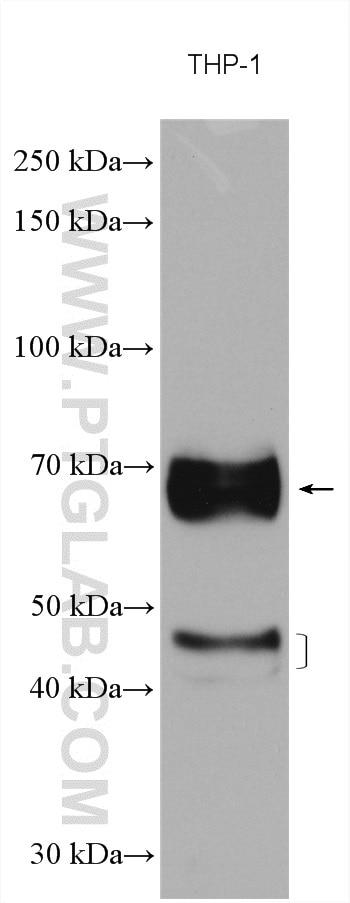
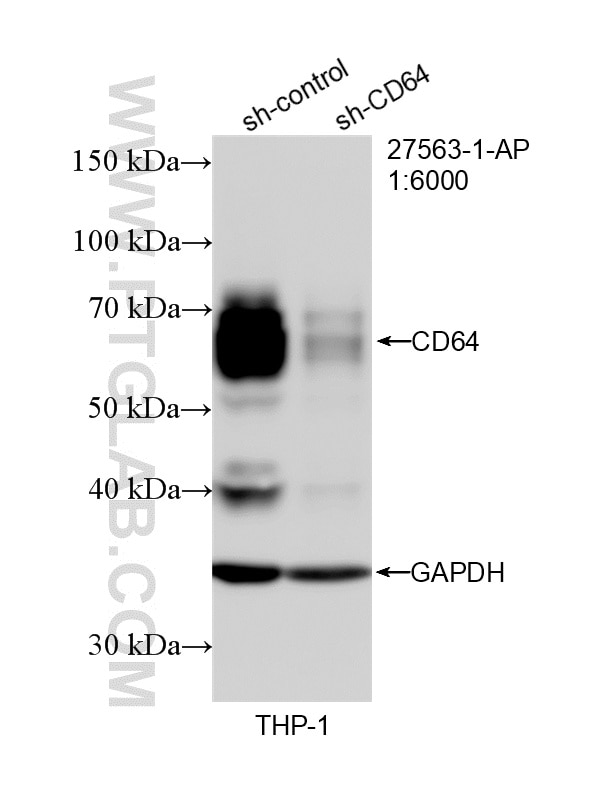
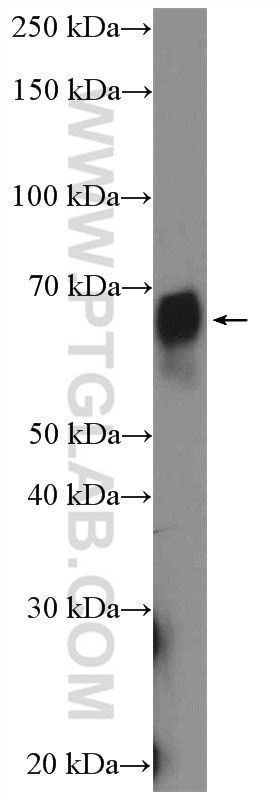
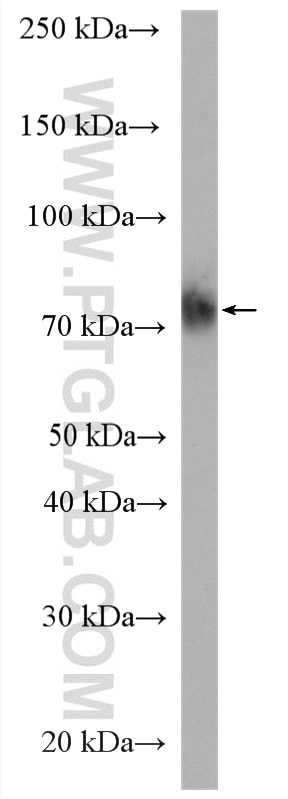
| Positive WB detected in | THP-1 cells, HL-60 cells, U-937 cells |
| Positive IHC detected in | human lymphoma tissue Note: suggested antigen retrieval with TE buffer pH 9.0; (*) Alternatively, antigen retrieval may be performed with citrate buffer pH 6.0 |
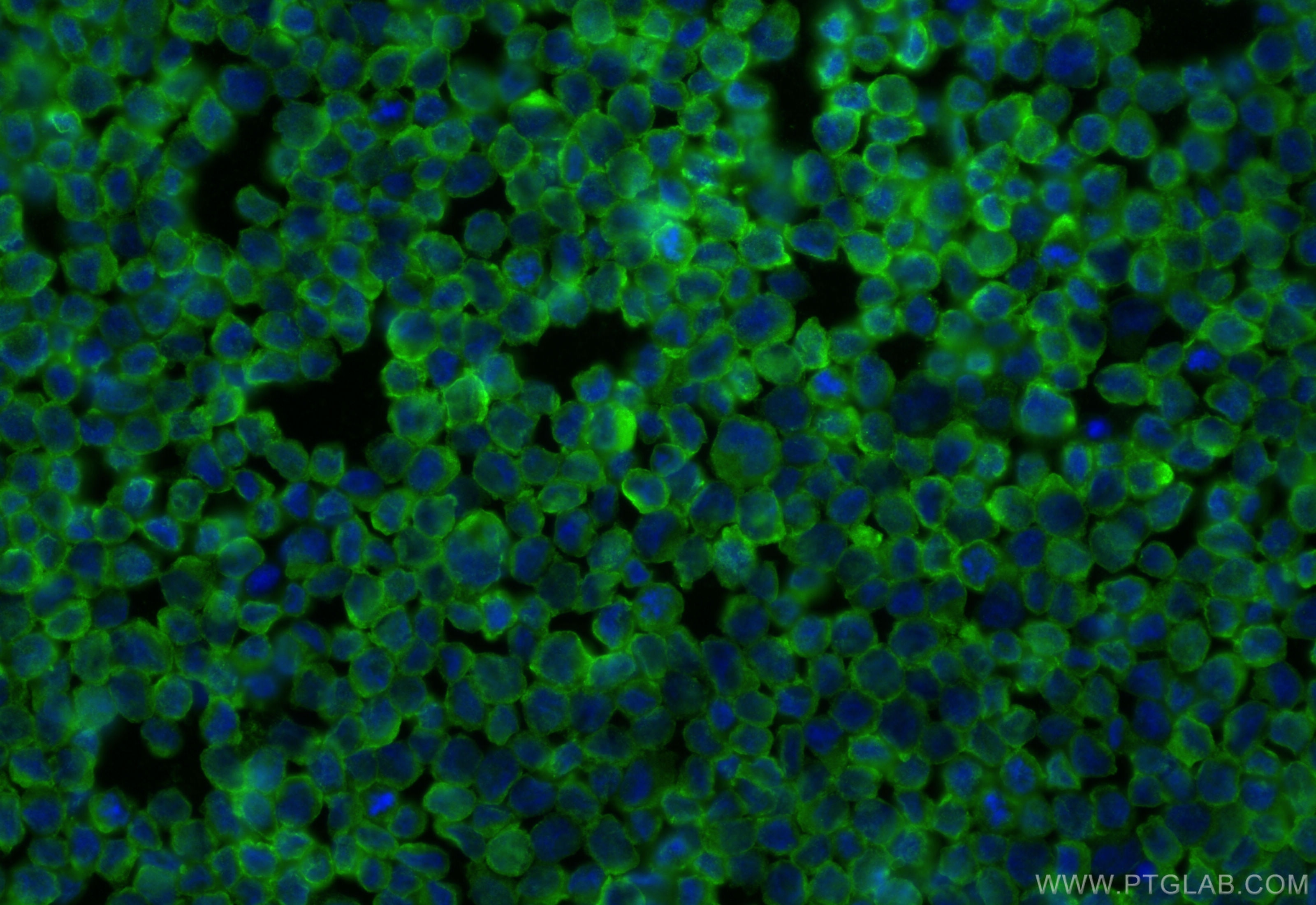
| Positive IF/ICC detected in | THP-1 cells |
Recommended dilution
| Application | Dilution |
|---|---|
| Western Blot (WB) | WB : 1:1000-1:4000 |
| Immunohistochemistry (IHC) | IHC : 1:200-1:800 |
| Immunofluorescence (IF)/ICC | IF/ICC : 1:50-1:500 |
| It is recommended that this reagent should be titrated in each testing system to obtain optimal results. | |
| Sample-dependent, Check data in validation data gallery. | |
Product Information
27563-1-AP targets CD64 in WB, IHC, IF/ICC, ELISA applications and shows reactivity with human samples.
| Tested Reactivity | human |
| Cited Reactivity | human |
| Host / Isotype | Rabbit / IgG |
| Class | Polyclonal |
| Type | Antibody |
| Immunogen |
CatNo: Ag26727 Product name: Recombinant human FCGR1A protein Source: e coli.-derived, PGEX-4T Tag: GST Domain: 311-374 aa of BC032634 Sequence: VTIRKELKRKKKWDLEISLDSGHEKKVISSLQEDRHLEEELKCQEQKEEQLQEGVHRKEPQGAT Predict reactive species |
| Full Name | Fc fragment of IgG, high affinity Ia, receptor (CD64) |
| Calculated Molecular Weight | 374 aa, 43 kDa |
| Observed Molecular Weight | 65-70 kDa, 43-45 kDa |
| GenBank Accession Number | BC032634 |
| Gene Symbol | FCGR1A |
| Gene ID (NCBI) | 2209 |
| ENSEMBL Gene ID | ENSG00000150337 |
| RRID | AB_2880909 |
| Conjugate | Unconjugated |
| Form | Liquid |
| Purification Method | Antigen affinity purification |
| UNIPROT ID | P12314 |
| Storage Buffer | PBS with 0.02% sodium azide and 50% glycerol, pH 7.3. |
| Storage Conditions | Store at -20°C. Stable for one year after shipment. Aliquoting is unnecessary for -20oC storage. 20ul sizes contain 0.1% BSA. |
Background Information
Fcγ receptor comprise a multigene family of integral membrane glycoproteins that exhibit complex activation or inhibitory effects on cell functions after aggregation by complexed immunoglobulin G (IgG) (PMID: 17005690 ). CD64, also known as FcγRIA, is a high affinity receptor for the Fc region of IgG. It is expressed by monocytes/macrophages, activated neutrophils, dendritic cells, and early myeloid cells (PMID: 23293080; 19642859; 7680917). CD64 functions in both innate and adaptive immune responses. The calculated molecular weight of CD64 is 43 kDa, while the glycosylated CD64 has a higher apparent molecular weight.
Protocols
| Product Specific Protocols | |
|---|---|
| IF protocol for CD64 antibody 27563-1-AP | Download protocol |
| IHC protocol for CD64 antibody 27563-1-AP | Download protocol |
| WB protocol for CD64 antibody 27563-1-AP | Download protocol |
| Standard Protocols | |
|---|---|
| Click here to view our Standard Protocols |
Publications
What published studies show
The CD64 Polyclonal antibody (Cat# 27563-1-AP) has 3 total citations. These appear in Cell Mol Immunol, Front Oncol, and Mol Cell Biochem. The research fields span immunology (FcγRI ubiquitination and inflammatory response regulation), oncology (HCC tumorigenesis via exosomes and Hedgehog pathway), and cancer immunology (M2 macrophage polarization in non-small cell lung cancer).
| Species | Application | Title |
|---|---|---|
Cell Mol Immunol MARCH2/3 target FcγRI for K27-linked polyubiquitination and degradation to restrict the inflammatory response. | ||
Front Oncol Cancer Cell-Derived Exosomes Promote HCC Tumorigenesis Through Hedgehog Pathway. | ||
Mol Cell Biochem MYBL2 promotes malignant phenotypes and M2-like macrophage polarization through CCL2 in non-small cell lung cancer. |








