
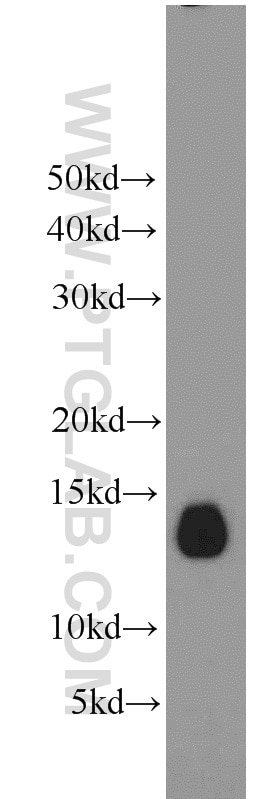
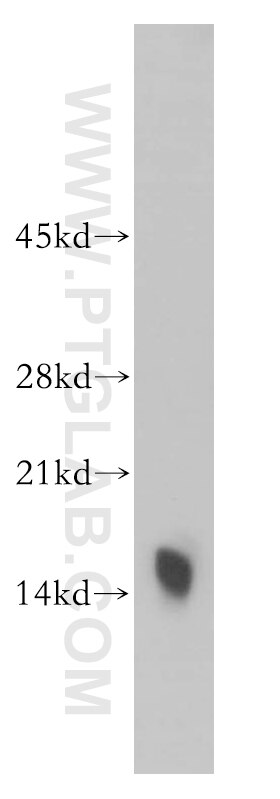
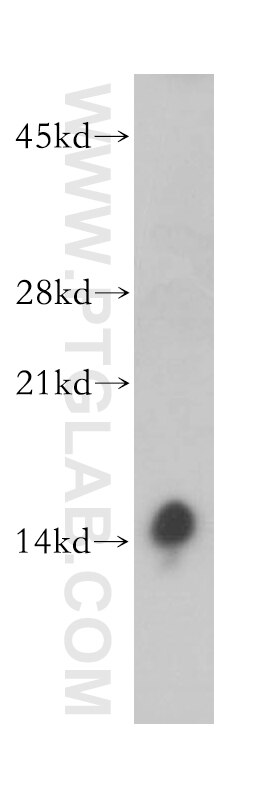
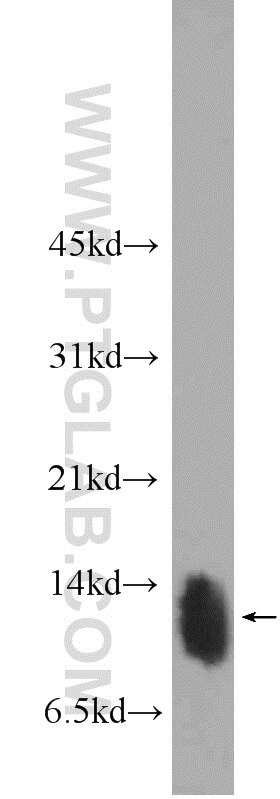
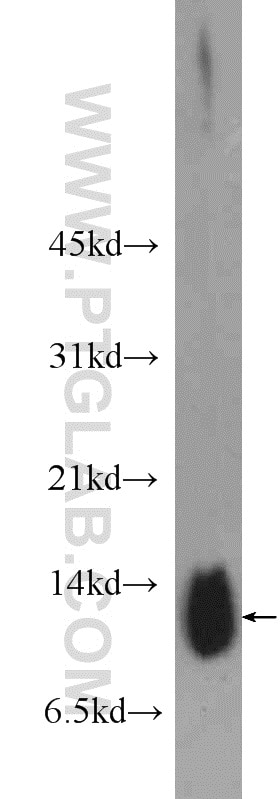
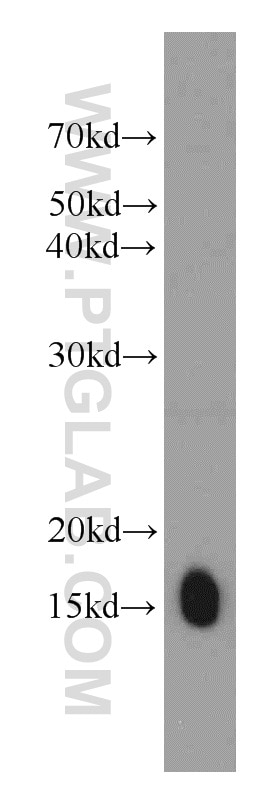
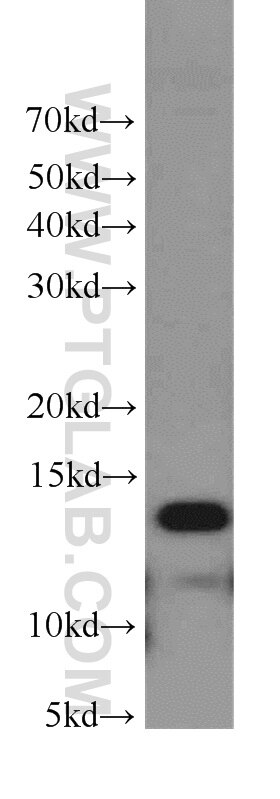
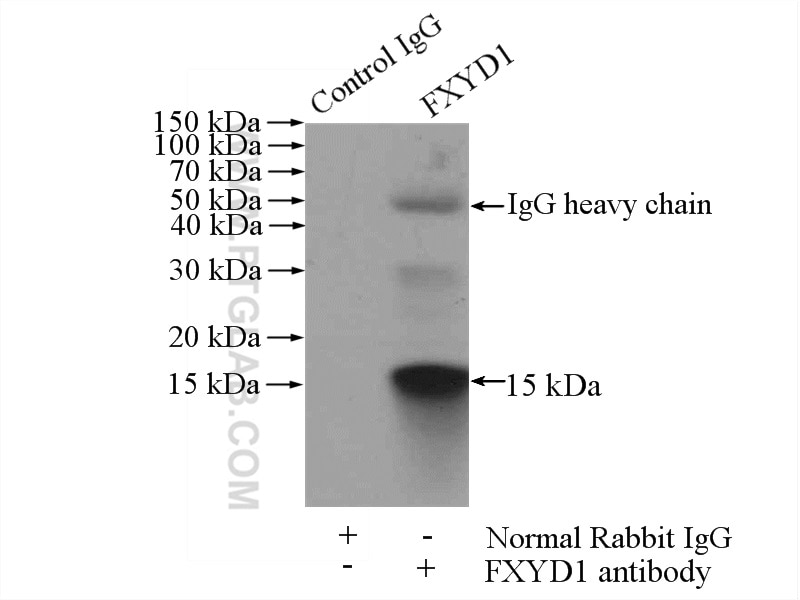

Tested Applications
| Positive WB detected in | human skeletal muscle tissue, rat skeletal muscle tissue, mouse skeletal muscle tissue, rat heart tissue, mouse heart tissue, mouse kidney tissue, human brain tissue |
| Positive IP detected in | mouse heart tissue |
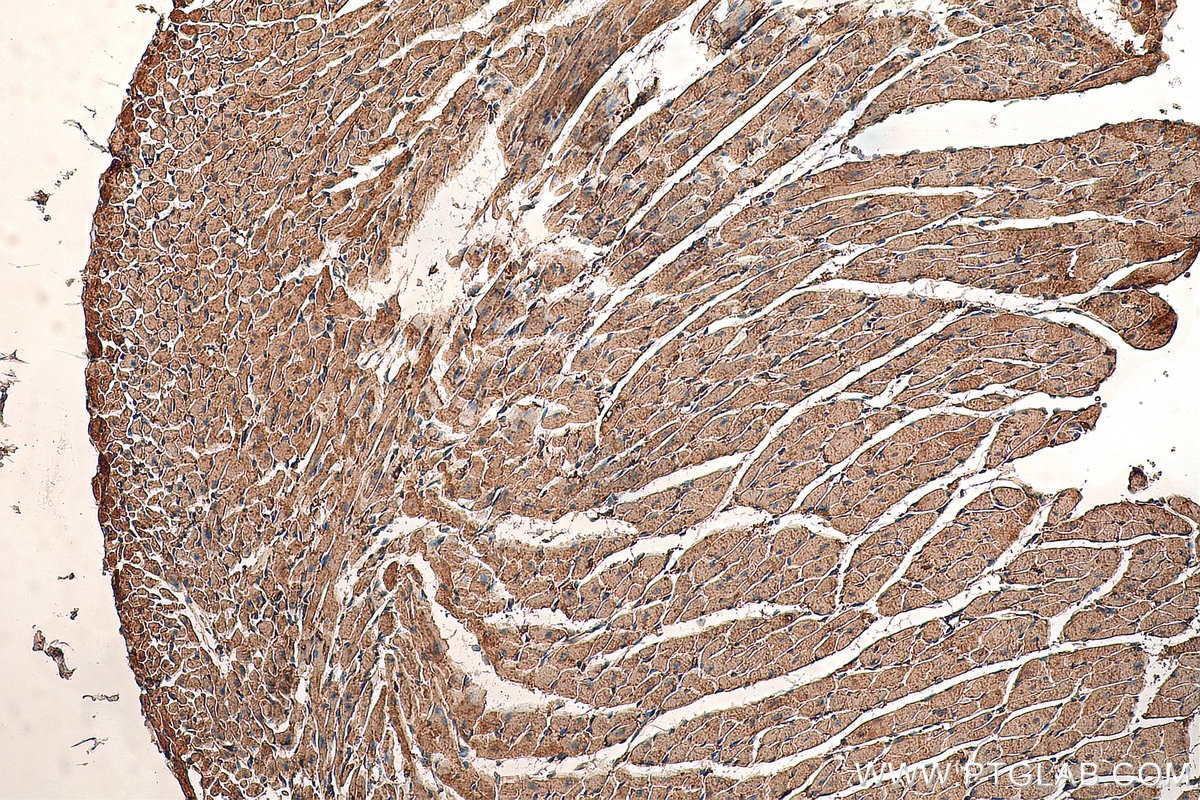
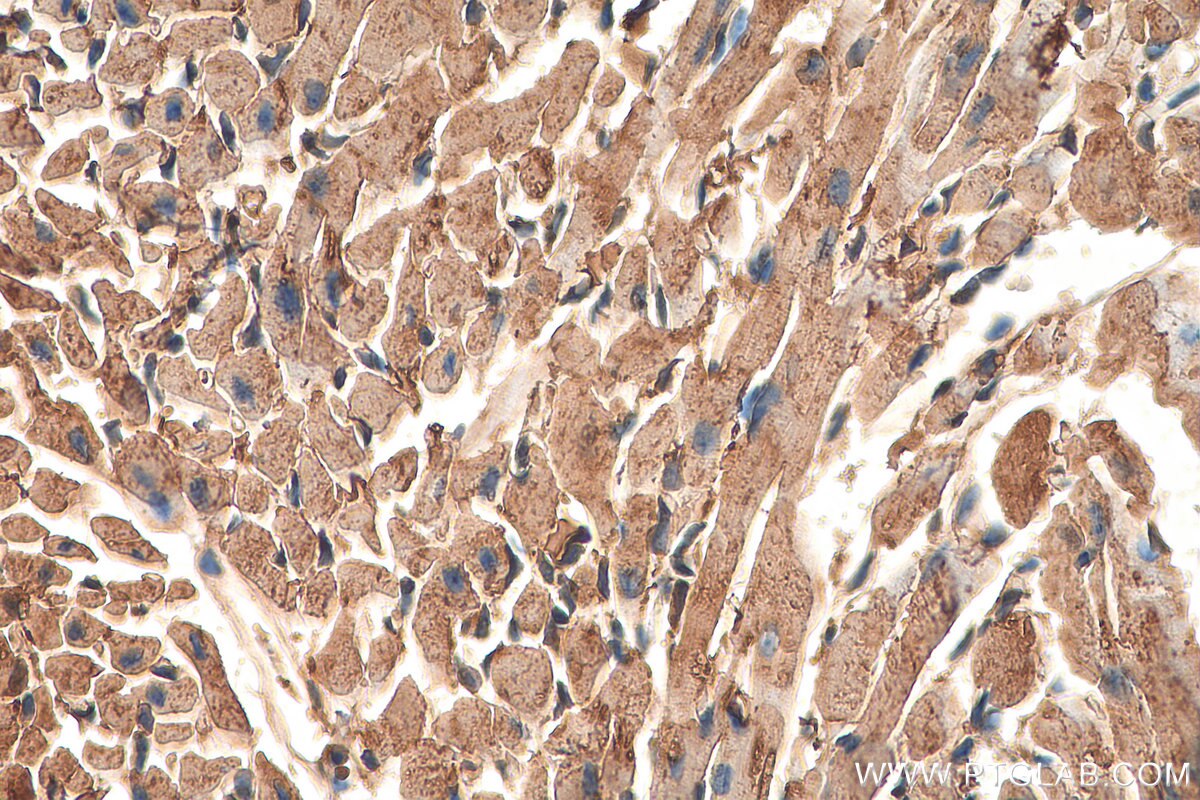
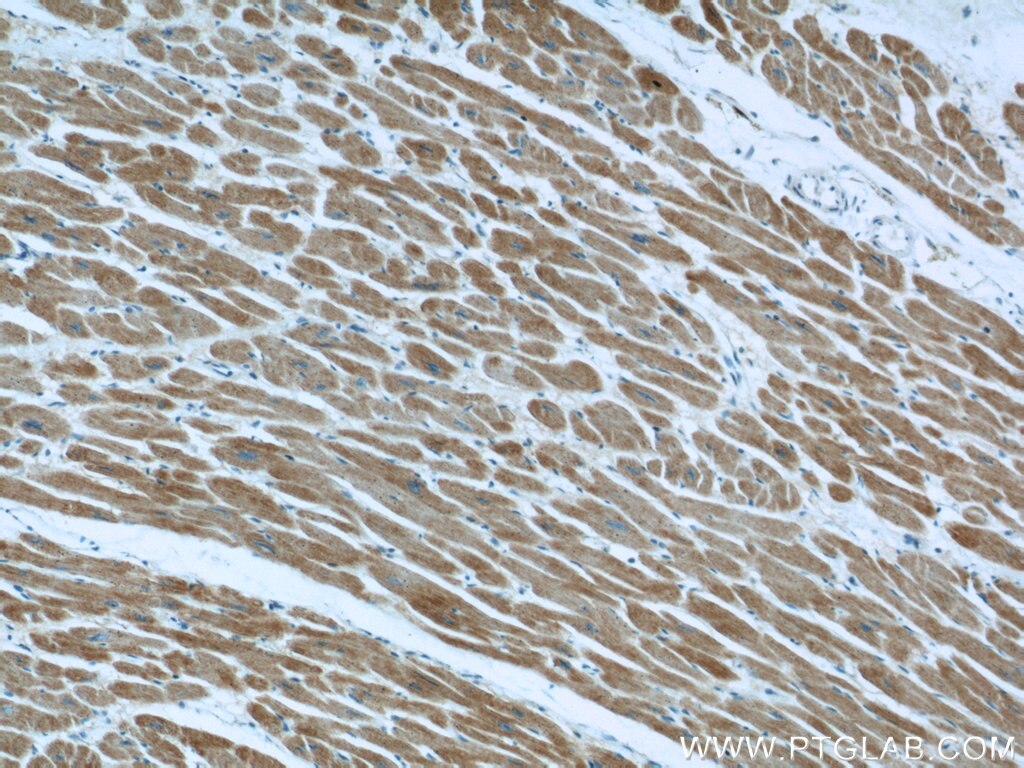
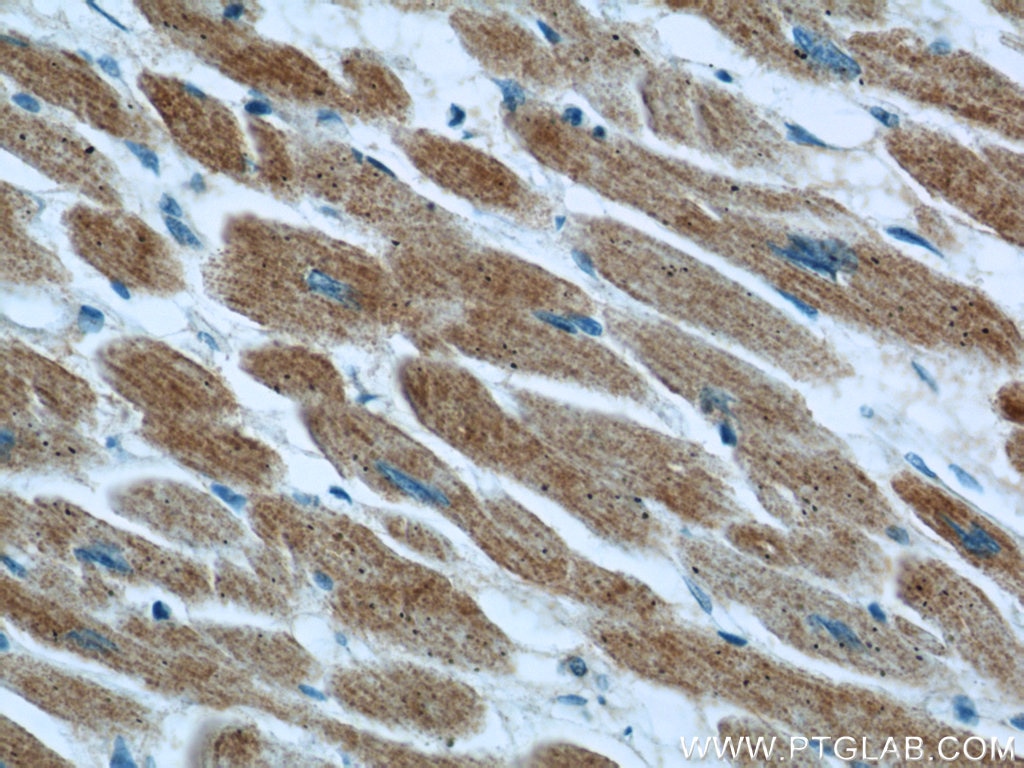
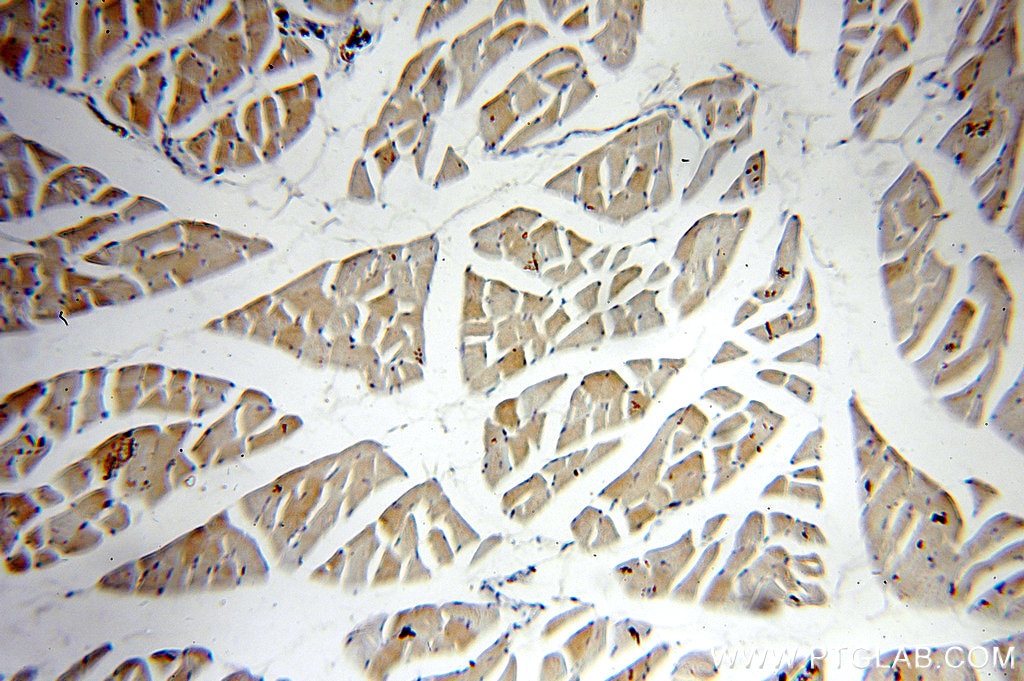
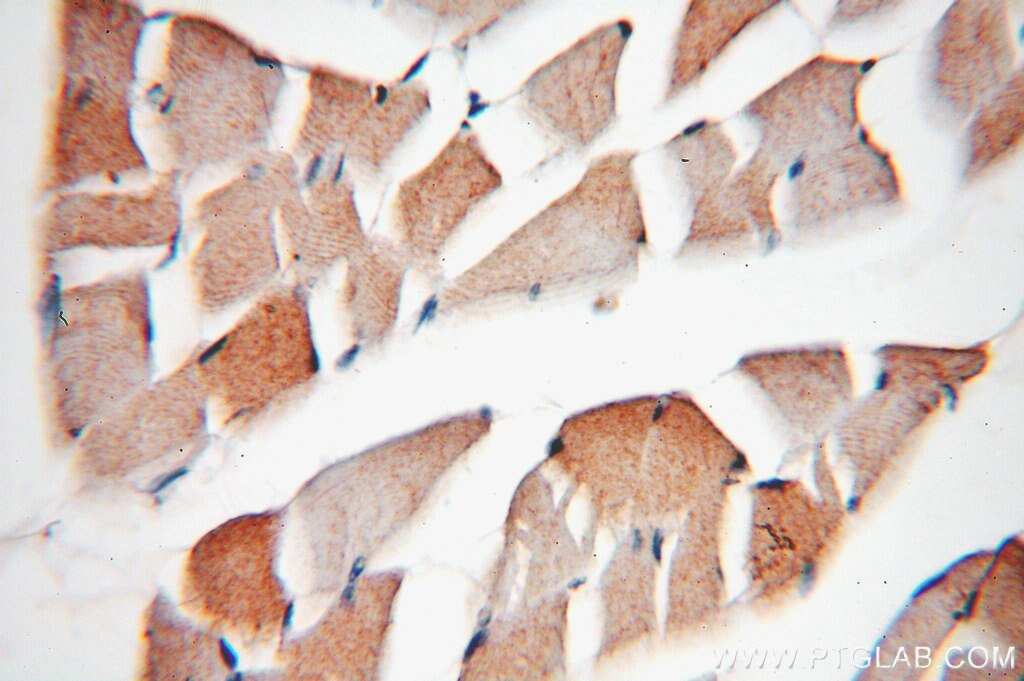
| Positive IHC detected in | mouse heart tissue, human skeletal muscle tissue, human heart tissue Note: suggested antigen retrieval with TE buffer pH 9.0; (*) Alternatively, antigen retrieval may be performed with citrate buffer pH 6.0 |
Recommended dilution
| Application | Dilution |
|---|---|
| Western Blot (WB) | WB : 1:500-1:1500 |
| Immunoprecipitation (IP) | IP : 0.5-4.0 ug for 1.0-3.0 mg of total protein lysate |
| Immunohistochemistry (IHC) | IHC : 1:50-1:500 |
| It is recommended that this reagent should be titrated in each testing system to obtain optimal results. | |
| Sample-dependent, Check data in validation data gallery. | |
Product Information
13721-1-AP targets Phospholemman/FXYD1 in WB, IP, IF, IHC, ELISA applications and shows reactivity with human, mouse, rat samples.
| Tested Reactivity | human, mouse, rat |
| Cited Reactivity | human, mouse, rat, pig, rabbit |
| Host / Isotype | Rabbit / IgG |
| Class | Polyclonal |
| Type | Antibody |
| Immunogen |
CatNo: Ag4669 Product name: Recombinant human FXYD1 protein Source: e coli.-derived, PGEX-4T Tag: GST Domain: 1-92 aa of BC032800 Sequence: MASLGHILVFCVGLLTMAKAESPKEHDPFTYDYQSLQIGGLVIAGILFILGILIVLSRRCRCKFNQQQRTGEPDEEEGTFRSSIRRLSTRRR Predict reactive species |
| Full Name | FXYD domain containing ion transport regulator 1 |
| Calculated Molecular Weight | 92 aa, 10 kDa |
| Observed Molecular Weight | 10-15 kDa |
| GenBank Accession Number | BC032800 |
| Gene Symbol | FXYD1 |
| Gene ID (NCBI) | 5348 |
| RRID | AB_2108296 |
| Conjugate | Unconjugated |
| Form | Liquid |
| Purification Method | Antigen affinity purification |
| UNIPROT ID | O00168 |
| Storage Buffer | PBS with 0.02% sodium azide and 50% glycerol, pH 7.3. |
| Storage Conditions | Store at -20°C. Stable for one year after shipment. Aliquoting is unnecessary for -20oC storage. 20ul sizes contain 0.1% BSA. |
Background Information
FXYD1, also named as PLM and Phospholemman, belongs to the FXYD family. FXYD1 induces a hyperpolarization-activated chloride current when expressed in Xenopus oocytes. It may have a functional role in muscle contraction. FXYD1 is a partner protein and regulator of the Na+,K+-ATPase (Na+,K+-pump). It may play a role in the acute regulation of the Na+,K+-ATPase response to exercise. (PMID: 20595385, 21653224)
Protocols
| Product Specific Protocols | |
|---|---|
| IHC protocol for Phospholemman/FXYD1 antibody 13721-1-AP | Download protocol |
| IP protocol for Phospholemman/FXYD1 antibody 13721-1-AP | Download protocol |
| WB protocol for Phospholemman/FXYD1 antibody 13721-1-AP | Download protocol |
| Standard Protocols | |
|---|---|
| Click here to view our Standard Protocols |
Publications
What published studies show
The anti-FXYD1 (Phospholemman) antibody (Cat# 13721-1-AP) has 27 citations across 15 journals, including J Physiol, J Appl Physiol, Am J Physiol Cell Physiol, Sci Rep, J Biol Chem, Front Physiol, PLoS One, and Scand J Med Sci Sports. Research fields span skeletal muscle physiology, exercise and sports science, Na,K-ATPase regulation, cardiac electrophysiology, diabetes, and neurological disorders.
| Species | Application | Title |
|---|---|---|
Am J Physiol Cell Physiol Phospholemman is not required for the acute stimulation of Na,K-ATPase α2 activity during skeletal muscle fatigue. | ||
Am J Physiol Cell Physiol Isoform-specific Na,K-ATPase and membrane cholesterol remodeling in motor endplates in distinct mouse models of myodystrophy. | ||
Sci Rep Over-expression of microRNA-1 causes arrhythmia by disturbing intracellular trafficking system. | ||
J Physiol Fatigue-induced change in T-system excitability and its major cause in rat fast-twitch skeletal muscle in vivo. | ||
J Physiol Fibre type-specific change in FXYD1 phosphorylation during acute intense exercise in humans. | ||
J Physiol Cycling with blood flow restriction improves performance and muscle K+ regulation and alters the effect of anti-oxidant infusion in humans. |















