
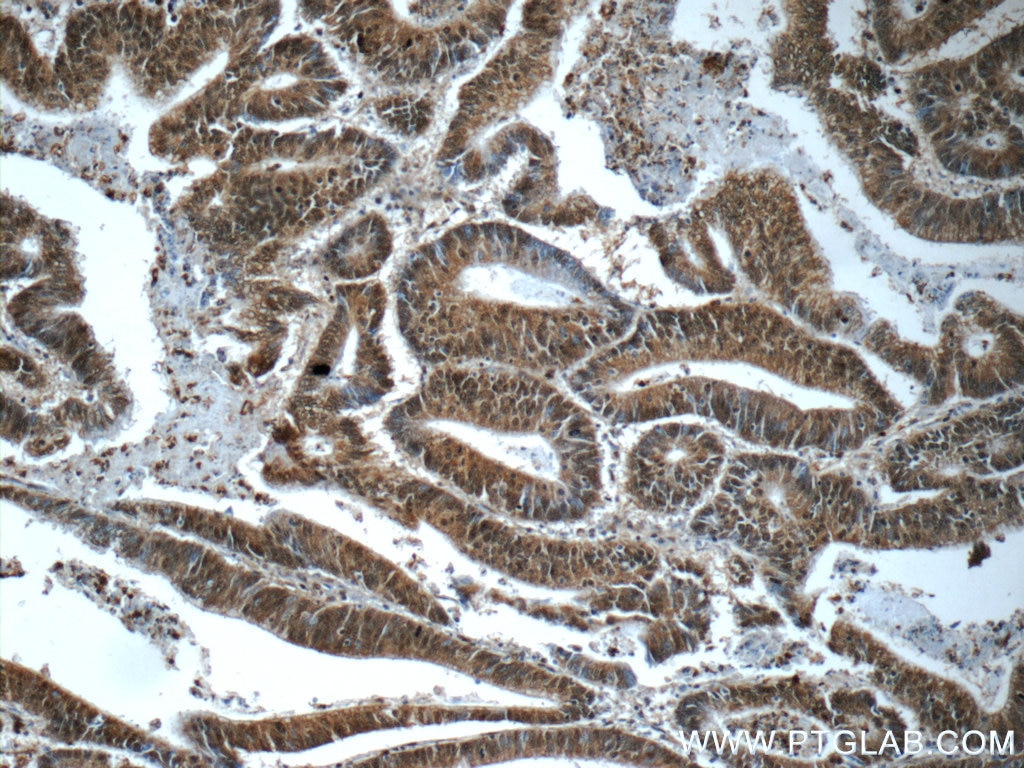
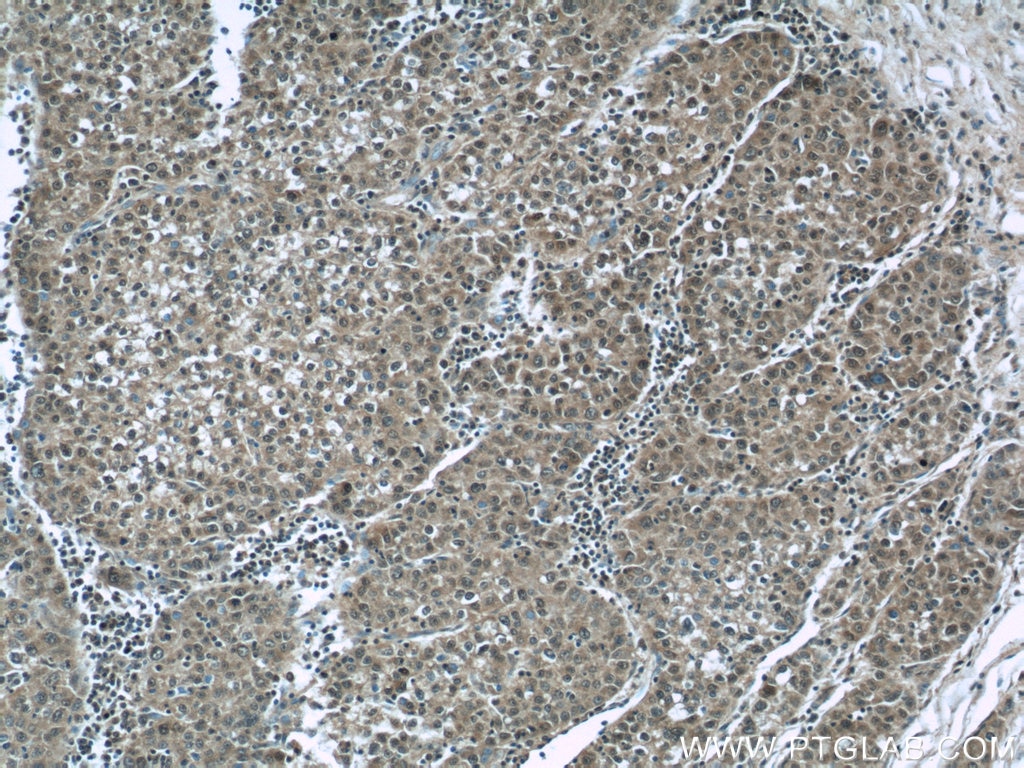
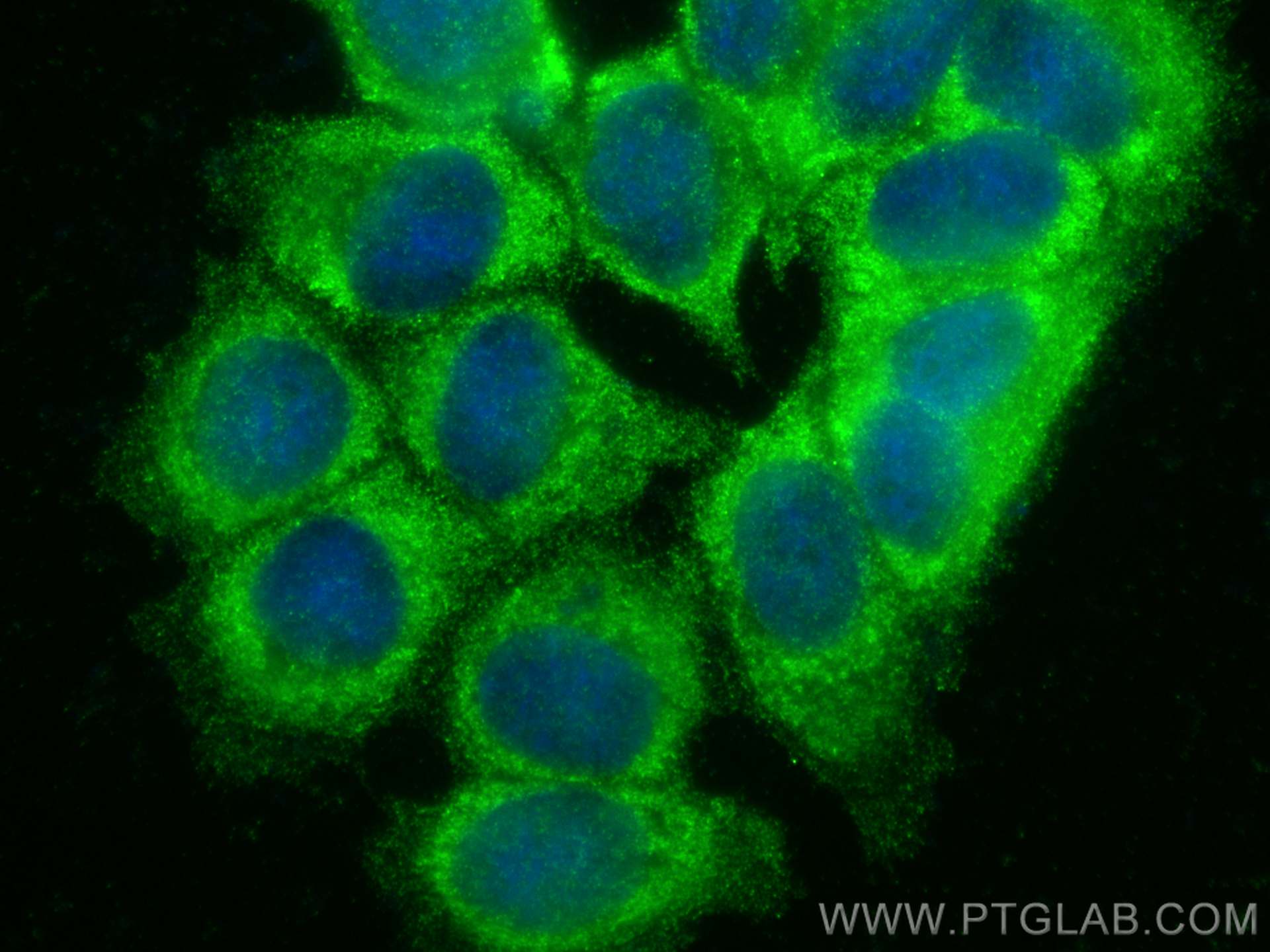

Tested Applications
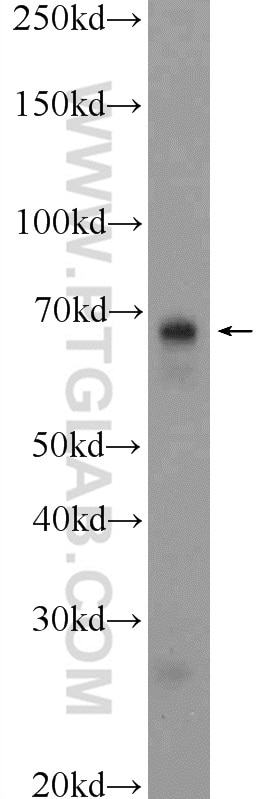
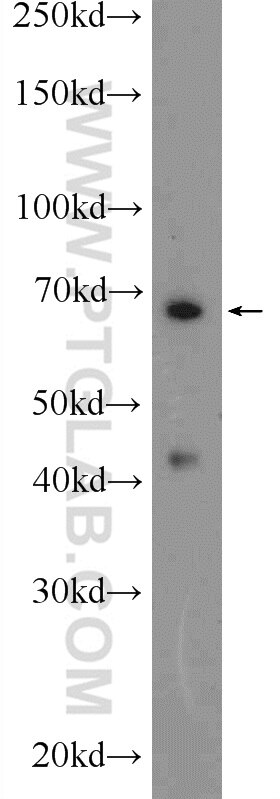
| Positive WB detected in | fetal human brain tissue, mouse thymus tissue |
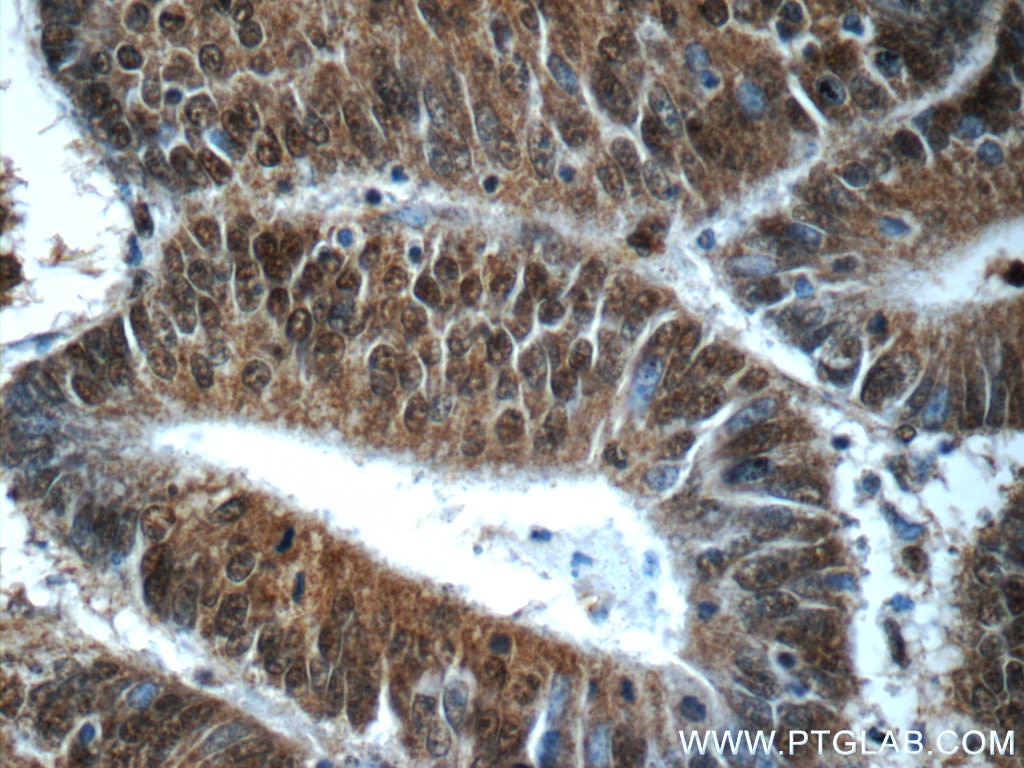
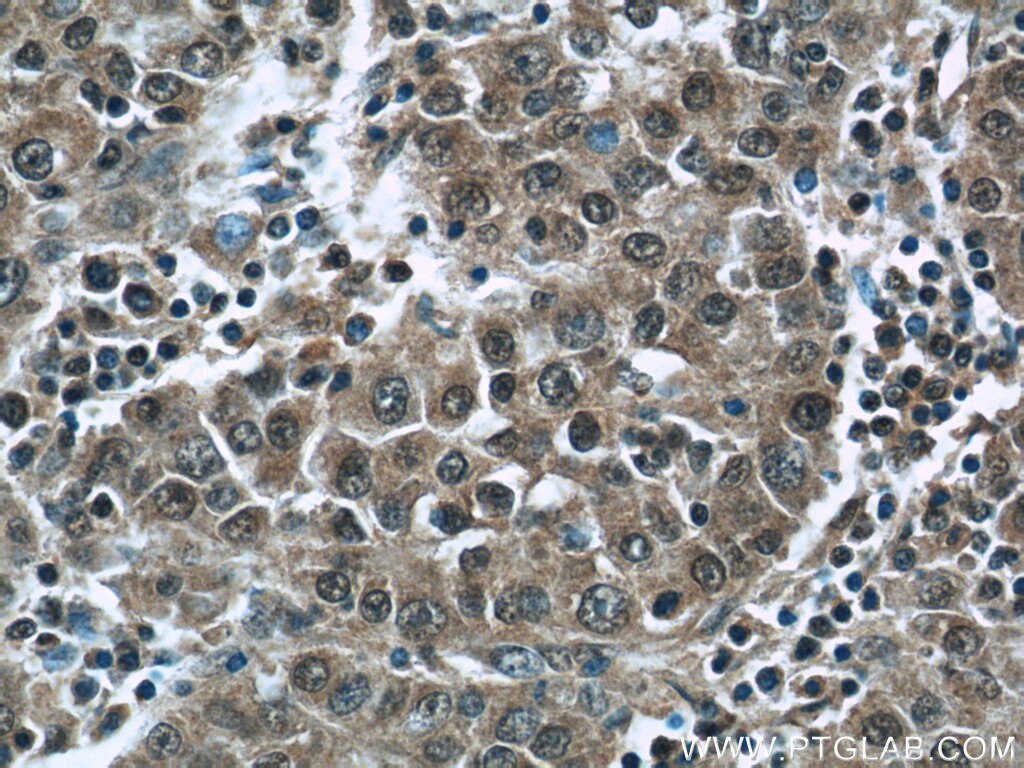
| Positive IHC detected in | human colon cancer tissue, human liver cancer tissue Note: suggested antigen retrieval with TE buffer pH 9.0; (*) Alternatively, antigen retrieval may be performed with citrate buffer pH 6.0 |
| Positive IF/ICC detected in | MCF-7 cells |
Recommended dilution
| Application | Dilution |
|---|---|
| Western Blot (WB) | WB : 1:500-1:1000 |
| Immunohistochemistry (IHC) | IHC : 1:20-1:200 |
| Immunofluorescence (IF)/ICC | IF/ICC : 1:50-1:500 |
| It is recommended that this reagent should be titrated in each testing system to obtain optimal results. | |
| Sample-dependent, Check data in validation data gallery. | |
Product Information
24913-1-AP targets HDAC10 in WB, IHC, IF/ICC, IP, ELISA applications and shows reactivity with human, mouse, rat samples.
| Tested Reactivity | human, mouse, rat |
| Cited Reactivity | human, mouse, rat |
| Host / Isotype | Rabbit / IgG |
| Class | Polyclonal |
| Type | Antibody |
| Immunogen |
CatNo: Ag18470 Product name: Recombinant human HDAC10 protein Source: e coli.-derived, PET28a Tag: 6*His Domain: 320-669 aa of BC125083 Sequence: TLLGDPAPPLSGPMAPCQSALESIQSARAAQAPHWKSLQQQDVTAVPMSPSSHSPEGRPPPLLPGGPVCKAAASAPSSLLDQPCLCPAPSVRTAVALTTPDITLVLPPDVIQQEASALREETEAWARPHESLAREEALTALGKLLYLLDGMLDGQVNSGIAATPASAAAATLDVAVRRGLSHGAQRLLCVALGQLDRPPDLAHDGRSLWLNIRGKEAAALSMFHVSTPLPVMTGGFLSCILGLVLPLAYGFQPDLVLVALGPGHGLQGPHAALLAAMLRGLAGGRVLALLEENSTPQLAGILARVLNGEAPPSLGPSSVASPEDVQALMYLRGQLEPQWKMLQCHPHLVA Predict reactive species |
| Full Name | histone deacetylase 10 |
| Calculated Molecular Weight | 669 aa, 71 kDa |
| Observed Molecular Weight | 68 kDa |
| GenBank Accession Number | BC125083 |
| Gene Symbol | HDAC10 |
| Gene ID (NCBI) | 83933 |
| RRID | AB_2879793 |
| Conjugate | Unconjugated |
| Form | Liquid |
| Purification Method | Antigen affinity purification |
| UNIPROT ID | Q969S8 |
| Storage Buffer | PBS with 0.02% sodium azide and 50% glycerol, pH 7.3. |
| Storage Conditions | Store at -20°C. Stable for one year after shipment. Aliquoting is unnecessary for -20oC storage. 20ul sizes contain 0.1% BSA. |
Background Information
HDAC10, also named as Histone deacetylase 10, is a 669 amino acid protein, which is widely expressed with high levels in liver and kidney. HDAC10, which belongs to the class IIb subfamily, has an active deacetylase domain (DAC) and a catalytically inactive leucine-rich domain (LRD). HDAC10 is determined that it plays a role in homologous recombination, promotes autophagy and survival in neuroblastoma cells, suppresses cervical cancer metastasis and facilitates the cell cycle.
Protocols
| Product Specific Protocols | |
|---|---|
| IF protocol for HDAC10 antibody 24913-1-AP | Download protocol |
| IHC protocol for HDAC10 antibody 24913-1-AP | Download protocol |
| WB protocol for HDAC10 antibody 24913-1-AP | Download protocol |
| Standard Protocols | |
|---|---|
| Click here to view our Standard Protocols |
Publications
What published studies show
The HDAC10 Polyclonal antibody (Cat# 24913-1-AP) has 14 citations published in journals including Signal Transduction and Targeted Therapy, Kidney International, Cancer Letters, Cell Death & Disease, Cell Communication and Signaling, Journal of Hazardous Materials, Journal of Medicinal Chemistry, Biochemical Pharmacology, and Oncology Letters. Research fields span oncology (bladder, esophageal, renal, colon, breast, and nasopharyngeal cancers), inflammation, fibrosis, autophagy, pyroptosis, anti-tumor immunity, and epigenetic regulation.
| Species | Application | Title |
|---|---|---|
Signal Transduct Target Ther The noncanonical function of liver-type phosphofructokinase potentiates the efficacy of HDAC inhibitors in cancer. | ||
Kidney Int Histone deacetylase 4 selectively contributes to podocyte injury in diabetic nephropathy. | ||
J Adv Res Candidalysin drives pyroptosis of intestinal epithelium to exacerbate IBS by suppressing HDAC2-mediated deacetylation of GSDMD-K194. | ||
Cell Death Dis WNT5A promotes the metastasis of esophageal squamous cell carcinoma by activating the HDAC7/SNAIL signaling pathway. | ||
Cancer Lett HDAC10 suppresses anti-tumour immunity by inhibiting ILF3-CXCL9 axis to block CD8(+) T cell infiltration and activation in bladder cancer. | ||
Cell Commun Signal HDAC10 switches NLRP3 modification from acetylation to ubiquitination and attenuates acute inflammatory diseases
|








