

Tested Applications
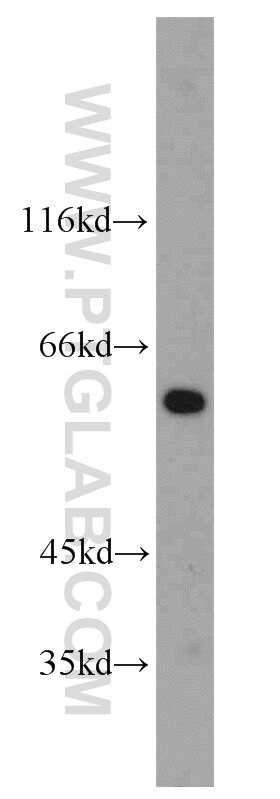
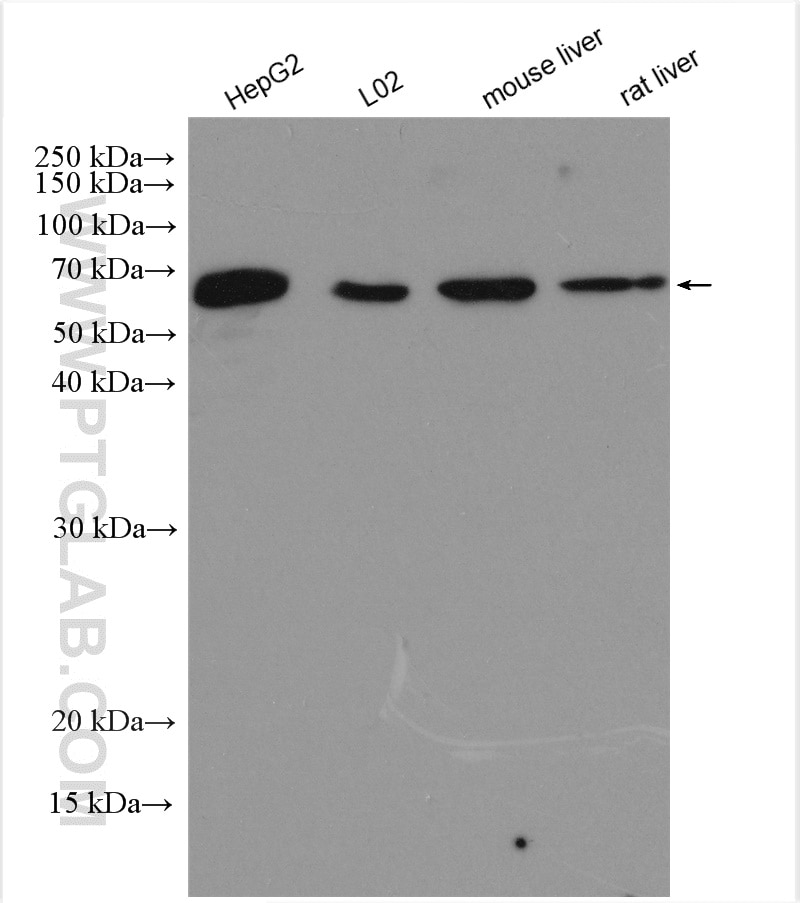
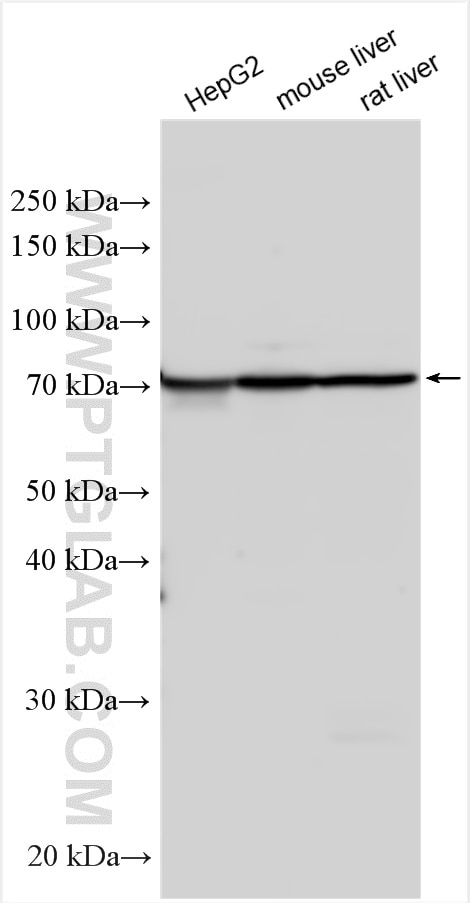
| Positive WB detected in | HepG2 cells, human liver tissue, mouse liver tissue, rat liver tissue, L02 cells |
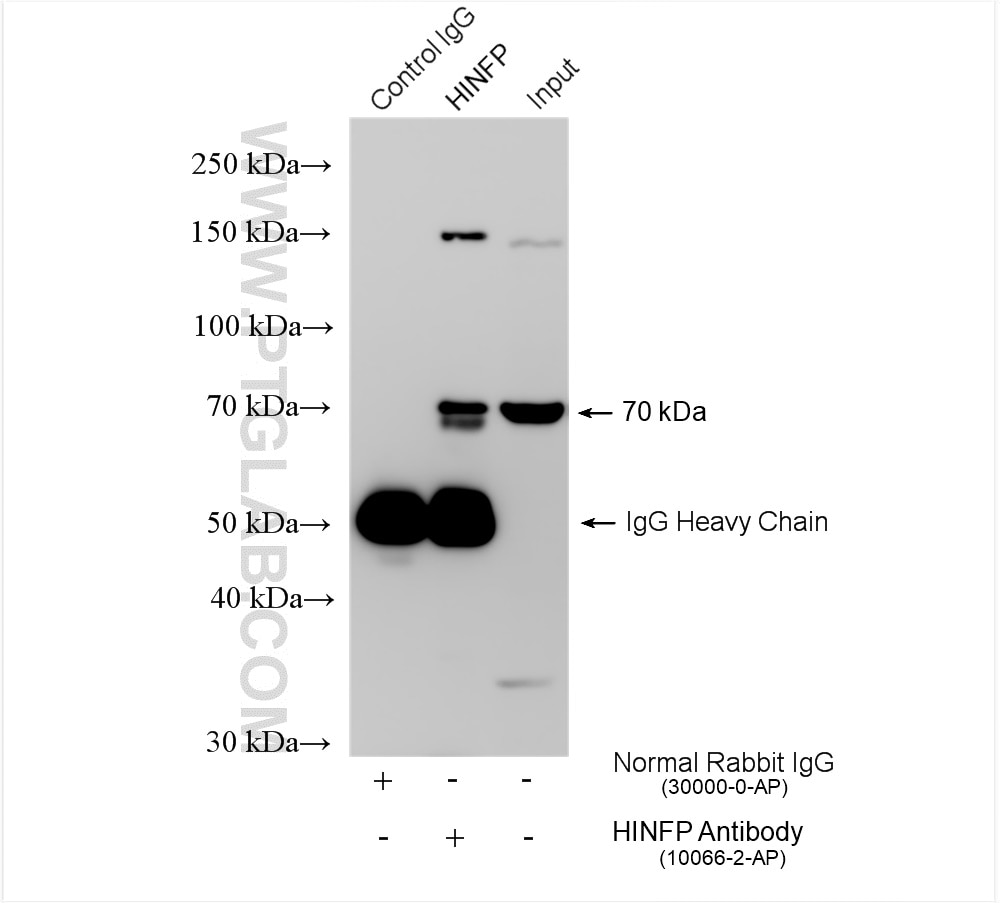
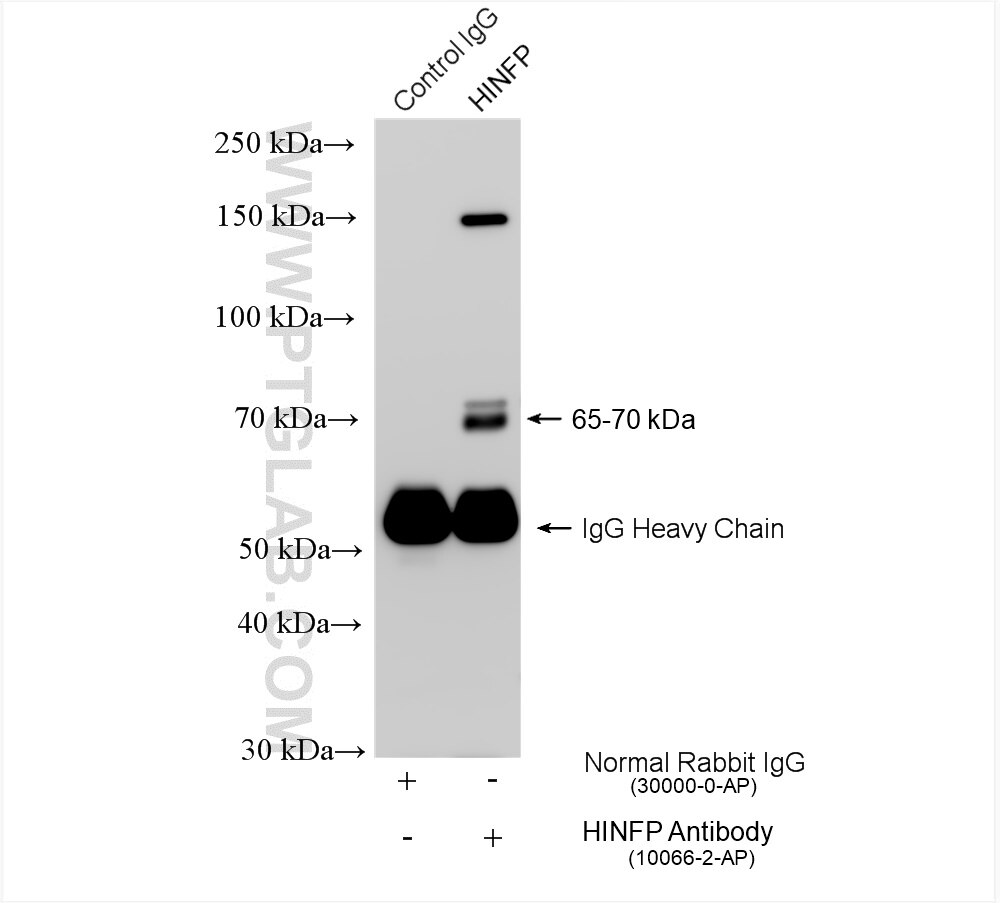
| Positive IP detected in | L02 cells |
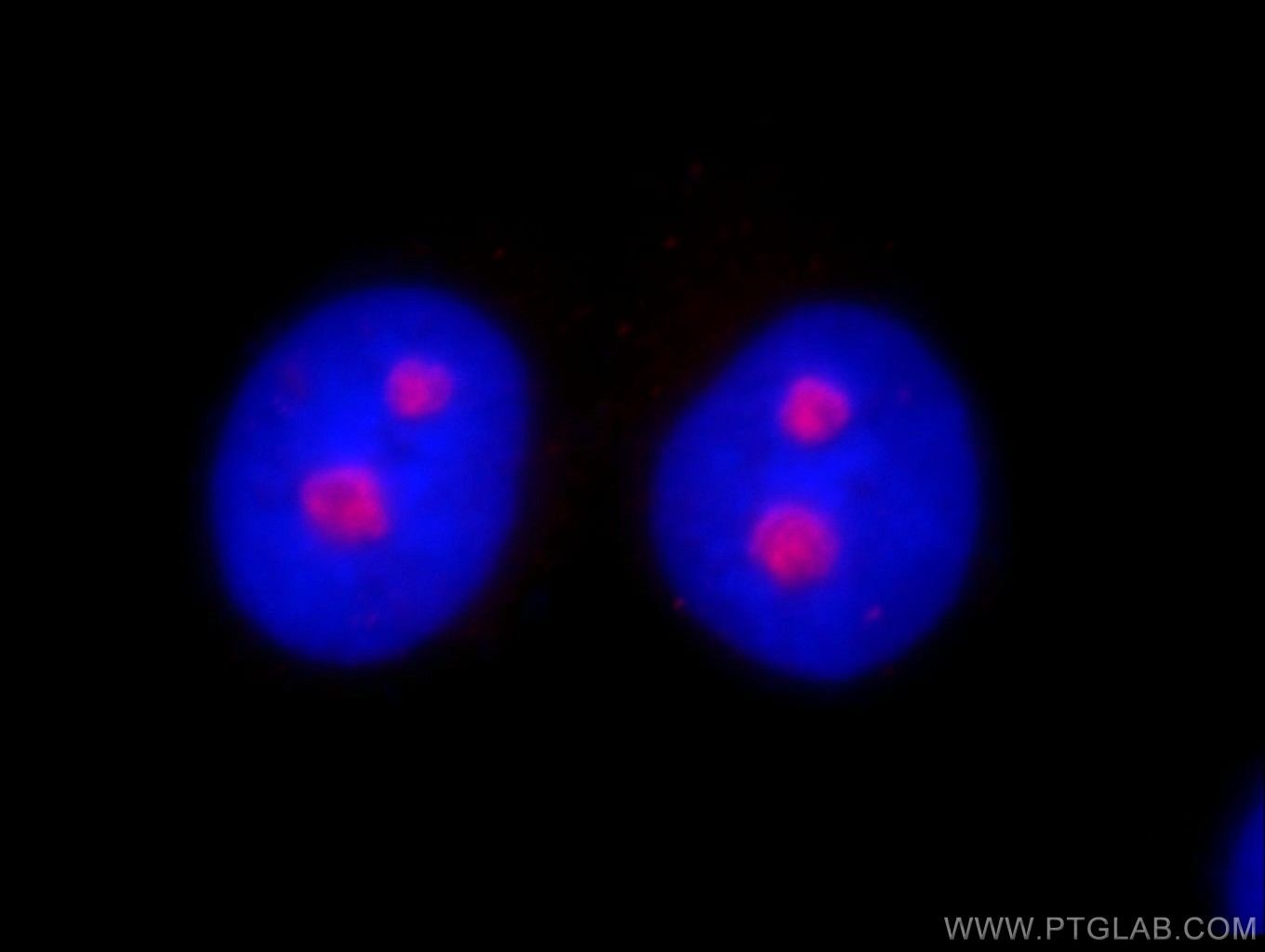
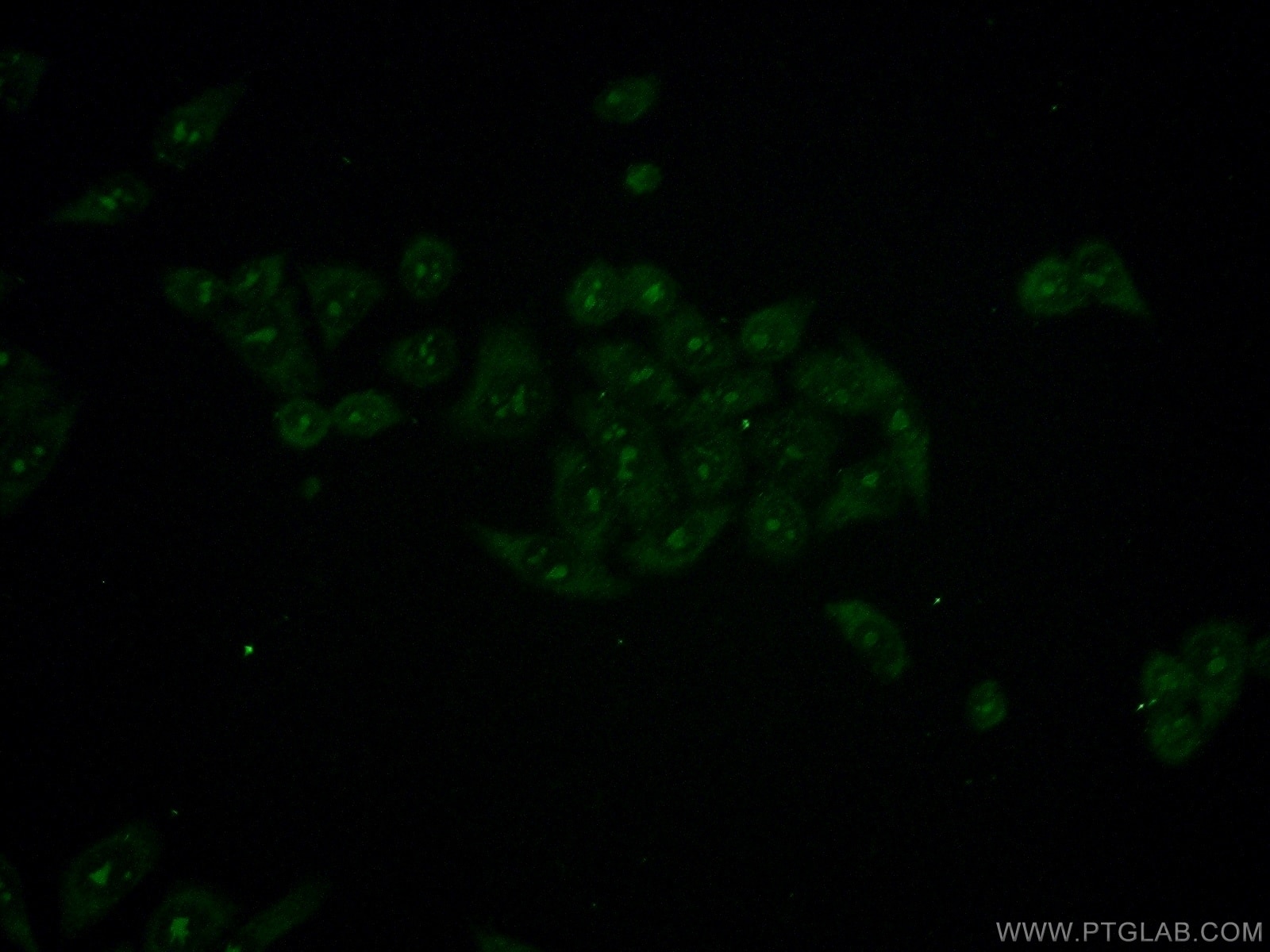
| Positive IF/ICC detected in | Hela cells, L02 cells |
Recommended dilution
| Application | Dilution |
|---|---|
| Western Blot (WB) | WB : 1:1000-1:4000 |
| Immunoprecipitation (IP) | IP : 0.5-4.0 ug for 1.0-3.0 mg of total protein lysate |
| Immunofluorescence (IF)/ICC | IF/ICC : 1:10-1:100 |
| It is recommended that this reagent should be titrated in each testing system to obtain optimal results. | |
| Sample-dependent, Check data in validation data gallery. | |
Product Information
10066-2-AP targets HINFP in WB, IHC, IF/ICC, IP, ELISA applications and shows reactivity with human, mouse, rat samples.
| Tested Reactivity | human, mouse, rat |
| Cited Reactivity | human |
| Host / Isotype | Rabbit / IgG |
| Class | Polyclonal |
| Type | Antibody |
| Immunogen |
CatNo: Ag0115 Product name: Recombinant human HINFP protein Source: e coli.-derived, PGEX-4T Tag: GST Domain: 215-452 aa of BC001073 Sequence: LDHIRRQTSLDQQHFQCSHCSKRFATERLLRDHMRNHVNHYKCPLCDMTCPLPSSLRNHMRFRHSEDRPFKCDCCDYSCKNLIDLQKHLDTHSEEPAYRCDFENCTFSARSLCSIKSHYRKVHEGDSEPRYKCHVCDKCFTRGNNLTVHLRKKHQFKWPSGHPRFRYKEHEDGYMRLQLVRYESVELTQQLLRQPQEGSGLGTSLNESSLQGIILETVPGEPGRKEEEEEGKGSEGTA Predict reactive species |
| Full Name | histone H4 transcription factor |
| Calculated Molecular Weight | 60 kDa |
| Observed Molecular Weight | 60-70 kDa |
| GenBank Accession Number | BC001073 |
| Gene Symbol | HINFP |
| Gene ID (NCBI) | 25988 |
| RRID | AB_2117412 |
| Conjugate | Unconjugated |
| Form | Liquid |
| Purification Method | Antigen affinity purification |
| UNIPROT ID | Q9BQA5 |
| Storage Buffer | PBS with 0.02% sodium azide and 50% glycerol, pH 7.3. |
| Storage Conditions | Store at -20°C. Stable for one year after shipment. Aliquoting is unnecessary for -20oC storage. 20ul sizes contain 0.1% BSA. |
Background Information
Methylation of CpG dinucleotides is the major epigenetic modification in higher eukaryotic genomes. MIZF interacts with MBD2, a methyl-CpG-binding protein playing a critical role in DNA methylation-mediated transcriptional repression. MIZF functions as a negative regulator of transcription by binding to MBD2 and recruiting histone deacetylase (HDAC)-containing complexes. MIZF mRNA is present in various human tissues and cell lines and expressed as a 60kd protein.
Protocols
| Product Specific Protocols | |
|---|---|
| IF protocol for HINFP antibody 10066-2-AP | Download protocol |
| IP protocol for HINFP antibody 10066-2-AP | Download protocol |
| WB protocol for HINFP antibody 10066-2-AP | Download protocol |
| Standard Protocols | |
|---|---|
| Click here to view our Standard Protocols |
Publications
What published studies show
The HINFP (MIZF) polyclonal antibody, catalog number 10066-2-AP, has 2 total citations. One appears in Oncogene (IF 9.1), studying HINFP downregulation and senescence-associated secretory phenotype in bladder cancer metastasis. The other is in Kaohsiung Journal of Medical Sciences (IF 3.1), investigating FOXC1 as a transcription factor in VSMC-derived foam cell formation in atherosclerotic plaque instability. Research fields span cancer biology and cardiovascular disease.
| Species | Application | Title |
|---|---|---|
Oncogene Downregulation of HINFP induces senescence-associated secretory phenotype to promote metastasis in a non-cell-autonomous manner in bladder cancer.
| ||
Kaohsiung J Med Sci FOXC1: A Key Transcription Factor of VSMC-Derived Foam Cell Formation in Atherosclerotic Plaque Instability. |








