
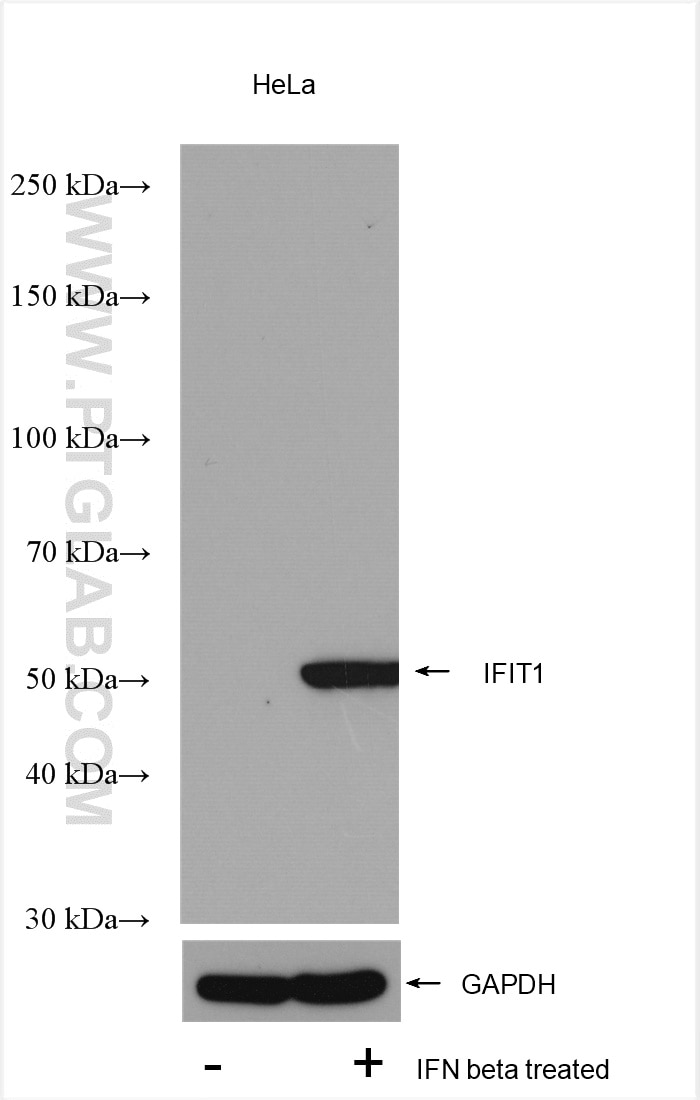
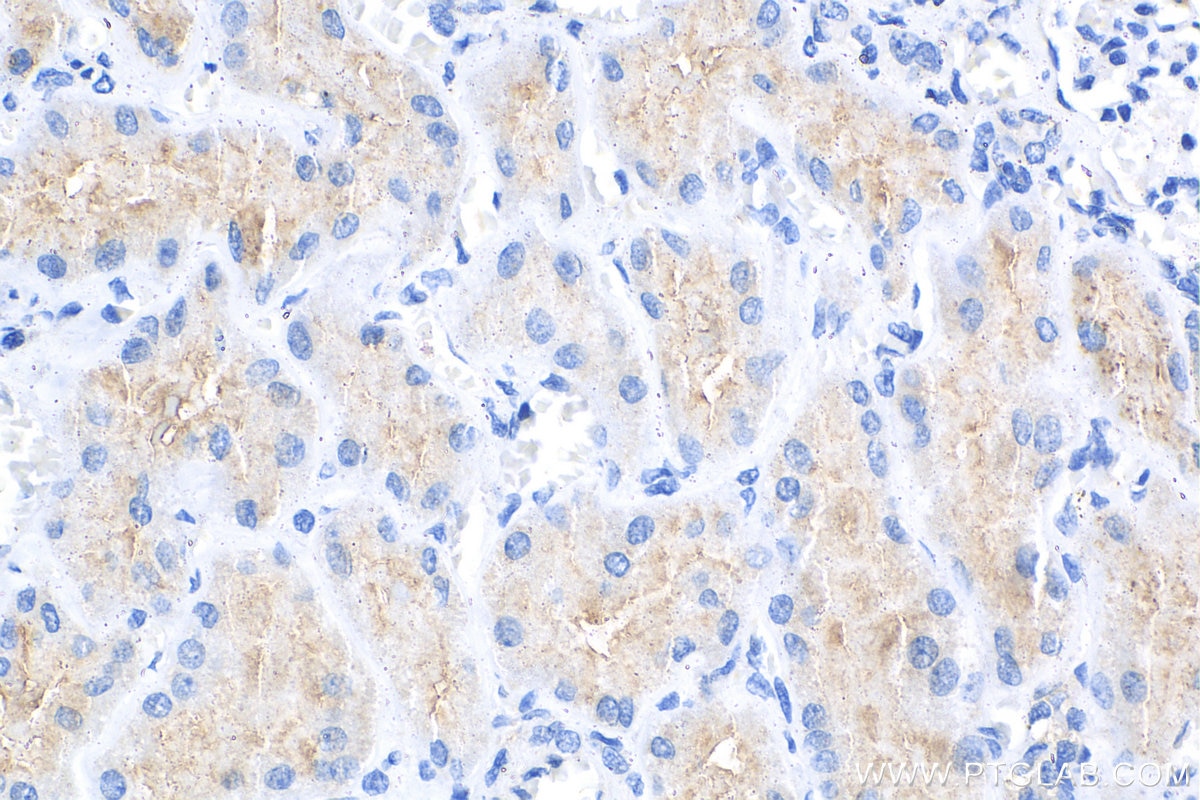
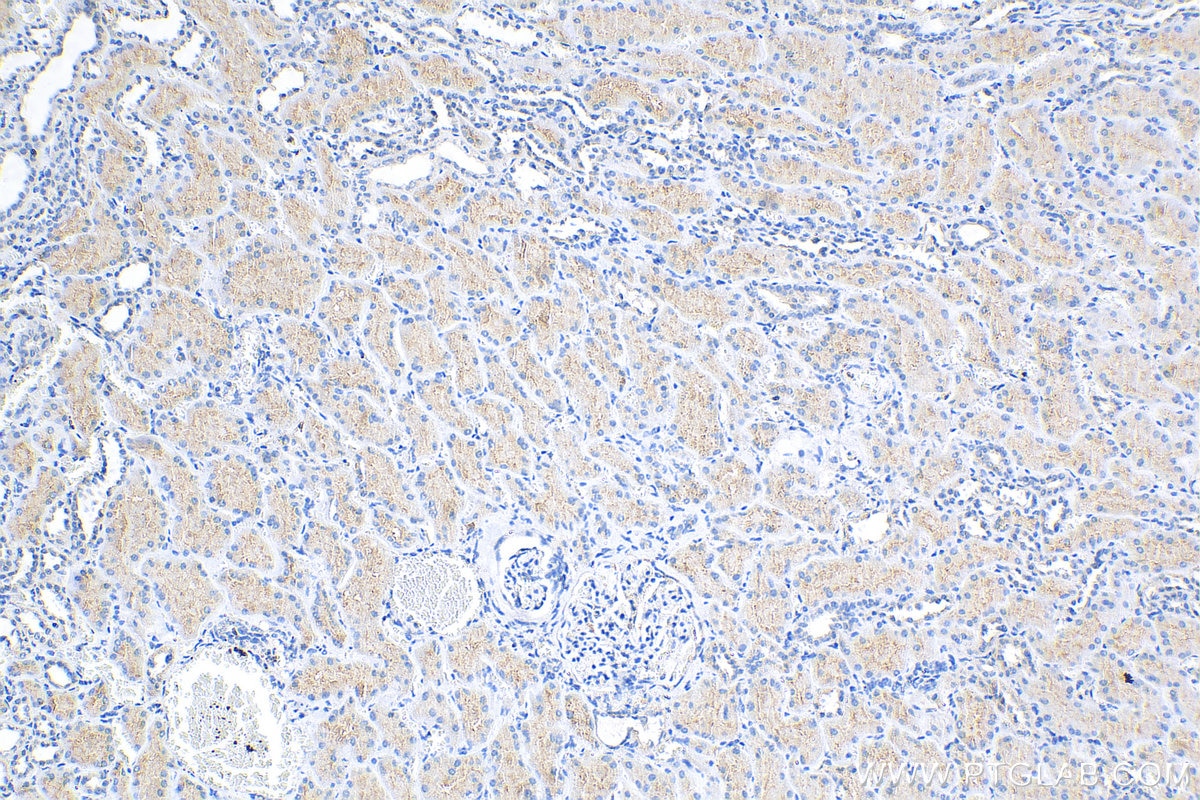
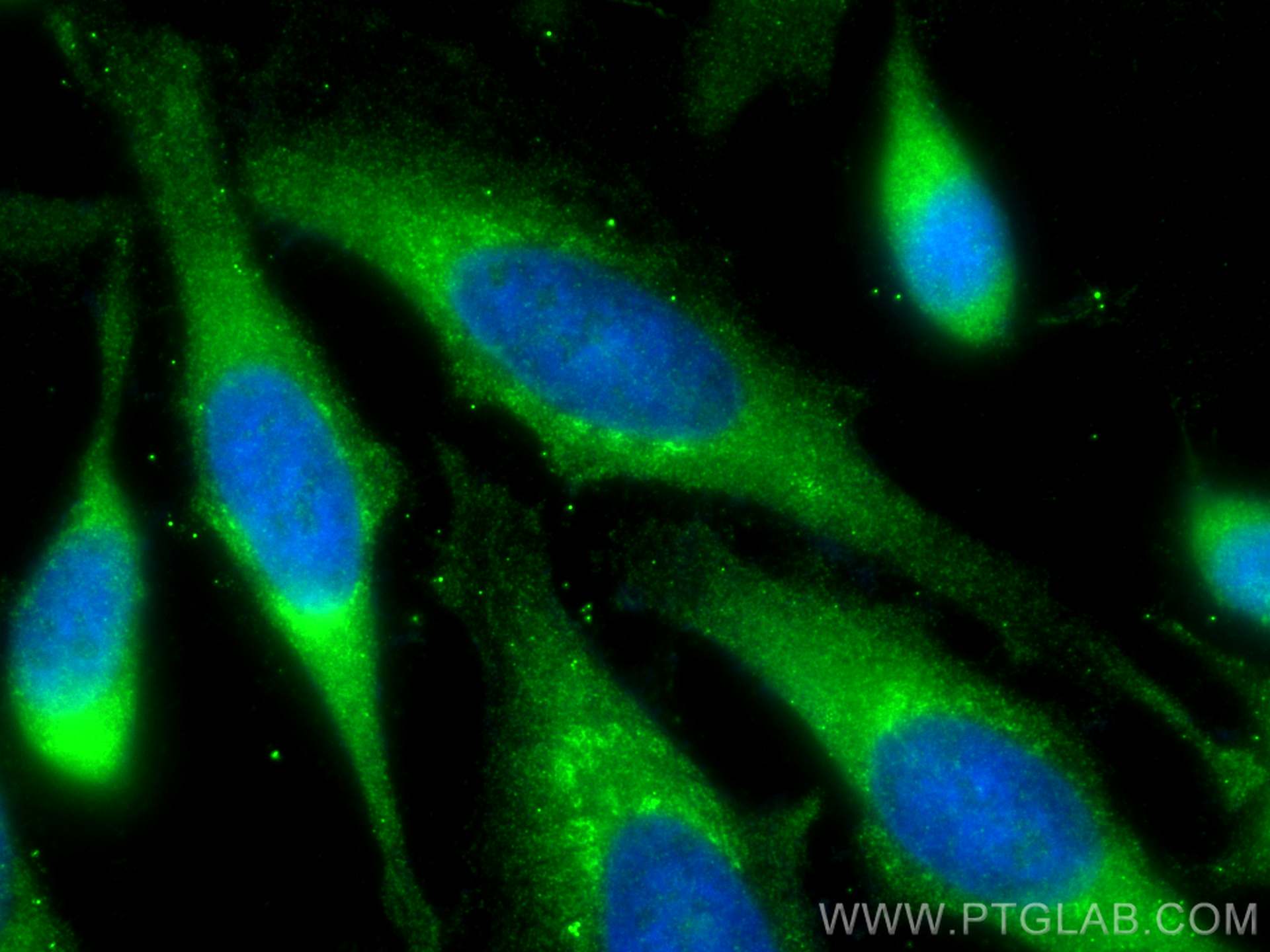

Tested Applications
| Positive WB detected in | IFN beta treated HeLa cells |
| Positive IHC detected in | human kidney tissue Note: suggested antigen retrieval with TE buffer pH 9.0; (*) Alternatively, antigen retrieval may be performed with citrate buffer pH 6.0 |
| Positive IF/ICC detected in | HeLa cells |
Recommended dilution
| Application | Dilution |
|---|---|
| Western Blot (WB) | WB : 1:1000-1:4000 |
| Immunohistochemistry (IHC) | IHC : 1:200-1:800 |
| Immunofluorescence (IF)/ICC | IF/ICC : 1:200-1:800 |
| It is recommended that this reagent should be titrated in each testing system to obtain optimal results. | |
| Sample-dependent, Check data in validation data gallery. | |
Product Information
23247-1-AP targets IFIT1 in WB, IHC, IF/ICC, IP, CoIP, ELISA applications and shows reactivity with human samples.
| Tested Reactivity | human |
| Cited Reactivity | human, mouse, hamster |
| Host / Isotype | Rabbit / IgG |
| Class | Polyclonal |
| Type | Antibody |
| Immunogen |
CatNo: Ag19691 Product name: Recombinant human IFIT1 protein Source: e coli.-derived, PET28a Tag: 6*His Domain: 340-460 aa of BC007091 Sequence: EVAHLDLARMYIEAGNHRKAEENFQKLLCMKPVVEETMQDIHFHYGRFQEFQKKSDVNAIIHYLKAIKIEQASLTRDKSINSLKKLVLRKLRRKALDLESLSLLGFVYKLEGNMNEALEYY Predict reactive species |
| Full Name | interferon-induced protein with tetratricopeptide repeats 1 |
| Calculated Molecular Weight | 478 aa, 55 kDa |
| Observed Molecular Weight | 55 KDa |
| GenBank Accession Number | BC007091 |
| Gene Symbol | IFIT1 |
| Gene ID (NCBI) | 3434 |
| RRID | AB_2811269 |
| Conjugate | Unconjugated |
| Form | Liquid |
| Purification Method | Antigen Affinity purified |
| UNIPROT ID | P09914 |
| Storage Buffer | PBS with 0.02% sodium azide and 50% glycerol, pH 7.3. |
| Storage Conditions | Store at -20°C. Stable for one year after shipment. Aliquoting is unnecessary for -20oC storage. 20ul sizes contain 0.1% BSA. |
Background Information
IFIT1, also known as glucocorticoid-attenuated response gene 16 protein (GARG-16), is a 463 amino acid protein belonging to the IFIT family. IFIT genes comprise a large family with three (IFIT1, IFIT2, and IFIT3) and four (IFIT1, IFIT2, IFIT3, and IFIT5) members in mice and humans, respectively. IFIT1 specifically bound virus PPP-RNA forms a complex with IFIT2 and IFIT3 to sequester the viral PPP-RNA and prevent virus replication.
Protocols
| Product Specific Protocols | |
|---|---|
| IF protocol for IFIT1 antibody 23247-1-AP | Download protocol |
| IHC protocol for IFIT1 antibody 23247-1-AP | Download protocol |
| WB protocol for IFIT1 antibody 23247-1-AP | Download protocol |
| Standard Protocols | |
|---|---|
| Click here to view our Standard Protocols |
Publications
What published studies show
Anti-IFIT3 antibody (Cat# 23247-1-AP) has 47 citations across 36 journals, including Nature Microbiology, EMBO Reports, Cell Reports, Journal of Virology, mBio, and eLife. Research fields span innate antiviral immunity, interferon signaling, virology (influenza, HPV, Zika, rabies, EV-A71), oncology (pancreatic, esophageal, ovarian, thyroid cancers), neuroinflammation, pyroptosis, and mitochondrial biology.
| Species | Application | Title |
|---|---|---|
Signal Transduct Target Ther TRAF3 activates STING-mediated suppression of EV-A71 and target of viral evasion | ||
Nat Microbiol Oxaloacetate sensing promotes innate immune antiviral defence against influenza virus infection. | ||
Adv Sci (Weinh) Single-Cell Transcriptomic Analysis of Primary and Metastatic Tumor Ecosystems in Esophageal Squamous Cell Carcinoma | ||
Cell Rep Med Pharmacological rescue of mutant p53 triggers spontaneous tumor regression via immune responses | ||
Cancer Lett Induction of IFIT1/IFIT3 and inhibition of Bcl-2 orchestrate the treatment of myeloma and leukemia via pyroptosis
| ||
J Neuroinflammation Progression of pathology in PINK1-deficient mouse brain from splicing via ubiquitination, ER stress, and mitophagy changes to neuroinflammation. |
Reviews
What customers say
All four reviewers gave this antibody a perfect 5-star rating for Western Blot applications. Users report clean bands at the expected molecular weight across diverse sample types, including mouse cell lines, liver tissue, mouse tissue, and human iPSC-derived macrophages and microglia. Recommended dilutions range from 1:1000 to 1:2500. Overall, customers consistently describe it as a reliable and high-performing antibody for WB.
The reviews below have been submitted by verified Proteintech customers who received an incentive for providing their feedback.
Gillian (Verified Customer) (03-12-2026) | Clean bands at expected molecular weight, used at 1:2500
|
MALLIKARJUNA (Verified Customer) (11-13-2025) | good ab for WB
|
MALLIKARJUNA (Verified Customer) (10-17-2025) | BEST FOR WB
|
Christin (Verified Customer) (03-28-2023) | Very nice antibody for WB
|





