
Tested Applications
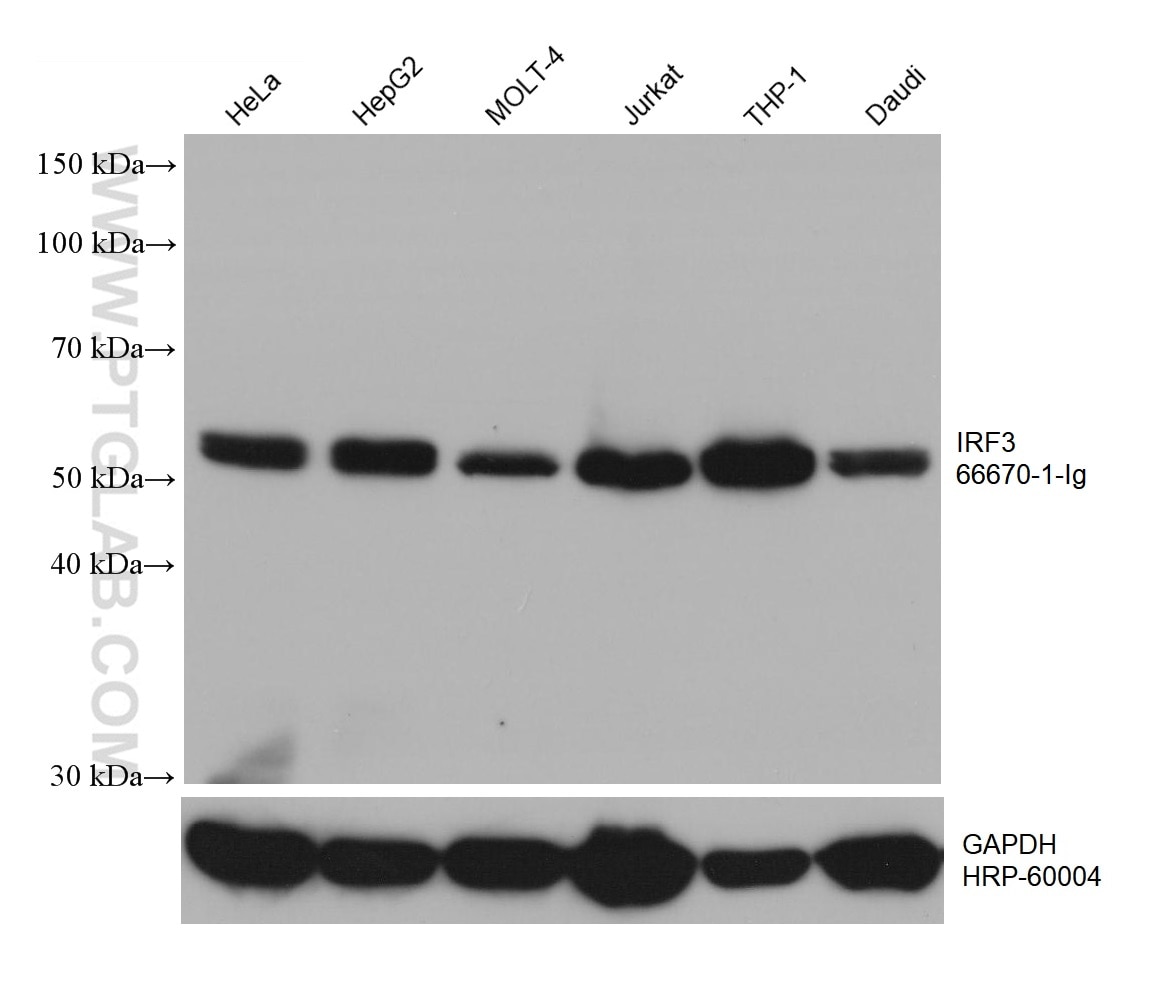
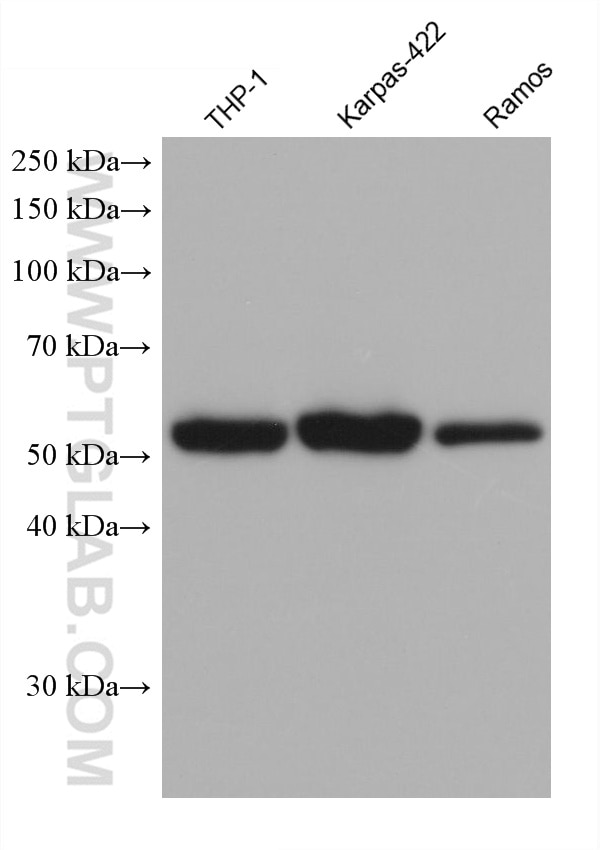
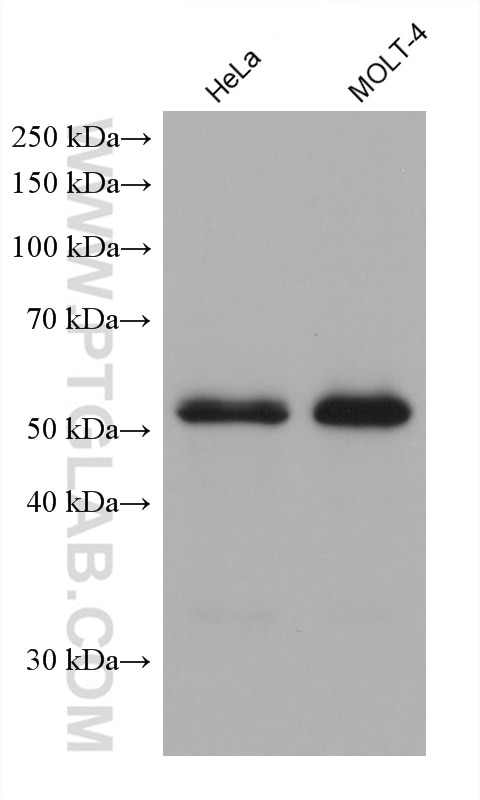
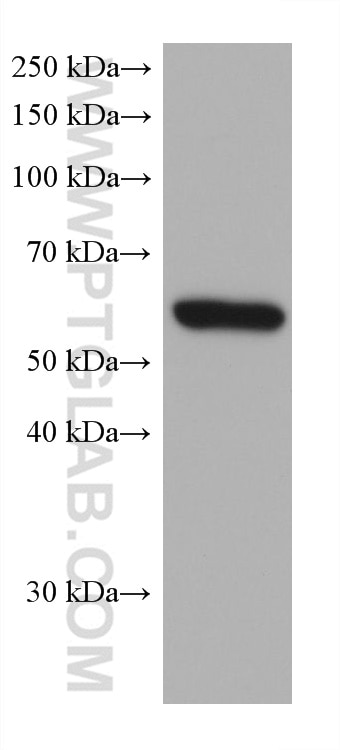
| Positive WB detected in | HeLa cells, A431 cells, THP-1 cells, MOLT-4 cells, HepG2 cells, Jurkat cells, Daudi cells, Karpas-422 cells, Ramos cells |
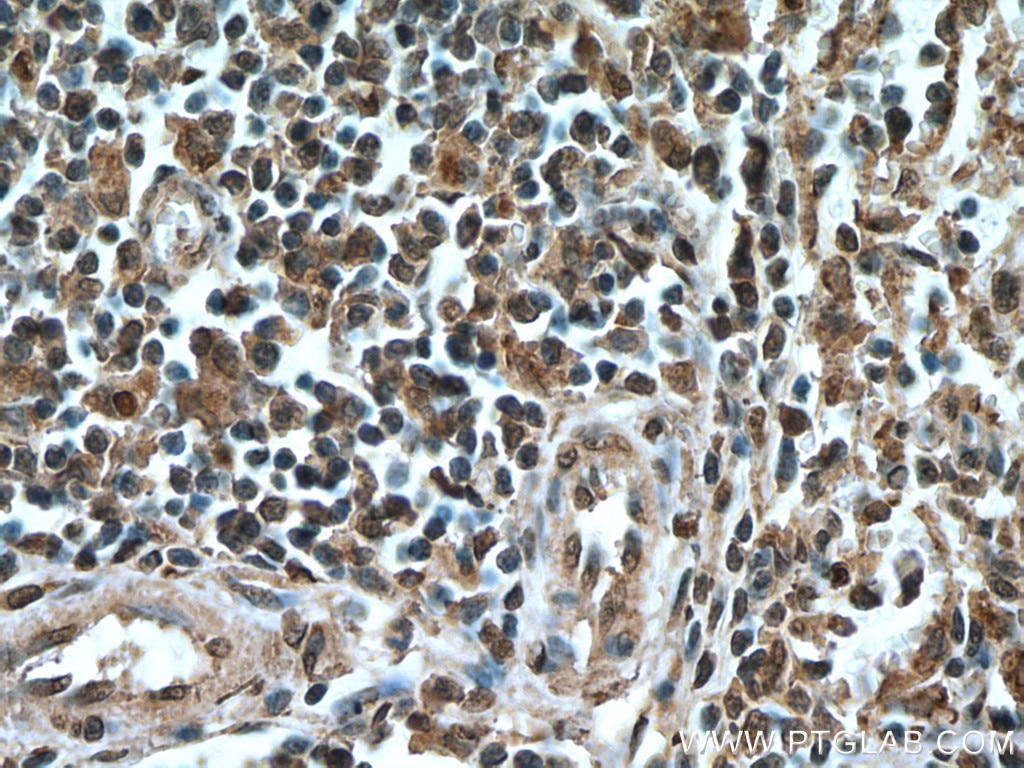
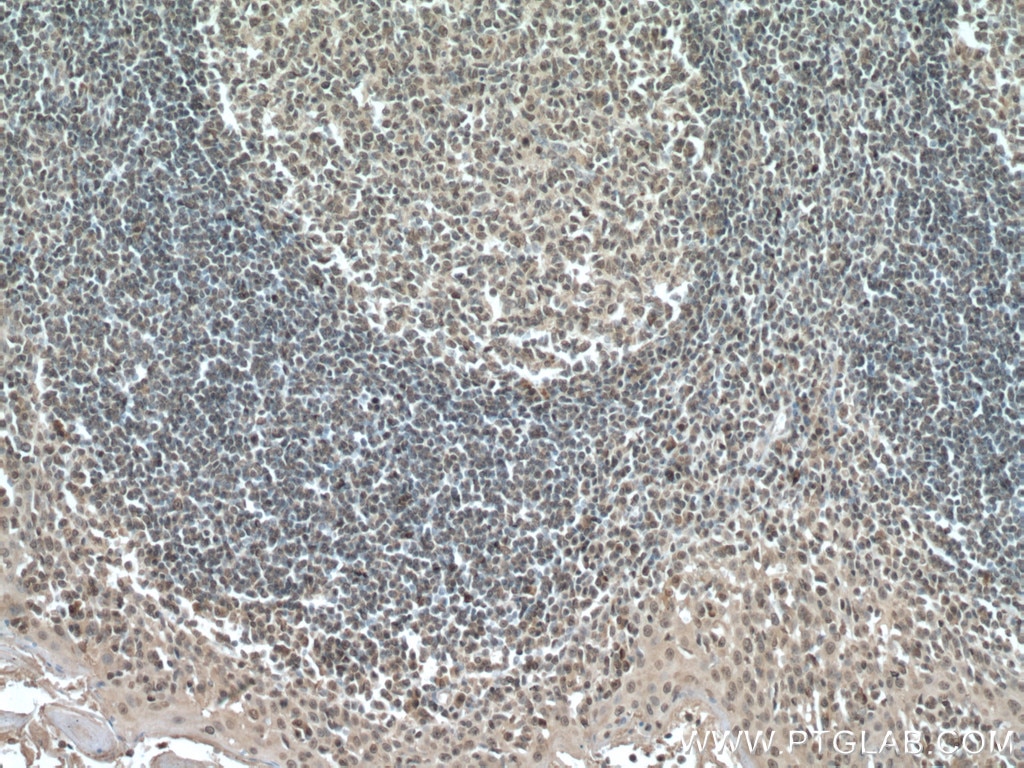
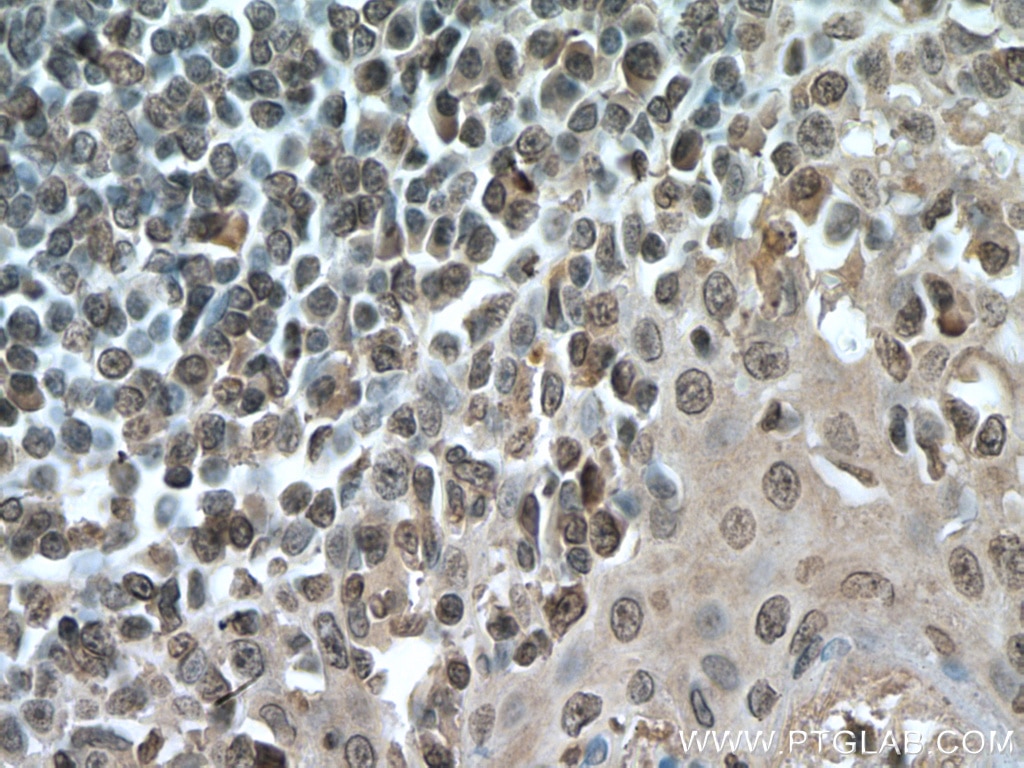
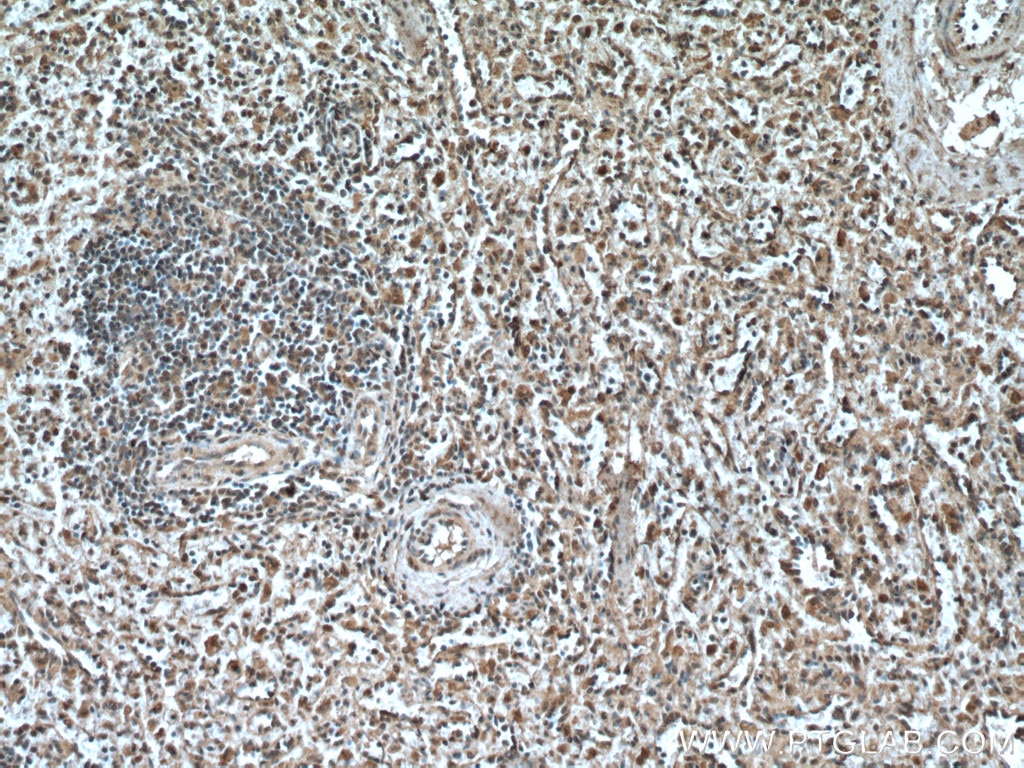
| Positive IHC detected in | human spleen tissue, human tonsillitis tissue Note: suggested antigen retrieval with TE buffer pH 9.0; (*) Alternatively, antigen retrieval may be performed with citrate buffer pH 6.0 |
Recommended dilution
| Application | Dilution |
|---|---|
| Western Blot (WB) | WB : 1:5000-1:50000 |
| Immunohistochemistry (IHC) | IHC : 1:250-1:1000 |
| It is recommended that this reagent should be titrated in each testing system to obtain optimal results. | |
| Sample-dependent, Check data in validation data gallery. | |
Product Information
66670-1-Ig targets IRF3 in WB, IHC, IF, CoIP, ELISA applications and shows reactivity with human samples.
| Tested Reactivity | human |
| Cited Reactivity | human, mouse, rat, pig |
| Host / Isotype | Mouse / IgG1 |
| Class | Monoclonal |
| Type | Antibody |
| Immunogen |
CatNo: Ag27223 Product name: Recombinant human IRF3 protein Source: e coli.-derived, PET28a Tag: 6*His Domain: 1-452 aa of BC009395 Sequence: MGTPKPRILPWLVSQLDLGQLEGVAWVNKSRTRFRIPWKHGLRQDAQQEDFGIFQAWAEATGAYVPGRDKPDLPTWKRNFRSALNRKEGLRLAEDRSKDPHDPHKIYEFVNSGVGDFSQPDTSPDTNGGGSTSDTQEDILDELLGNMVLAPLPDPGPPSLAVAPEPCPQPLRSPSLDNPTPFPNLGPSENPLKRLLVPGEEWEFEVTAFYRGRQVFQQTISCPEGLRLVGSEVGDRTLPGWPVTLPDPGMSLTDRGVMSYVRHVLSCLGGGLALWRAGQWLWAQRLGHCHTYWAVSEELLPNSGHGPDGEVPKDKEGGVFDLGPFIVGSWAPRSDYLHGRKRTLTTLCPLVLCGGVMAPGPAVDQEARDGQGCAHVPQGLGRNGPGRGCLLPGEYCGPAHFQQPPTLPHLRPVQGLPAGLGGGHGFPGPWGDLSPRSSWCASNPPVPHHLNQ Predict reactive species |
| Full Name | interferon regulatory factor 3 |
| Calculated Molecular Weight | 47 kDa |
| Observed Molecular Weight | 50-60 kDa |
| GenBank Accession Number | BC009395 |
| Gene Symbol | IRF3 |
| Gene ID (NCBI) | 3661 |
| RRID | AB_2882024 |
| Conjugate | Unconjugated |
| Form | Liquid |
| Purification Method | Protein G purification |
| UNIPROT ID | Q14653 |
| Storage Buffer | PBS with 0.02% sodium azide and 50% glycerol, pH 7.3. |
| Storage Conditions | Store at -20°C. Stable for one year after shipment. Aliquoting is unnecessary for -20oC storage. 20ul sizes contain 0.1% BSA. |
Background Information
The virul-induced expression of interferon(IFN) genes in infected cells implicate in the interplay of several constitutively expressed and virus-activated transcription factors. A family of IFN regulatory factors(IRFs) have been shown to has a role in the transcription of IFN genes as well as IFN-stimulated genes. IRF3 is a novel key transcriptional regulator of type I IFN-dependent immune responses and involves in the innate immune response against DNA and RNA viruses, by binding to the promoters of IFN. It located in the cytoplasm of uninfected cells in an inactive form, and following viral infection, double-stranded RNA (dsRNA), or toll-like receptor (TLR) signaling, could be phosphorylated by IKBKE and TBK1 kinases. This induces a conformational change, leading to its dimerization, nuclear localization and association with CREB binding protein (CREBBP) to form dsRNA-activated factor 1 (DRAF1), a complex which activates the transcription of the type I IFN and ISG genes.
Protocols
| Product Specific Protocols | |
|---|---|
| IHC protocol for IRF3 antibody 66670-1-Ig | Download protocol |
| WB protocol for IRF3 antibody 66670-1-Ig | Download protocol |
| Standard Protocols | |
|---|---|
| Click here to view our Standard Protocols |
Publications
What published studies show
| Species | Application | Title |
|---|---|---|
J Hematol Oncol Glutathione reductase deficiency potentiates the immunogenicity of ferroptosis and cuproptosis via amplified reactive oxygen species accumulation and cGAS-STING pathway activation | ||
Immunity Membrane integrity changes upon viral infection activate sphingomyelinase SMPDL3B to restrict cGAS-STING signaling via cGAMP degradation | ||
Cell Mol Immunol Dynamic regulation of TBK1 lactylation shapes antiviral immune responses. | ||
Bioact Mater Targeting and reprogramming microglial phagocytosis of neutrophils by ginsenoside Rg1 nanovesicles promotes stroke recovery |









