

Tested Applications
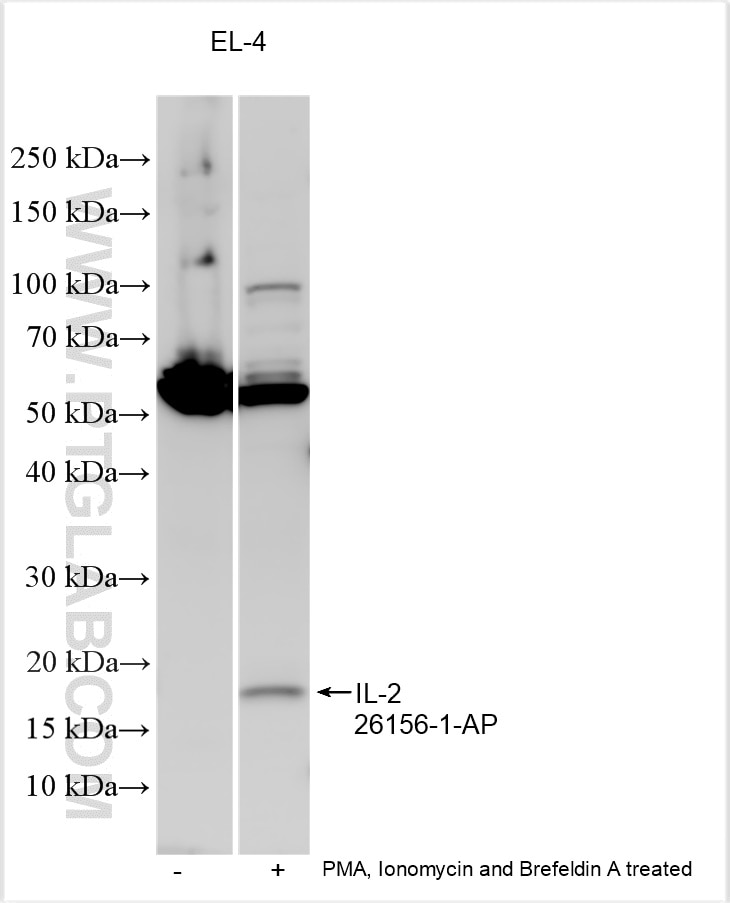
| Positive WB detected in | PMA, Ionomycin and Brefeldin A treated EL-4 cells |
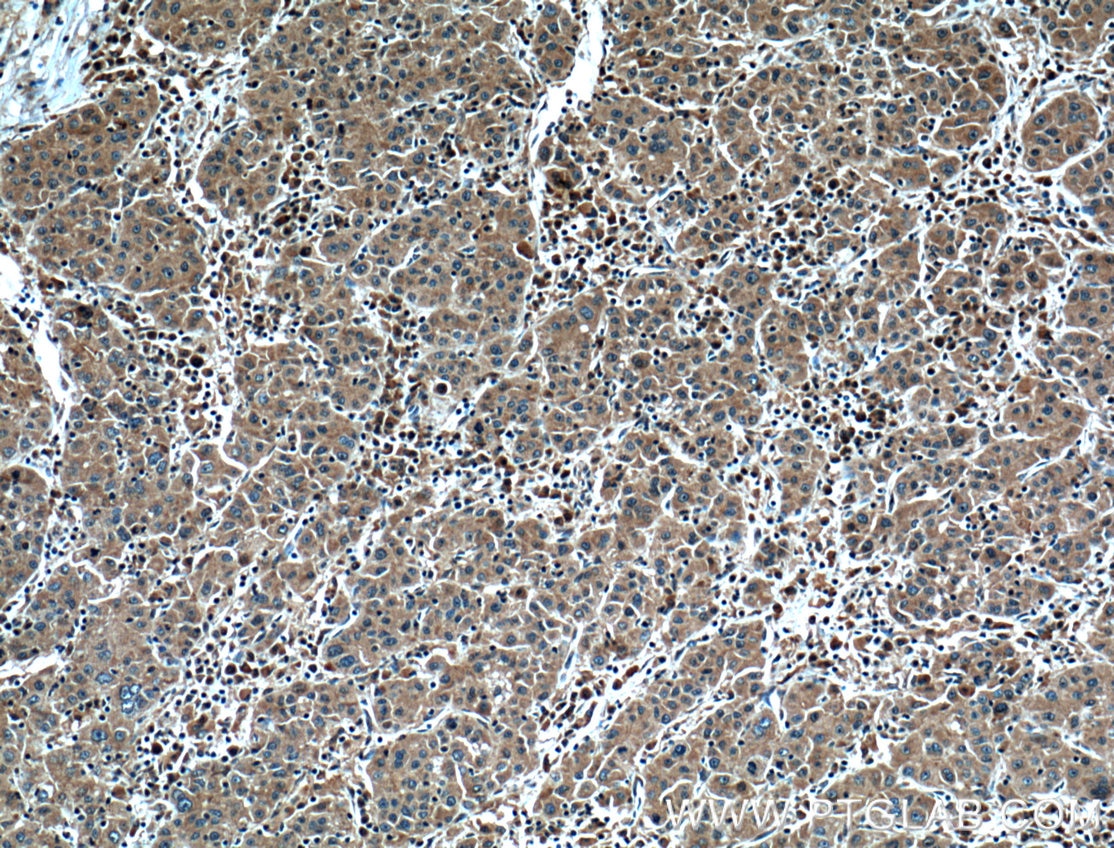
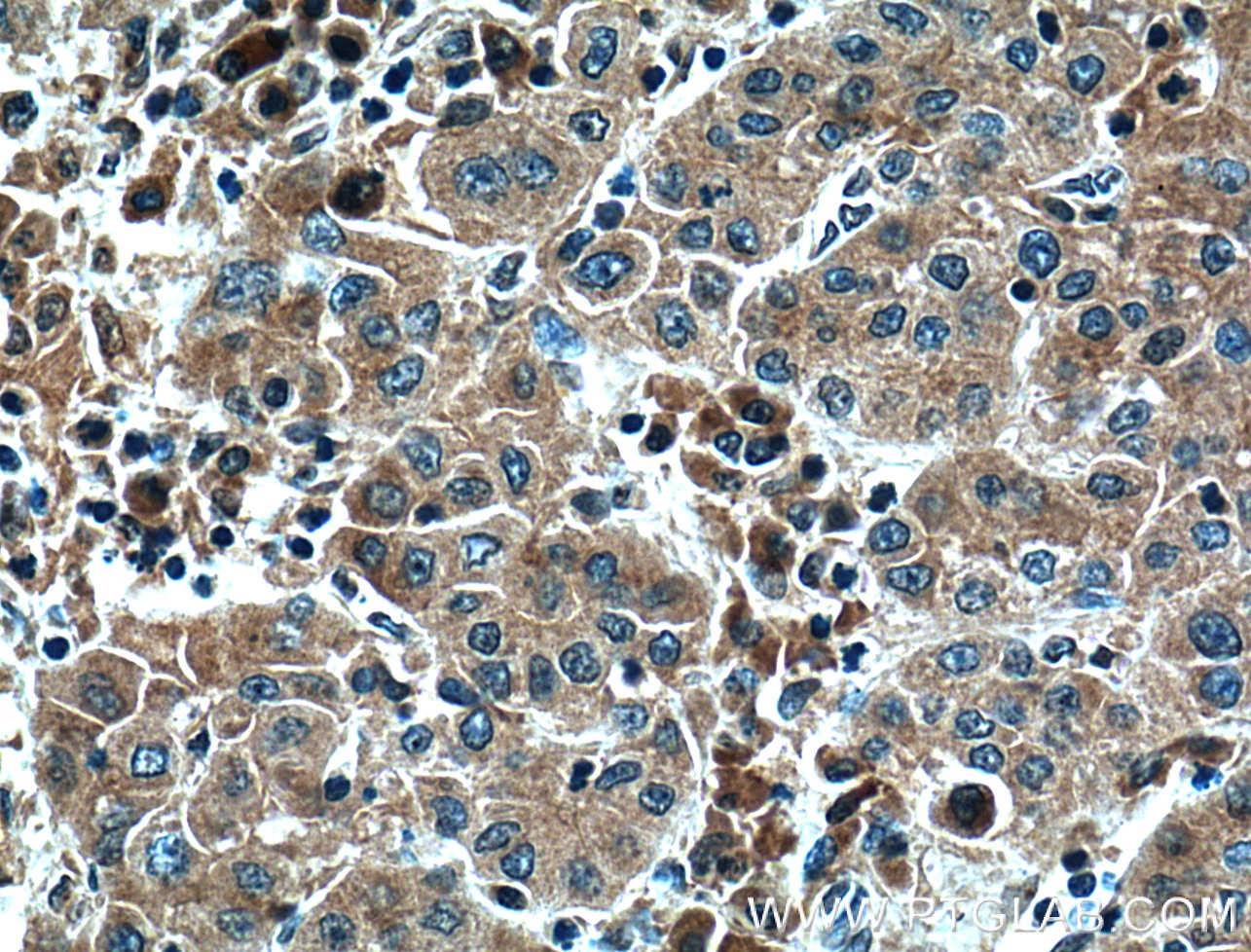
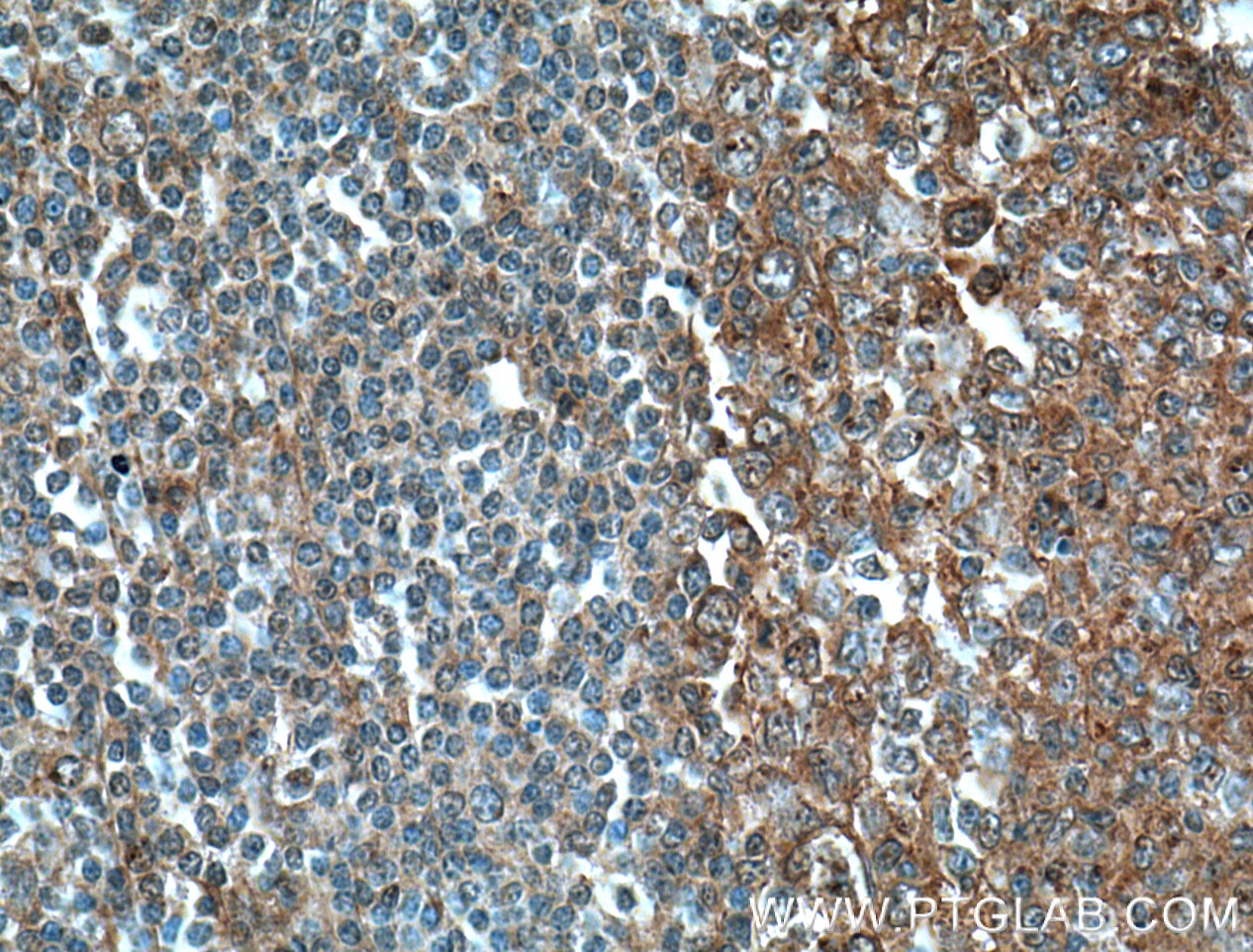
| Positive IHC detected in | human liver cancer tissue, human tonsillitis tissue Note: suggested antigen retrieval with TE buffer pH 9.0; (*) Alternatively, antigen retrieval may be performed with citrate buffer pH 6.0 |
Recommended dilution
| Application | Dilution |
|---|---|
| Western Blot (WB) | WB : 1:500-1:2000 |
| Immunohistochemistry (IHC) | IHC : 1:50-1:500 |
| It is recommended that this reagent should be titrated in each testing system to obtain optimal results. | |
| Sample-dependent, Check data in validation data gallery. | |
Product Information
26156-1-AP targets IL-2 in WB, IHC, IF, ELISA, Cell treatment applications and shows reactivity with human, mouse samples.
| Tested Reactivity | human, mouse |
| Cited Reactivity | human, mouse, rat |
| Host / Isotype | Rabbit / IgG |
| Class | Polyclonal |
| Type | Antibody |
| Immunogen |
CatNo: Ag24079 Product name: Recombinant mouse IL-2 protein Source: e coli.-derived, PGEX-4T Tag: GST Domain: 21-169 aa of NM-008366 Sequence: APTSSSTSSSTAEAQQQQQQQQQQQQHLEQLLMDLQELLSRMENYRNLKLPRMLTFKFYLPKQATELKDLQCLEDELGPLRHVLDLTQSKSFQLEDAENFISNIRVTVVKLKGSDNTFECQFDDESATVVDFLRRWIAFCQSIISTSPQ Predict reactive species |
| Full Name | interleukin 2 |
| Calculated Molecular Weight | 19 kDa |
| Observed Molecular Weight | 19 kDa |
| GenBank Accession Number | NM-008366 |
| Gene Symbol | IL-2 |
| Gene ID (NCBI) | 16183 |
| RRID | AB_2880407 |
| Conjugate | Unconjugated |
| Form | Liquid |
| Purification Method | Antigen affinity purification |
| UNIPROT ID | P04351 |
| Storage Buffer | PBS with 0.02% sodium azide and 50% glycerol, pH 7.3. |
| Storage Conditions | Store at -20°C. Stable for one year after shipment. Aliquoting is unnecessary for -20oC storage. 20ul sizes contain 0.1% BSA. |
Background Information
What is the calculated molecular weight of IL2?
19 kDa
Where is IL-2 produced?
IL-2 is primarily produced and secreted by CD4+ helper T cells in secondary lymphoid organs. CD8+ T cells, some B cells, and dendritic cells also produce IL-2.
What allows the protein to bind to its receptor?
The N-terminal 20 amino acids are essential for protein-receptor interaction.
What are the post-translational modifications of IL-2?
IL-2 may present glycosylation, yet the function of this modification has not been confirmed.
What is the role of IL-2?
IL-2 is a key immunoregulatory cytokine that promotes proliferation of helper T cells, upregulating its own secretion, while also increasing activity of regulatory T cells and providing negative feedback to its production and the immune response as a whole. IL-2 is also a growth factor for natural killer cells and an upregulator of B cell antibody expression and secretion.
What activates the IL-2 pathway?
Combined T cell antigen receptor and CD28 signals allow for maximum activation of the IL-2 pathway.
How does IL-2 expression change during an immune response?
During an immune response, CD4+ and CD8+ T cells will secrete increased amounts of IL-2 to be consumed by regulatory T cells.
How do the responses to strong and weak IL-2 signals differ?
Strong IL-2 levels promote antigen-specific T cells to differentiate into effector T cells, responding immediately to a stimulus or threat. Weak IL-2 signals, however, result in effector T cells to differentiate into helper or memory T cells.
What negatively regulates IL-2?
Immunoregulatory CD4+CD5+ T cells in inhibit IL-2 production by helper T cells.
(PMIDs: 22343569, 24376444, 15473953)
Protocols
| Product Specific Protocols | |
|---|---|
| IHC protocol for IL-2 antibody 26156-1-AP | Download protocol |
| WB protocol for IL-2 antibody 26156-1-AP | Download protocol |
| Standard Protocols | |
|---|---|
| Click here to view our Standard Protocols |
Publications
What published studies show
The IL-2 Polyclonal antibody (Cat# 26156-1-AP) has 18 citations spanning journals including Nature Biotechnology, Cell Reports, Journal of Controlled Release, Materials Today Bio, Molecular Medicine, Frontiers in Immunology, and others. Research fields covered include cancer immunotherapy, ferroptosis, hepatocellular carcinoma, SARS-CoV-2 inner ear infection, macrophage polarization, renal fibrosis, transplant rejection, glioma, thyroid cancer, T cell signaling, and inflammatory diseases. Applications cited include WB, IHC, IF, and cell treatment in human, mouse, and rat models.
| Species | Application | Title |
|---|---|---|
Nat Biotechnol Magnify is a universal molecular anchoring strategy for expansion microscopy | ||
J Control Release Tumor-activated IL-2 mRNA delivered by lipid nanoparticles for cancer immunotherapy | ||
Mater Today Bio Sorafenib-loaded metal-organic framework nanoparticles for anti-hepatocellular carcinoma effects through synergistically potentiating ferroptosis and remodeling tumor immune microenvironment | ||
Mol Med Th1 cells reduce the osteoblast-like phenotype in valvular interstitial cells by inhibiting NLRP3 inflammasome activation in macrophages | ||
Front Immunol Inhibition of the MyD88 signaling pathway could upregulates Ghrelin expression to synergistically regulate hepatic Echinococcus multilocularis-infected progression |
Reviews
What customers say
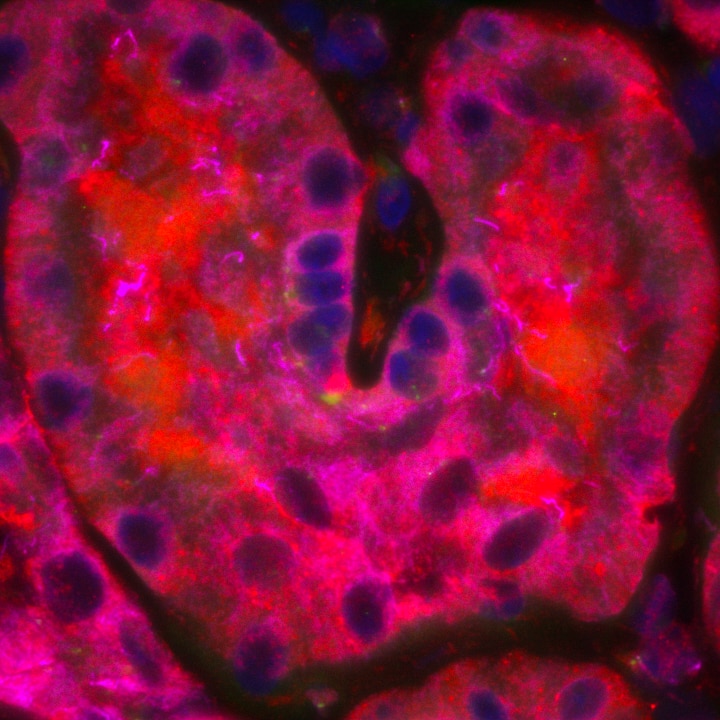
The single review for this product is a 5-star rating for immunofluorescence. The reviewer used a 1:100 dilution on human kidney (FFPE) and mouse lung (OCT/frozen) tissues, reporting that the antibody "worked well from day 1." Overall, the feedback is positive, highlighting reliable performance out of the box.
The reviews below have been submitted by verified Proteintech customers who received an incentive for providing their feedback.
Lindsey (Verified Customer) (05-24-2021) | Great antibody--worked well from day 1!
 |





