
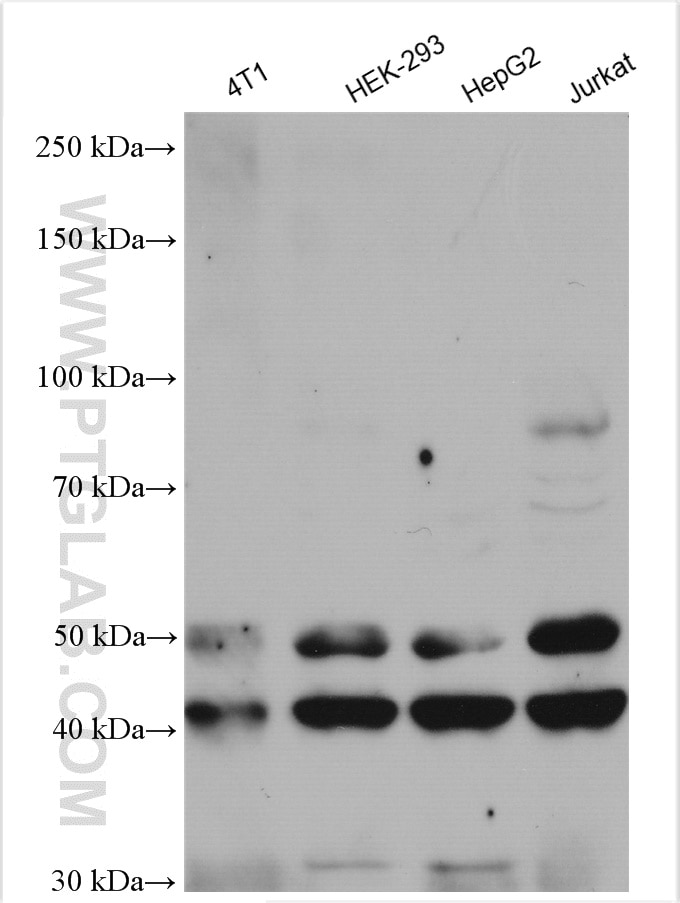
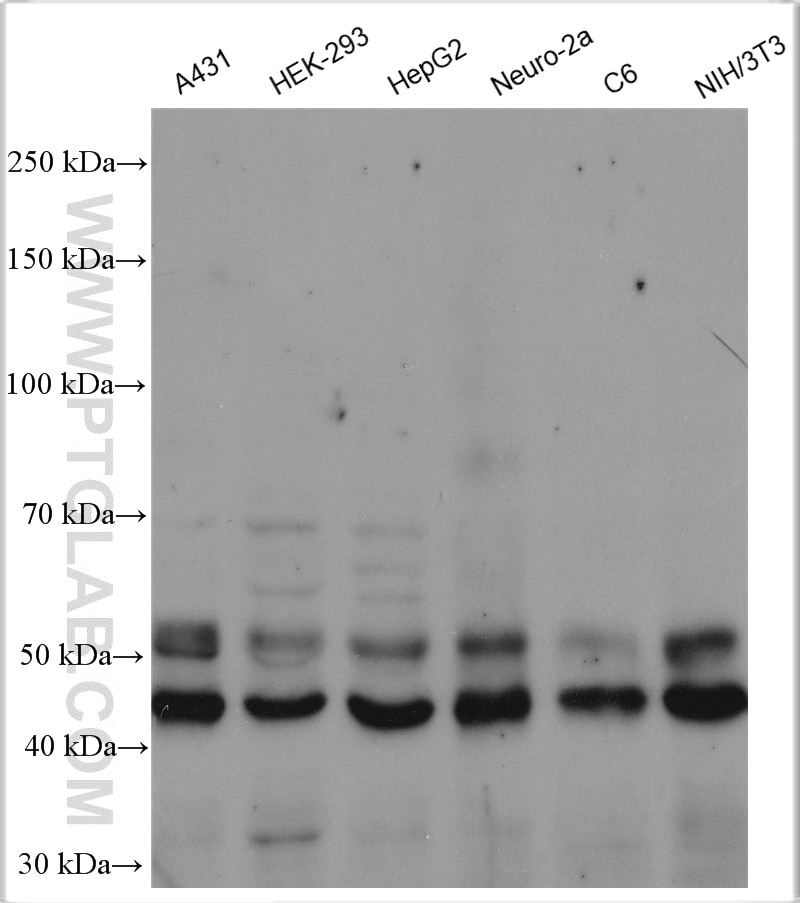
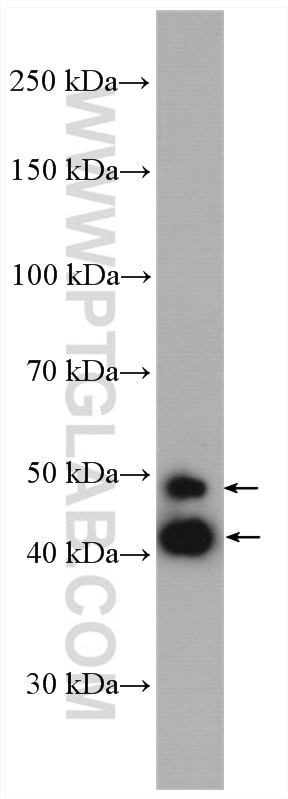
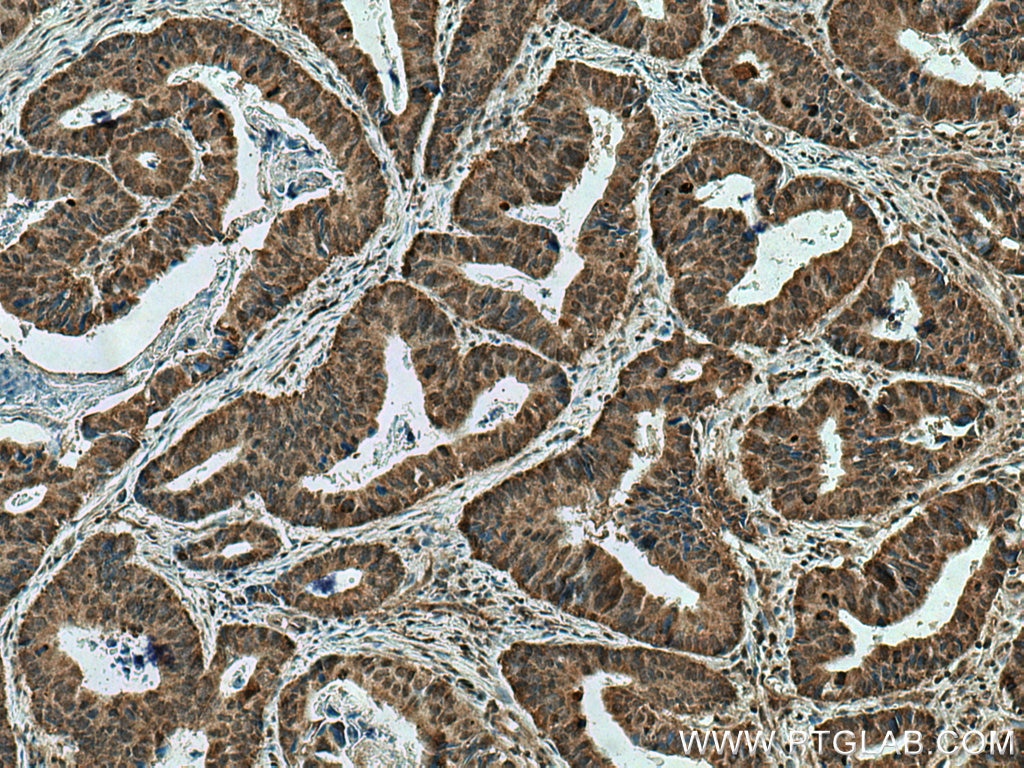

Tested Applications
| Positive WB detected in | 4T1 cells, mouse brain tissue, A431 cells, HEK-293 cells, HepG2 cells, Jurkat cells, Neuro-2a cells, C6 cells, NIH/3T3 cells |
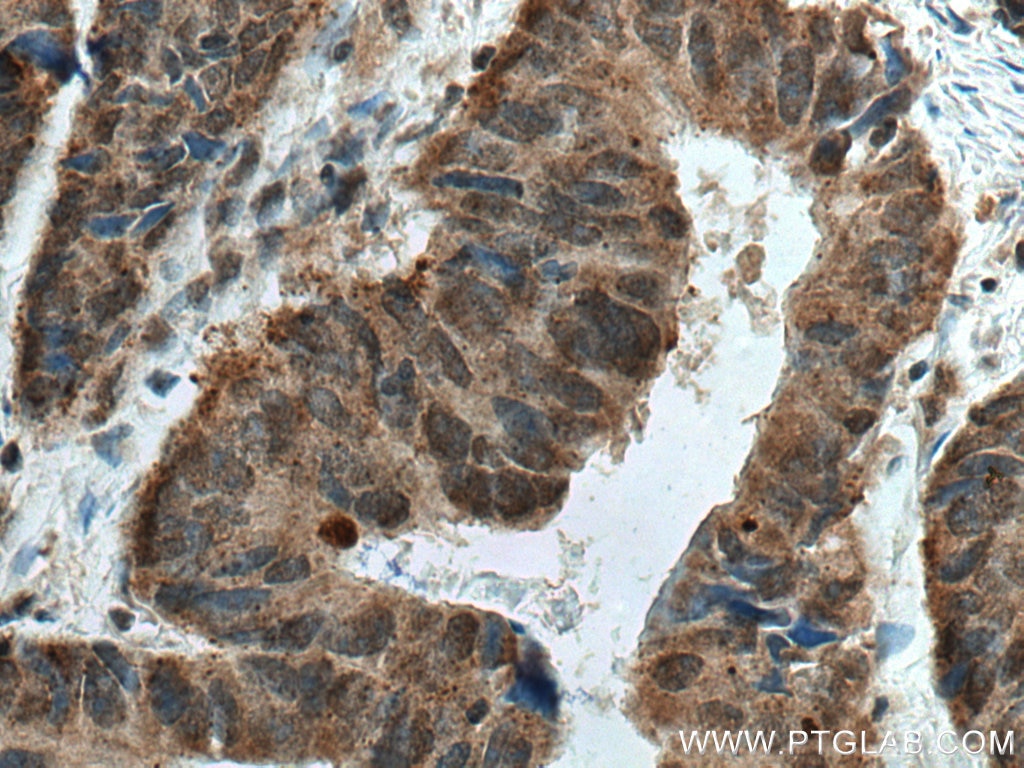
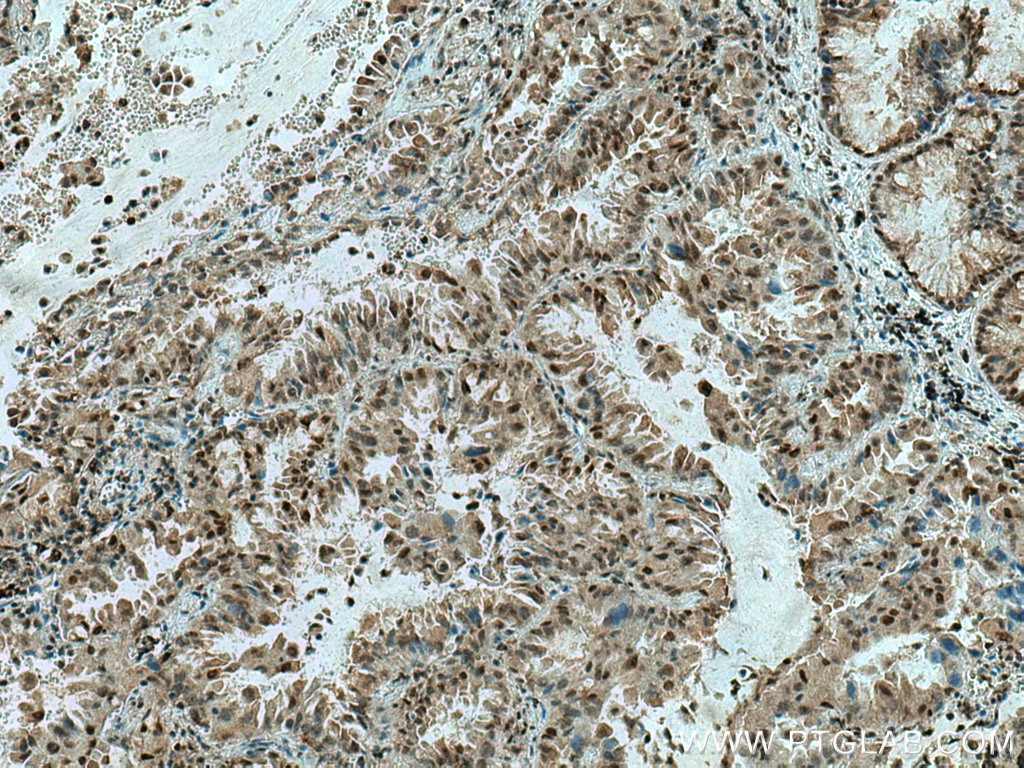
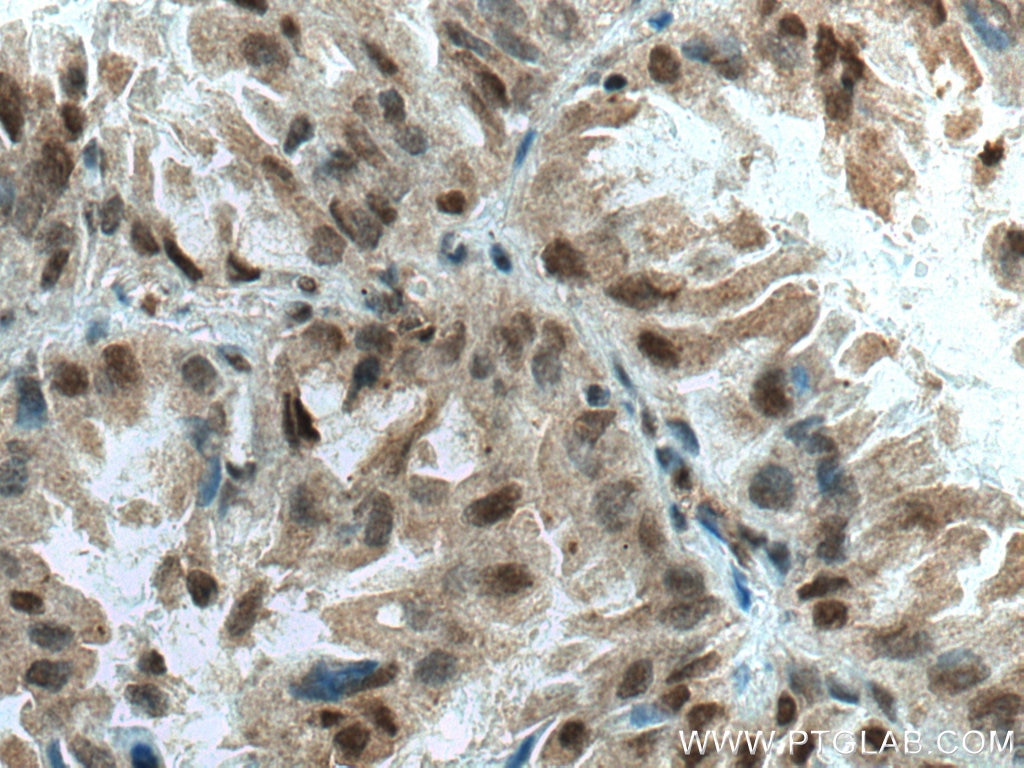
| Positive IHC detected in | human colon cancer tissue, human lung cancer tissue Note: suggested antigen retrieval with TE buffer pH 9.0; (*) Alternatively, antigen retrieval may be performed with citrate buffer pH 6.0 |
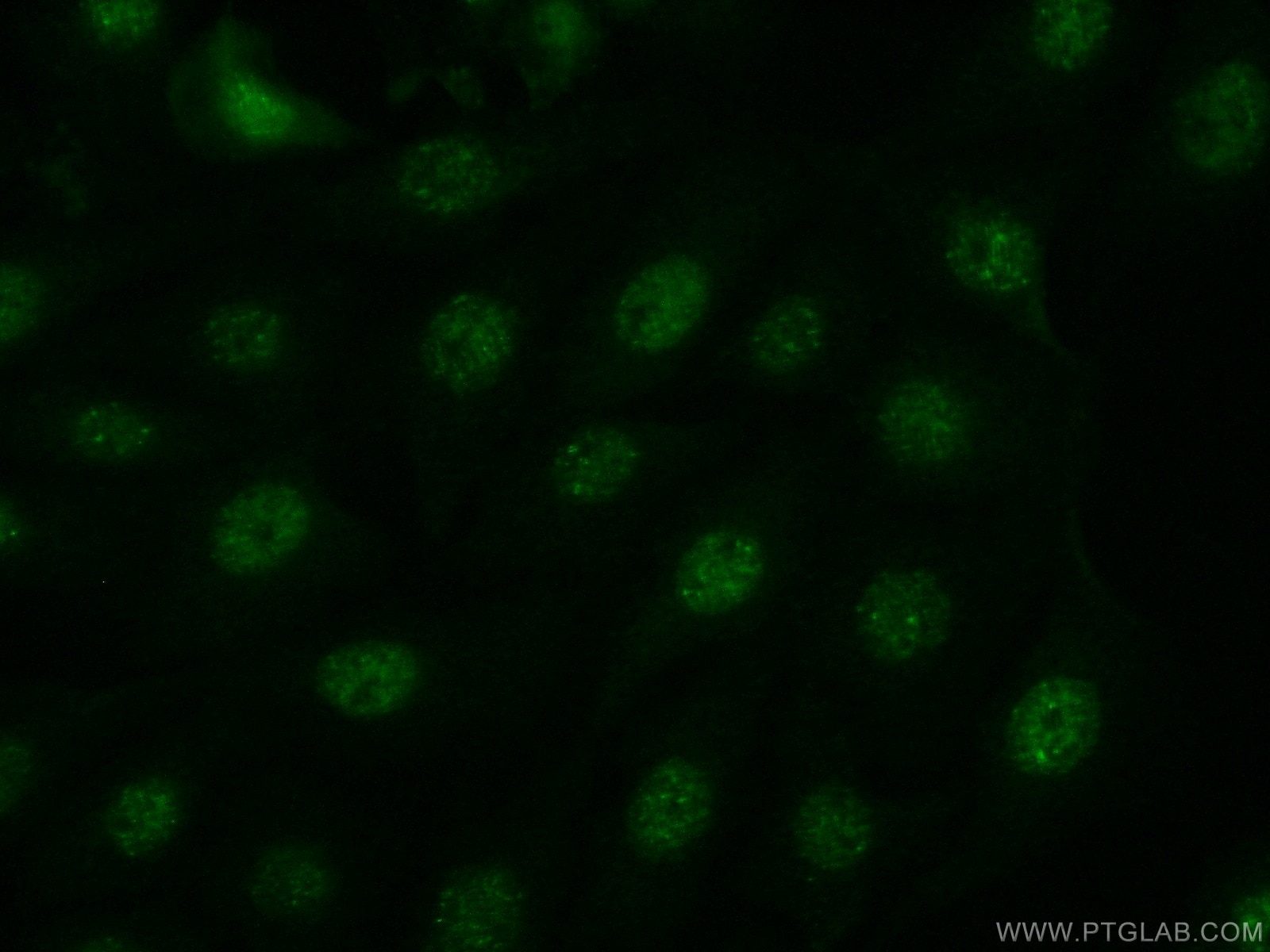
| Positive IF/ICC detected in | SH-SY5Y cells |
Recommended dilution
| Application | Dilution |
|---|---|
| Western Blot (WB) | WB : 1:500-1:3000 |
| Immunohistochemistry (IHC) | IHC : 1:50-1:500 |
| Immunofluorescence (IF)/ICC | IF/ICC : 1:50-1:500 |
| It is recommended that this reagent should be titrated in each testing system to obtain optimal results. | |
| Sample-dependent, Check data in validation data gallery. | |
Product Information
51151-1-AP targets JNK in WB, IHC, IF/ICC, IP, CoIP, ELISA applications and shows reactivity with human, mouse samples.
| Tested Reactivity | human, mouse |
| Cited Reactivity | human, mouse, rat, pig, chicken |
| Host / Isotype | Rabbit / IgG |
| Class | Polyclonal |
| Type | Antibody |
| Immunogen |
Peptide Predict reactive species |
| Full Name | mitogen-activated protein kinase 8 |
| Calculated Molecular Weight | 48 kDa |
| Observed Molecular Weight | 44-48 kDa, 50-55 kDa |
| GenBank Accession Number | NM_138982 |
| Gene Symbol | JNK |
| Gene ID (NCBI) | 5599 |
| RRID | AB_2140710 |
| Conjugate | Unconjugated |
| Form | Liquid |
| Purification Method | Antigen affinity purification |
| UNIPROT ID | P45983 |
| Storage Buffer | PBS with 0.02% sodium azide and 50% glycerol, pH 7.3. |
| Storage Conditions | Store at -20°C. Aliquoting is unnecessary for -20oC storage. 20ul sizes contain 0.1% BSA. |
Background Information
Function
JNK1, also known as mitogen-activated protein kinase 8 - MAPK8, is a serine/threonine-protein kinase. It is an important player in signaling transduction pathways governing cellular response to external stimuli, including ultraviolet radiation (UV), inflammatory cytokines, and reactive oxygen species (ROS). JNK1 phosphorylates several transcription factors, such as c-Jun, Elk-1, and ATF2, affecting their transcription activity.
Tissue specificity
JNK1 is ubiquitously expressed.
Involvement in disease
JNK-mediated phosphorylation governs a variety of important cellular processes, and abnormalities of JNK1 activity have been implicated in obesity and cancer.
Isoforms
There are four isoforms of JNK1 (PMID: 8654373), giving rise to 46 kDa and 55 kDa isoforms. JNK1 isoforms differ in their substrate specificity and tissue expression profiles.
Post-translational modifications
JNK1 is phosphorylated by MAPK kinases (MAPKK).
Cellular localization
JNK1 is present both in the nucleus and in the cytoplasm. Stress conditions and other stimuli can cause a shift in JNK1 subcellular distribution.
Protocols
| Product Specific Protocols | |
|---|---|
| IF protocol for JNK antibody 51151-1-AP | Download protocol |
| IHC protocol for JNK antibody 51151-1-AP | Download protocol |
| WB protocol for JNK antibody 51151-1-AP | Download protocol |
| Standard Protocols | |
|---|---|
| Click here to view our Standard Protocols |
Publications
What published studies show
The JNK Polyclonal Antibody (Cat# 51151-1-AP) has 141 total citations published in journals including Nature Communications, Cell Research, Cell Death & Differentiation, Journal of Ethnopharmacology, Free Radical Biology and Medicine, FASEB Journal, and many others. Research fields covered include MAPK/JNK signaling, inflammation, apoptosis, cancer biology, cardiovascular disease, neuroprotection, liver injury, bone metabolism, pharmacology, and infectious diseases.
| Species | Application | Title |
|---|---|---|
Nat Commun Proteogenomics of different urothelial bladder cancer stages reveals distinct molecular features for papillary cancer and carcinoma in situ | ||
Int J Oral Sci Activation of mitogen-activated protein kinases in satellite glial cells of the trigeminal ganglion contributes to substance P-mediated inflammatory pain. | ||
J Nanobiotechnology Gut microbiota dysfunction mediates stress-exacerbated aortic dissection via the bacteroides vulgatus-outer membrane vesicles-stearic acid-JNK/MAPK axis. | ||
J Exp Clin Cancer Res BDH2 triggers ROS-induced cell death and autophagy by promoting Nrf2 ubiquitination in gastric cancer. |









