

Tested Applications
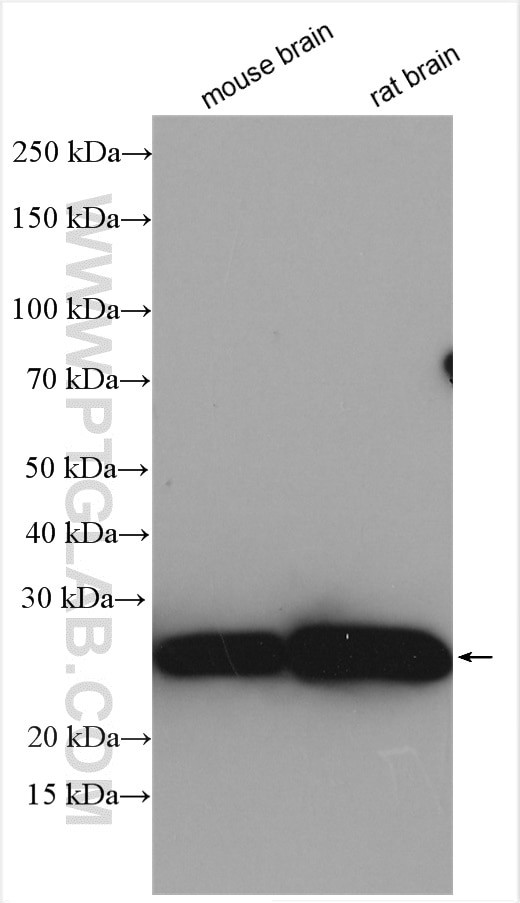
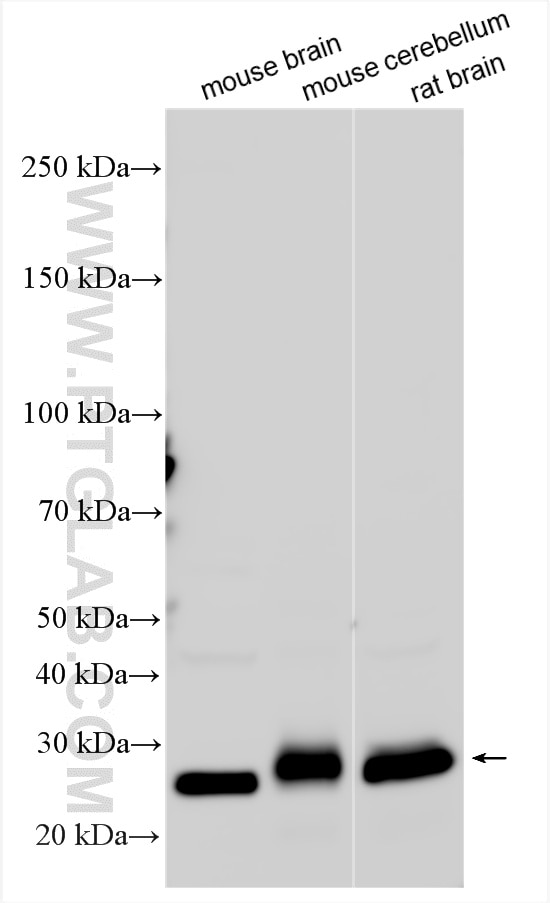
| Positive WB detected in | mouse brain tissue, rat brain tissue, mouse cerebellum tissue |
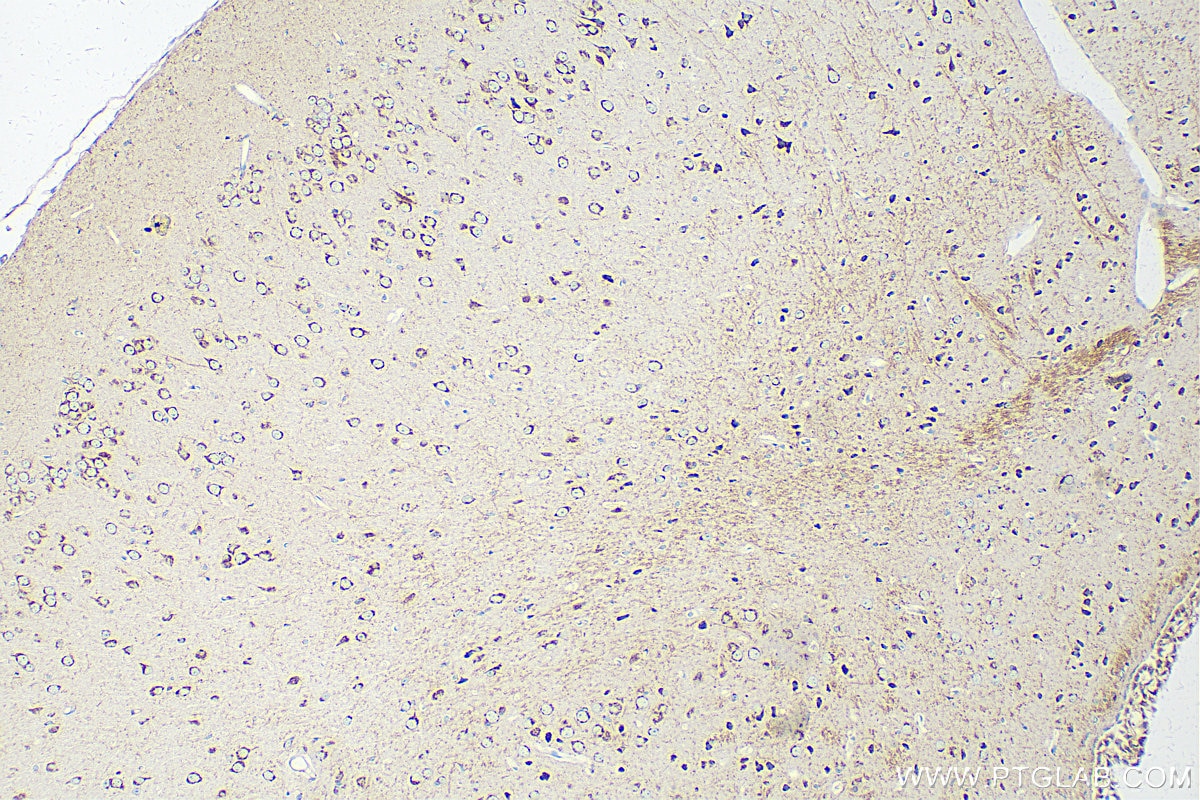
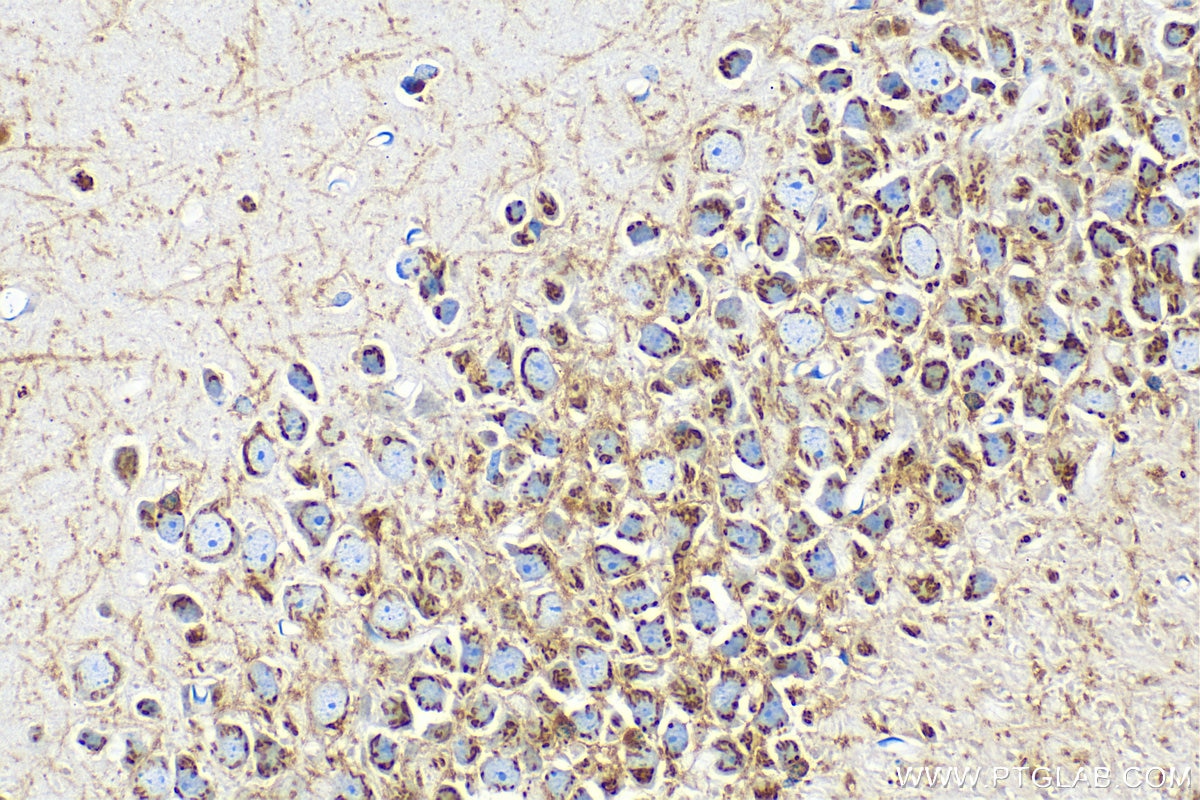
| Positive IHC detected in | mouse brain tissue Note: suggested antigen retrieval with TE buffer pH 9.0; (*) Alternatively, antigen retrieval may be performed with citrate buffer pH 6.0 |
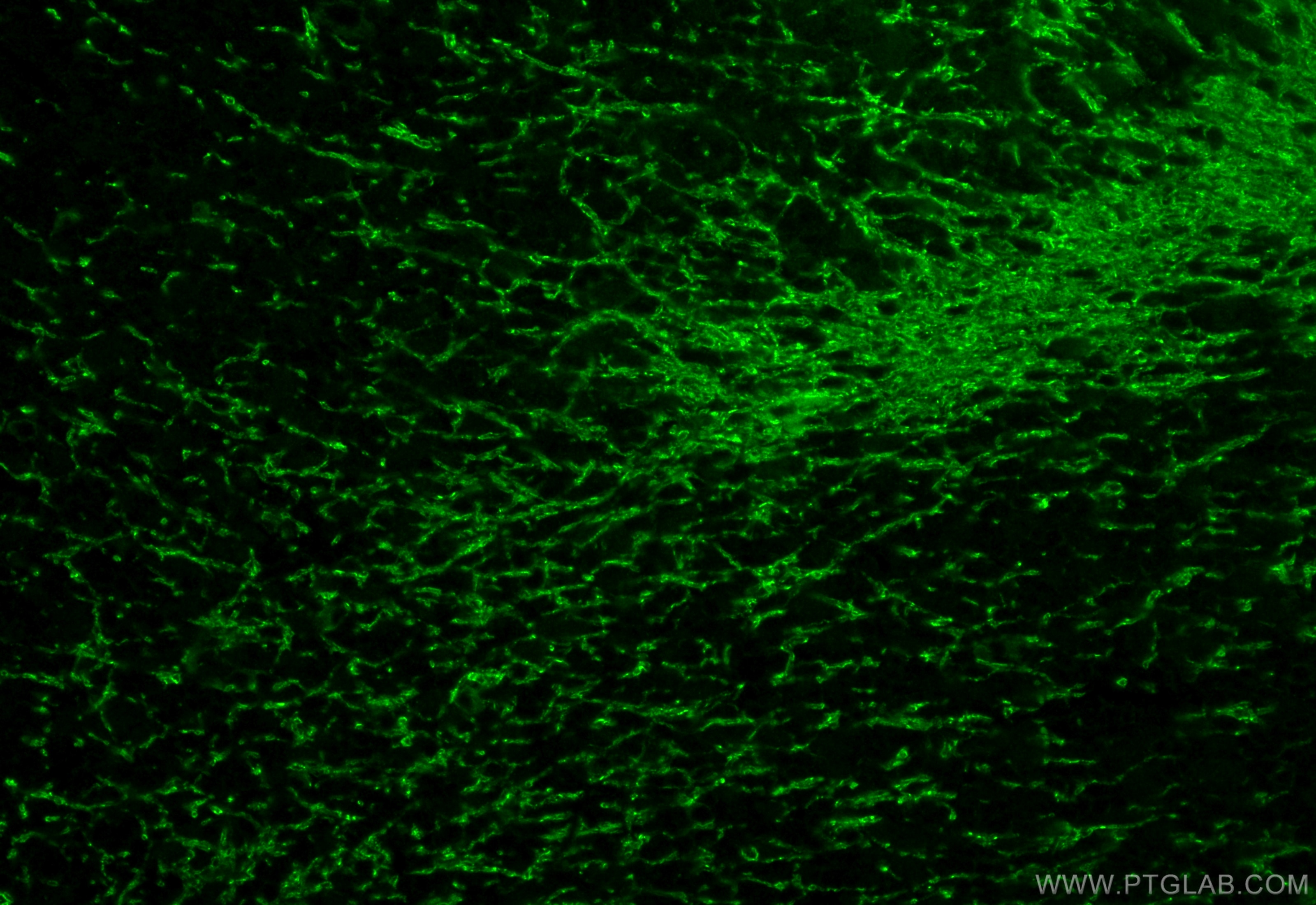
| Positive IF-P detected in | rat cerebellum tissue |
Recommended dilution
| Application | Dilution |
|---|---|
| Western Blot (WB) | WB : 1:1000-1:6000 |
| Immunohistochemistry (IHC) | IHC : 1:500-1:2000 |
| Immunofluorescence (IF)-P | IF-P : 1:50-1:500 |
| It is recommended that this reagent should be titrated in each testing system to obtain optimal results. | |
| Sample-dependent, Check data in validation data gallery. | |
Product Information
12690-1-AP targets MOG in WB, IHC, IF-P, ELISA applications and shows reactivity with human, mouse, rat samples.
| Tested Reactivity | human, mouse, rat |
| Cited Reactivity | human, mouse, rat |
| Host / Isotype | Rabbit / IgG |
| Class | Polyclonal |
| Type | Antibody |
| Immunogen |
CatNo: Ag3273 Product name: Recombinant human MOG protein Source: e coli.-derived, PGEX-4T Tag: GST Domain: 1-295 aa of BC035938 Sequence: MASLSRPSLPSCLCSFLLLLLLQVSSSYAGQFRVIGPRHPIRALVGDEVELPCRISPGKNATGMEVGWYRPPFSRVVHLYRNGKDQDGDQAPEYRGRTELLKDAIGEGKVTLRIRNVRFSDEGGFTCFFRDHSYQEEAAMELKVEDPFYWVSPGVLVLLAVLPVLLLQITVGLVFLCLQYRLRGKLRAEIENLHRTFDPHFLRVPCWKITLFVIVPVLGPLVALIICYNWLHRRLAGQFLEELRKFSSLCYKQRIKSQERETEATRGRGGLLRDHIPRGKEELESLGGGKTPPGR Predict reactive species |
| Full Name | myelin oligodendrocyte glycoprotein |
| Calculated Molecular Weight | 295 aa, 34 kDa |
| Observed Molecular Weight | 25-28 kDa |
| GenBank Accession Number | BC035938 |
| Gene Symbol | MOG |
| Gene ID (NCBI) | 4340 |
| RRID | AB_2145527 |
| Conjugate | Unconjugated |
| Form | Liquid |
| Purification Method | Antigen affinity purification |
| UNIPROT ID | Q16653 |
| Storage Buffer | PBS with 0.02% sodium azide and 50% glycerol, pH 7.3. |
| Storage Conditions | Store at -20°C. Stable for one year after shipment. Aliquoting is unnecessary for -20oC storage. 20ul sizes contain 0.1% BSA. |
Background Information
Myelin/oligodendrocyte glycoprotein (MOG), a 23~28 kDa glycoprotein, a myelin antigen at the outer surface of the central nervous system (CNS) myelin sheath, which may trigger T-cell as well as B-cell responses. It therefore constitutes a pivotal target for autoimmune responses, which result in inflammation and also demyelination in the CNS. Its presence on the outer- most lamellae of mature CNS myelin and its late appearance during myelinogenesis suggest that it contributes to myelin maturation or maintenance. 10 isoforms of MOG produced by alternative splicing have been described, and heterodimers may be formed between the different isoforms. Defects in MOG are the cause of narcolepsy type 7 (NRCLP7), a neurological disabling sleep disorder characterized by excessive daytime sleepiness, sleep fragmentation, symptoms of abnormal rapid-eye-movement (REM) sleep, cataplexy, hypnagogic hallucinations, and sleep paralysis. Role of MOG in the pathogenesis of multiple sclerosis (MS) has been reported but remains to be clarified. (PMID: 9886048; 21907016; 7684687)
Protocols
| Product Specific Protocols | |
|---|---|
| IF protocol for MOG antibody 12690-1-AP | Download protocol |
| IHC protocol for MOG antibody 12690-1-AP | Download protocol |
| WB protocol for MOG antibody 12690-1-AP | Download protocol |
| Standard Protocols | |
|---|---|
| Click here to view our Standard Protocols |
Publications
What published studies show
Anti-MOG antibody (Cat# 12690-1-AP) has accumulated 31 citations across 26 journals, including Nature Communications, Advanced Science, Science Advances, Journal of Neuroinflammation, Biomolecules, and eLife. Research fields encompass multiple sclerosis, neuroinflammation, myelination/demyelination, oligodendrocyte biology, neurodegeneration (Alzheimer's, α-synuclein, tau), glioma, stroke, vascular dementia, Huntington disease, and autoimmune encephalomyelitis. Primary applications are WB, IF, and IHC across human, mouse, and rat species.
| Species | Application | Title |
|---|---|---|
Nat Commun Huntington disease oligodendrocyte maturation deficits revealed by single-nucleus RNAseq are rescued by thiamine-biotin supplementation | ||
Adv Sci (Weinh) Understanding Glioblastoma Dynamics Using 3D Organoids and Engineered Extracellular Matrix. | ||
Adv Sci (Weinh) The E3 Ubiquitin Ligase RLIM Safeguards Oligodendrocyte Development and Myelination by Targeting SLC7A11 for Polyubiquitination to Regulate Ferroptotic Resistance | ||
Sci Adv RNF220-mediated K63-linked polyubiquitination stabilizes Olig proteins during oligodendroglial development and myelination | ||
J Neuroinflammation SIRT6 modulates lesion microenvironment in LPC induced demyelination by targeting astrocytic CHI3L1 | ||
J Neuroinflammation Interleukin-9 regulates macrophage activation in the progressive multiple sclerosis brain. |
Reviews
What customers say
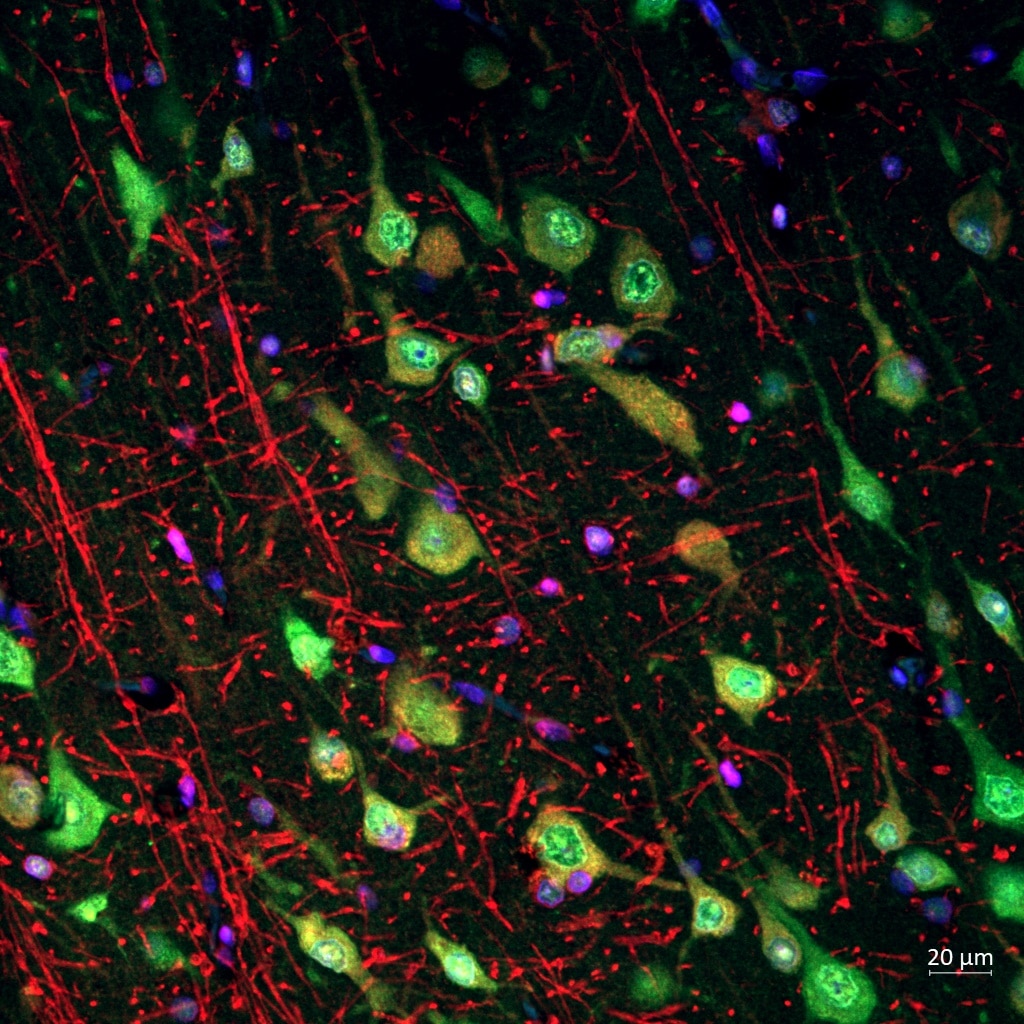
One reviewer rated this antibody 5/5 stars after using it at a 1:100 dilution for immunofluorescence on paraffin-embedded human brain cortex sections. They reported that the antibody clearly labeled myelinated axons with strong red signal, confirming reliable performance in IF applications on human tissue.
The reviews below have been submitted by verified Proteintech customers who received an incentive for providing their feedback.
Reyes (Verified Customer) (03-01-2024) | MOG (in red) worked nicely showing the mielinated axons in my paraffin human brain cortex sections in IF
 |






