

Tested Applications
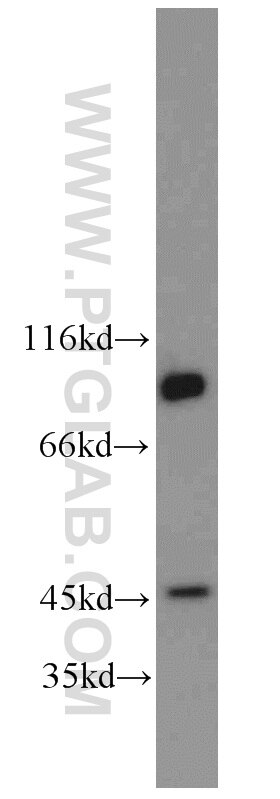
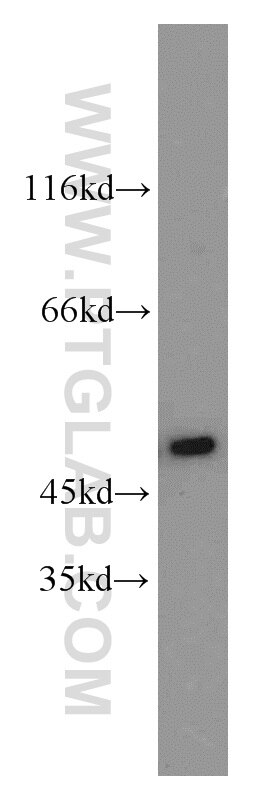
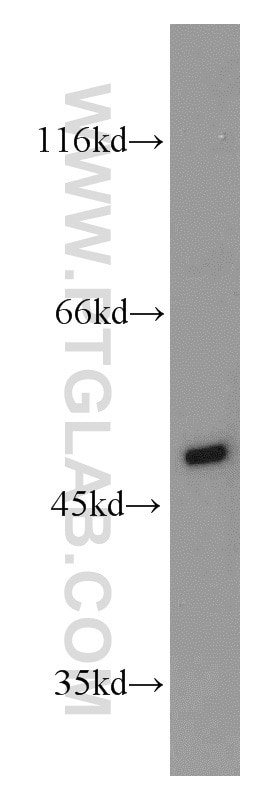
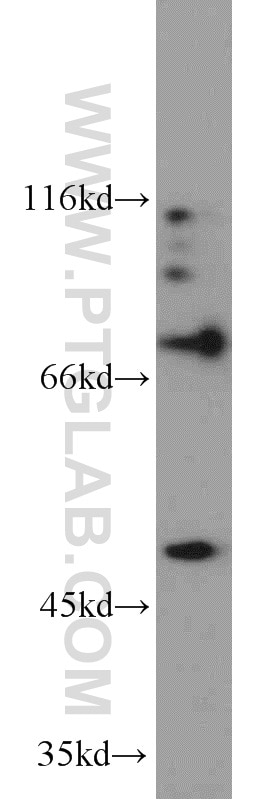
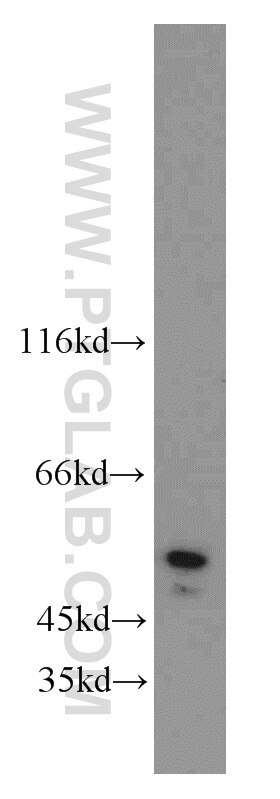
| Positive WB detected in | human testis tissue, HEK-293 cells, MCF-7 cells, mouse testis tissue |
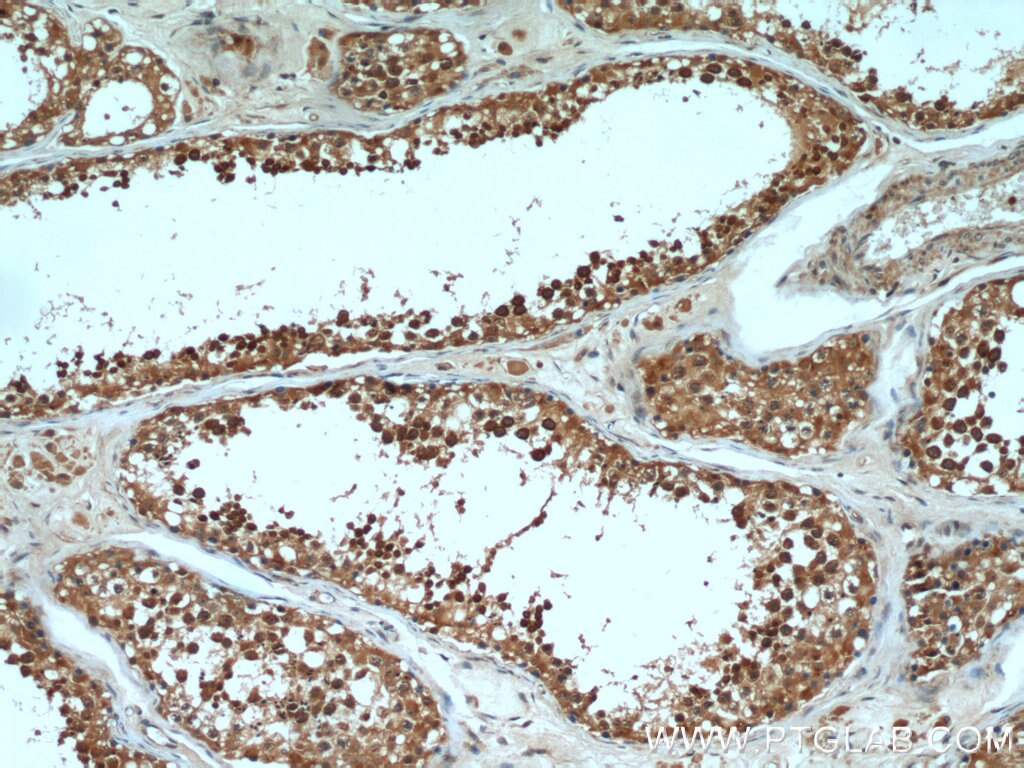
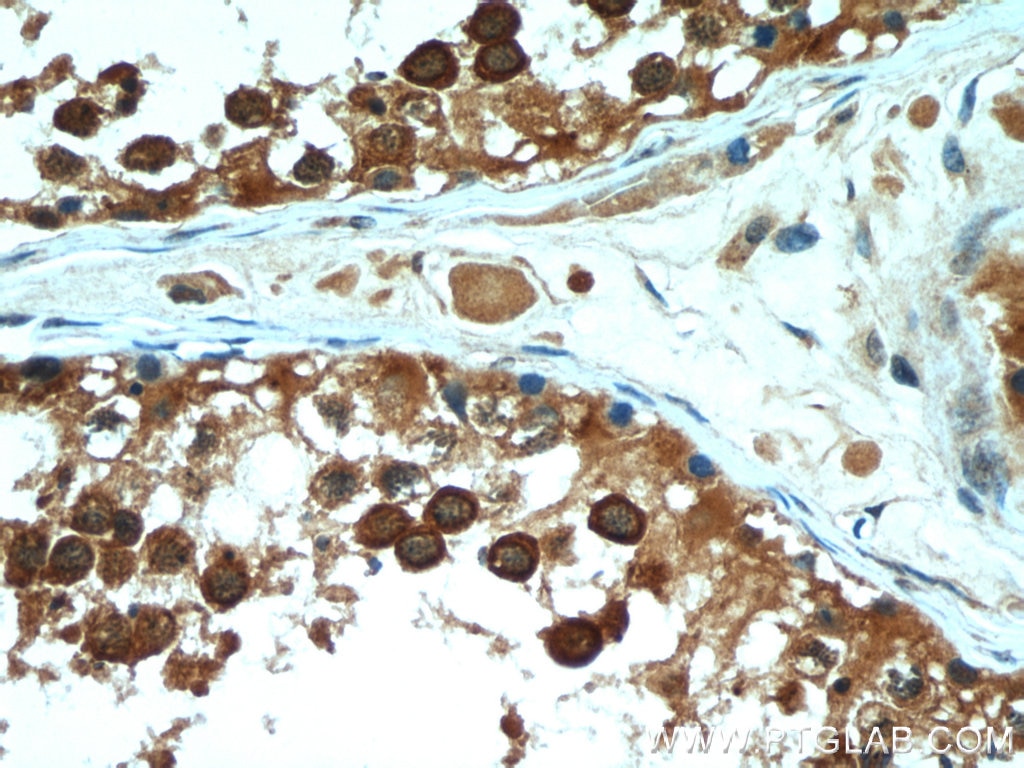
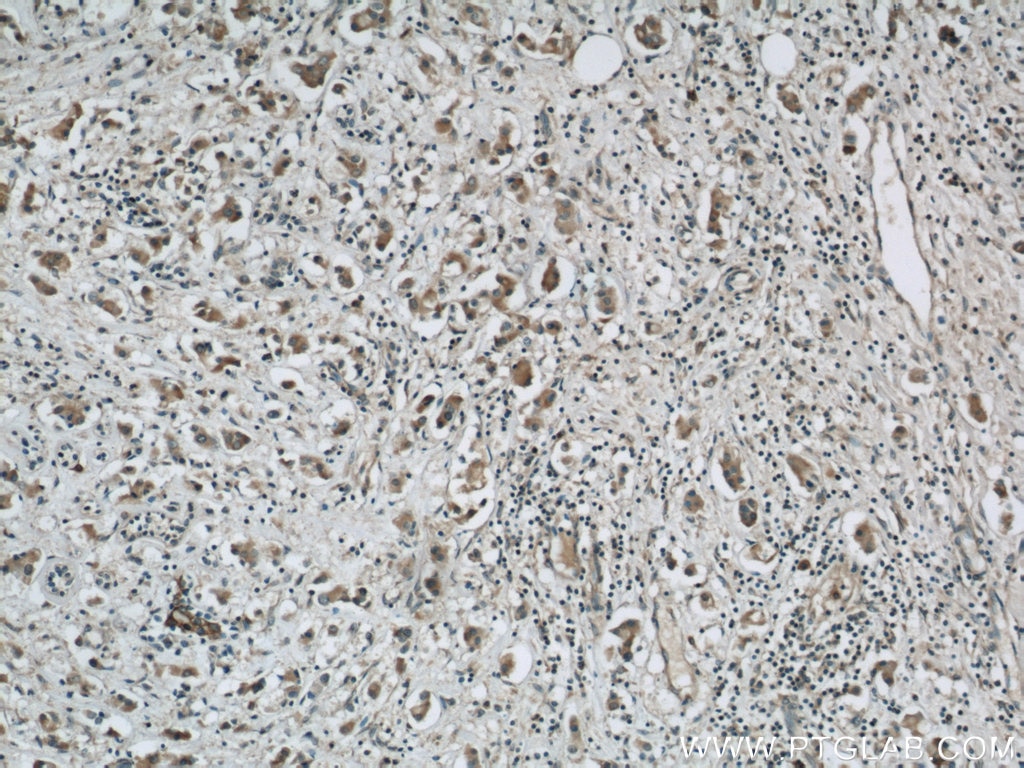
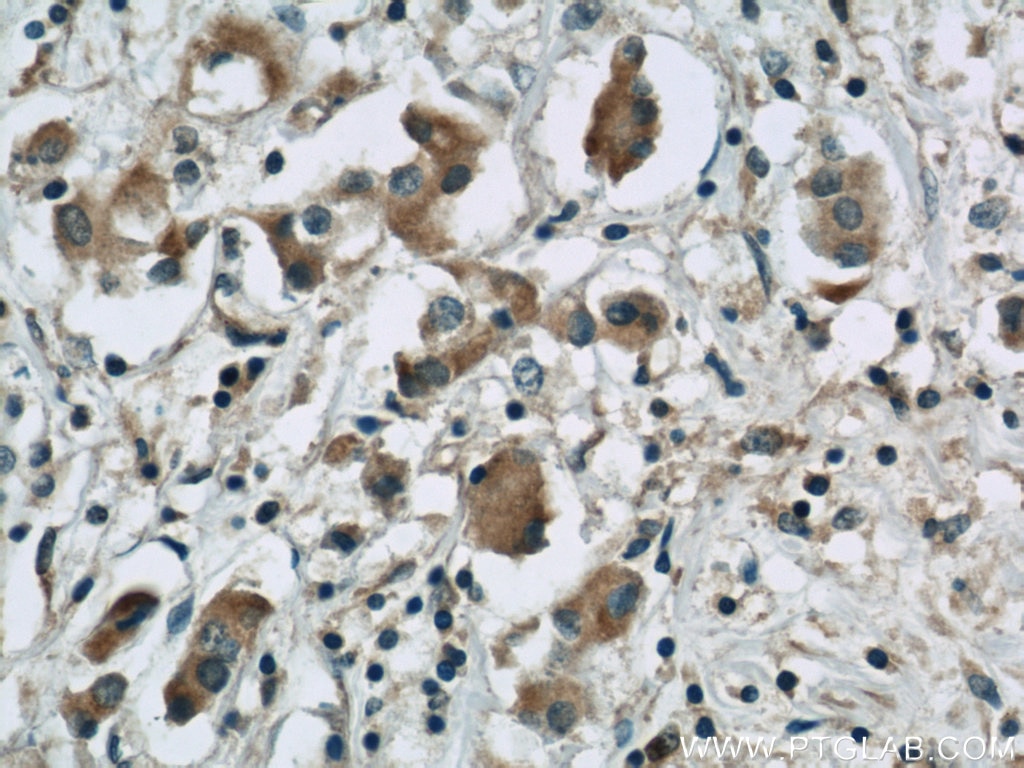
| Positive IHC detected in | human testis tissue, human breast cancer tissue Note: suggested antigen retrieval with TE buffer pH 9.0; (*) Alternatively, antigen retrieval may be performed with citrate buffer pH 6.0 |
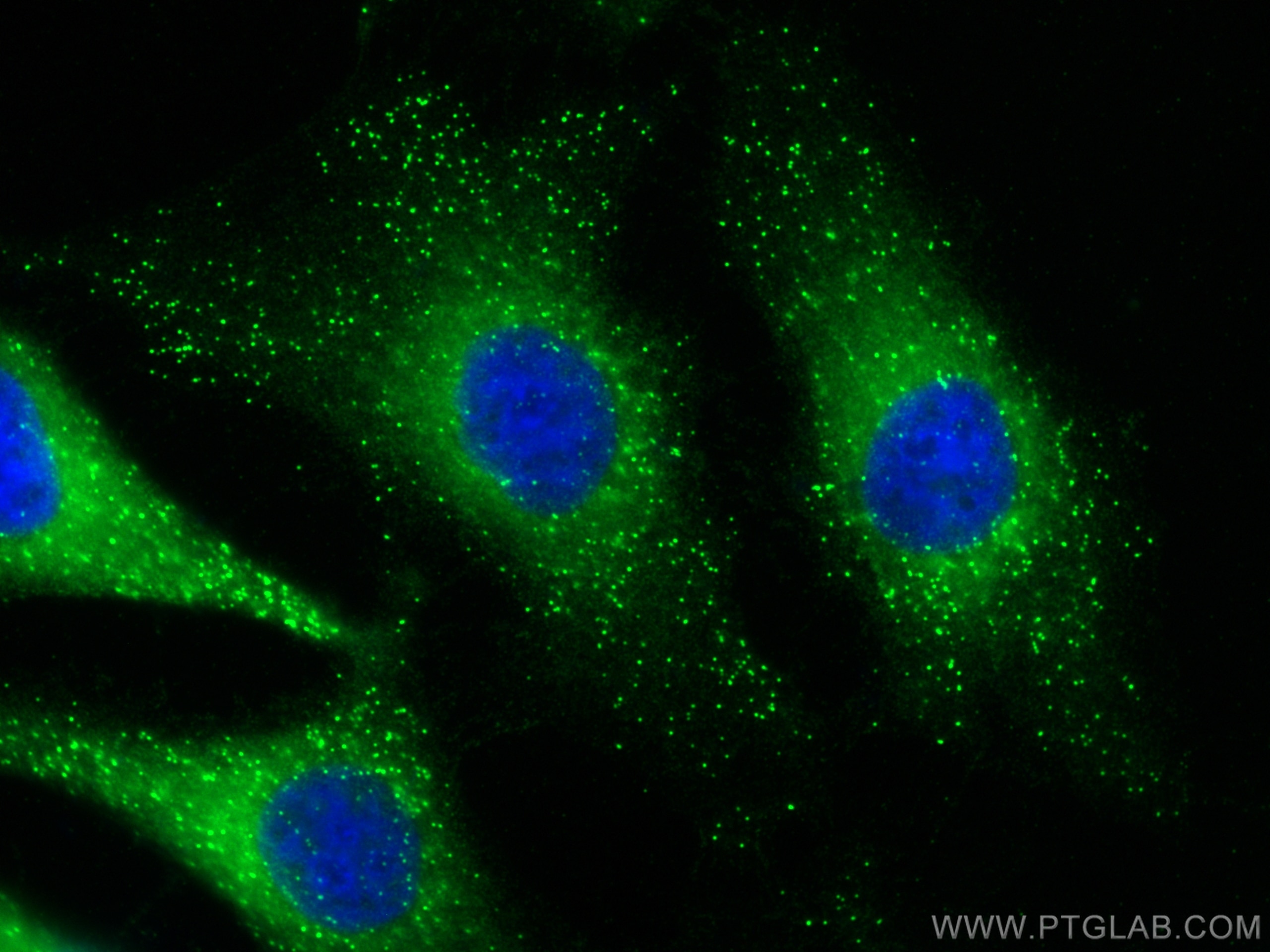
| Positive IF/ICC detected in | HeLa cells |
Recommended dilution
| Application | Dilution |
|---|---|
| Western Blot (WB) | WB : 1:500-1:1000 |
| Immunohistochemistry (IHC) | IHC : 1:20-1:200 |
| Immunofluorescence (IF)/ICC | IF/ICC : 1:200-1:800 |
| It is recommended that this reagent should be titrated in each testing system to obtain optimal results. | |
| Sample-dependent, Check data in validation data gallery. | |
Product Information
55392-1-AP targets PGAP1 in WB, IHC, IF/ICC, ELISA applications and shows reactivity with human, mouse samples.
| Tested Reactivity | human, mouse |
| Cited Reactivity | human, mouse |
| Host / Isotype | Rabbit / IgG |
| Class | Polyclonal |
| Type | Antibody |
| Immunogen |
Peptide Predict reactive species |
| Full Name | post-GPI attachment to proteins 1 |
| Calculated Molecular Weight | 105 kDa |
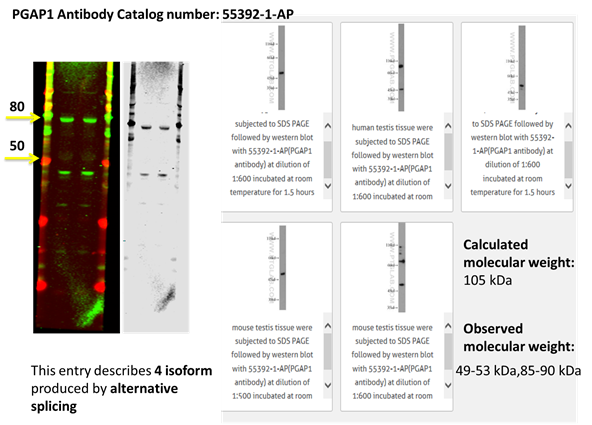
| Observed Molecular Weight | 49-53 kDa, 85-90 kDa |
| GenBank Accession Number | NM_024989 |
| Gene Symbol | PGAP1 |
| Gene ID (NCBI) | 80055 |
| RRID | AB_11232412 |
| Conjugate | Unconjugated |
| Form | Liquid |
| Purification Method | Antigen affinity purification |
| UNIPROT ID | Q75T13 |
| Storage Buffer | PBS with 0.02% sodium azide and 50% glycerol, pH 7.3. |
| Storage Conditions | Store at -20°C. Stable for one year after shipment. Aliquoting is unnecessary for -20oC storage. 20ul sizes contain 0.1% BSA. |
Background Information
PGAP1 belongs to the GPI inositol-deacylase family. It is involved in inositol deacylation of GPI-anchored proteins. GPI inositol deacylation may important for efficient transport of GPI-anchored proteins from the endoplasmic reticulum to the Golgi. PGAP1 is the GPI inositol-deacylase (PMID:14734546). This antibody is specific to PGAP1.
Protocols
| Product Specific Protocols | |
|---|---|
| IF protocol for PGAP1 antibody 55392-1-AP | Download protocol |
| IHC protocol for PGAP1 antibody 55392-1-AP | Download protocol |
| WB protocol for PGAP1 antibody 55392-1-AP | Download protocol |
| Standard Protocols | |
|---|---|
| Click here to view our Standard Protocols |
Publications
What published studies show
The PGAP1 Polyclonal antibody (Cat# 55392-1-AP) has 5 citations. These appear in Nature, Molecular Cell, Journal of Biological Chemistry, Cancer Medicine, and Clinical Rheumatology. Research fields span single-cell atlas of adipose tissue, neuronal mRNA regulation, glycoprotein biosynthesis, lung adenocarcinoma risk genetics, and systemic sclerosis biomarker identification.
| Species | Application | Title |
|---|---|---|
Mol Cell Integrative omics indicate FMRP sequesters mRNA from translation and deadenylation in human neuronal cells | ||
J Biol Chem Identification of mammalian glycoproteins with type-I LacdiNAc structures synthesized by the glycosyltransferase B3GALNT2. | ||
Cancer Med Identification of novel pQTL-SNPs associated with lung adenocarcinoma risk: A multi-stage study | ||
Clin Rheumatol Th17-related genes PGAP1 and TMBIM1 serve as potential diagnostic and predictive biomarkers in systemic sclerosis: bioinformatic identification and murine model validation. |
Reviews
What customers say
One reviewer rated this PGAP1 antibody 4 out of 5 stars for Western Blot on postmortem human brain (DLPFC) tissue at a 1:1,000 dilution. They noted that PGAP1 has four isoforms ranging from 49–105 KDa and that isoform regulation remains an open question in the literature. To reduce non-specific binding, the blot was incubated in Odyssey Blocking Buffer (Li-Cor) for 1 hour at room temperature. Overall, the antibody performed well under these conditions.
The reviews below have been submitted by verified Proteintech customers who received an incentive for providing their feedback.
pitna (Verified Customer) (12-19-2019) | PGAP1According to Uniprot, this protein has 4 isoforms ranging from 49 – 105 KDa. it appears that the regulation of the different isoforms is still an open question in the literatureTo reduce non-specific binding, blots were incubated in Odyssey Blocking buffer (Li-Cor) for 1 hour at room temperature (RT) .
 |











