

Tested Applications
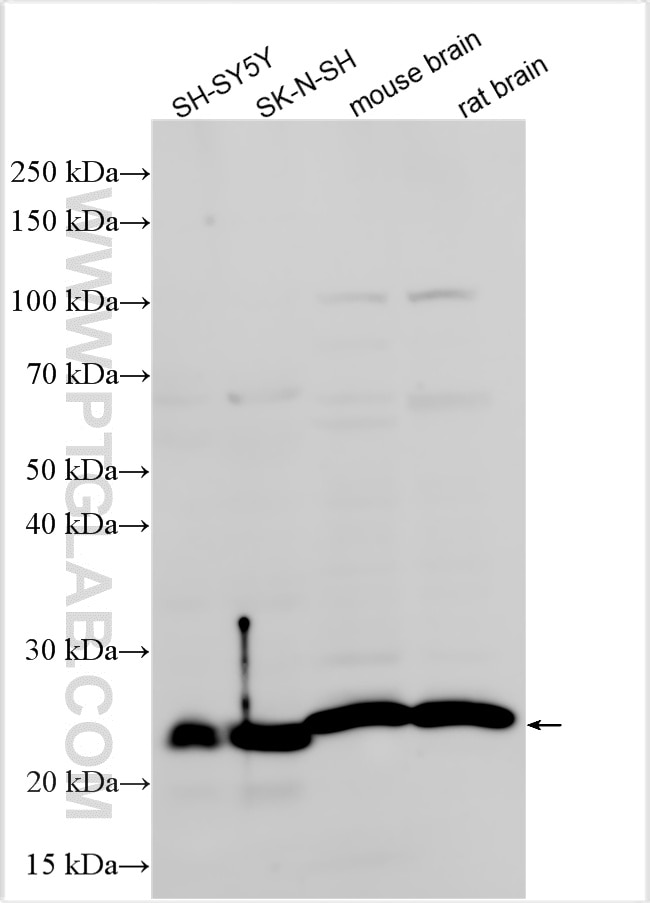
| Positive WB detected in | SH-SY5Y cells, SK-N-SH cells, mouse brain tissue, rat brain tissue |
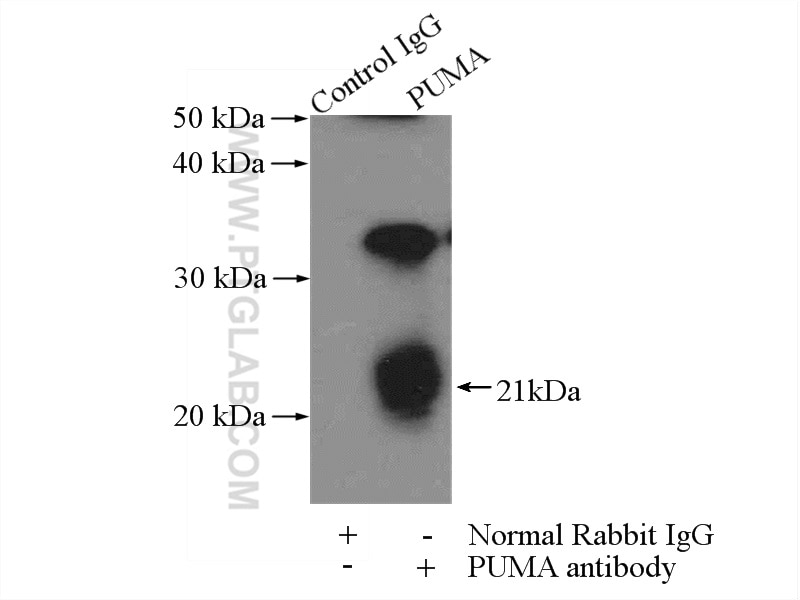
| Positive IP detected in | mouse heart tissue |
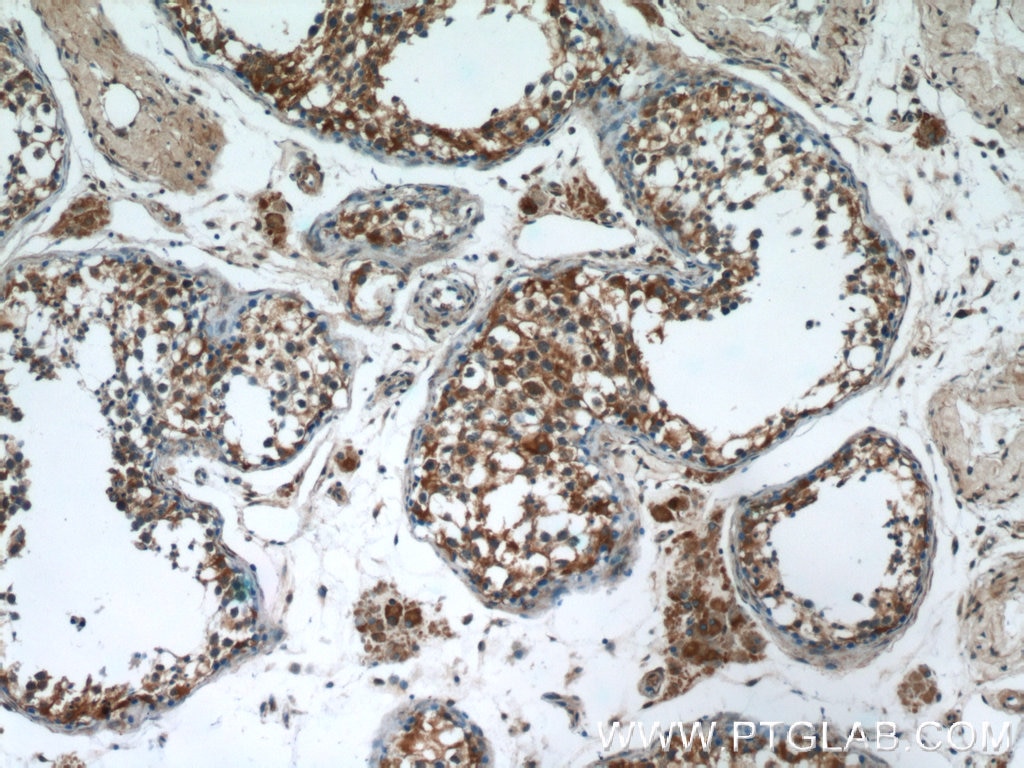
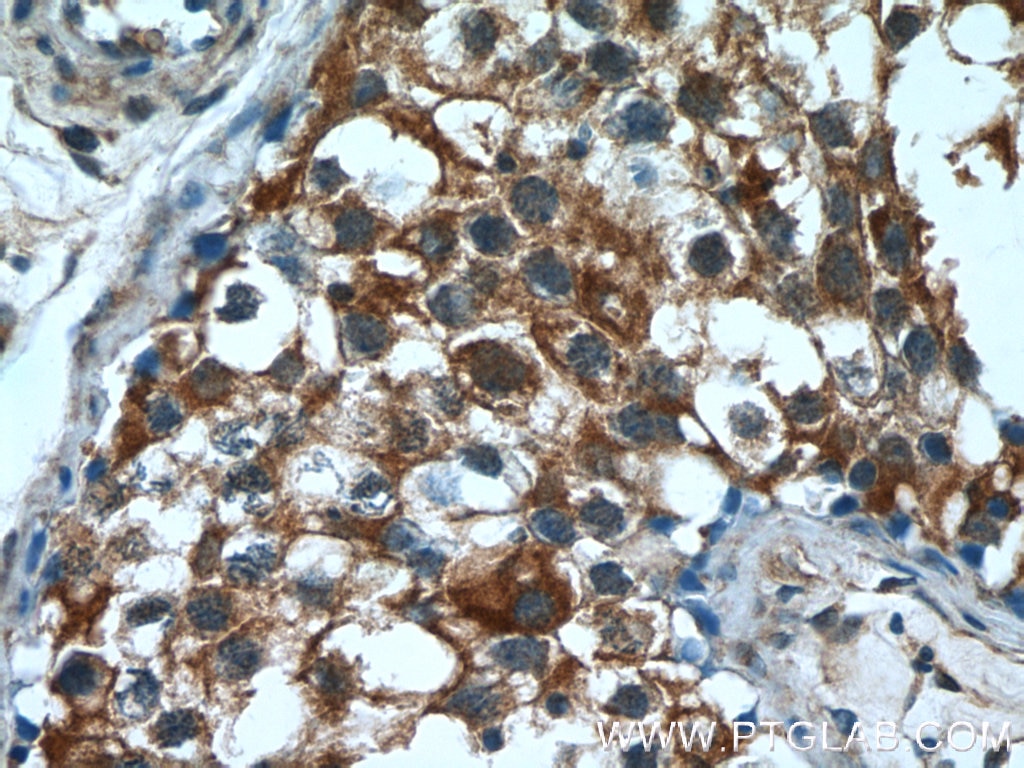
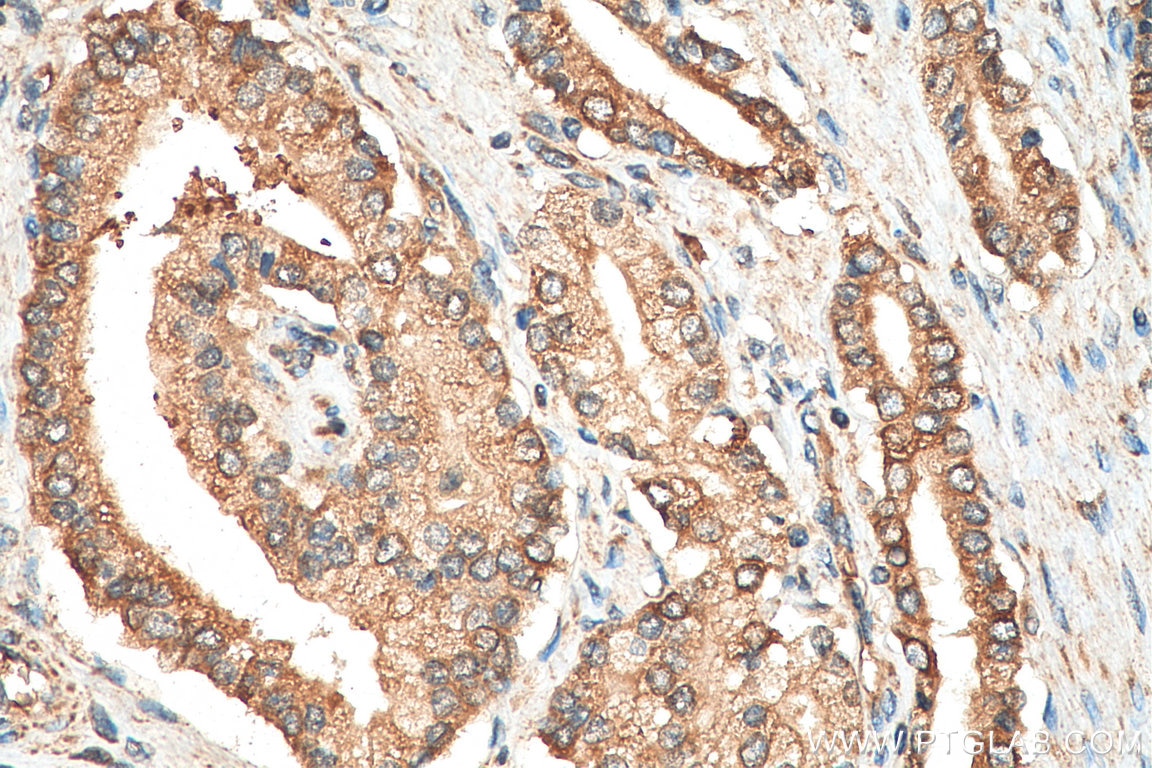
| Positive IHC detected in | human testis tissue, human prostate cancer tissue Note: suggested antigen retrieval with TE buffer pH 9.0; (*) Alternatively, antigen retrieval may be performed with citrate buffer pH 6.0 |
Recommended dilution
| Application | Dilution |
|---|---|
| Western Blot (WB) | WB : 1:500-1:3000 |
| Immunoprecipitation (IP) | IP : 0.5-4.0 ug for 1.0-3.0 mg of total protein lysate |
| Immunohistochemistry (IHC) | IHC : 1:100-1:500 |
| It is recommended that this reagent should be titrated in each testing system to obtain optimal results. | |
| Sample-dependent, Check data in validation data gallery. | |
Product Information
55120-1-AP targets PUMA in WB, IHC, IP, ELISA applications and shows reactivity with human, mouse, rat samples.
| Tested Reactivity | human, mouse, rat |
| Cited Reactivity | human, mouse, rat, zebrafish |
| Host / Isotype | Rabbit / IgG |
| Class | Polyclonal |
| Type | Antibody |
| Immunogen |
Peptide Predict reactive species |
| Full Name | BCL2 binding component 3 |
| Calculated Molecular Weight | 21 kDa |
| Observed Molecular Weight | 18-21 kDa |
| GenBank Accession Number | NM_014417 |
| Gene Symbol | PUMA |
| Gene ID (NCBI) | 27113 |
| RRID | AB_10859944 |
| Conjugate | Unconjugated |
| Form | Liquid |
| Purification Method | Antigen affinity purification |
| UNIPROT ID | Q9BXH1 |
| Storage Buffer | PBS with 0.02% sodium azide and 50% glycerol, pH 7.3. |
| Storage Conditions | Store at -20°C. Stable for one year after shipment. Aliquoting is unnecessary for -20oC storage. 20ul sizes contain 0.1% BSA. |
Background Information
PUMA, also named as JFY-1 and BBC3, belongs to the Bcl-2 family. It is a critical mediator of p53-dependent and -independent apoptosis induced by a wide variety of stimuli. It serves as a proximal signaling molecule whose expression is regulated by transcription factors in response to these stimuli. PUMA transduces death signals primarily to the mitochondria, where it acts indirectly on the Bcl-2 family members Bax and/or Bak by relieving the inhibition imposed by antiapoptotic members. It directly binds and antagonizes all known antiapoptotic Bcl-2 family members to induce mitochondrial dysfunction and caspase activation. PUMA ablation or inhibition leads to apoptosis deficiency underlying increased risks for cancer development and therapeutic resistance. It is a general sensor of cell death stimuli and a promising drug target for cancer therapy and tissue damage. It is essential mediator of p53-dependent and p53-independent apoptosis (PMID: 19641508). Catalog #55120-1-AP can recognize PUMA alpha 21-24 kDa and PUMA beta 15-18 kDa.
Protocols
| Product Specific Protocols | |
|---|---|
| IHC protocol for PUMA antibody 55120-1-AP | Download protocol |
| IP protocol for PUMA antibody 55120-1-AP | Download protocol |
| WB protocol for PUMA antibody 55120-1-AP | Download protocol |
| Standard Protocols | |
|---|---|
| Click here to view our Standard Protocols |
Publications
What published studies show
The PUMA Polyclonal Antibody (Cat# 55120-1-AP) has accumulated 84 citations published in high-impact journals including Nature Communications, Molecular Cell, Journal of Clinical Investigation, Science Advances, Cell Death & Differentiation, EMBO Reports, and eLife. The associated research spans multiple fields: apoptosis and cell death mechanisms, oncology (covering lung, liver, colorectal, breast, ovarian, and esophageal cancers), neuroscience (Parkinson's disease, stroke, brain injury), cardiology, pharmacology, and toxicology.
| Species | Application | Title |
|---|---|---|
Cell Stem Cell Parasympathetic neurons derived from human pluripotent stem cells model human diseases and development | ||
Nat Commun Diphthamide deficiency promotes association of eEF2 with p53 to induce p21 expression and neural crest defects | ||
Nat Commun A non-canonical pathway regulates ER stress signaling and blocks ER stress-induced apoptosis and heart failure. | ||
Mol Cell Filamentous GLS1 promotes ROS-induced apoptosis upon glutamine deprivation via insufficient asparagine synthesis. | ||
J Exp Clin Cancer Res Two-polarized roles of transcription factor FOSB in lung cancer progression and prognosis: dependent on p53 status | ||
J Clin Invest Circular RNA circEsyt2 regulates vascular smooth muscle cell remodeling via splicing regulation. |
Reviews
What customers say
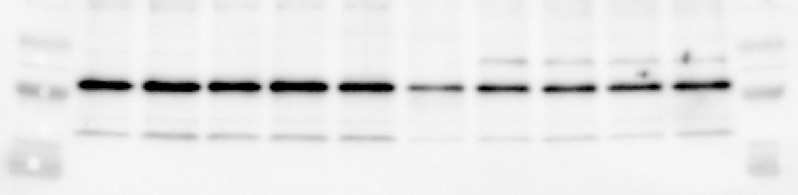
One reviewer rated this antibody 5/5 stars for Western Blot on human pulmonary artery smooth muscle cells at a 1:2500 dilution using PVDF membrane and skim milk blocking. They reported one sharp band at the expected molecular weight, describing the product as "very good working." Overall, the feedback highlights reliable performance with clear, specific results under standard WB conditions.
The reviews below have been submitted by verified Proteintech customers who received an incentive for providing their feedback.
Sarah-Eve (Verified Customer) (03-01-2023) | Very good working, pvdf membrane, blocking solution skim milk. One sharp band at the expected size
 |






