

Tested Applications
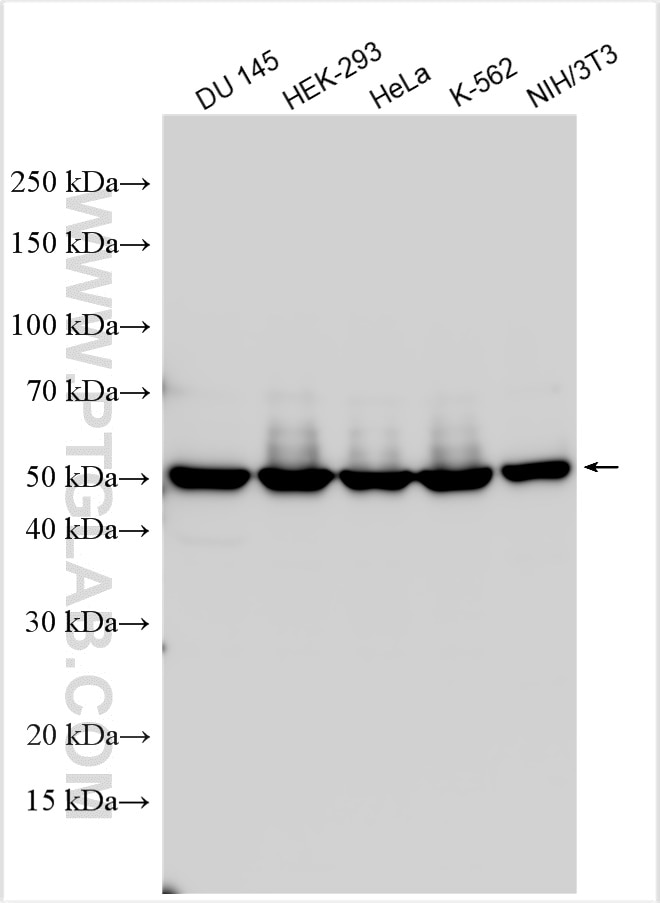
| Positive WB detected in | DU 145 cells, HEK-293 cells, HeLa cells, K-562 cells, NIH/3T3 cells |
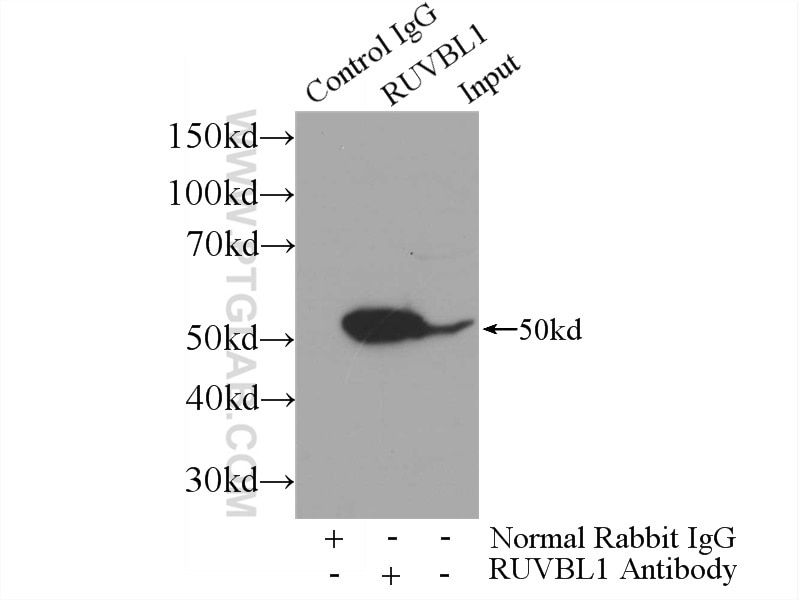
| Positive IP detected in | HeLa cells |
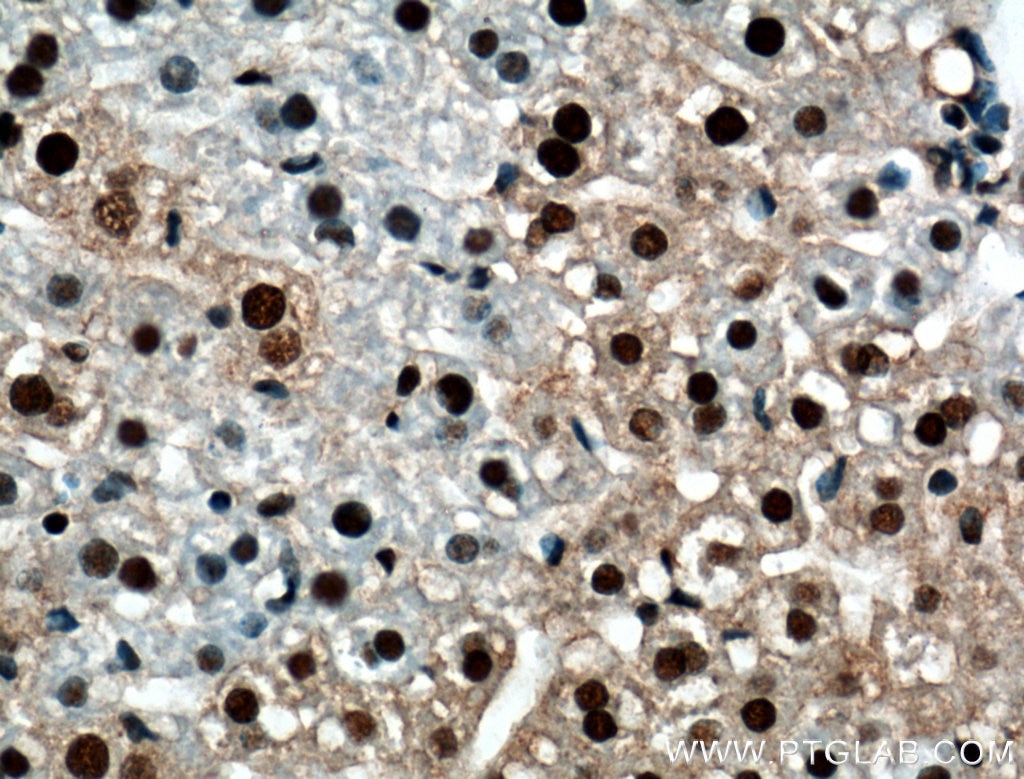
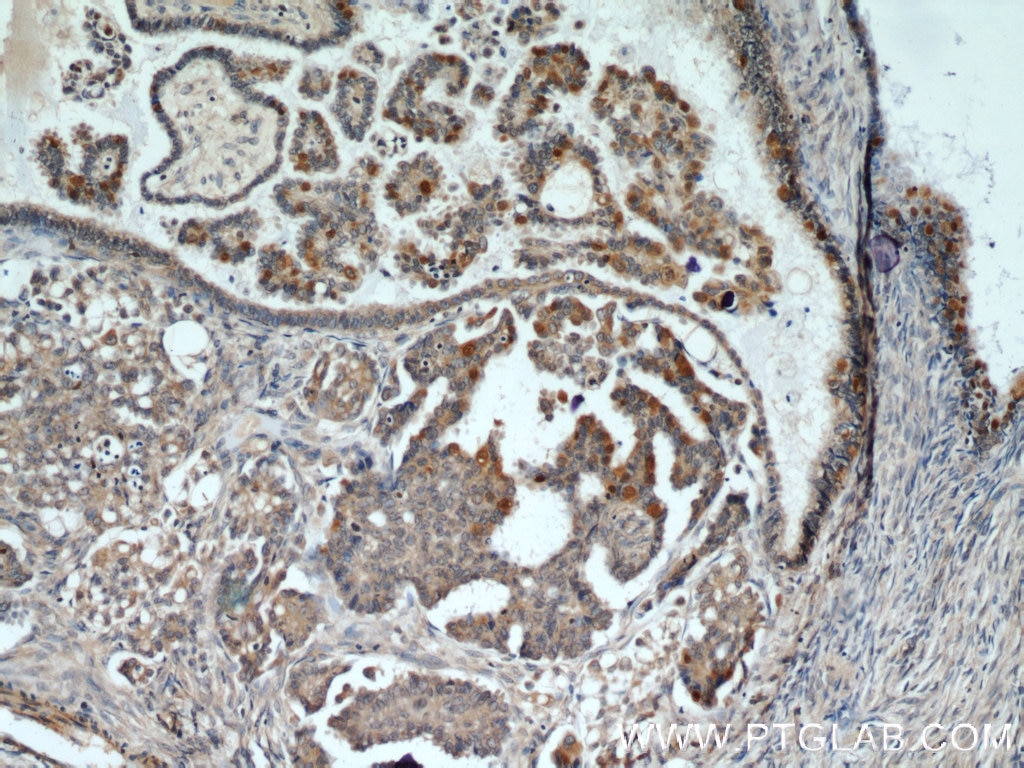
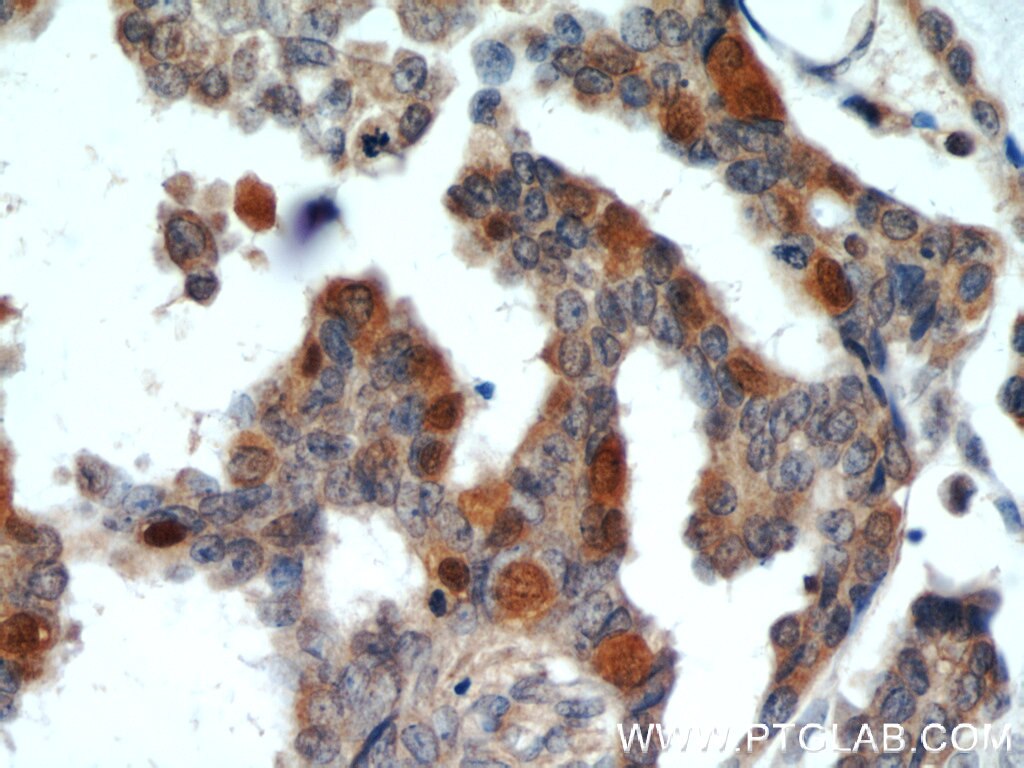
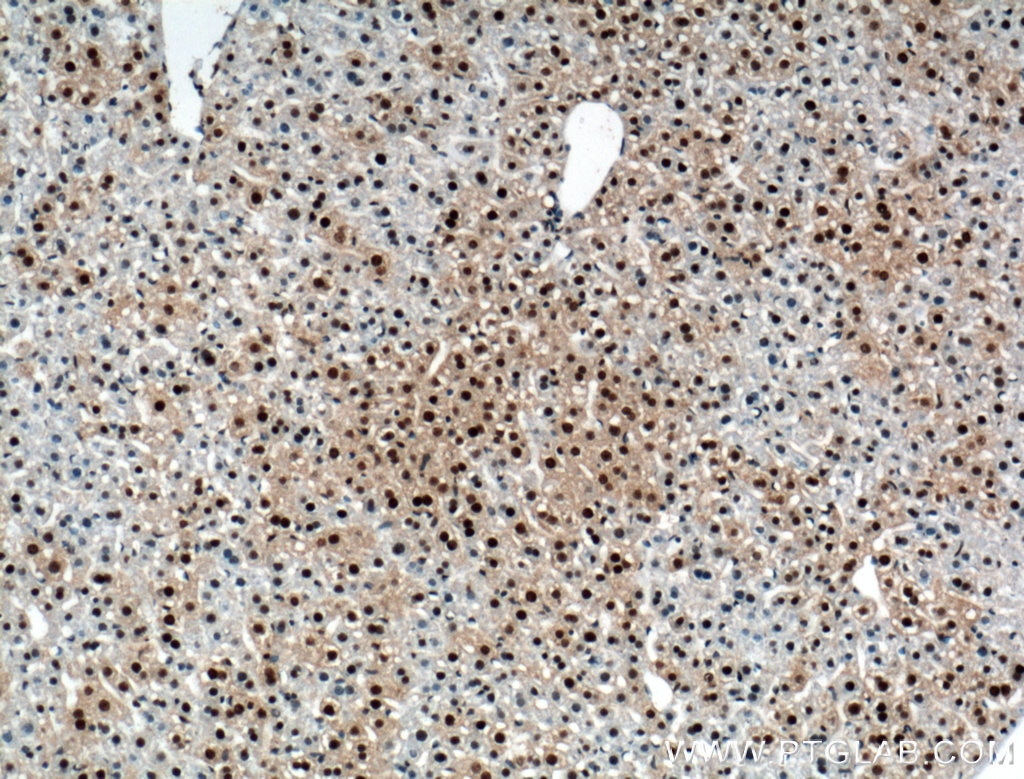
| Positive IHC detected in | mouse liver tissue, human ovary tumor tissue Note: suggested antigen retrieval with TE buffer pH 9.0; (*) Alternatively, antigen retrieval may be performed with citrate buffer pH 6.0 |
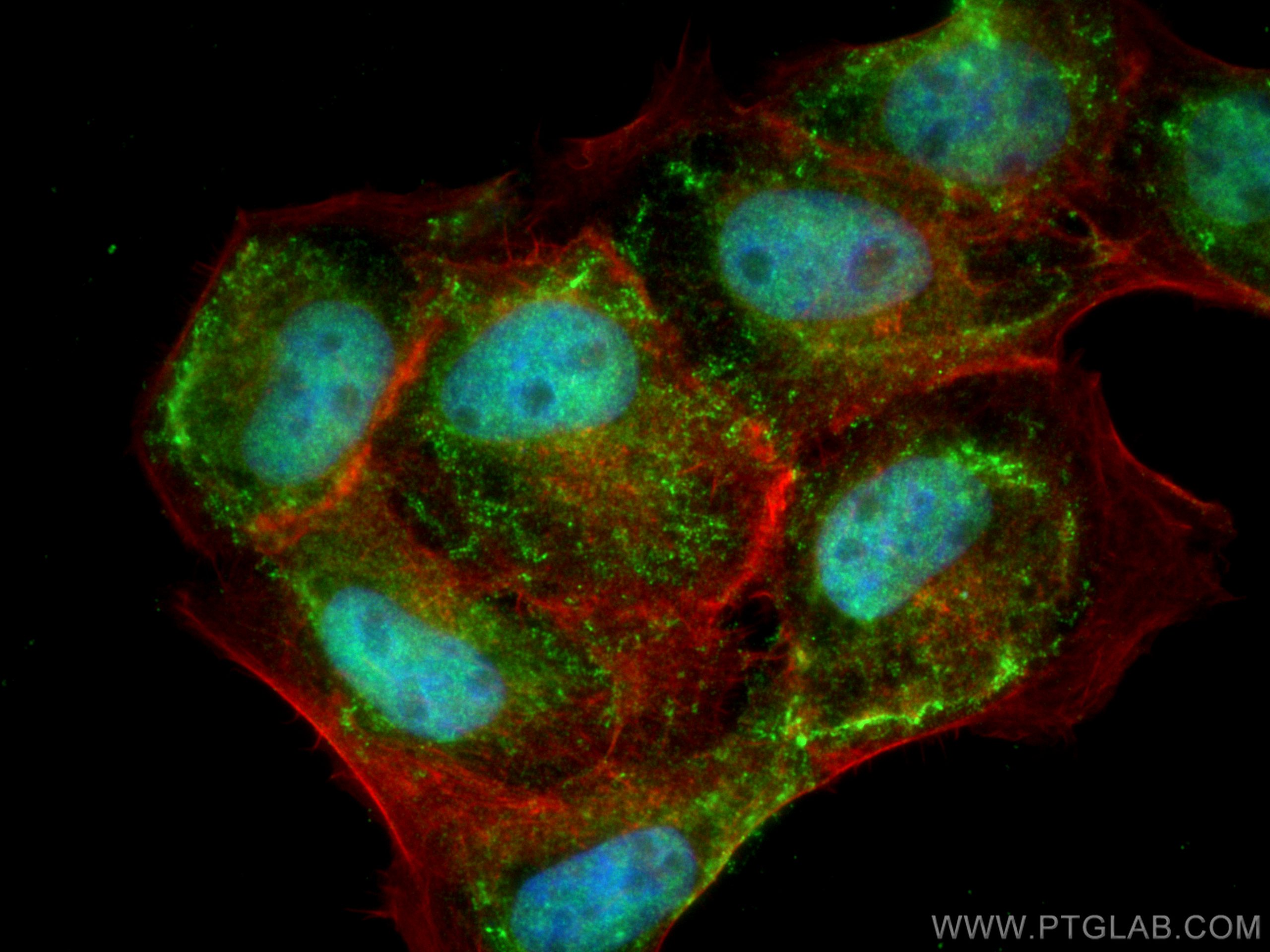
| Positive IF/ICC detected in | A431 cells |
Recommended dilution
| Application | Dilution |
|---|---|
| Western Blot (WB) | WB : 1:1000-1:10000 |
| Immunoprecipitation (IP) | IP : 0.5-4.0 ug for 1.0-3.0 mg of total protein lysate |
| Immunohistochemistry (IHC) | IHC : 1:50-1:500 |
| Immunofluorescence (IF)/ICC | IF/ICC : 1:50-1:500 |
| It is recommended that this reagent should be titrated in each testing system to obtain optimal results. | |
| Sample-dependent, Check data in validation data gallery. | |
Product Information
10210-2-AP targets RUVBL1 in WB, IHC, IF/ICC, IP, CoIP, CHIP, IP-MS, ELISA applications and shows reactivity with human, mouse samples.
| Tested Reactivity | human, mouse |
| Cited Reactivity | human, mouse, bovine |
| Host / Isotype | Rabbit / IgG |
| Class | Polyclonal |
| Type | Antibody |
| Immunogen |
CatNo: Ag0281 Product name: Recombinant human RUVBL1 protein Source: e coli.-derived, PGEX-4T Tag: GST Domain: 1-214 aa of BC002993 Sequence: MKIEEVKSTTKTQRIASHSHVKGLGLDESGLAKQAASGLVGQENAREACGVIVELIKSKKMAGRAVLLAGPPGTGKTALALAIAQELGSKVPFCPMVGSEVYSTEIKKTEVLMENFRRAIGLRIKETKEVYEGEVTELTPCETENPMGGYGKTISHVIIGLKTAKGTKQLKLDPSIFESLQKERVEAGDVIYIEANSGAVKRQGRCDTYATEFD Predict reactive species |
| Full Name | RuvB-like 1 (E. coli) |
| Calculated Molecular Weight | 456 aa, 50 kDa |
| Observed Molecular Weight | 50 kDa |
| GenBank Accession Number | BC002993 |
| Gene Symbol | RUVBL1 |
| Gene ID (NCBI) | 8607 |
| RRID | AB_2184405 |
| Conjugate | Unconjugated |
| Form | Liquid |
| Purification Method | Antigen affinity purification |
| UNIPROT ID | Q9Y265 |
| Storage Buffer | PBS with 0.02% sodium azide and 50% glycerol, pH 7.3. |
| Storage Conditions | Store at -20°C. Stable for one year after shipment. Aliquoting is unnecessary for -20oC storage. 20ul sizes contain 0.1% BSA. |
Background Information
RUVBL1 is a member of the AAA (ATPase associated with diverse cellular activities) family of proteins that is associated with several chromatin-remodelling complexes and has important roles in transcriptional regulation, the DNA damage response, telomerase activity, snoRNP assembly, cellular transformation and cancer metastasis[PMID: 21617703]. It consists of 456 amino acids (50 kDa) and interacts with TATA-binding protein (TBP), which is a central component for transcriptional regulation by forming complexes with various transcription regulators. RUVBL1 is a component of a large nuclear protein complex, possibly the RNA polymerase II holoenzyme. RUVBL1 is also highly homologous to RuvB proteins that function as a DNA helicase promote branch migration of the Holliday junction[PMID: 9588198]. This antibody is a rabbit polyclonal antibody to human RUVBL1.
Protocols
| Product Specific Protocols | |
|---|---|
| IF protocol for RUVBL1 antibody 10210-2-AP | Download protocol |
| IHC protocol for RUVBL1 antibody 10210-2-AP | Download protocol |
| IP protocol for RUVBL1 antibody 10210-2-AP | Download protocol |
| WB protocol for RUVBL1 antibody 10210-2-AP | Download protocol |
| Standard Protocols | |
|---|---|
| Click here to view our Standard Protocols |
Publications
What published studies show
Anti-RUVBL1 (Pontin) antibody (Cat# 10210-2-AP) has 56 citations across journals including Cell, Nature Immunology, Cancer Research, Nature Communications, Molecular Cell, Science Advances, EMBO Journal, Hepatology, Oncogene, and Nucleic Acids Research. Research fields span cancer biology (liver, colorectal, prostate, lung, breast, ovarian), chromatin remodeling, RNA biogenesis, DNA damage repair, cell signaling (mTOR, Wnt, MAPK), epigenetics, and protein homeostasis.
| Species | Application | Title |
|---|---|---|
Nat Immunol Hierarchical regulation of the resting and activated T cell epigenome by major transcription factor families. | ||
Cancer Res RUVBL1/2 Blockade Targets YTHDF1 Activity to Suppress m6A-Dependent Oncogenic Translation and Colorectal Tumorigenesis
| ||
Nat Commun Systematic HOIP interactome profiling reveals critical roles of linear ubiquitination in tissue homeostasis | ||
Nat Commun Co-translational determination of quaternary structures in chaperone factories. | ||
Hepatology Adenosine triphosphatase pontin is overexpressed in hepatocellular carcinoma and coregulated with reptin through a new posttranslational mechanism.
|
Reviews
What customers say
One reviewer rated this product 4 out of 5 stars, reporting that it worked well for Western Blot on H1 human embryonic stem cells at a 1:1000 dilution. Overall, the feedback is positive, with the user confirming reliable performance in their specific application.
The reviews below have been submitted by verified Proteintech customers who received an incentive for providing their feedback.
Deyong (Verified Customer) (03-11-2022) | It worked well in H1 human embryonic stem cell.
|








