
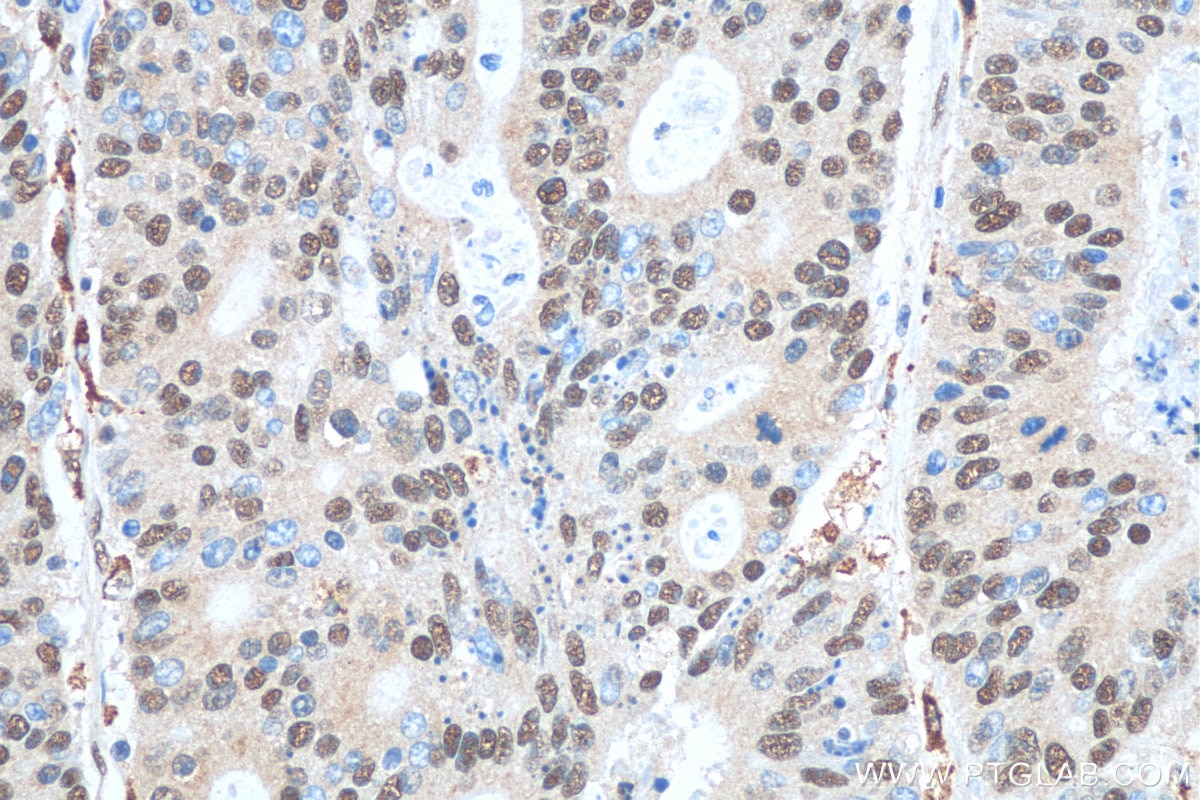
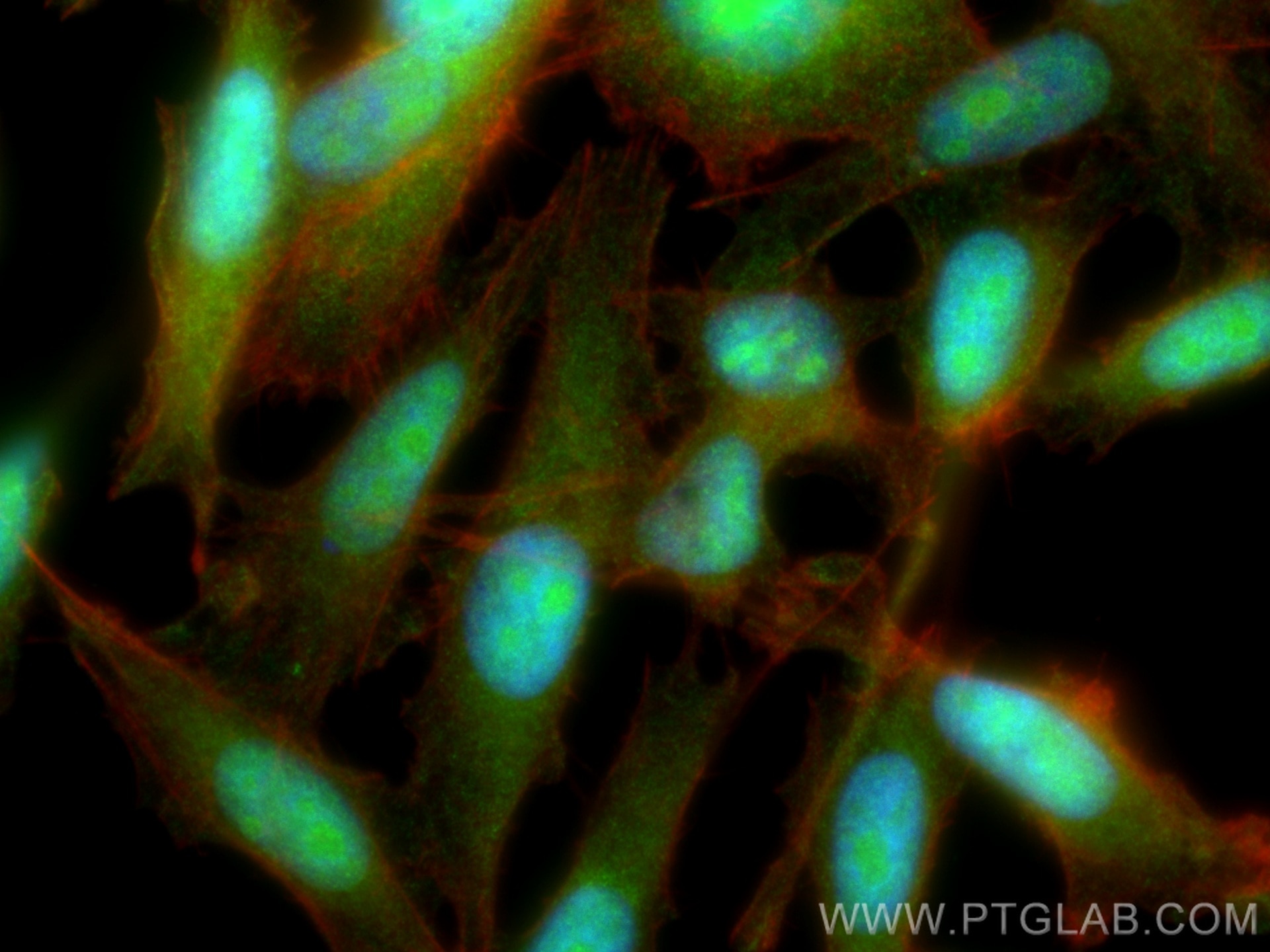

Tested Applications
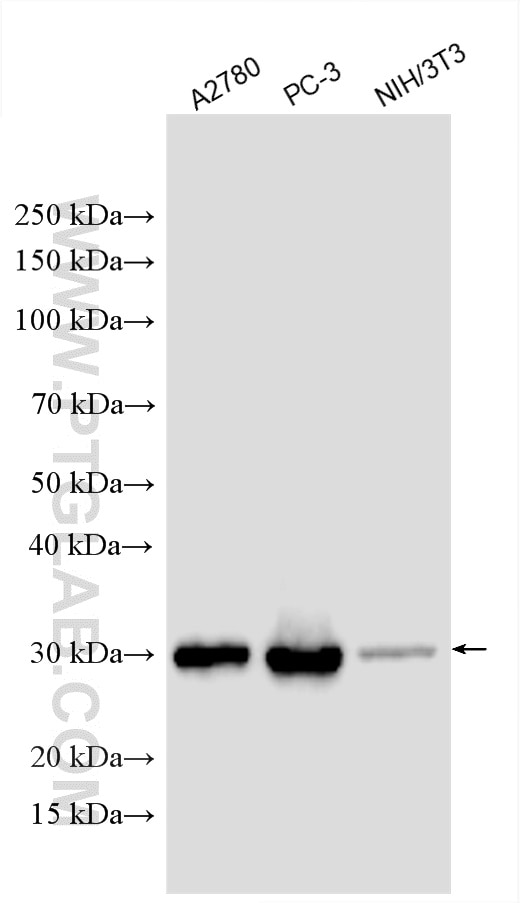
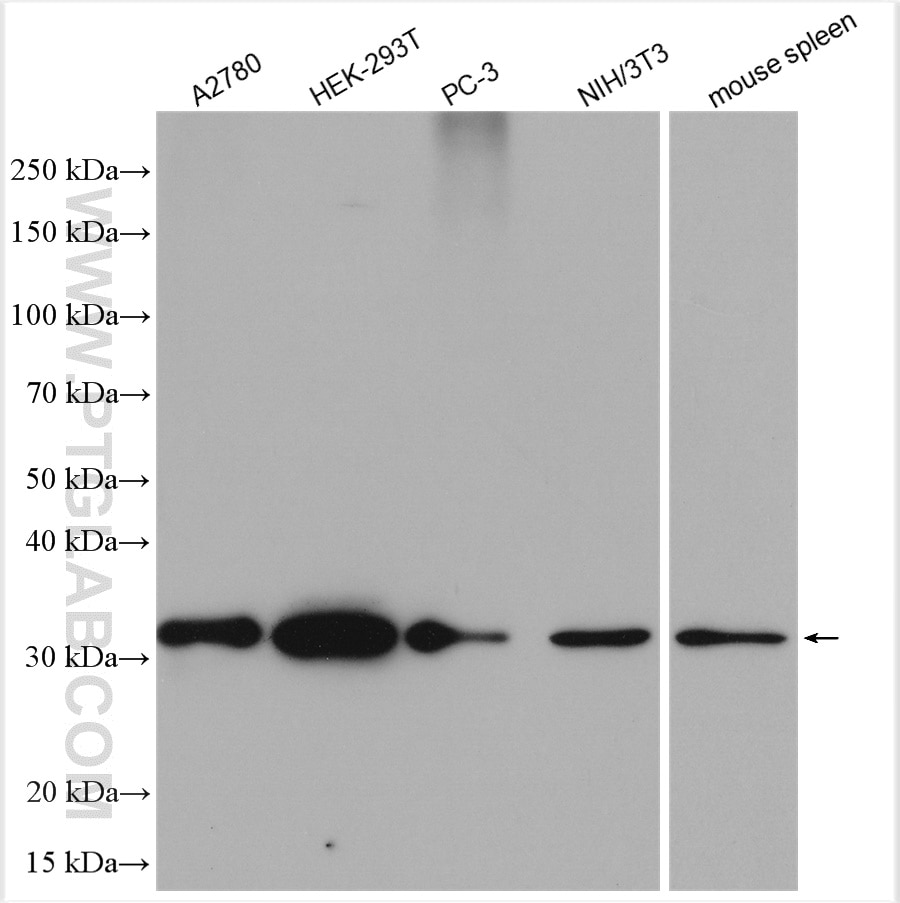
| Positive WB detected in | A2780 cells, HEK-293T cells, PC-3 cells, NIH/3T3 cells, mouse spleen tissue |
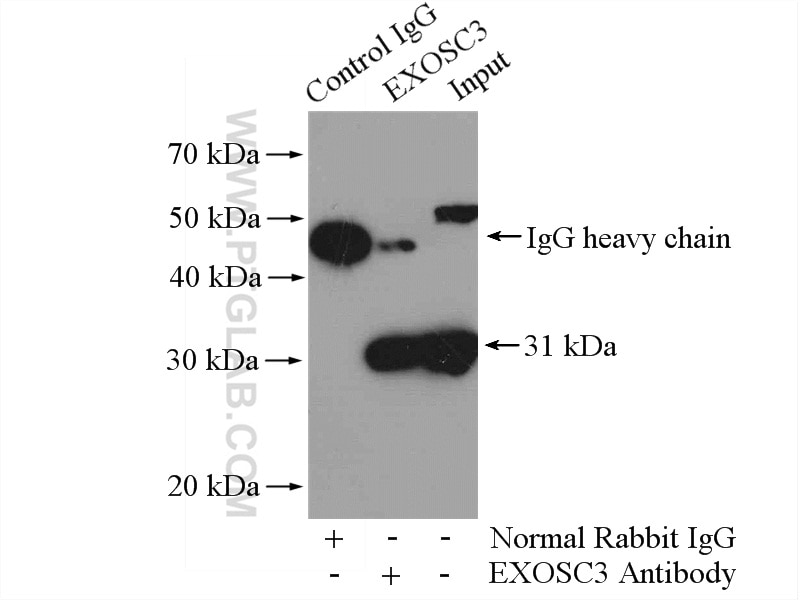
| Positive IP detected in | A2780 cells |
| Positive IF/ICC detected in | PC-3 cells |
Recommended dilution
| Application | Dilution |
|---|---|
| Western Blot (WB) | WB : 1:1000-1:4000 |
| Immunoprecipitation (IP) | IP : 0.5-4.0 ug for 1.0-3.0 mg of total protein lysate |
| Immunofluorescence (IF)/ICC | IF/ICC : 1:200-1:800 |
| It is recommended that this reagent should be titrated in each testing system to obtain optimal results. | |
| Sample-dependent, Check data in validation data gallery. | |
Product Information
15062-1-AP targets EXOSC3 in WB, IF/ICC, IP, ELISA applications and shows reactivity with human, mouse, rat samples.
| Tested Reactivity | human, mouse, rat |
| Cited Reactivity | human, mouse |
| Host / Isotype | Rabbit / IgG |
| Class | Polyclonal |
| Type | Antibody |
| Immunogen |
CatNo: Ag7065 Product name: Recombinant human EXOSC3 protein Source: e coli.-derived, PGEX-4T Tag: GST Domain: 1-275 aa of BC002437 Sequence: MAEPASVAAESLAGSRARAARTVLGQVVLPGEELLLPEQEDAEGPGGAVERPLSLNARACSRVRVVCGPGLRRCGDRLLVTKCGRLRHKEPGSGSGGGVYWVDSQQKRYVPVKGDHVIGIVTAKSGDIFKVDVGGSEPASLSYLSFEGATKRNRPNVQVGDLIYGQFVVANKDMEPEMVCIDSCGRANGMGVIGQDGLLFKVTLGLIRKLLAPDCEIIQEVGKLYPLEIVFGMNGRIWVKAKTIQQTLILANILEACEHMTSDQRKQIFSRLAES Predict reactive species |
| Full Name | exosome component 3 |
| Calculated Molecular Weight | 30 kDa |
| Observed Molecular Weight | 31 kDa |
| GenBank Accession Number | BC002437 |
| Gene Symbol | EXOSC3 |
| Gene ID (NCBI) | 51010 |
| RRID | AB_2278183 |
| Conjugate | Unconjugated |
| Form | Liquid |
| Purification Method | Antigen affinity purification |
| UNIPROT ID | Q9NQT5 |
| Storage Buffer | PBS with 0.02% sodium azide and 50% glycerol, pH 7.3. |
| Storage Conditions | Store at -20°C. Stable for one year after shipment. Aliquoting is unnecessary for -20oC storage. 20ul sizes contain 0.1% BSA. |
Background Information
RNA exosomes are multi-subunit complexes conserved throughout evolution, and they are emerging as the major cellular machinery for processing, surveillance and turnover of a diverse spectrum of coding and noncoding RNA substrates essential for viability[PMID:22544365]. In the nucleus, the RNA exosome complex is involved in proper maturation of stable RNA species such as rRNA, snRNA and snoRNA, in the elimination of RNA processing by-products and non-coding 'pervasive' transcripts [PMID:11782436]. EXOSC3 is a non-catalytic component of the RNA exosome complex which has 3'->5' exoribonuclease activity and involves in a multitude of cellular RNA processing and degradation events. EXOSC3 as peripheral part of the Exo-9 complex stabilizes the hexameric ring of Rnase PH-domain subunits through contacts with EXOSC9 and EXOSC5 [PMID:21255825].
Protocols
| Product Specific Protocols | |
|---|---|
| IF protocol for EXOSC3 antibody 15062-1-AP | Download protocol |
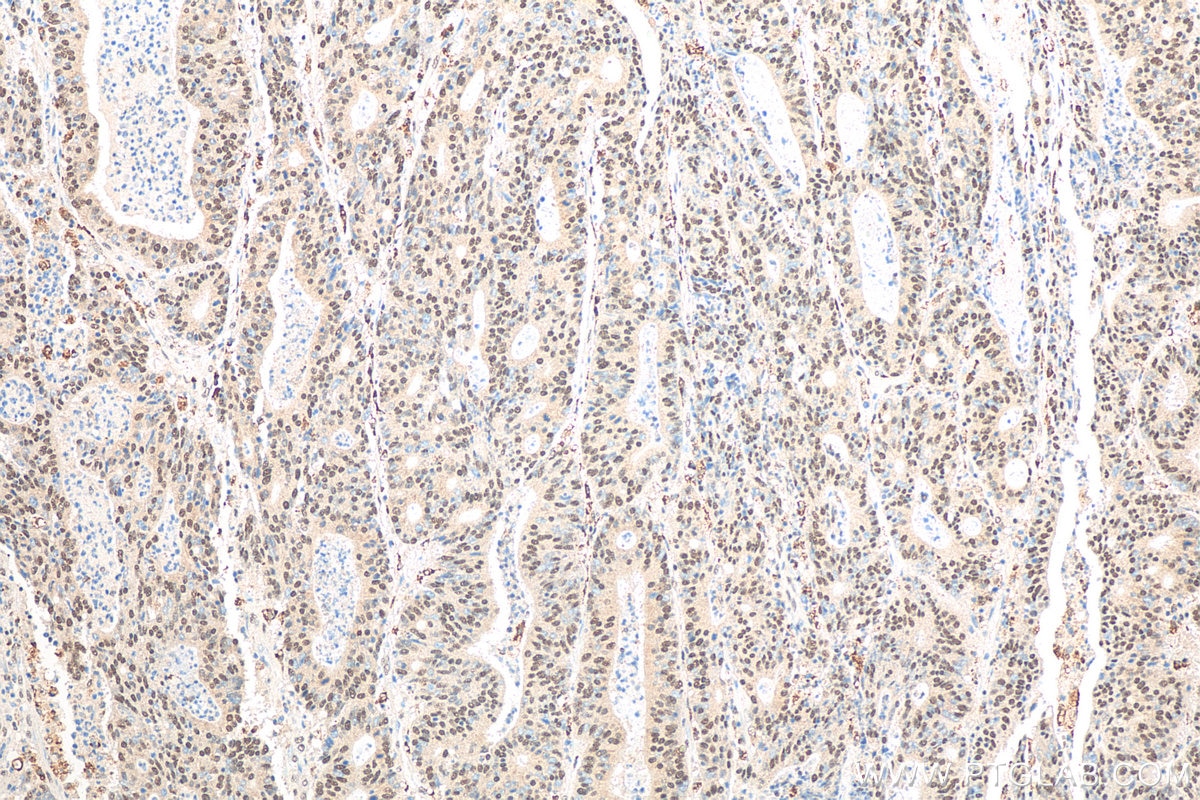
| IHC protocol for EXOSC3 antibody 15062-1-AP | Download protocol |
| IP protocol for EXOSC3 antibody 15062-1-AP | Download protocol |
| WB protocol for EXOSC3 antibody 15062-1-AP | Download protocol |
| Standard Protocols | |
|---|---|
| Click here to view our Standard Protocols |
Publications
What published studies show
The EXOSC3 Polyclonal antibody (Cat# 15062-1-AP) has 22 citations across journals including Nature Communications, Molecular Cell, Nucleic Acids Research, Science Advances, EMBO Journal, Cell Reports, Neurobiology of Disease, International Journal of Molecular Sciences, Scientific Reports, RNA Biology, PLoS Genetics, Life Science Alliance, and Bio Protoc. Research fields span RNA exosome biology, mRNA metabolism and degradation, gene expression regulation, stem cell differentiation, neurodegeneration, hepatocellular carcinoma, telomere biology, retrotransposition, and viral infection.
| Species | Application | Title |
|---|---|---|
Nat Commun EXOSC8 mutations alter mRNA metabolism and cause hypomyelination with spinal muscular atrophy and cerebellar hypoplasia. | ||
Mol Cell Integrator is a genome-wide attenuator of non-productive transcription.
| ||
Mol Cell Large-scale tethered screen of RNA-binding proteins reveals novel regulators of poly(A) site selection. | ||
Mol Cell A nuclear RNA degradation code is recognized by PAXT for eukaryotic transcriptome surveillance |
Reviews
What customers say
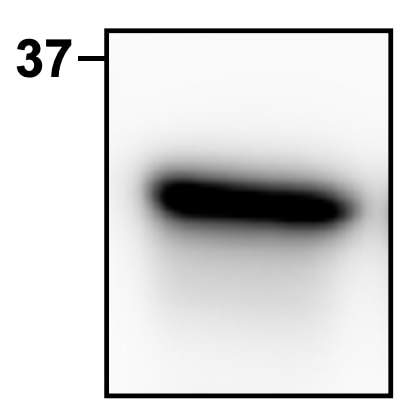
All four reviews (average 4.75/5) report successful use of this antibody for Western Blot across multiple cell types including RKO, HeLa, HEK293T, and mESCs. Users tested dilutions of 1:1000 and 1:5000 with consistent results. One reviewer noted only slight background, while others confirmed specificity through knockout/depletion comparisons. Overall, customers describe the antibody as working well to excellently for detecting Exosc3 protein levels.
The reviews below have been submitted by verified Proteintech customers who received an incentive for providing their feedback.
Aleksandr (Verified Customer) (12-15-2025) | Worked great
 |
Kalodiah (Verified Customer) (08-07-2025) | Antibody sample. Worked very well. Only slight background on Western blot.
|
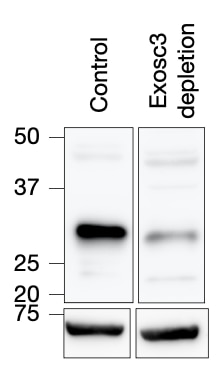
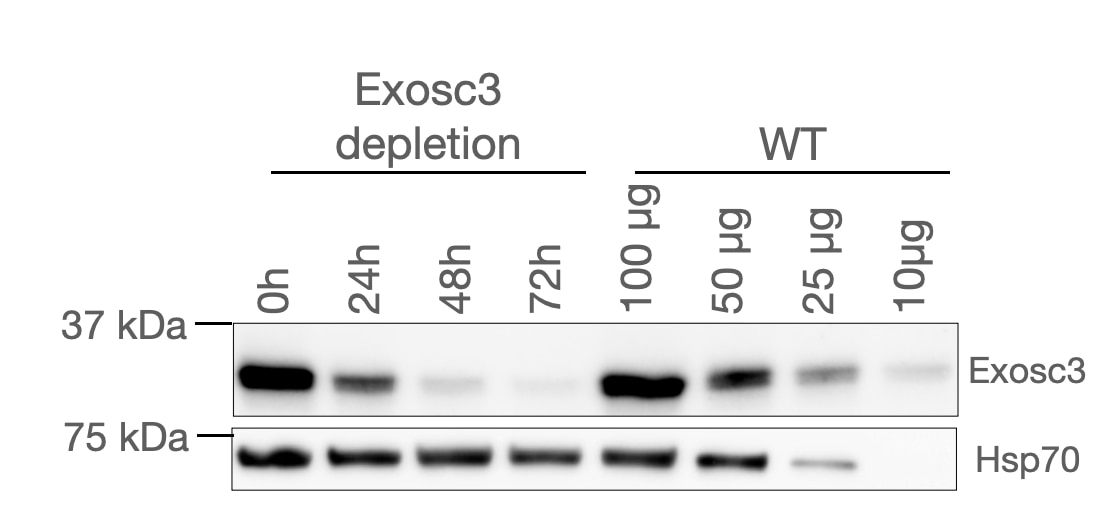
Tsimafei (Verified Customer) (06-01-2022) | Comparison of WT and Exosc3 depletion showed a reduction in Exosc3 protein levels (confirming the specificity of the antibodies). Antibodies were incubated ON at 4C.
 |
Nikolaus (Verified Customer) (05-24-2022) | Exosc3 conditional KO timecourse; Hsp70 as loading control; exoscenllent abs
 |







