

Tested Applications
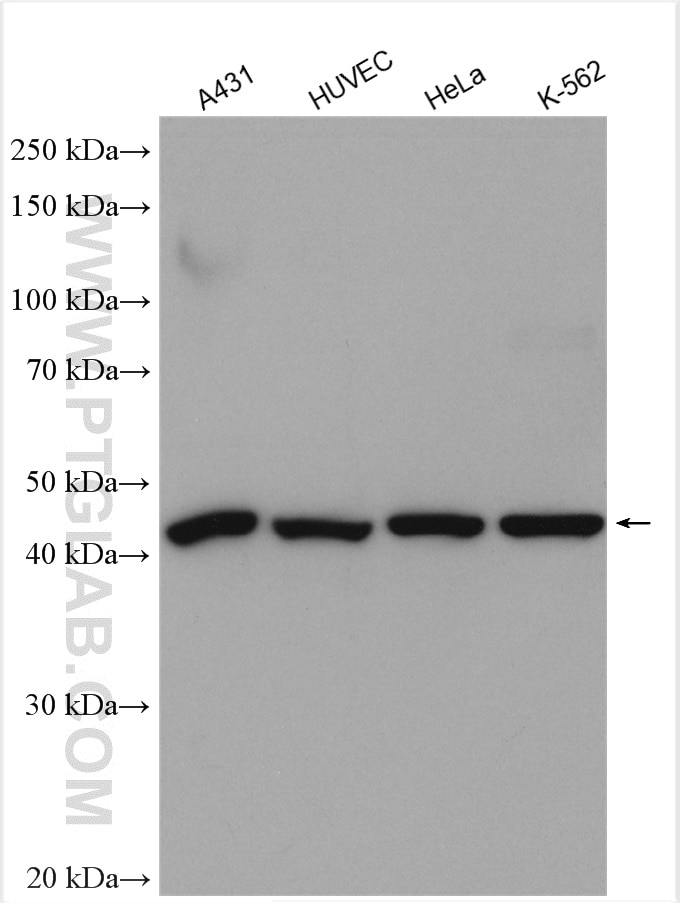
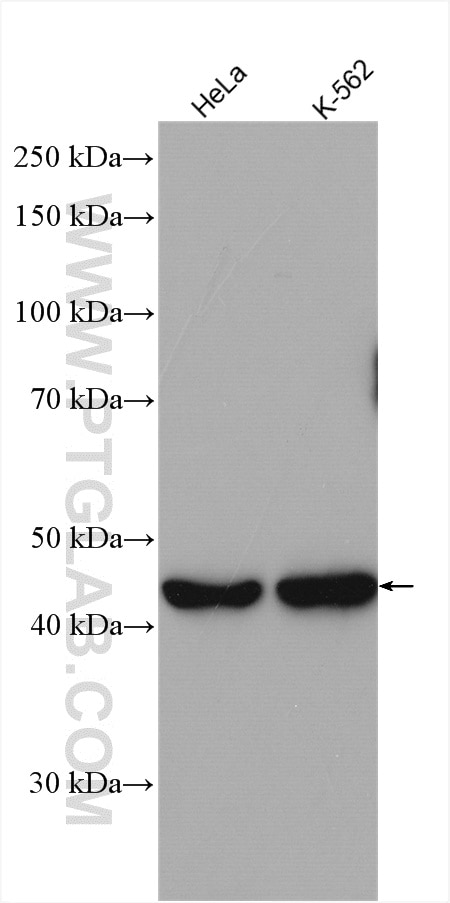
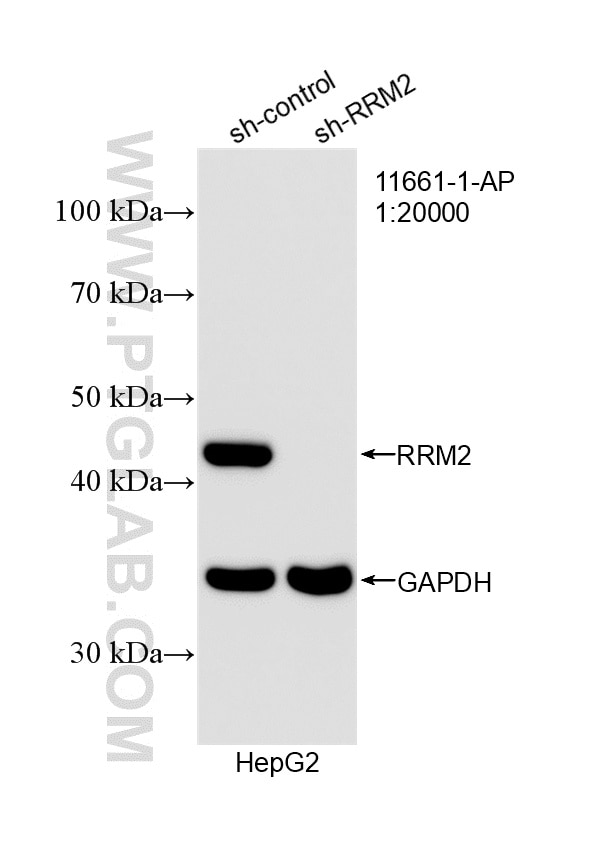
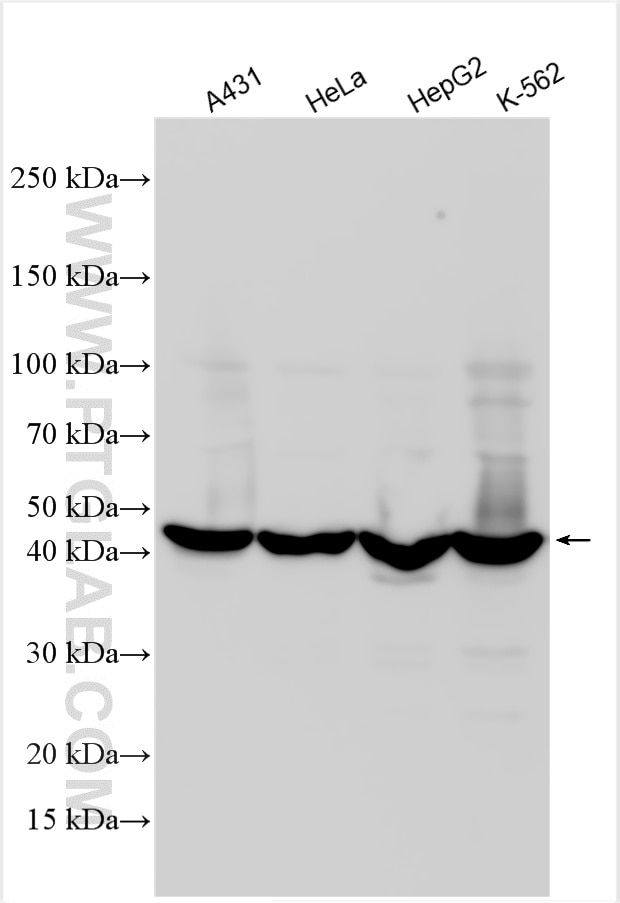
| Positive WB detected in | A431 cells, HeLa cells, HepG2 cells, HUVEC cells, K-562 cells |
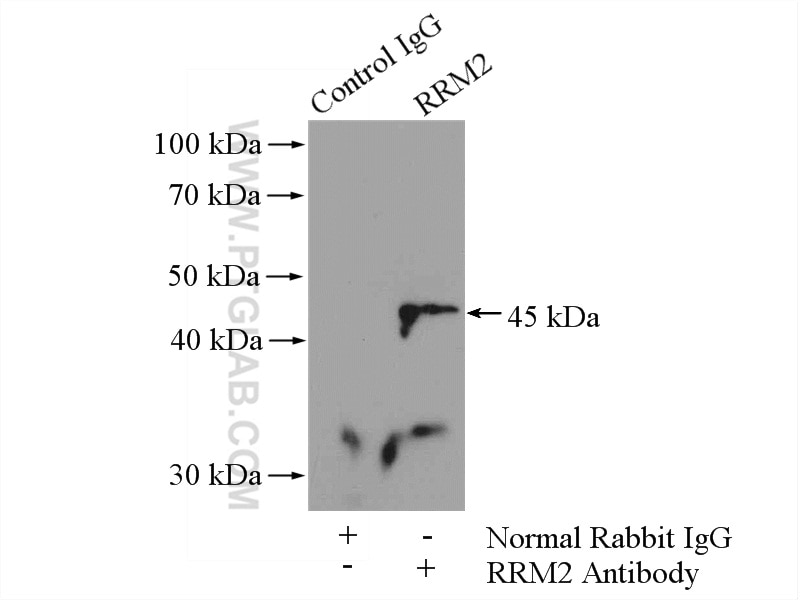
| Positive IP detected in | K-562 cells |
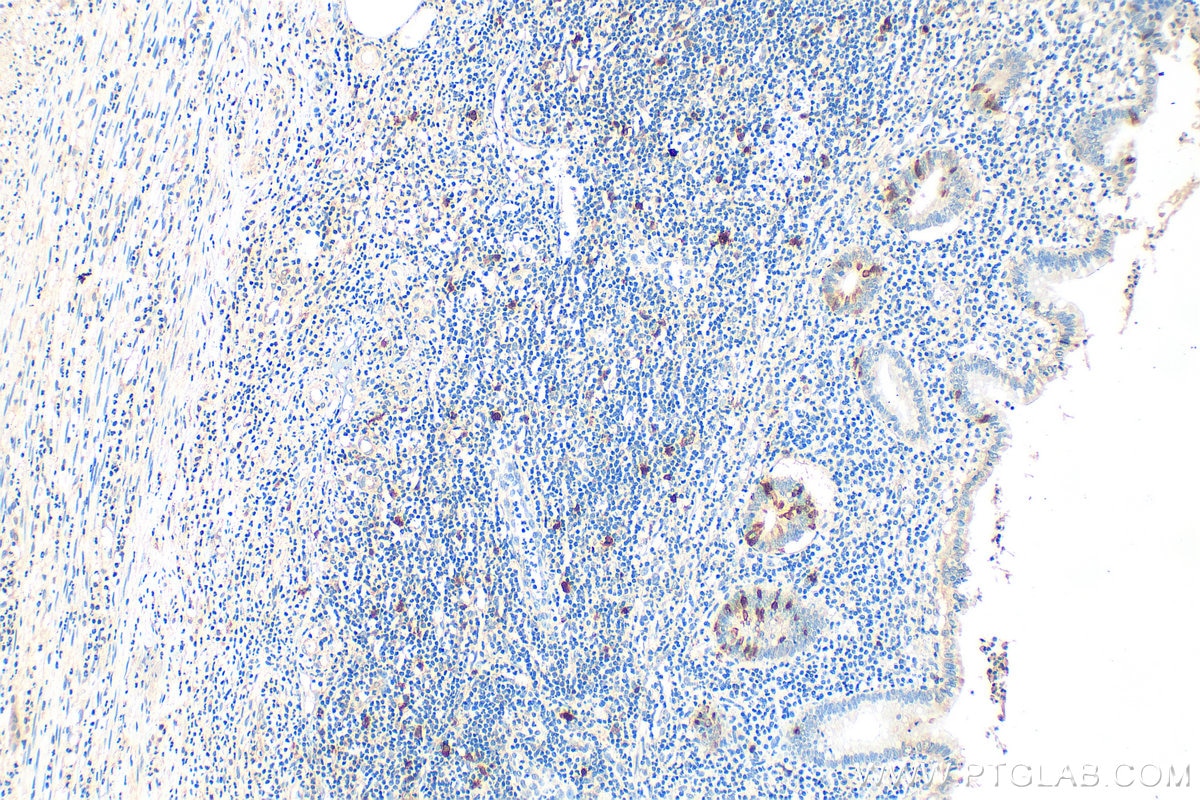
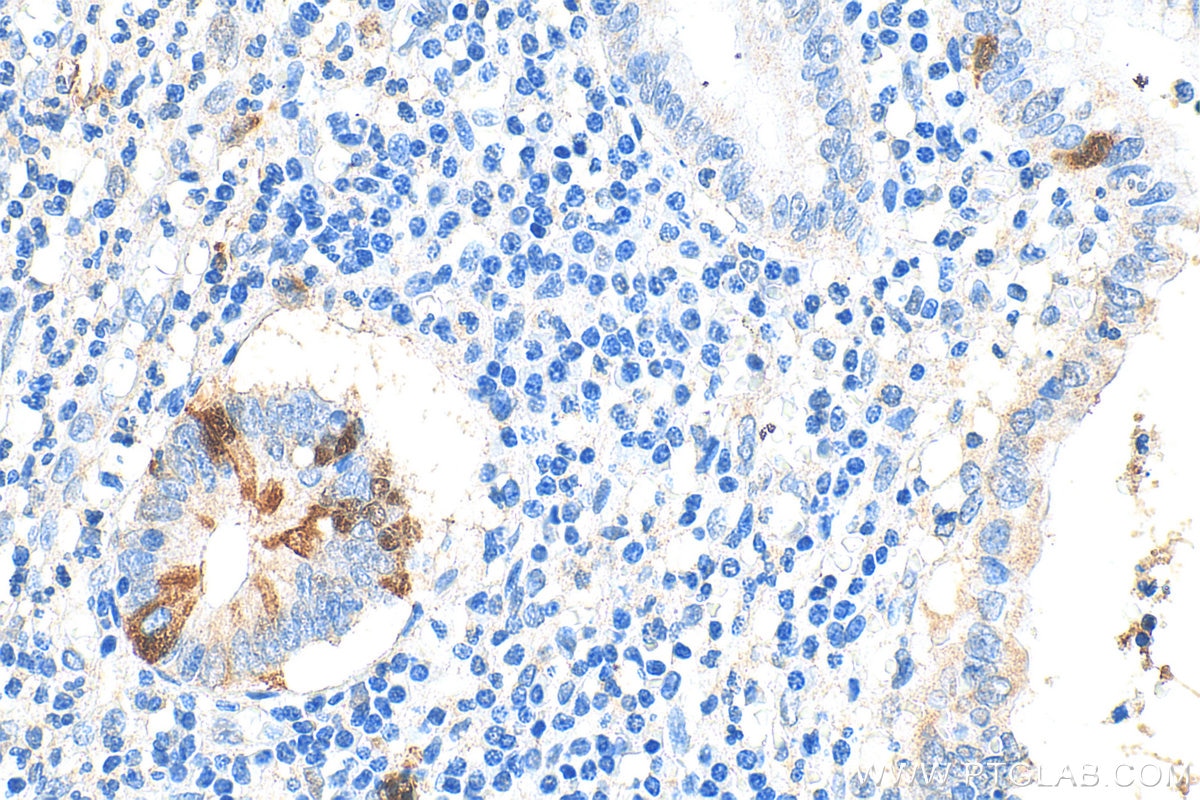
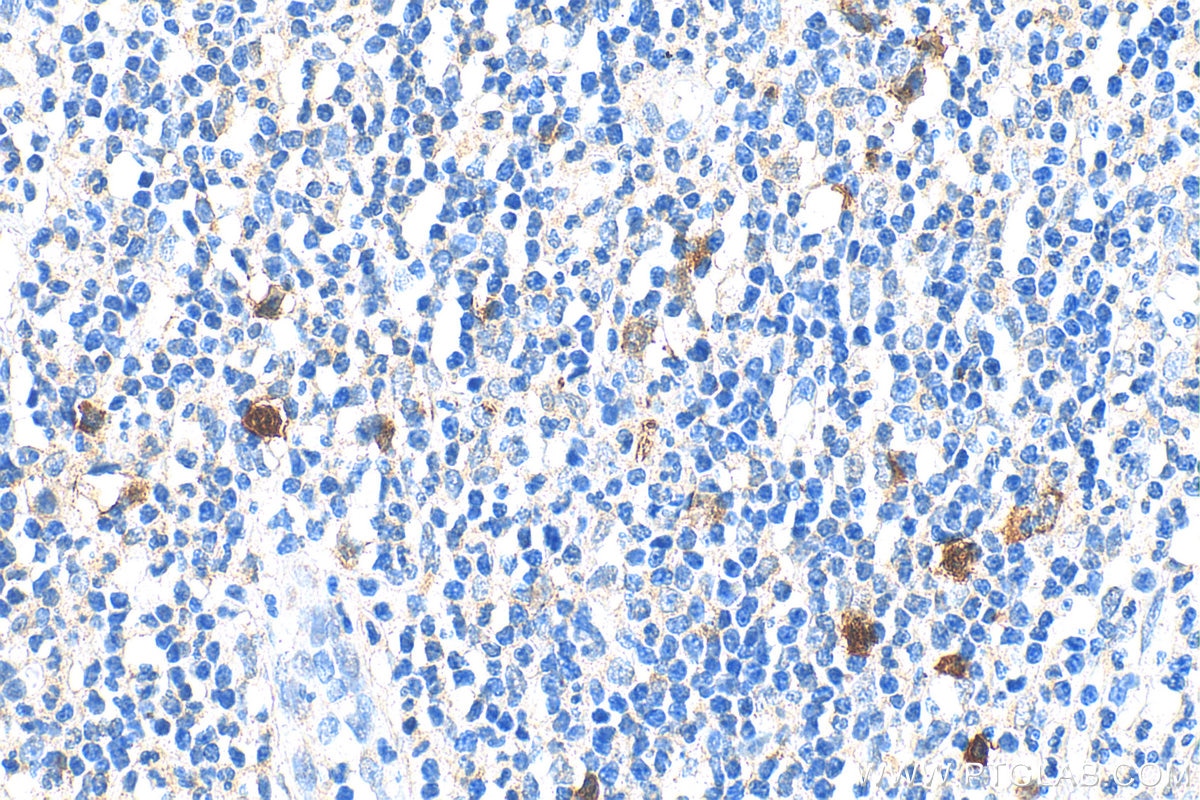
| Positive IHC detected in | human appendicitis tissue Note: suggested antigen retrieval with TE buffer pH 9.0; (*) Alternatively, antigen retrieval may be performed with citrate buffer pH 6.0 |
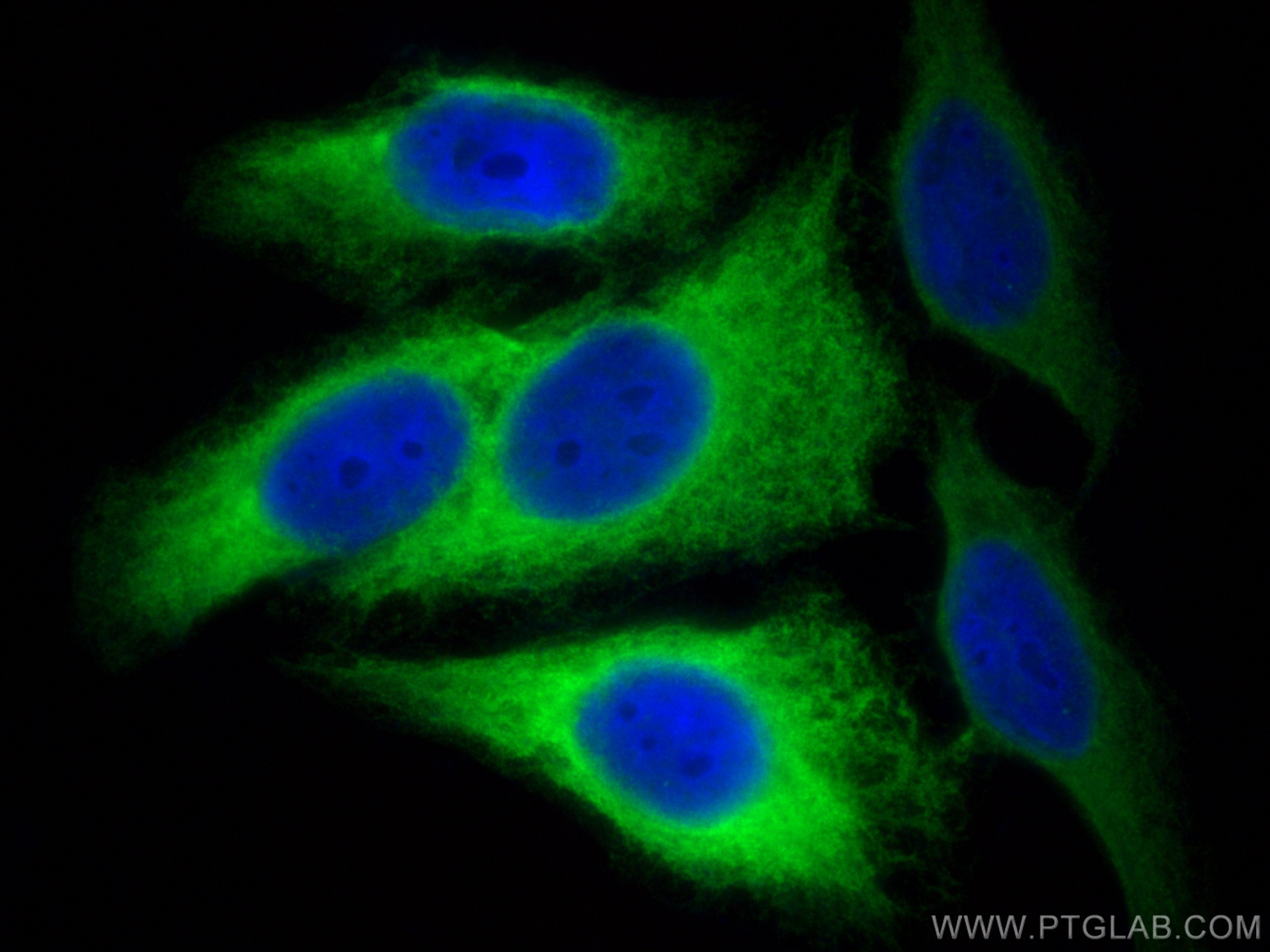
| Positive IF/ICC detected in | HepG2 cells |
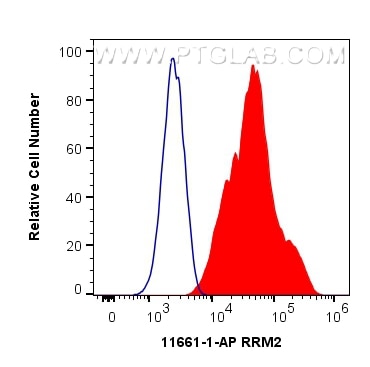
| Positive FC (Intra) detected in | HepG2 cells |
Recommended dilution
| Application | Dilution |
|---|---|
| Western Blot (WB) | WB : 1:5000-1:50000 |
| Immunoprecipitation (IP) | IP : 0.5-4.0 ug for 1.0-3.0 mg of total protein lysate |
| Immunohistochemistry (IHC) | IHC : 1:1000-1:4000 |
| Immunofluorescence (IF)/ICC | IF/ICC : 1:200-1:800 |
| Flow Cytometry (FC) (INTRA) | FC (INTRA) : 0.40 ug per 10^6 cells in a 100 µl suspension |
| It is recommended that this reagent should be titrated in each testing system to obtain optimal results. | |
| Sample-dependent, Check data in validation data gallery. | |
Product Information
11661-1-AP targets RRM2 in WB, IHC, IF/ICC, FC (Intra), IP, CoIP, RIP, ELISA applications and shows reactivity with human samples.
| Tested Reactivity | human |
| Cited Reactivity | human, mouse, chicken |
| Host / Isotype | Rabbit / IgG |
| Class | Polyclonal |
| Type | Antibody |
| Immunogen |
CatNo: Ag2203 Product name: Recombinant human RRM2 protein Source: e coli.-derived, PGEX-4T Tag: GST Domain: 1-389 aa of BC030154 Sequence: MLSLRVPLAPITDPQQLQLSPLKGLSLVDKENTPPALSGTRVLASKTARRIFQEPTEPKTKAAAPGVEDEPLLRENPRRFVIFPIEYHDIWQMYKKAEASFWTAEEVDLSKDIQHWESLKPEERYFISHVLAFFAASDGIVNENLVERFSQEVQITEARCFYGFQIAMENIHSEMYSLLIDTYIKDPKEREFLFNAIETMPCVKKKADWALRWIGDKEATYGERVVAFAAVEGIFFSGSFASIFWLKKRGLMPGLTFSNELISRDEGLHCDFACLMFKHLVHKPSEERVREIIINAVRIEQEFLTEALPVKLIGMNCTLMKQYIEFVADRLMLELGFSKVFRVENPFDFMENISLEGKTNFFEKRVGEYQRMGVMSSPTENSFTLDADF Predict reactive species |
| Full Name | ribonucleotide reductase M2 polypeptide |
| Calculated Molecular Weight | 389 aa, 45 kDa |
| Observed Molecular Weight | 45 kDa |
| GenBank Accession Number | BC030154 |
| Gene Symbol | RRM2 |
| Gene ID (NCBI) | 6241 |
| RRID | AB_2180392 |
| Conjugate | Unconjugated |
| Form | Liquid |
| Purification Method | Antigen affinity purification |
| UNIPROT ID | P31350 |
| Storage Buffer | PBS with 0.02% sodium azide and 50% glycerol, pH 7.3. |
| Storage Conditions | Store at -20°C. Stable for one year after shipment. Aliquoting is unnecessary for -20oC storage. 20ul sizes contain 0.1% BSA. |
Background Information
Ribonucleotide reductase M2 subunit is one of two subunits that constitute ribonucleotide reductase, the enzyme that catalyzes the conversion of ribonucleotide 5'-diphosphates into 2'-deoxyribonucleotides, a rate-limiting step in the production of 2'-deoxyribonucleoside 5'-diphosphates (dNTP) required for DNA synthesis and repair that is required for DNA synthesis and repair [PMID:20825972, 19250552]. RRM2 is only expressed during the late G1/early S phase, and degraded in late S phase, and the activity of RNR, and therefore DNA synthesis and cell proliferation, is controlled during the cell cycle by the synthesis and degradation of RRM2 subunit [PMID:3894352].
Protocols
| Product Specific Protocols | |
|---|---|
| FC protocol for RRM2 antibody 11661-1-AP | Download protocol |
| IF protocol for RRM2 antibody 11661-1-AP | Download protocol |
| IHC protocol for RRM2 antibody 11661-1-AP | Download protocol |
| IP protocol for RRM2 antibody 11661-1-AP | Download protocol |
| WB protocol for RRM2 antibody 11661-1-AP | Download protocol |
| Standard Protocols | |
|---|---|
| Click here to view our Standard Protocols |
Publications
What published studies show
RRM2 antibody (Cat# 11661-1-AP) has accumulated 43 citations across journals such as Cancer Research, ACS Nano, Nucleic Acids Research, Cell Reports, International Journal of Biological Sciences, Small, iScience, and Cell Death & Disease. Associated research fields include oncology (lung, liver, pancreatic, ovarian, colorectal, gastric, and endometrial cancers), ferroptosis, DNA repair, nucleotide metabolism, antiviral immunity (HIV), autoimmune disease (Sjögren's syndrome), angiogenesis, and muscle regeneration.
| Species | Application | Title |
|---|---|---|
Cancer Res Adaptive Regulation of dNTP Homeostasis Confers Osimertinib Resistance in EGFR-Mutant Non-small Cell Lung Carcinoma. | ||
Drug Resist Updat Functional precision oncology platform of BRAF(V600E)-mutated colorectal cancer organoids predicts therapy response and reveals RNF43-mediated immunogenicity. | ||
ACS Nano Breaking the Iron Homeostasis: A "Trojan Horse" Self-Assembled Nanodrug Sensitizes Homologous Recombination Proficient Ovarian Cancer Cells to PARP Inhibition | ||
Cell Death Dis Stattic enhances the anti-tumor activity of AZD4547 in LUSC by blocking STAT3/RRM2-mediated DNA repair and inducing ROS-driven mitochondrial dysfunction.
| ||
Small Nanomagnetic Hyperthermia Sensitizes Gemcitabine Chemosensitivity in Pancreatic Cancer by Inhibiting HSPB1 to Amplify ACSL4-Mediated Ferroptosis. |











