
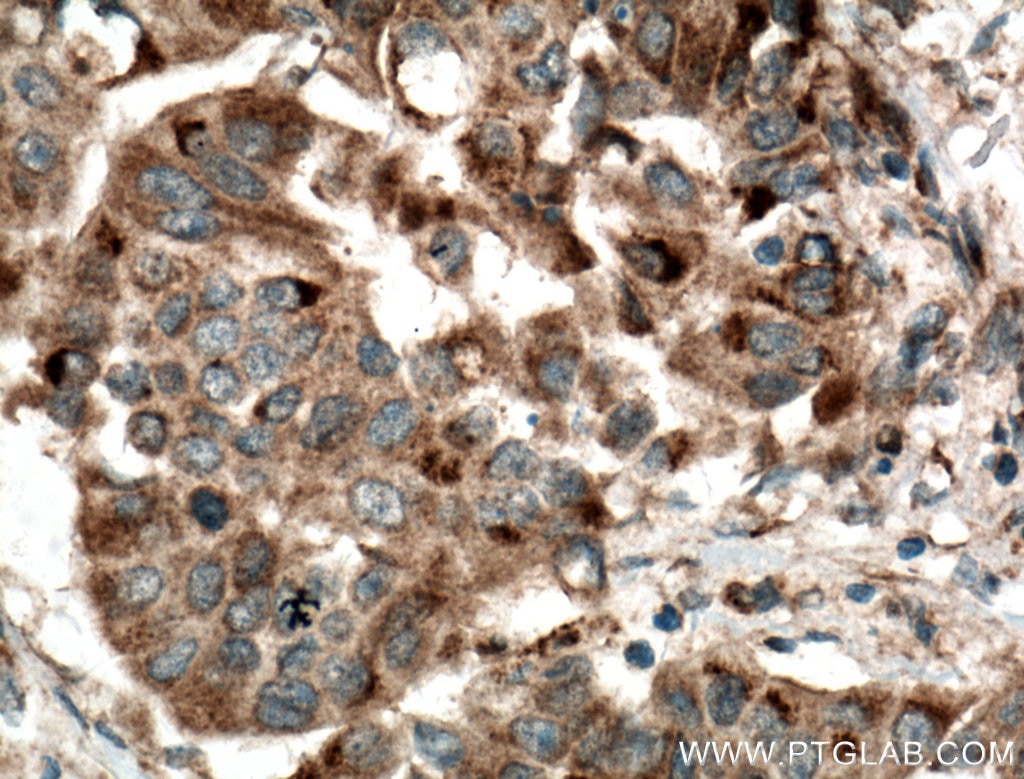

Tested Applications
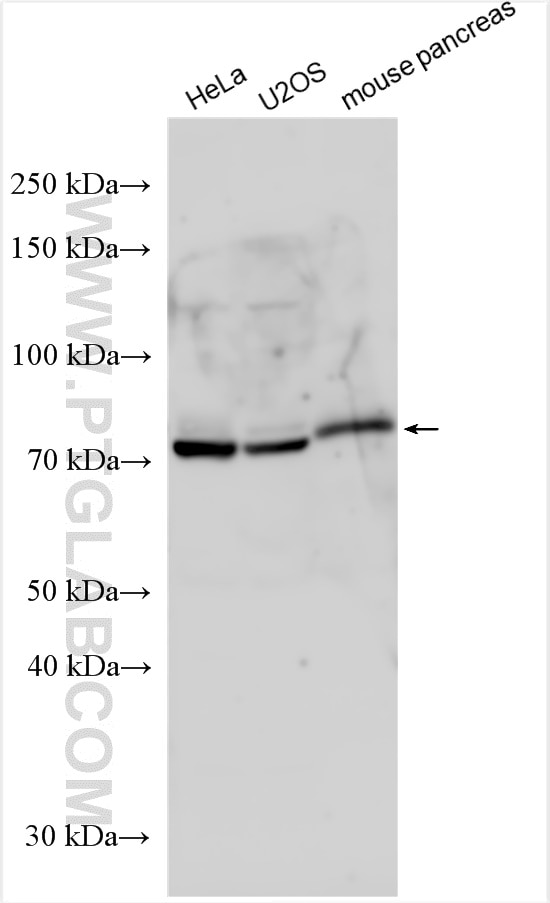
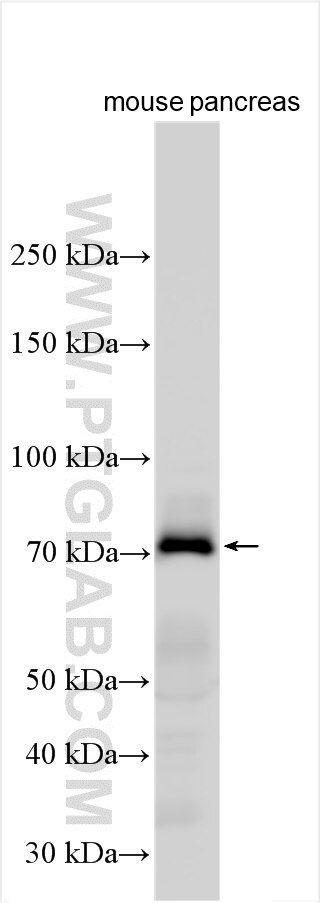
| Positive WB detected in | HeLa cells, mouse pancreas tissue, U2OS cells |
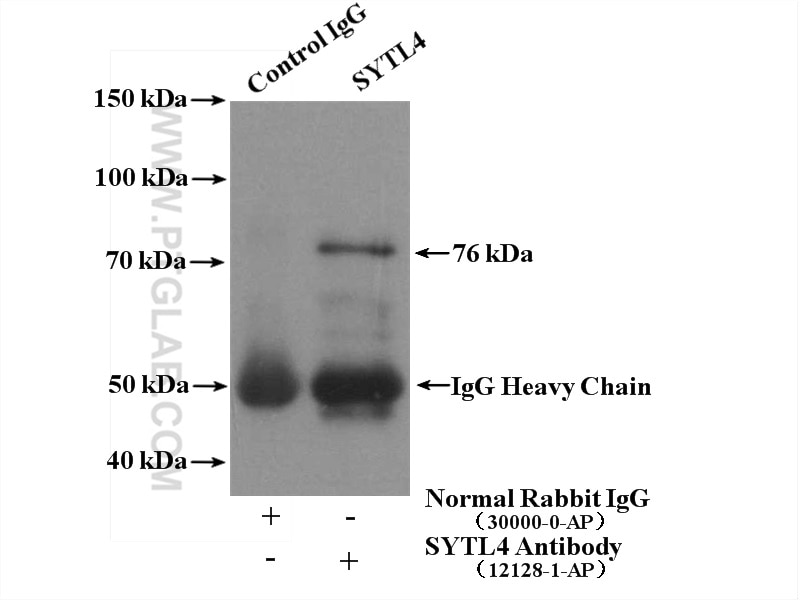
| Positive IP detected in | HEK-293 cells |
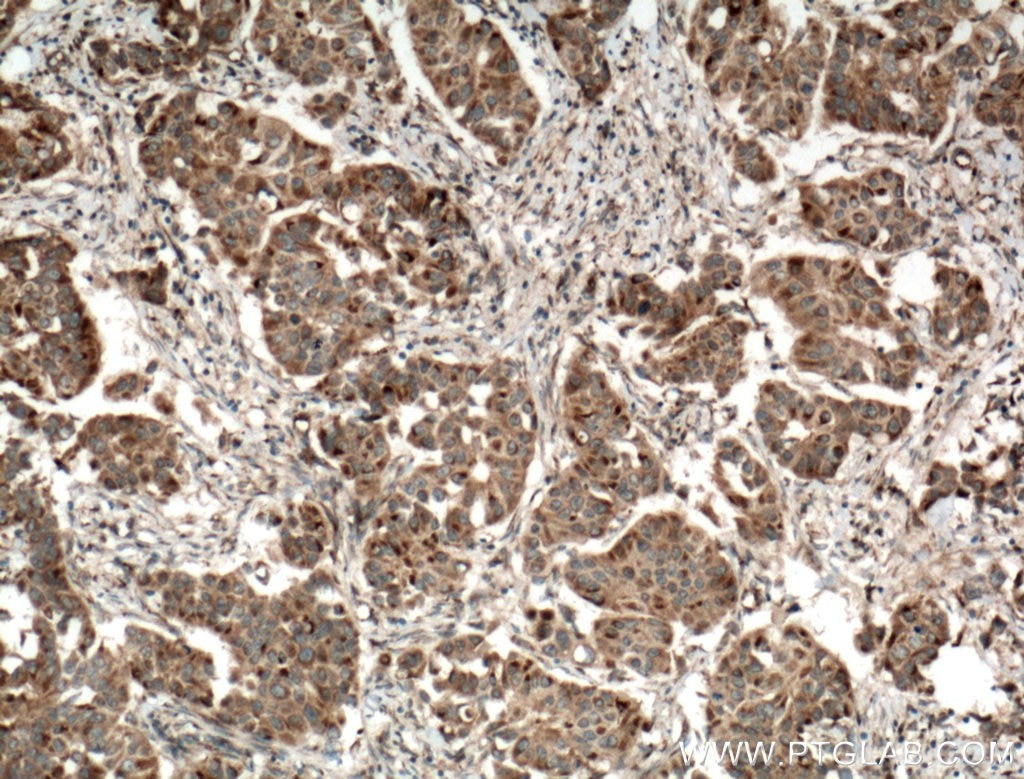
| Positive IHC detected in | human breast cancer tissue Note: suggested antigen retrieval with TE buffer pH 9.0; (*) Alternatively, antigen retrieval may be performed with citrate buffer pH 6.0 |
Recommended dilution
| Application | Dilution |
|---|---|
| Western Blot (WB) | WB : 1:500-1:3000 |
| Immunoprecipitation (IP) | IP : 0.5-4.0 ug for 1.0-3.0 mg of total protein lysate |
| Immunohistochemistry (IHC) | IHC : 1:50-1:500 |
| It is recommended that this reagent should be titrated in each testing system to obtain optimal results. | |
| Sample-dependent, Check data in validation data gallery. | |
Product Information
12128-1-AP targets SYTL4 in WB, IHC, IF, IP, ELISA applications and shows reactivity with human, mouse samples.
| Tested Reactivity | human, mouse |
| Cited Reactivity | human, rat, hamster |
| Host / Isotype | Rabbit / IgG |
| Class | Polyclonal |
| Type | Antibody |
| Immunogen |
CatNo: Ag2772 Product name: Recombinant human SYTL4 protein Source: e coli.-derived, PGEX-4T Tag: GST Domain: 338-671 aa of BC014913 Sequence: IGSMMSIYSEAGDFGNIFVTGRIAFSLKYEQQTQSLVVHVKECHQLAYADEAKKRSNPYVKTYLLPDKSRQGKRKTSIKRDTVNPLYDETLRYEIPESLLAQRTLQFSVWHHGRFGRNTFLGEAEIQMDSWKLDKKLDHCLPLHGKISAESPTGLPSHKGELVVSLKYIPASKTPVGGDRKKSKGGEGGELQVWIKEAKNLTAAKAGGTSDSFVKGYLLPMRNKASKRKTPVMKKTLNPHYNHTFVYNGVRLEDLQHMCLELTVWDREPLASNDFLGGVRLGVGTGISNGEVVDWMDSTGEEVSLWQKMRQYPGSWAEGTLQLRSSMAKQKLGL Predict reactive species |
| Full Name | synaptotagmin-like 4 |
| Calculated Molecular Weight | 671 aa, 76 kDa |
| Observed Molecular Weight | 76 kDa |
| GenBank Accession Number | BC014913 |
| Gene Symbol | SYTL4 |
| Gene ID (NCBI) | 94121 |
| RRID | AB_2877828 |
| Conjugate | Unconjugated |
| Form | Liquid |
| Purification Method | Antigen affinity purification |
| UNIPROT ID | Q96C24 |
| Storage Buffer | PBS with 0.02% sodium azide and 50% glycerol, pH 7.3. |
| Storage Conditions | Store at -20°C. Stable for one year after shipment. Aliquoting is unnecessary for -20oC storage. 20ul sizes contain 0.1% BSA. |
Background Information
SYTL4, also known as SLP4 or granuphilin, is a member of the synaptotagmin-like protein (Slp) family. Members of this family are characterized by presence of an N-terminal Slp homology domain (SHD), which functions as a Rab27-binding domain, and C-terminal tandem C2 domains, putative Ca(2+)-binding motifs. SYTL4 is specifically expressed on dense-core granules in certain neuroendocrine cells and negatively controls dense-core vesicle exocytosis through specific interaction with Rab27A. (PMID: 16481396; 16473610)
Protocols
| Product Specific Protocols | |
|---|---|
| IHC protocol for SYTL4 antibody 12128-1-AP | Download protocol |
| IP protocol for SYTL4 antibody 12128-1-AP | Download protocol |
| WB protocol for SYTL4 antibody 12128-1-AP | Download protocol |
| Standard Protocols | |
|---|---|
| Click here to view our Standard Protocols |
Publications
What published studies show
The SYTL4 polyclonal antibody (Cat# 12128-1-AP) has 9 citations published in journals including Nature Communications, Theranostics, Cell Communication and Signaling, Arteriosclerosis Thrombosis and Vascular Biology, Journal of Proteome Research, Biochemical and Biophysical Research Communications, Biophysical Reports, and International Immunopharmacology. Research fields span vesicular transport, exosome biology, cancer (breast, colorectal, lung), vascular calcification, platelet/thrombus biology, proteomics, insulin secretion, and atherosclerosis.
| Species | Application | Title |
|---|---|---|
Nat Commun Rab27a regulates the transport of influenza virus membrane proteins to the plasma membrane
| ||
Theranostics SYTL4 downregulates microtubule stability and confers paclitaxel resistance in triple-negative breast cancer.
| ||
Cell Commun Signal Nesfatin-1 enhances vascular smooth muscle calcification through facilitating BMP-2 osteogenic signaling
| ||
Arterioscler Thromb Vasc Biol Kinesin-1: A New Actor Involved in Platelet Secretion and Thrombus Stability. | ||
J Proteome Res Identification of tyrosine-phosphorylated proteins associated with lung cancer metastasis using label-free quantitative analyses. |






