

Tested Applications
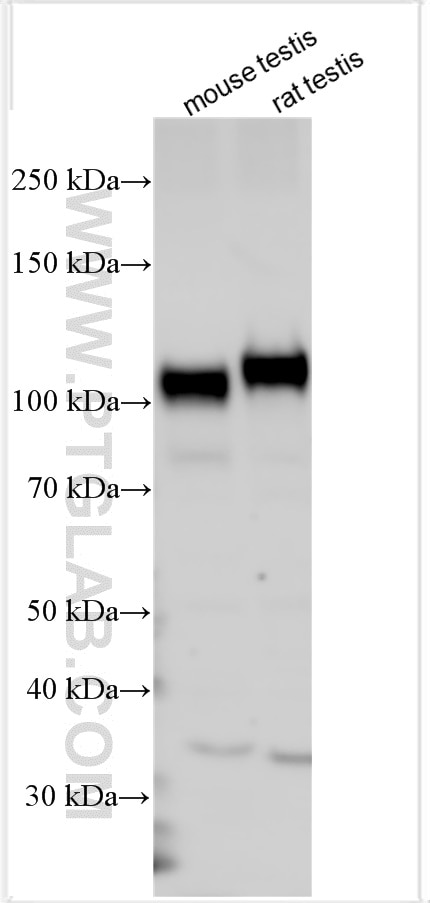
| Positive WB detected in | mouse testis tissue, rat testis tissue |
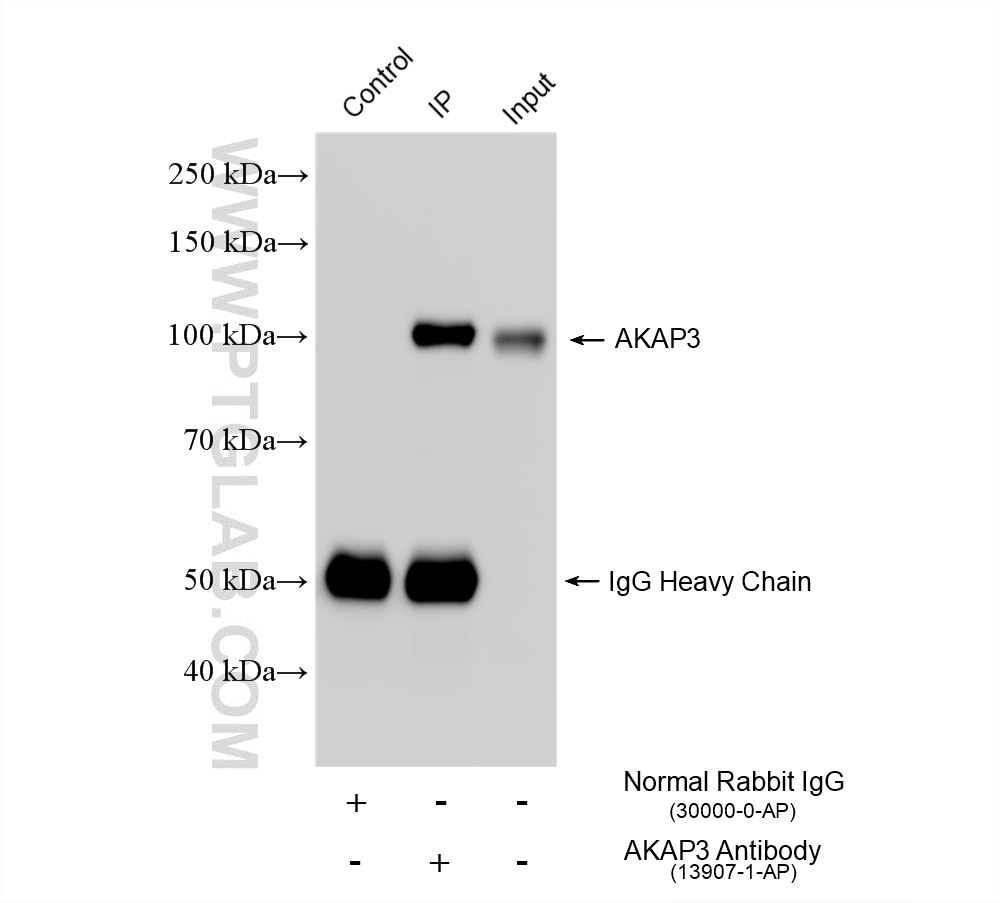
| Positive IP detected in | mouse testis tissue |
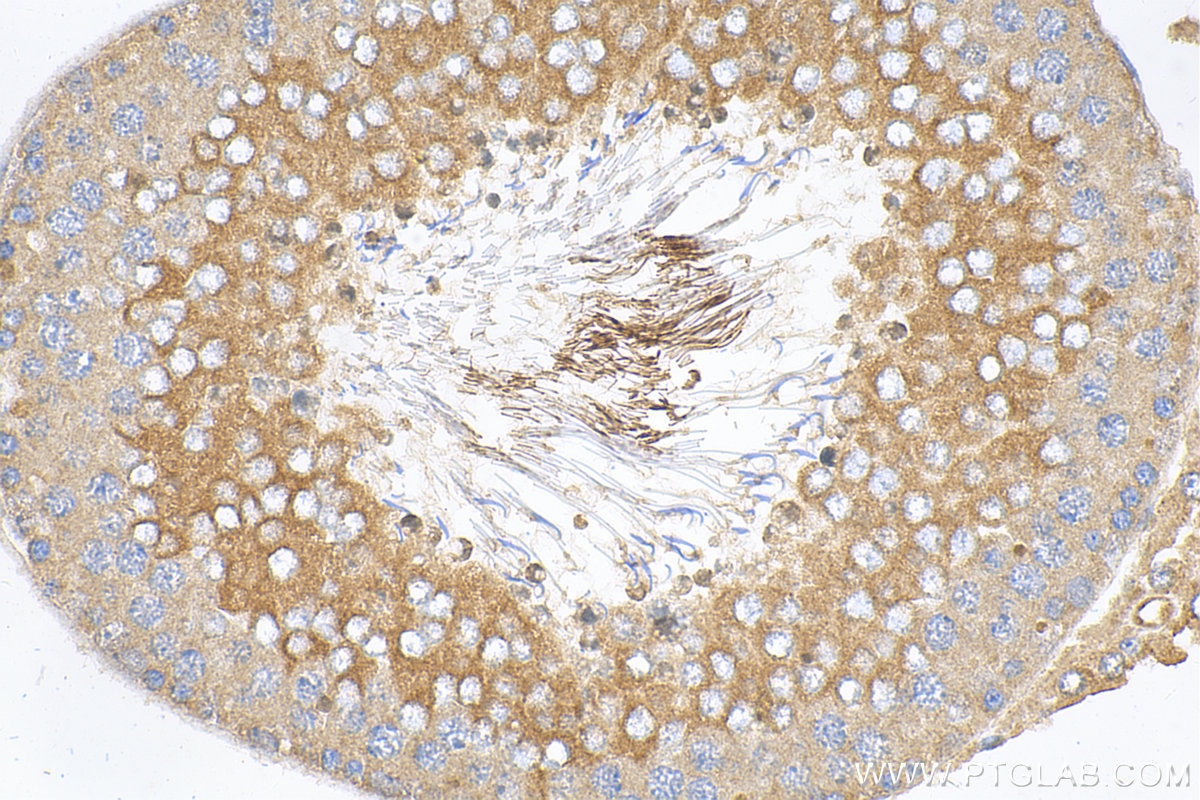
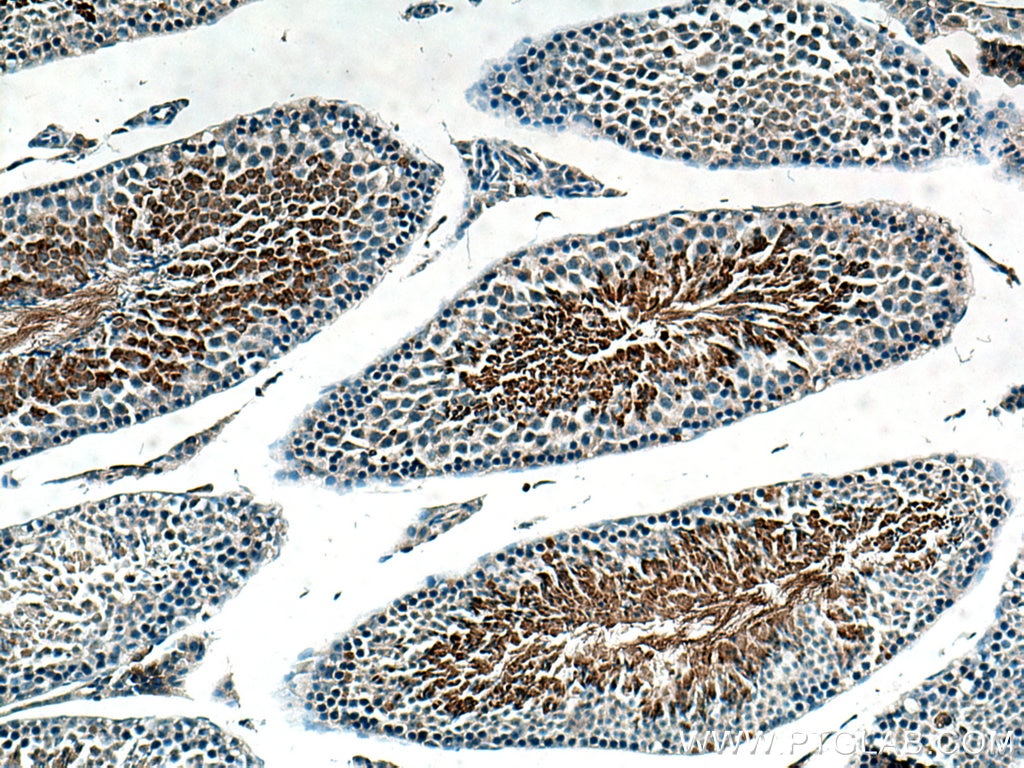
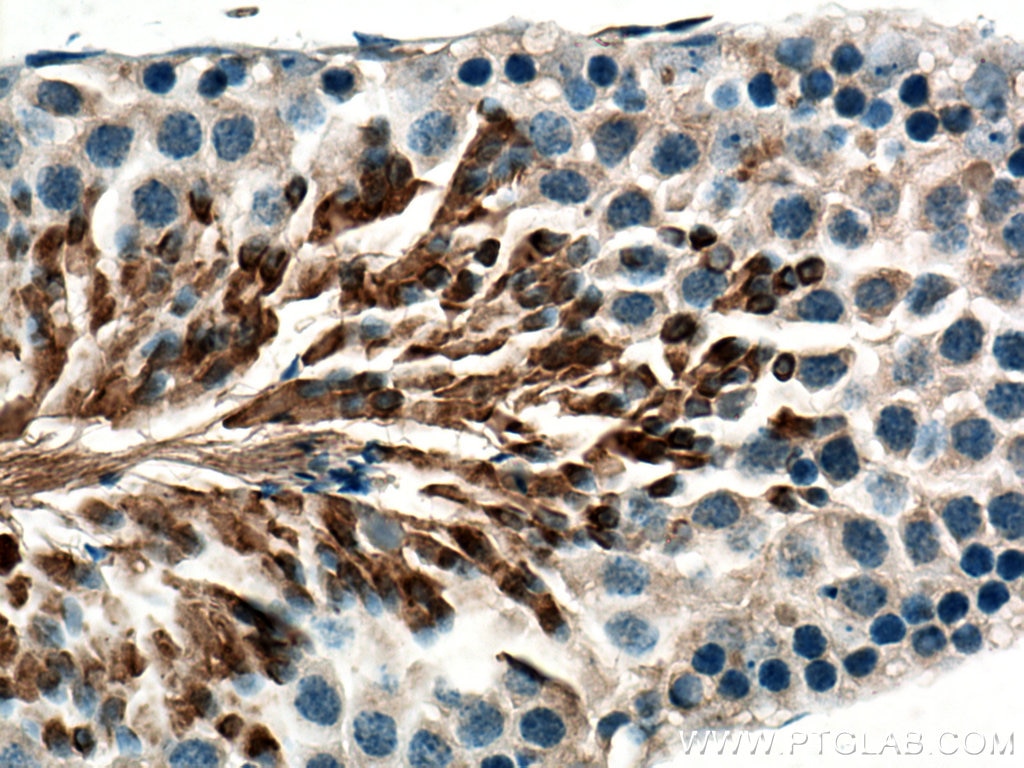
| Positive IHC detected in | rat testis tissue, mouse testis tissue Note: suggested antigen retrieval with TE buffer pH 9.0; (*) Alternatively, antigen retrieval may be performed with citrate buffer pH 6.0 |
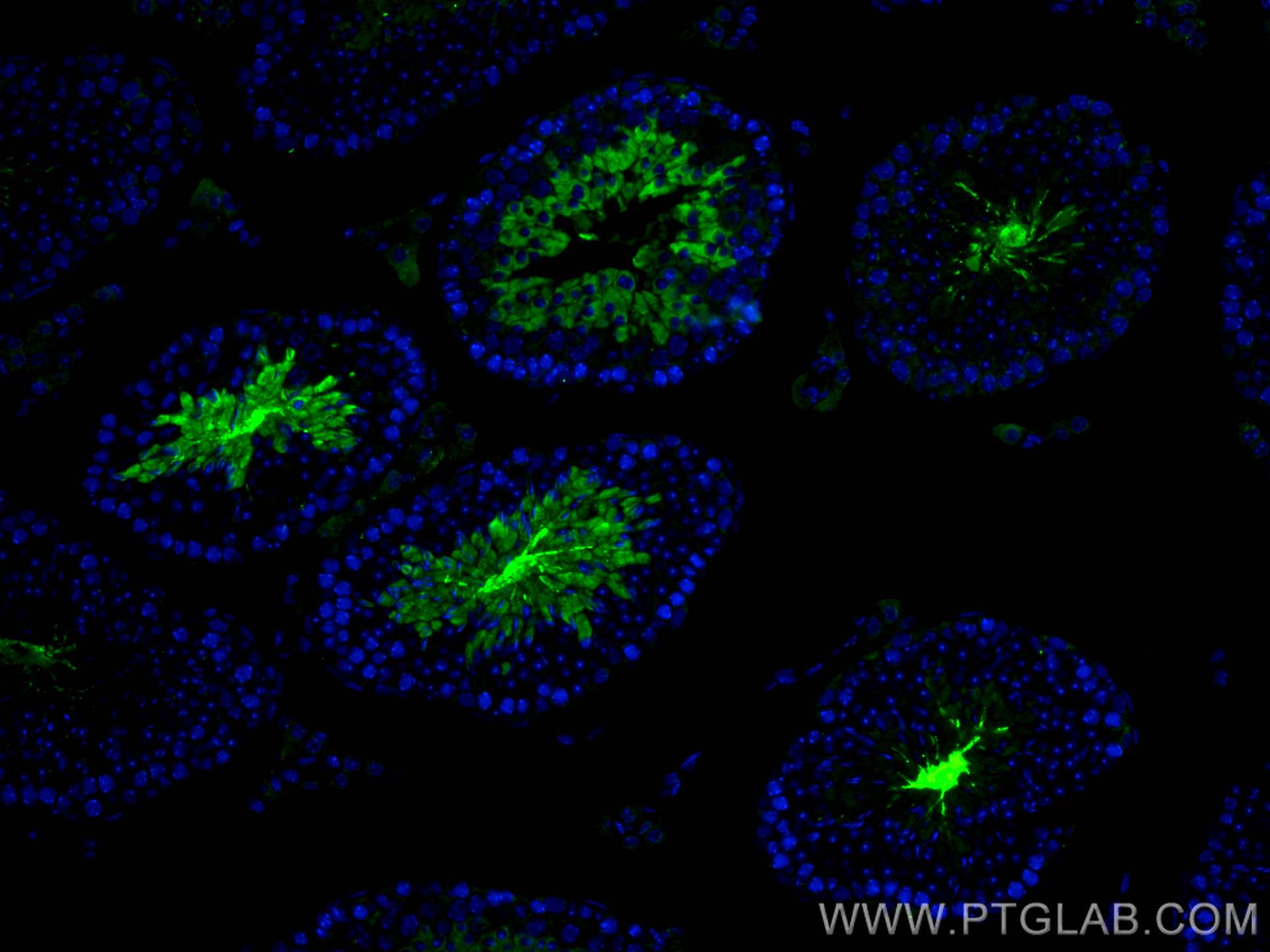
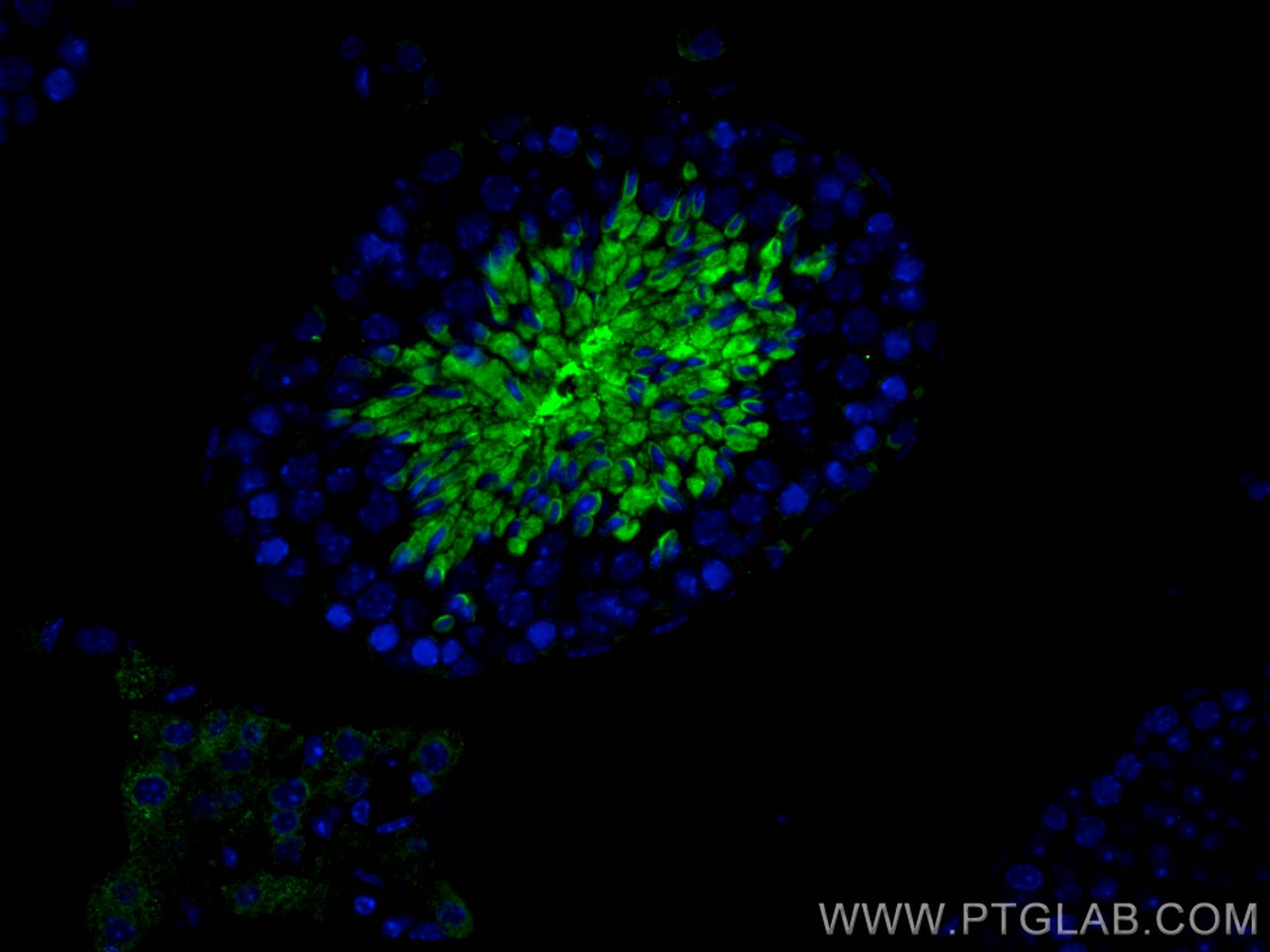
| Positive IF-P detected in | mouse testis tissue |
Recommended dilution
| Application | Dilution |
|---|---|
| Western Blot (WB) | WB : 1:2000-1:12000 |
| Immunoprecipitation (IP) | IP : 0.5-4.0 ug for 1.0-3.0 mg of total protein lysate |
| Immunohistochemistry (IHC) | IHC : 1:200-1:800 |
| Immunofluorescence (IF)-P | IF-P : 1:400-1:1600 |
| It is recommended that this reagent should be titrated in each testing system to obtain optimal results. | |
| Sample-dependent, Check data in validation data gallery. | |
Product Information
13907-1-AP targets AKAP3 in WB, IHC, IF-P, IP, CoIP, ELISA applications and shows reactivity with human, mouse, rat samples.
| Tested Reactivity | human, mouse, rat |
| Cited Reactivity | human, mouse, pig |
| Host / Isotype | Rabbit / IgG |
| Class | Polyclonal |
| Type | Antibody |
| Immunogen |
CatNo: Ag4885 Product name: Recombinant human AKAP3 protein Source: e coli.-derived, PET28a Tag: 6*His Domain: 1-353 aa of BC047535 Sequence: MSEKVDWLQSQNGVCKVDVYSPGDNQAQDWKMDTSTDPVRVLSWLRRDLEKSTAEFQDVRFKPGESFGGETSNSGDPHKGFSVDYYNTTTKGTPERLHFEMTHKEIPCQGPRAQLGNESSVDEVSFYANRLTNLVIAMARKEINEKIDGSENKCVYQSLYMGNEPTPTKSLSKIASELVNETVSACSRNAAPDKAPGSGDRVSGSSQSPPNLKYKSTLKIKESTKERQGPDDKPPSKKSFFYKEVFESRNGDYAREGGRFFPRERKRFRGQERPDDFTASVSEGIMTYANSVVSDMMVSIMKTLKIQVKDTTIATILLKKVLLKHAKEVVSDLIDSFLRNLHSVTGTLMTDTQ Predict reactive species |
| Full Name | A kinase (PRKA) anchor protein 3 |
| Calculated Molecular Weight | 95 kDa |
| Observed Molecular Weight | 100 kDa |
| GenBank Accession Number | BC047535 |
| Gene Symbol | AKAP3 |
| Gene ID (NCBI) | 10566 |
| RRID | AB_2273887 |
| Conjugate | Unconjugated |
| Form | Liquid |
| Purification Method | Antigen affinity purification |
| UNIPROT ID | O75969 |
| Storage Buffer | PBS with 0.02% sodium azide and 50% glycerol, pH 7.3. |
| Storage Conditions | Store at -20°C. Stable for one year after shipment. Aliquoting is unnecessary for -20oC storage. 20ul sizes contain 0.1% BSA. |
Background Information
AKAP3 is a member of A-kinase anchoring proteins (AKAPs), a family of functionally related proteins that target protein kinase A to discrete locations within the cell. AKAP3 is reported to participate in protein-protein interactions with the R-subunit of the protein kinase A as well as sperm-associated proteins. AKAP3 is expressed in spermatozoa and localized to the acrosomal region of the sperm head as well as the length of the principal piece. It may function as a regulator of motility, capacitation, and the acrosome reaction.
Protocols
| Product Specific Protocols | |
|---|---|
| IF protocol for AKAP3 antibody 13907-1-AP | Download protocol |
| IHC protocol for AKAP3 antibody 13907-1-AP | Download protocol |
| IP protocol for AKAP3 antibody 13907-1-AP | Download protocol |
| WB protocol for AKAP3 antibody 13907-1-AP | Download protocol |
| Standard Protocols | |
|---|---|
| Click here to view our Standard Protocols |
Publications
What published studies show
The AKAP3 Polyclonal antibody (Cat# 13907-1-AP) has 27 citations spanning 21 journals, including Nature Communications, Molecular Cell, PNAS, Development, eLife, EMBO Reports, and Andrology. Research fields predominantly cover sperm flagella biology, fibrous sheath assembly, spermiogenesis, male infertility, and cilia function, with additional applications in breast cancer progression, proteomics, and centriole dynamics. Cited species include human, mouse, and pig, with WB, IF, IHC, IP, and CoIP as the main validated applications.
| Species | Application | Title |
|---|---|---|
Nat Commun Loss-of-function mutations in QRICH2 cause male infertility with multiple morphological abnormalities of the sperm flagella. | ||
Proc Natl Acad Sci U S A FSIP1 binds HER2 directly to regulate breast cancer growth and invasiveness. | ||
Proc Natl Acad Sci U S A SPATA33 localizes calcineurin to the mitochondria and regulates sperm motility in mice. | ||
J Genet Genomics Coiled-coil domain-containing 38 is required for acrosome biogenesis and fibrous sheath assembly in mice | ||
Development The FOXJ1 target Cfap206 is required for sperm motility, mucociliary clearance of the airways and brain development |








