
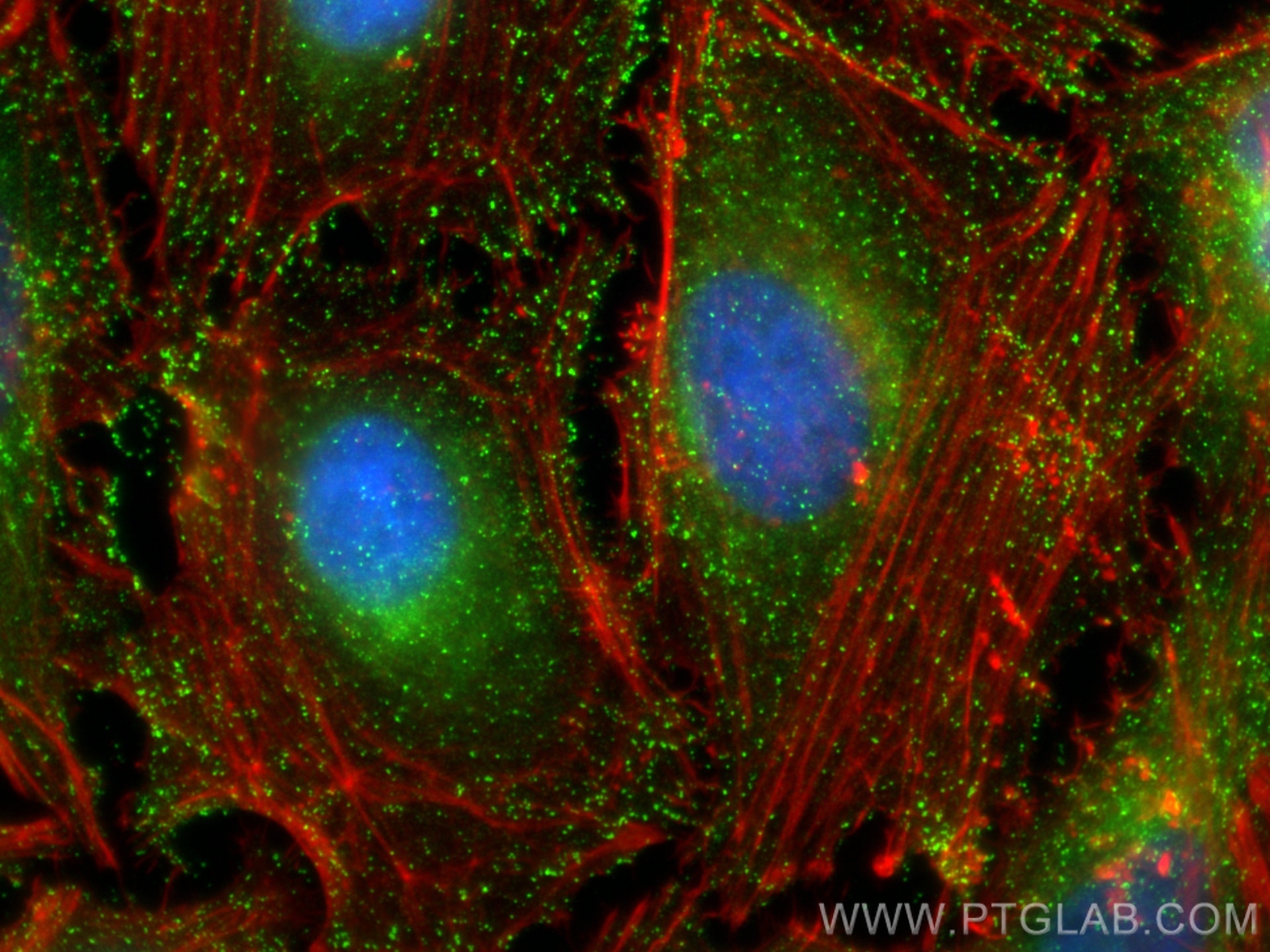

Tested Applications
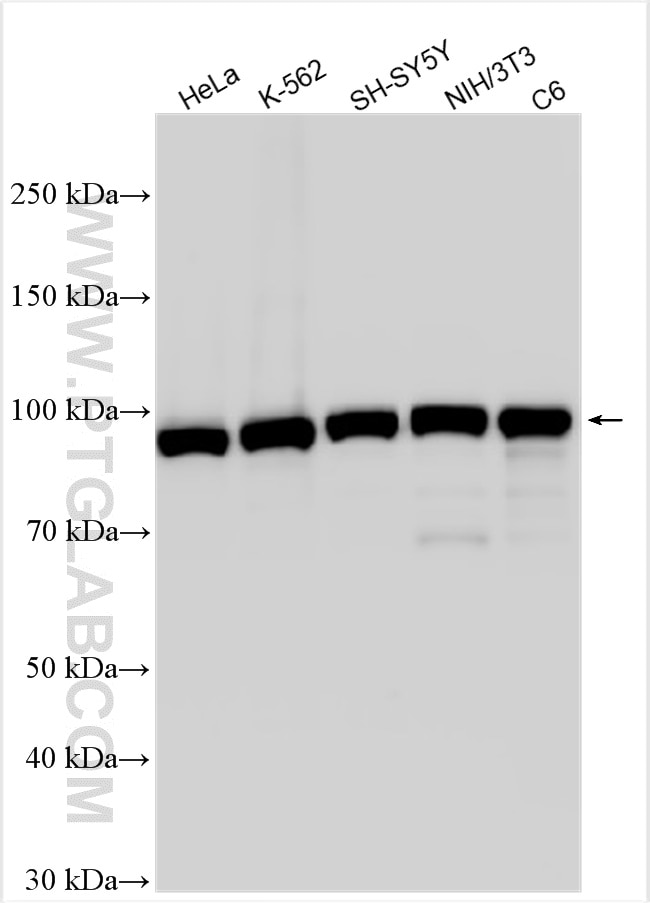
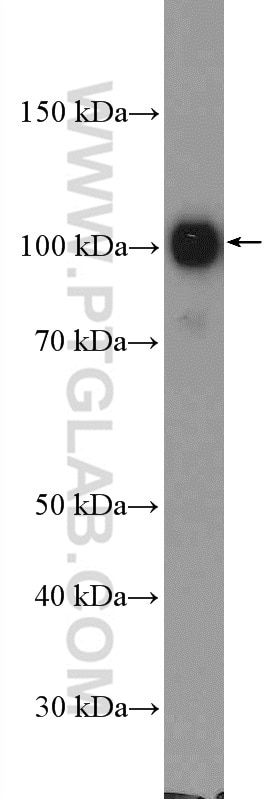
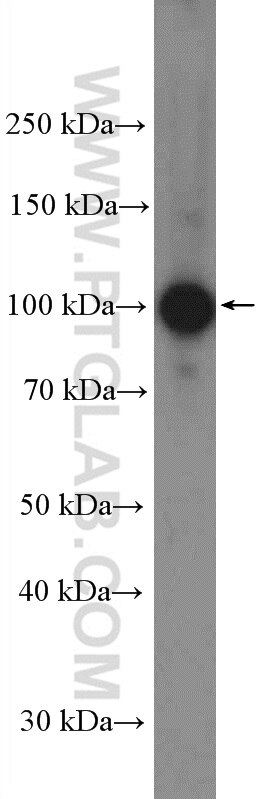
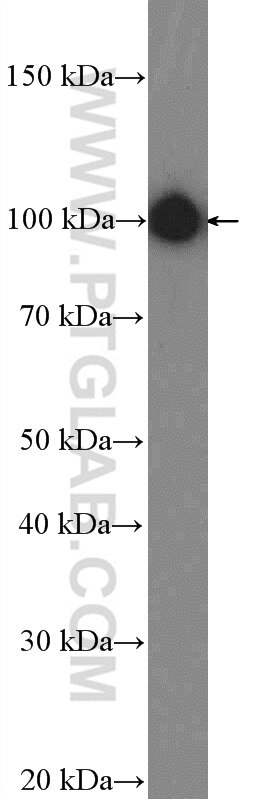
| Positive WB detected in | HeLa cells, C6 cells, K-562 cells, SH-SY5Y cells, NIH/3T3 cells |
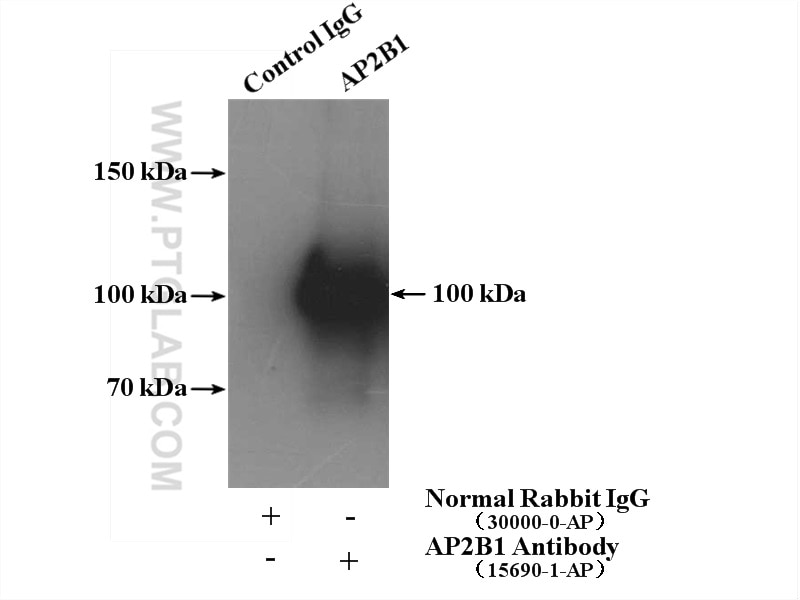
| Positive IP detected in | K-562 cells |
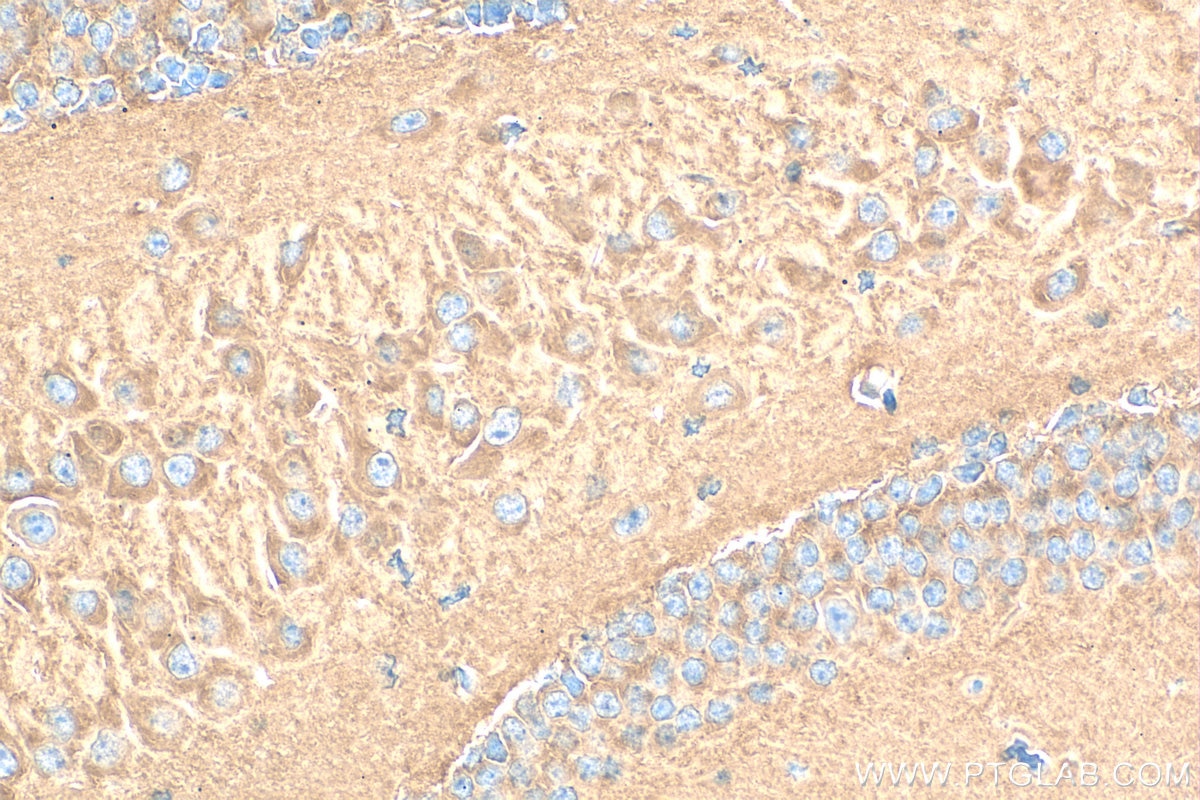
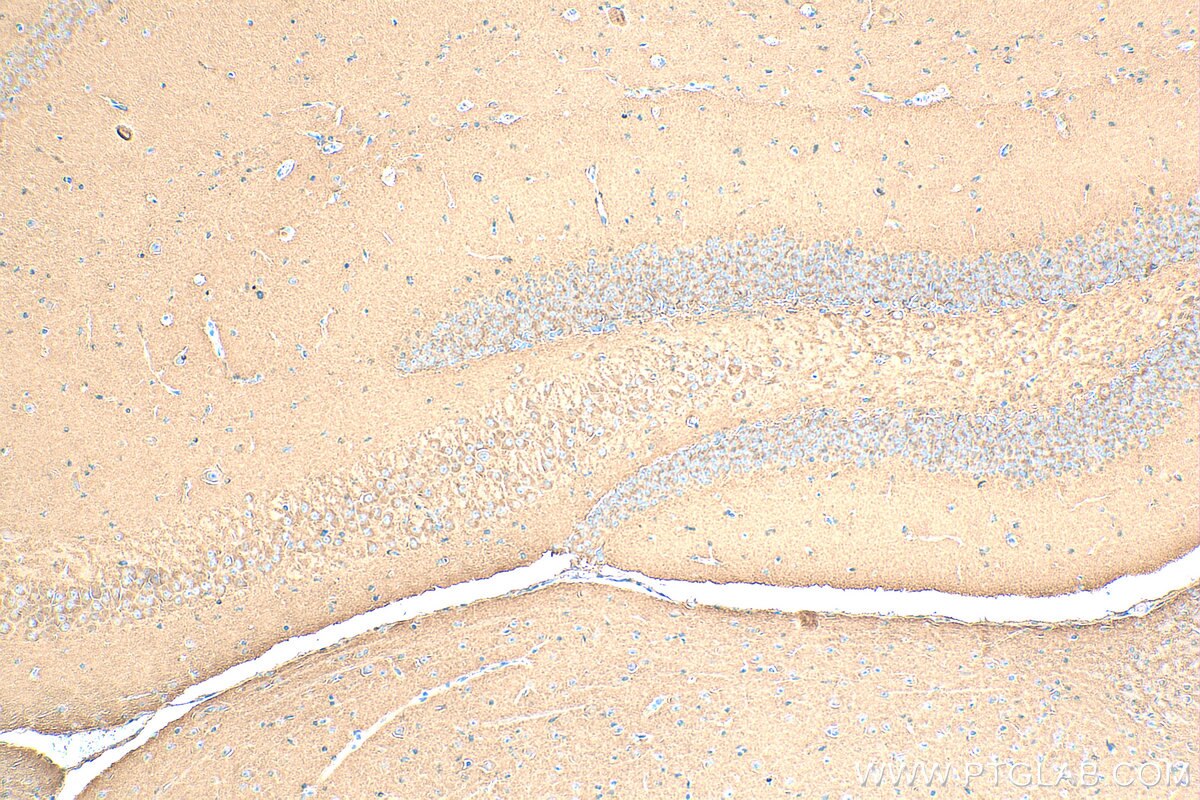
| Positive IHC detected in | mouse brain tissue Note: suggested antigen retrieval with TE buffer pH 9.0; (*) Alternatively, antigen retrieval may be performed with citrate buffer pH 6.0 |
| Positive IF/ICC detected in | HeLa cells |
Recommended dilution
| Application | Dilution |
|---|---|
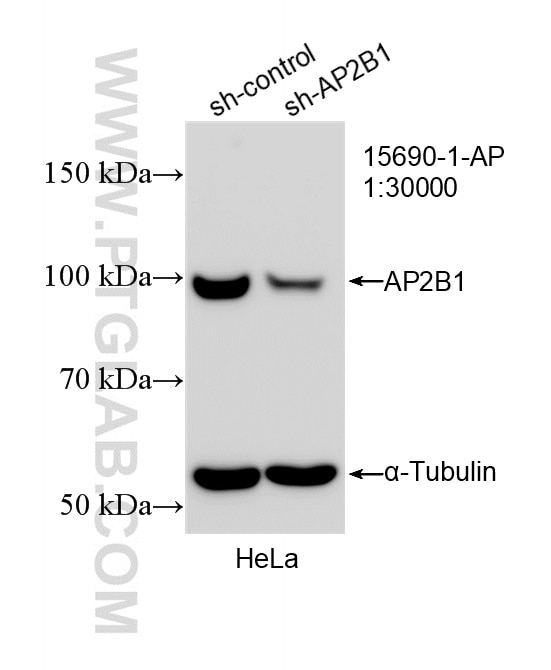
| Western Blot (WB) | WB : 1:5000-1:50000 |
| Immunoprecipitation (IP) | IP : 0.5-4.0 ug for 1.0-3.0 mg of total protein lysate |
| Immunohistochemistry (IHC) | IHC : 1:50-1:500 |
| Immunofluorescence (IF)/ICC | IF/ICC : 1:1000-1:4000 |
| It is recommended that this reagent should be titrated in each testing system to obtain optimal results. | |
| Sample-dependent, Check data in validation data gallery. | |
Product Information
15690-1-AP targets AP2B1 in WB, IHC, IF/ICC, IP, ELISA applications and shows reactivity with human, mouse, rat samples.
| Tested Reactivity | human, mouse, rat |
| Cited Reactivity | human, mouse, pig, monkey |
| Host / Isotype | Rabbit / IgG |
| Class | Polyclonal |
| Type | Antibody |
| Immunogen |
CatNo: Ag8248 Product name: Recombinant human AP2B1 protein Source: e coli.-derived, PGEX-4T Tag: GST Domain: 598-951 aa of BC006201 Sequence: GSTDAGDSPVGTTTATNLEQPQVIPSQGDLLGDLLNLDLGPPVNVPQVSSMQMGAVDLLGGGLDSLLGSDLGGGIGGSPAVGQSFIPSSVPATFAPSPTPAVVSSGLNDLFELSTGIGMAPGGYVAPKAVWLPAVKAKGLEISGTFTHRQGHIYMEMNFTNKALQHMTDFAIQFNKNSFGVIPSTPLAIHTPLMPNQSIDVSLPLNTLGPVMKMEPLNNLQVAVKNNIDVFYFSCLIPLNVLFVEDGKMERQVFLATWKDIPNENELQFQIKECHLNADTVSSKLQNNNVYTIAKRNVEGQDMLYQSLKLTNGIWILAELRIQPGNPNYTLSLKCRAPEVSQYIYQVYDSILKN Predict reactive species |
| Full Name | adaptor-related protein complex 2, beta 1 subunit |
| Calculated Molecular Weight | 105 kDa |
| Observed Molecular Weight | 100-105 kDa |
| GenBank Accession Number | BC006201 |
| Gene Symbol | AP2B1 |
| Gene ID (NCBI) | 163 |
| RRID | AB_2056351 |
| Conjugate | Unconjugated |
| Form | Liquid |
| Purification Method | Antigen affinity purification |
| UNIPROT ID | P63010 |
| Storage Buffer | PBS with 0.02% sodium azide and 50% glycerol, pH 7.3. |
| Storage Conditions | Store at -20°C. Stable for one year after shipment. Aliquoting is unnecessary for -20oC storage. 20ul sizes contain 0.1% BSA. |
Background Information
AP2B1 is a component of the adaptor protein complex 2 (AP-2). AP complexes are cytosolic heterotetramers that mediate the sorting of membrane proteins in the secretory and endocytic pathways. AP complexes are involved in the formation of clathrin-coated vesicles (CCVs) by recruiting the scaffold protein, clathrin. AP complexes also play a pivotal role in the cargo selection by recognizing the sorting signals within the cytoplasmic tail of integral membrane proteins. AP-2 works on the plasma membrane to internalize cargo in clathrin-mediated endocytosis.
Protocols
| Product Specific Protocols | |
|---|---|
| IF protocol for AP2B1 antibody 15690-1-AP | Download protocol |
| IHC protocol for AP2B1 antibody 15690-1-AP | Download protocol |
| IP protocol for AP2B1 antibody 15690-1-AP | Download protocol |
| WB protocol for AP2B1 antibody 15690-1-AP | Download protocol |
| Standard Protocols | |
|---|---|
| Click here to view our Standard Protocols |
Publications
What published studies show
AP2B1 Polyclonal antibody (Cat# 15690-1-AP) has accumulated 18 citations published in journals including Nature Communications, PNAS, Cell Death Discovery, Cell & Molecular Life Sciences, iScience, eLife, PLoS Pathogens, Journal of Virology, and Virulence. The associated research fields encompass clathrin-mediated endocytosis, viral entry and infection mechanisms, neurodegenerative diseases (ALS, Parkinson's, Alzheimer's), cancer progression, membrane trafficking, proteostasis, and tissue homeostasis.
| Species | Application | Title |
|---|---|---|
Nat Commun Systematic HOIP interactome profiling reveals critical roles of linear ubiquitination in tissue homeostasis | ||
J Exp Clin Cancer Res GPAA1 promotes gastric cancer progression via upregulation of GPI-anchored protein and enhancement of ERBB signalling pathway. | ||
Cell Death Discov Digital color-coded molecular barcoding reveals dysregulation of common FUS and FMRP targets in soma and neurites of ALS mutant motoneurons | ||
Sci China Life Sci NPC1-regulated dynamic of clathrin-coated pits is essential for viral entry. | ||
Proc Natl Acad Sci U S A ATG9A-mediated plasma membrane repair is linked to Vps13A and regulated by glycosylation. | ||
NPJ Parkinsons Dis Regulators of proteostasis are translationally repressed in fibroblasts from patients with sporadic and LRRK2-G2019S Parkinson's disease |










