
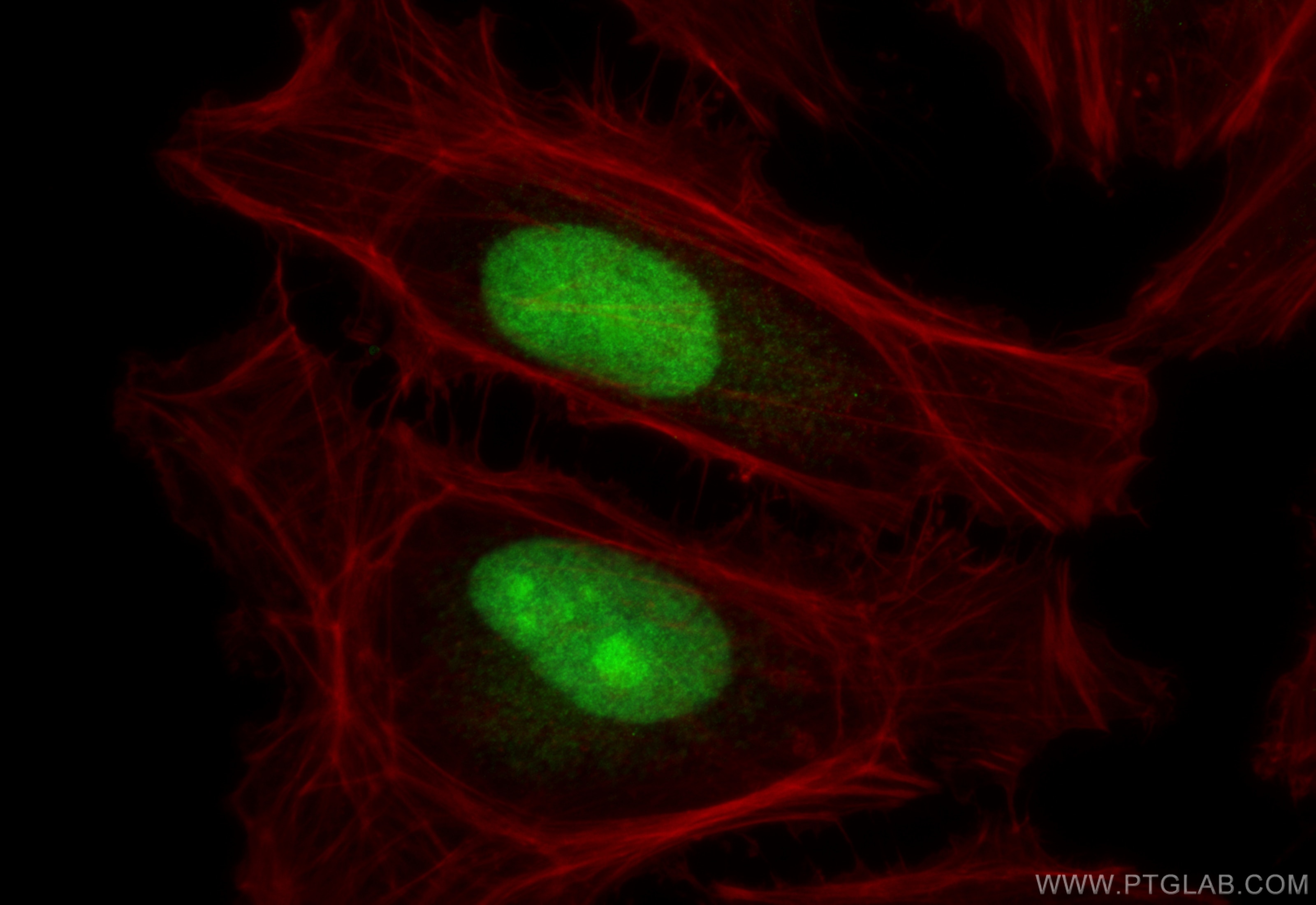

Tested Applications
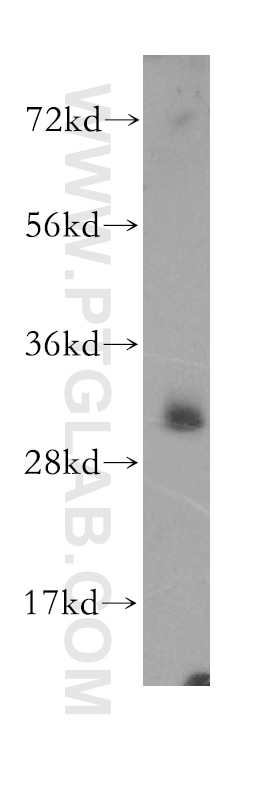
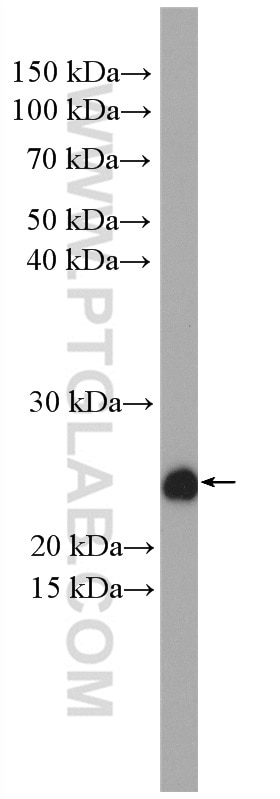
| Positive WB detected in | HeLa cells |
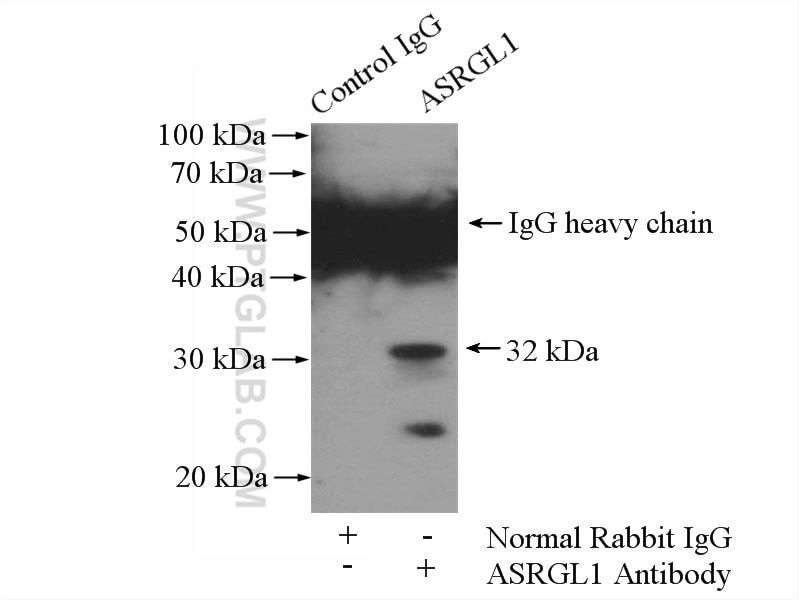
| Positive IP detected in | HeLa cells |
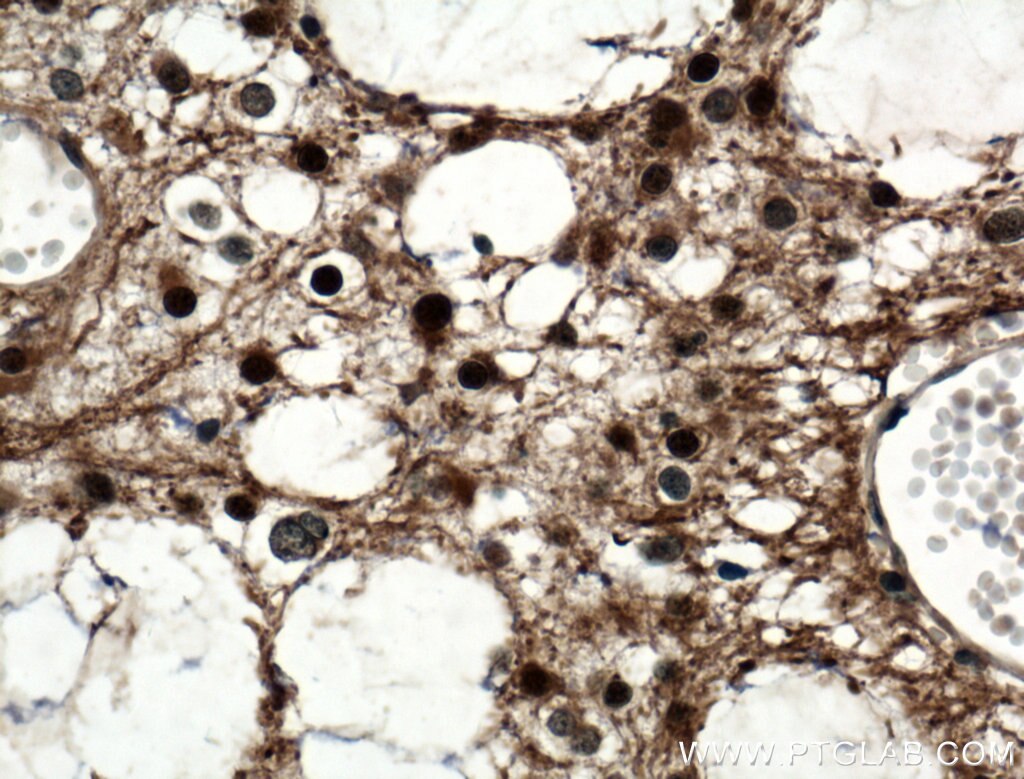
| Positive IHC detected in | human gliomas tissue Note: suggested antigen retrieval with TE buffer pH 9.0; (*) Alternatively, antigen retrieval may be performed with citrate buffer pH 6.0 |
| Positive IF/ICC detected in | HeLa cells |
Recommended dilution
| Application | Dilution |
|---|---|
| Western Blot (WB) | WB : 1:500-1:2000 |
| Immunoprecipitation (IP) | IP : 0.5-4.0 ug for 1.0-3.0 mg of total protein lysate |
| Immunohistochemistry (IHC) | IHC : 1:50-1:500 |
| Immunofluorescence (IF)/ICC | IF/ICC : 1:250-1:1000 |
| It is recommended that this reagent should be titrated in each testing system to obtain optimal results. | |
| Sample-dependent, Check data in validation data gallery. | |
Product Information
11400-1-AP targets ASRGL1 in WB, IHC, IF/ICC, IP, ELISA applications and shows reactivity with human, mouse, rat samples.
| Tested Reactivity | human, mouse, rat |
| Cited Reactivity | human, mouse, rat, cat |
| Host / Isotype | Rabbit / IgG |
| Class | Polyclonal |
| Type | Antibody |
| Immunogen |
CatNo: Ag1955 Product name: Recombinant human ASRGL1 protein Source: e coli.-derived, PGEX-4T Tag: GST Domain: 1-308 aa of BC021295 Sequence: MNPIVVVHGGGAGPISKDRKERVHQGMVRAATVGYGILREGGSAVDAVEGAVVALEDDPEFNAGCGSVLNTNGEVEMDASIMDGKDLSAGAVSAVQCIANPIKLARLVMEKTPHCFLTDQGAAQFAAAMGVPEIPGEKLVTERNKKRLEKEKHEKGAQKTDCQKNLGTVGAVALDCKGNVAYATSTGGIVNKMVGRVGDSPCLGAGGYADNDIGAVSTTGHGESILKVNLARLTLFHIEQGKTVEEAADLSLGYMKSRVKGLGGLIVVSKTGDWVAKWTSTSMPWAAAKDGKLHFGIDPDDTTITDLP Predict reactive species |
| Full Name | asparaginase like 1 |
| Calculated Molecular Weight | 308 aa, 32 kDa |
| Observed Molecular Weight | 32-40 kDa, 20-25 kDa, 15-19 kDa |
| GenBank Accession Number | BC021295 |
| Gene Symbol | ASRGL1 |
| Gene ID (NCBI) | 80150 |
| RRID | AB_2060440 |
| Conjugate | Unconjugated |
| Form | Liquid |
| Purification Method | Antigen affinity purification |
| UNIPROT ID | Q7L266 |
| Storage Buffer | PBS with 0.02% sodium azide and 50% glycerol, pH 7.3. |
| Storage Conditions | Store at -20°C. Stable for one year after shipment. Aliquoting is unnecessary for -20oC storage. 20ul sizes contain 0.1% BSA. |
Background Information
Asparaginase-like protein 1 (ASRGL1) is also named as ALP, CRASH and belongs to the Ntn-hydrolase family. ASRGL1 has both L-asparaginase and beta-aspartyl peptidase activity. It may be involved in the production of L-aspartate, which can act as an excitatory neurotransmitter in some brain regions. ASRGL1 has 2 isoforms produced by alternative splicing with the MW of 32 kDa and 19 kDa. Two lower molecular weight bands (23 and 15 kDa) can be detected corresponding to the processed α and β subunits (PMID: 27106100).
Protocols
| Product Specific Protocols | |
|---|---|
| IF protocol for ASRGL1 antibody 11400-1-AP | Download protocol |
| IHC protocol for ASRGL1 antibody 11400-1-AP | Download protocol |
| IP protocol for ASRGL1 antibody 11400-1-AP | Download protocol |
| WB protocol for ASRGL1 antibody 11400-1-AP | Download protocol |
| Standard Protocols | |
|---|---|
| Click here to view our Standard Protocols |
Publications
What published studies show
The ASRGL1 antibody (Cat# 11400-1-AP) has 17 total citations appearing in journals including Cell Metabolism, Nature Chemical Biology, Journal of Tissue Engineering, International Journal of Molecular Medicine, International Immunopharmacology, Inflammation, Frontiers in Cell and Developmental Biology, BMC Genomics, Toxicology and Applied Pharmacology, Frontiers in Oncology, Human Molecular Genetics, and others. Associated research fields span amino acid metabolism, extracellular vesicles, bone biology and osteoporosis, periodontitis, hair follicle development, hepatocellular carcinoma, retinal degeneration, and oocyte biology.
| Species | Application | Title |
|---|---|---|
Cell Metab As Extracellular Glutamine Levels Decline, Asparagine Becomes an Essential Amino Acid. | ||
J Tissue Eng Engineered extracellular vesicle-delivered TGF-β inhibitor for attenuating osteoarthritis by targeting subchondral bone | ||
Int J Mol Med Baicalin increases hair follicle development by increasing canonical Wnt/β‑catenin signaling and activating dermal papillar cells in mice. | ||
Int Immunopharmacol Fibroblast ferroptosis is involved in periodontitis-induced tissue damage and bone loss | ||
Inflammation Ghrelin Fights Against Titanium Particle-Induced Inflammatory Osteolysis Through Activation of β-Catenin Signaling Pathway. |






