


Tested Applications
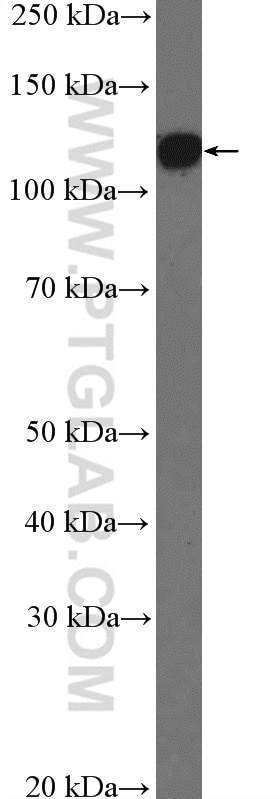
| Positive WB detected in | Jurkat cells |
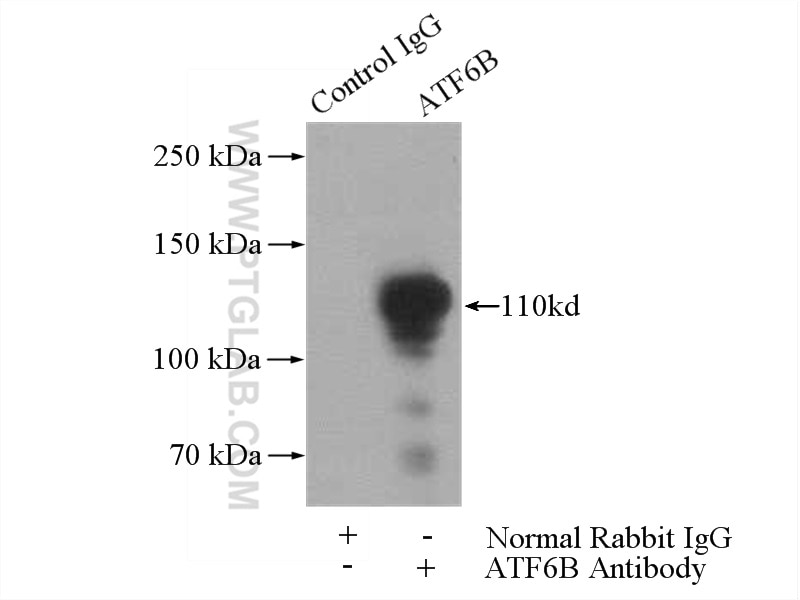
| Positive IP detected in | Jurkat cells |
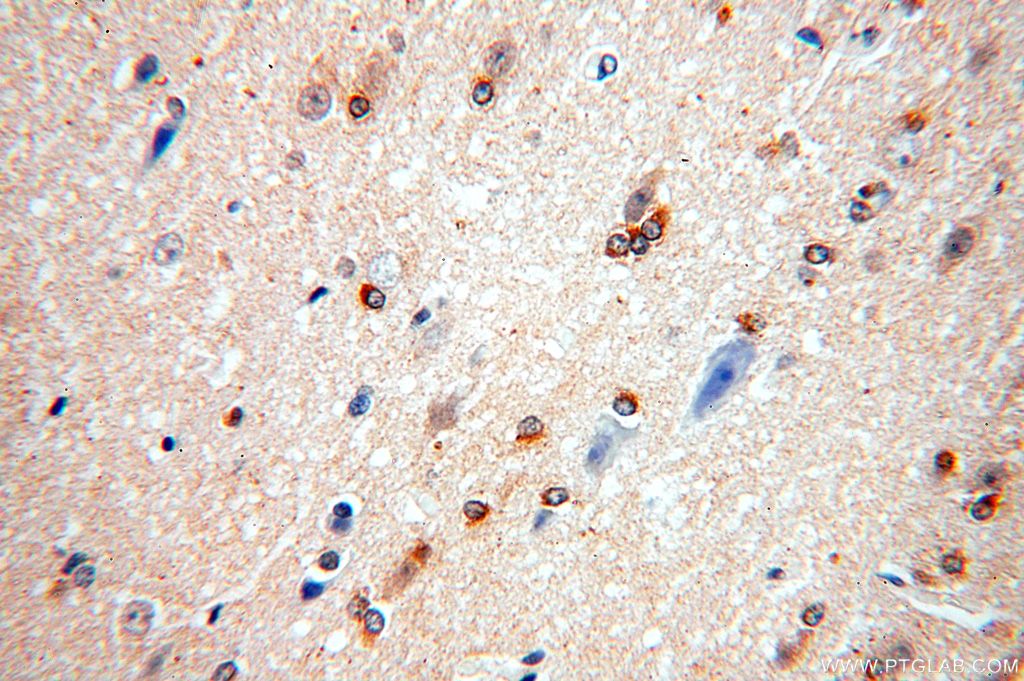
| Positive IHC detected in | human brain tissue Note: suggested antigen retrieval with TE buffer pH 9.0; (*) Alternatively, antigen retrieval may be performed with citrate buffer pH 6.0 |
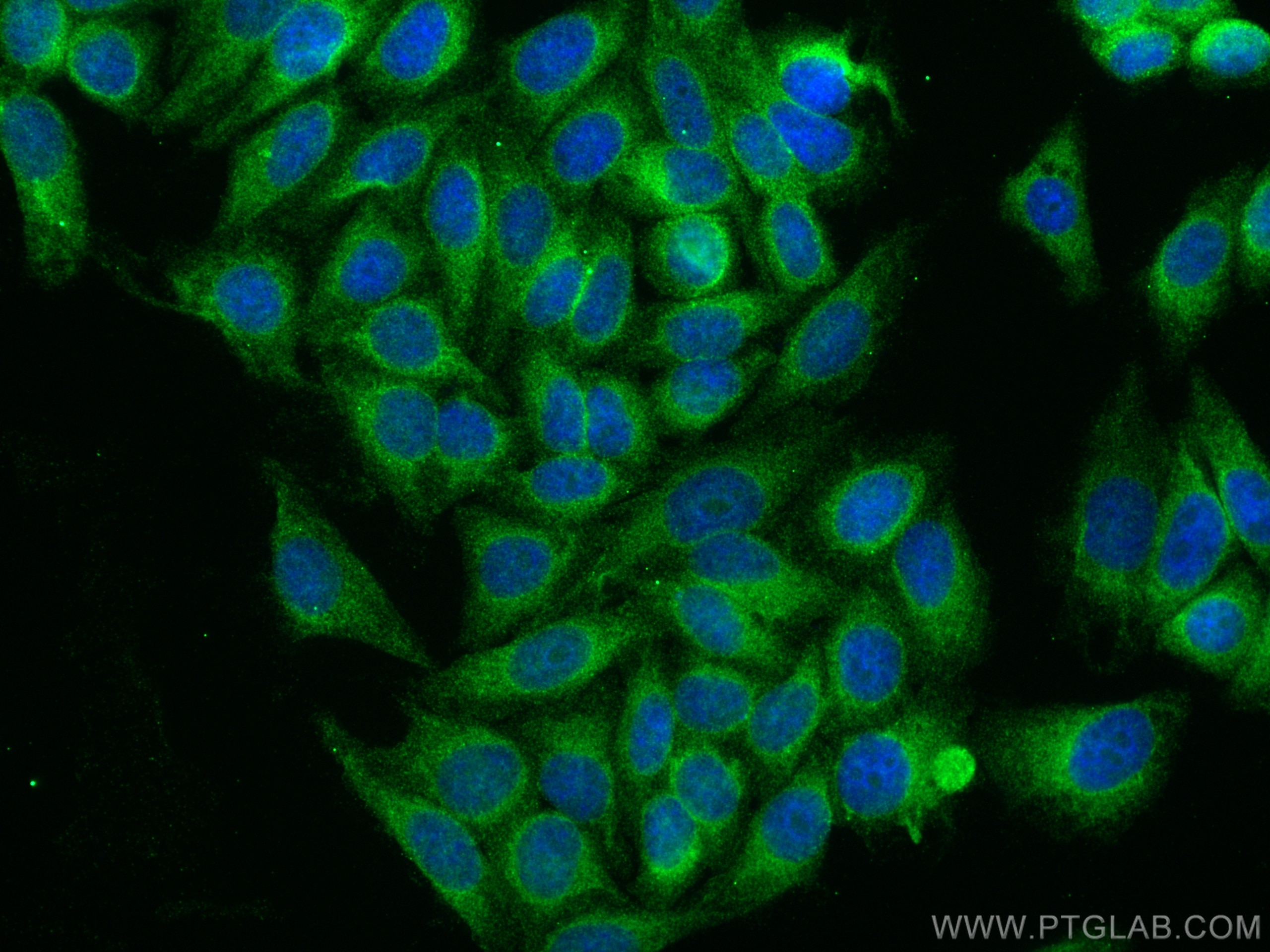
| Positive IF/ICC detected in | HepG2 cells |
Recommended dilution
| Application | Dilution |
|---|---|
| Western Blot (WB) | WB : 1:500-1:2000 |
| Immunoprecipitation (IP) | IP : 0.5-4.0 ug for 1.0-3.0 mg of total protein lysate |
| Immunohistochemistry (IHC) | IHC : 1:20-1:200 |
| Immunofluorescence (IF)/ICC | IF/ICC : 1:50-1:500 |
| It is recommended that this reagent should be titrated in each testing system to obtain optimal results. | |
| Sample-dependent, Check data in validation data gallery. | |
Product Information
15794-1-AP targets ATF6B in WB, IHC, IF/ICC, IP, ELISA applications and shows reactivity with human, mouse, rat samples.
| Tested Reactivity | human, mouse, rat |
| Cited Reactivity | human, mouse, rat |
| Host / Isotype | Rabbit / IgG |
| Class | Polyclonal |
| Type | Antibody |
| Immunogen |
CatNo: Ag8502 Product name: Recombinant human ATF6B protein Source: e coli.-derived, PGEX-4T Tag: GST Domain: 1-318 aa of BC008394 Sequence: MAELMLLSEIADPTRFFTDNLLSPEDWGLQNSTLYSGLDEVAEEQTQLFRCPEQDVPFDGSSLDVGMDVSPSEPPWELLPIFPDLQVKSEPSSPCSSSSLSSESSRLSTEPSSEALGVGEVLHVKTESLAPPLCLLGDDPTSSFETVQINVIPTSDDSSDVQTKIEPVSPCSSVNSEASLLSADSSSQAFIGEEVLEVKTESLSPSGCLLWDVPAPSLGAVQISMGPSLDGSSGKALPTRKPPLQPKPVVLTTVPMPSRAVSPSTTVLLQSLVQPPPGTEEGEKGRAWWLTPVIPALWEAEAGESPEVRSLRPAWPTW Predict reactive species |
| Full Name | activating transcription factor 6 beta |
| Calculated Molecular Weight | 703 aa, 77 kDa |
| Observed Molecular Weight | 110 kDa |
| GenBank Accession Number | BC008394 |
| Gene Symbol | ATF6B |
| Gene ID (NCBI) | 1388 |
| RRID | AB_2058912 |
| Conjugate | Unconjugated |
| Form | Liquid |
| Purification Method | Antigen affinity purification |
| UNIPROT ID | Q99941 |
| Storage Buffer | PBS with 0.02% sodium azide and 50% glycerol, pH 7.3. |
| Storage Conditions | Store at -20°C. Stable for one year after shipment. Aliquoting is unnecessary for -20oC storage. 20ul sizes contain 0.1% BSA. |
Background Information
The endoplasmic reticulum (ER)-transmembrane proteins, ATF6 alpha (ATF6) and ATF6 beta (ATF6B), are cleaved during the ER stress response (ERSR). The resulting N-terminal fragments of both ATF6 isoforms, which have conserved basic leucine-zipper and DNA binding domains but divergent transcriptional activation domains, translocate to the nucleus where they bind to ER stress-response elements (ERSE) in ERSR, such as Bip/GRP78. This antibody could recognize ATF6 beta (110kd) and its cleaved forms(60,80kd )(PMID: 11256944)
Protocols
| Product Specific Protocols | |
|---|---|
| IF protocol for ATF6B antibody 15794-1-AP | Download protocol |
| IHC protocol for ATF6B antibody 15794-1-AP | Download protocol |
| IP protocol for ATF6B antibody 15794-1-AP | Download protocol |
| WB protocol for ATF6B antibody 15794-1-AP | Download protocol |
| Standard Protocols | |
|---|---|
| Click here to view our Standard Protocols |
Publications
What published studies show
The anti-PERK antibody (Cat# 15794-1-AP) has 19 citations across journals including Cancer Letters, Developmental Cell, Archives of Toxicology, Scientific Reports, Frontiers in Cell and Developmental Biology, International Journal of Molecular Sciences, Molecules, Proteomics, and others. Research fields span endoplasmic reticulum stress, apoptosis, ferroptosis, liver injury, colorectal and lung cancer, cardiac fibrosis, neuroprotection, podocyte dysfunction, and periodontal bone loss.
| Species | Application | Title |
|---|---|---|
Cancer Lett LIMK1 m6A-RNA methylation recognized by YTHDC2 induces 5-FU chemoresistance in colorectal cancer via endoplasmic reticulum stress and stress granule formation | ||
Arch Toxicol Correction to: Protective effects of dioscin against alcohol‑induced liver injury. | ||
Int J Mol Sci Proteomic Analysis of Marinesco-Sjogren Syndrome Fibroblasts Indicates Pro-Survival Metabolic Adaptation to SIL1 Loss. |






