

Tested Applications
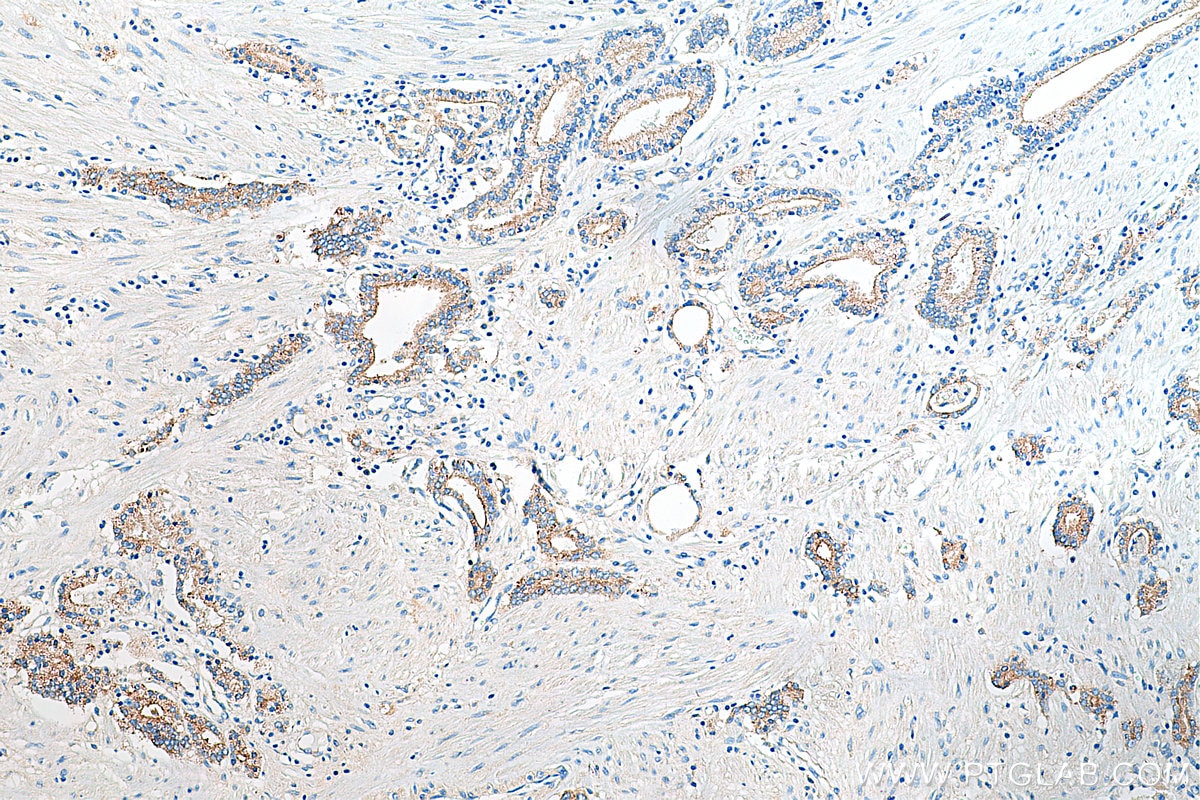
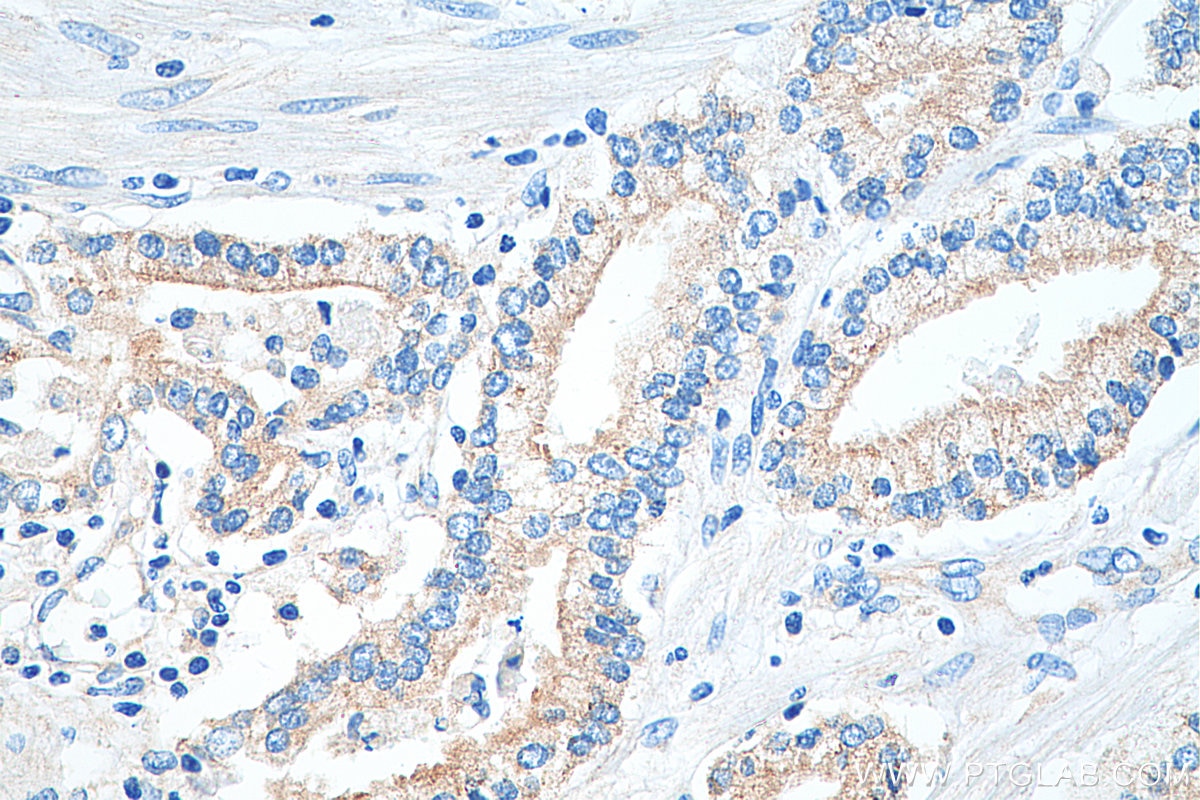
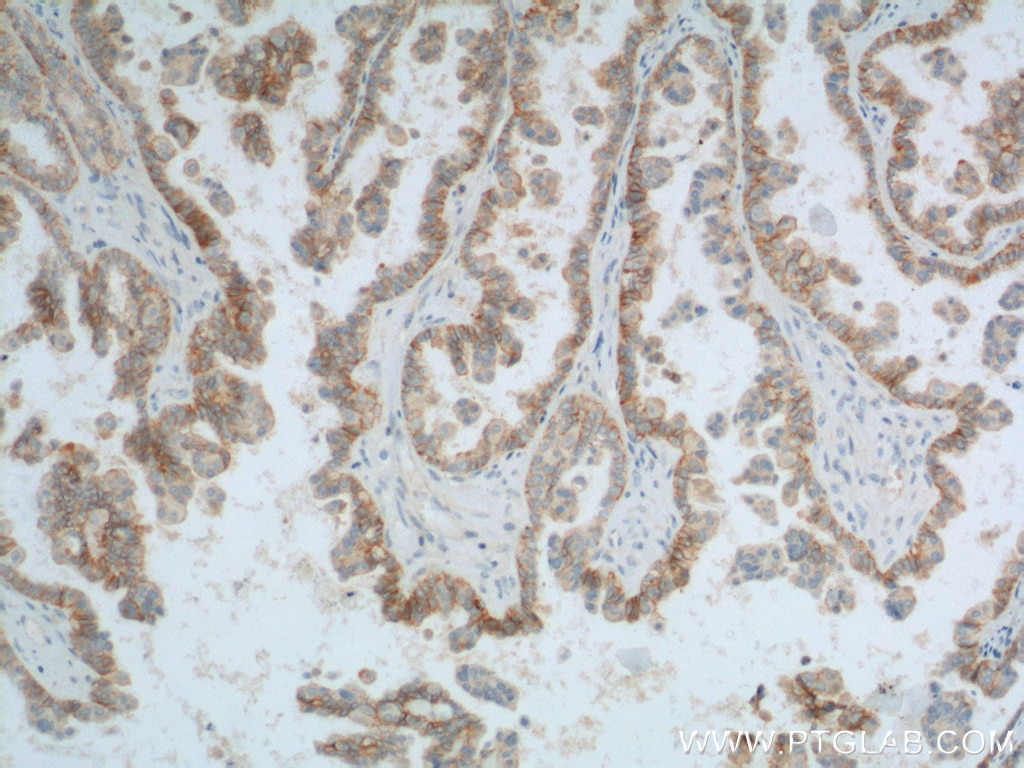
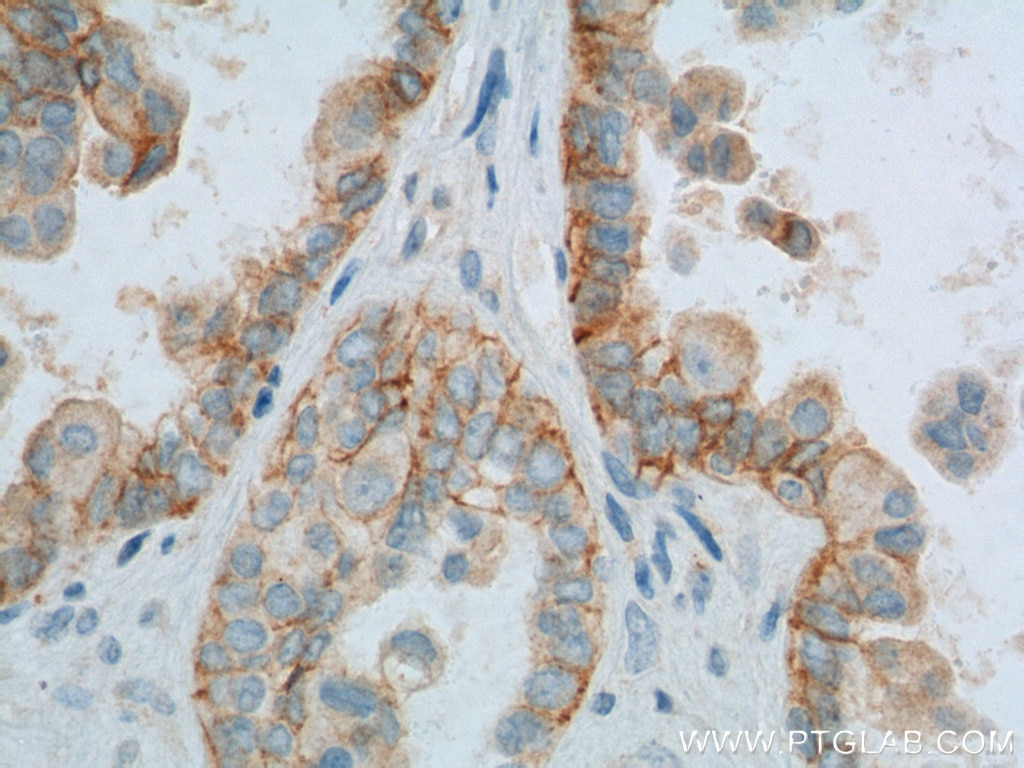
| Positive IHC detected in | human prostate cancer tissue, human ovary tumor tissue Note: suggested antigen retrieval with TE buffer pH 9.0; (*) Alternatively, antigen retrieval may be performed with citrate buffer pH 6.0 |
Recommended dilution
| Application | Dilution |
|---|---|
| Immunohistochemistry (IHC) | IHC : 1:500-1:2000 |
| It is recommended that this reagent should be titrated in each testing system to obtain optimal results. | |
| Sample-dependent, Check data in validation data gallery. | |
Product Information
20305-1-AP targets CD47 in WB, IHC, IF, IP, CoIP, ELISA applications and shows reactivity with human samples.
| Tested Reactivity | human |
| Cited Reactivity | human, mouse, rat |
| Host / Isotype | Rabbit / IgG |
| Class | Polyclonal |
| Type | Antibody |
| Immunogen |
CatNo: Ag14132 Product name: Recombinant human CD47 protein Source: e coli.-derived, PGEX-4T Tag: GST Domain: 1-150 aa of BC010016 Sequence: MWPLVAALLLGSACCGSAQLLFNKTKSVEFTFCNDTVVIPCFVTNMEAQNTTEVYVKWKFKGRDIYTFDGALNKSTVPTDFSSAKIEVSQLLKGDASLKMDKSDAVSHTGNYTCEVTELTREGETIIELKYRVVSWFSPNENILIVIFPI Predict reactive species |
| Full Name | CD47 molecule |
| Calculated Molecular Weight | 323 aa, 35 kDa |
| GenBank Accession Number | BC010016 |
| Gene Symbol | CD47 |
| Gene ID (NCBI) | 961 |
| RRID | AB_10732838 |
| Conjugate | Unconjugated |
| Form | Liquid |
| Purification Method | Antigen affinity purification |
| UNIPROT ID | Q08722 |
| Storage Buffer | PBS with 0.02% sodium azide and 50% glycerol, pH 7.3. |
| Storage Conditions | Store at -20°C. Stable for one year after shipment. Aliquoting is unnecessary for -20oC storage. 20ul sizes contain 0.1% BSA. |
Background Information
CD47, also known as integrin-associated protein (IAP), is a member of the immunoglobulin superfamily containing a five-pass transmembrane attachment. CD47 is heavily glycosylated and widely expressed by hematopoietic and nonhematopoietic cells. CD47 interacts with several membrane integrins and also acts as a receptor for thrombospondin (THBS1). It is involved in a range of cellular processes, including apoptosis, proliferation, adhesion, and migration. CD47 also functions as a ligand for signal regulatory protein-α (SIRPα). Upon binding CD47, SIRPα initiates a signaling cascade that results in the inhibition of phagocytosis.
Protocols
| Product Specific Protocols | |
|---|---|
| IHC protocol for CD47 antibody 20305-1-AP | Download protocol |
| Standard Protocols | |
|---|---|
| Click here to view our Standard Protocols |
Publications
What published studies show
The CD47 Polyclonal Antibody (catalog 20305-1-AP) from Proteintech has 65 total citations. These appear in leading journals including Molecular Cancer, Advanced Materials, Nature Communications, Advanced Science, Journal of Nanobiotechnology, Biomaterials, Journal of Controlled Release, Small, Cell Reports, Theranostics, and Cell Reports Medicine. The research encompasses cancer immunology and tumor microenvironment studies, CD47-mediated phagocytosis and immune evasion, biomimetic nanoparticle drug delivery, tumor immunotherapy, and biomarker/prognostic investigations across cancers (glioblastoma, gastric, breast, colorectal, lung, ovarian), as well as applications in atherosclerosis, kidney injury, and neuroinflammation.
| Species | Application | Title |
|---|---|---|
Mol Cancer Targeting the CD47-HCK-LGALS9 axis disrupts proliferation-immunosuppression coupling in early-stage endometrial cancer. | ||
Adv Mater Efficient Delivery of Lomitapide Using Hybrid Membrane-Coated Tetrahedral DNA Nanostructures for Glioblastoma Therapy | ||
Bioact Mater A closed-loop myocardial infarction theranostic platform activated by macrophage-derived nitric oxide and acidic microenvironment. | ||
J Extracell Vesicles Engineering high-affinity dual targeting cellular nanovesicles for optimised cancer immunotherapy | ||
Nat Commun USP2 inhibition unleashes CD47-restrained phagocytosis and enhances anti-tumor immunity | ||
J Nanobiotechnology Targeting and repolarizing M2-like tumor-associated macrophage-mediated MR imaging and tumor immunotherapy by biomimetic nanoparticles |





