
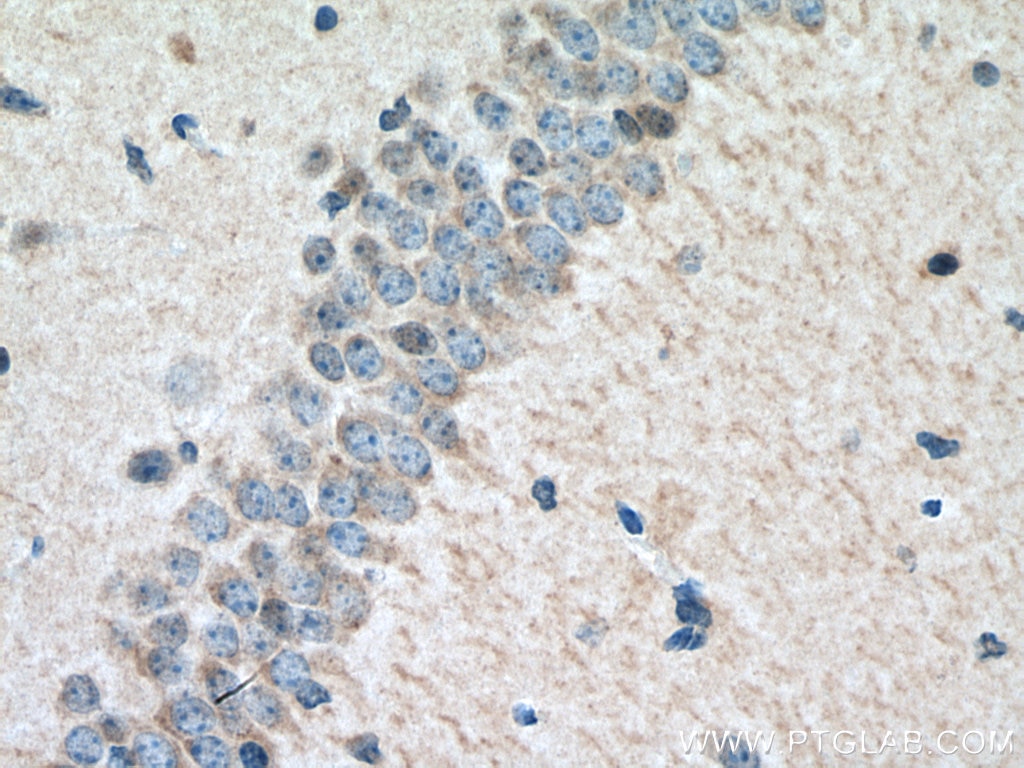
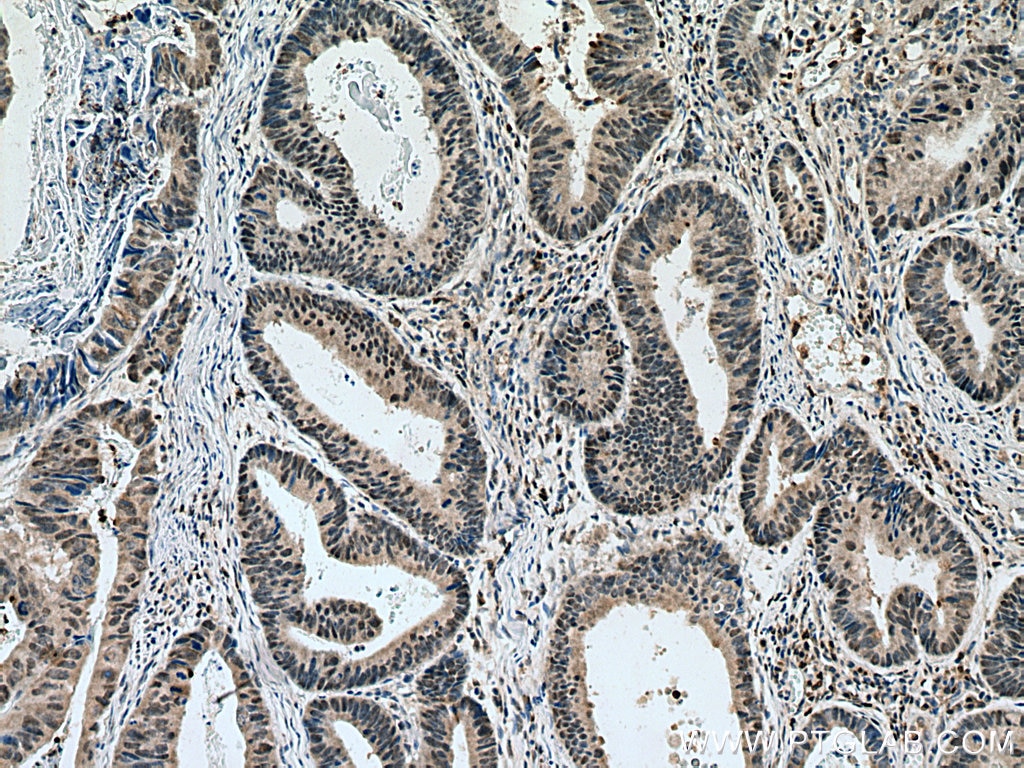

Tested Applications
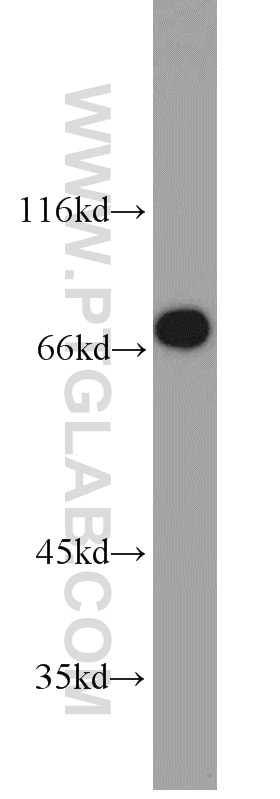
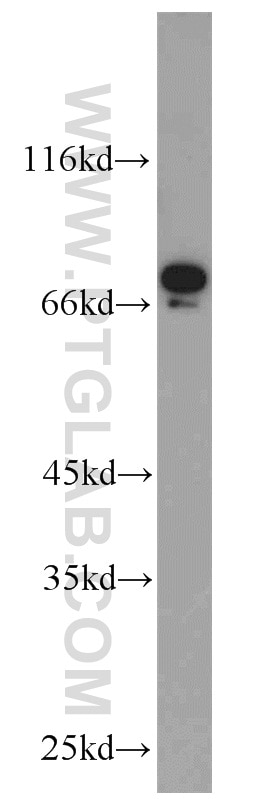
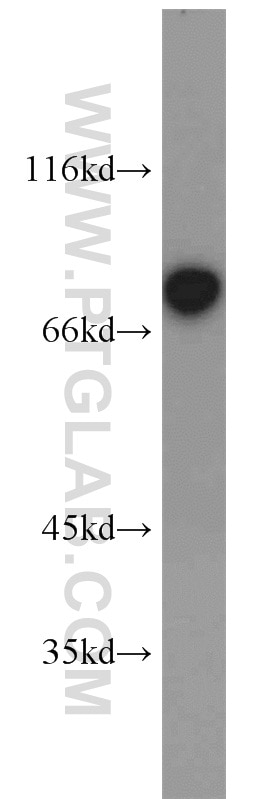
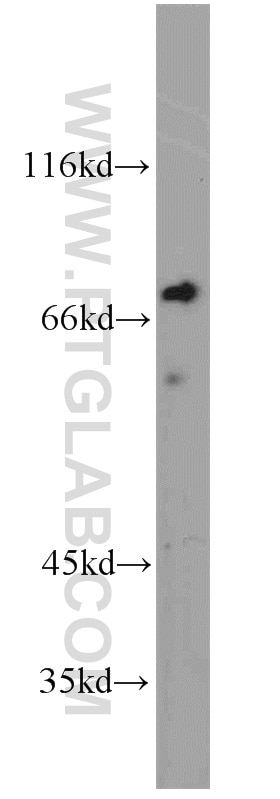
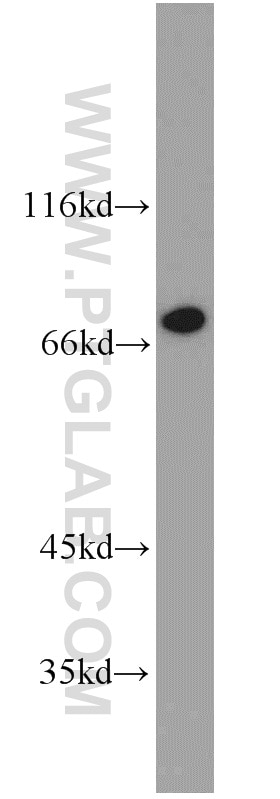
| Positive WB detected in | mouse kidney tissue, A431 cells, Jurkat cells, L02 cells, mouse brain tissue |
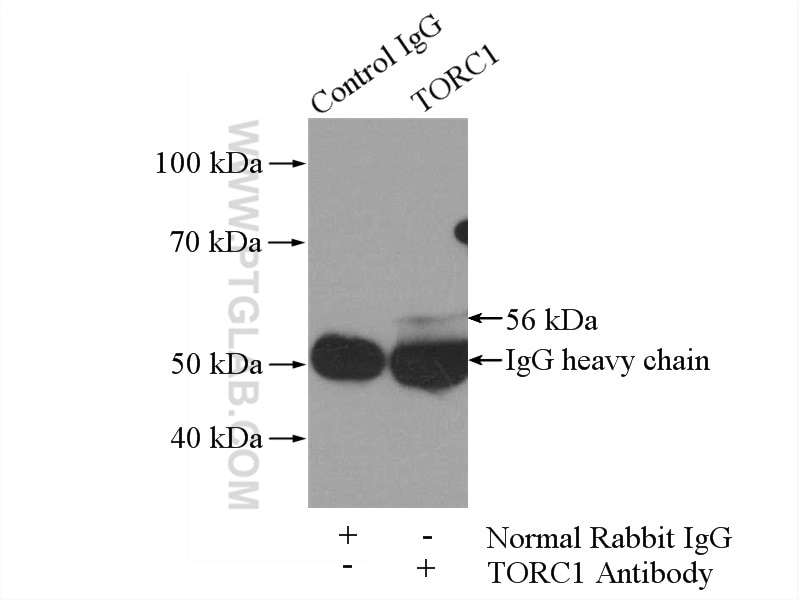
| Positive IP detected in | mouse kidney tissue |
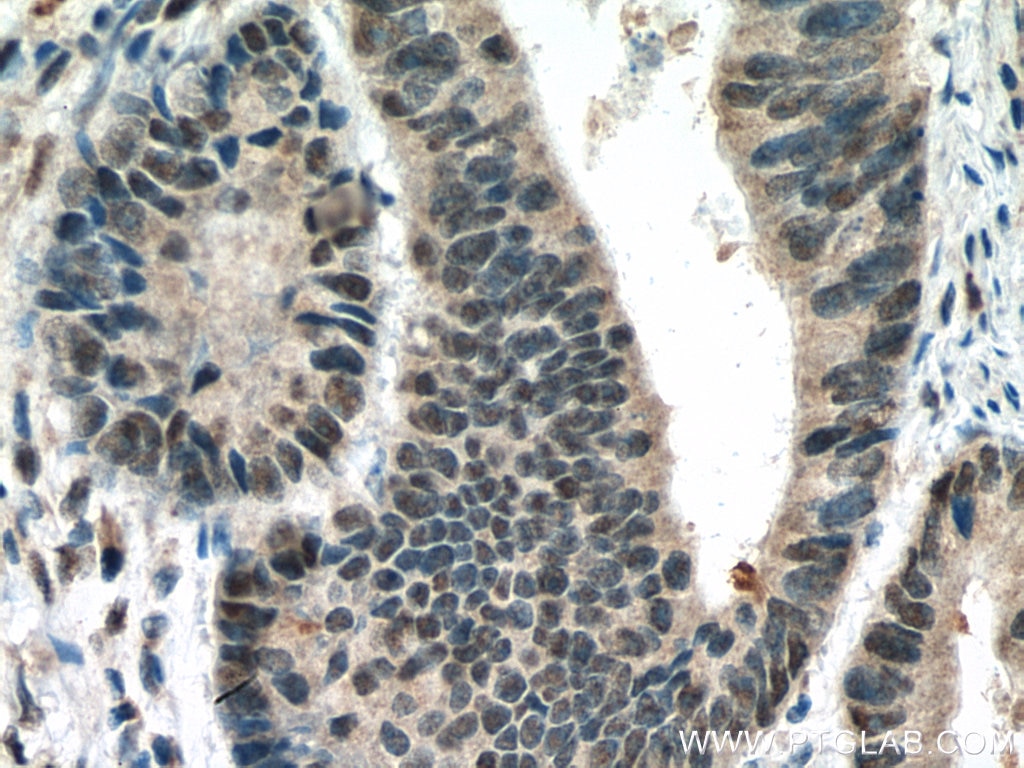
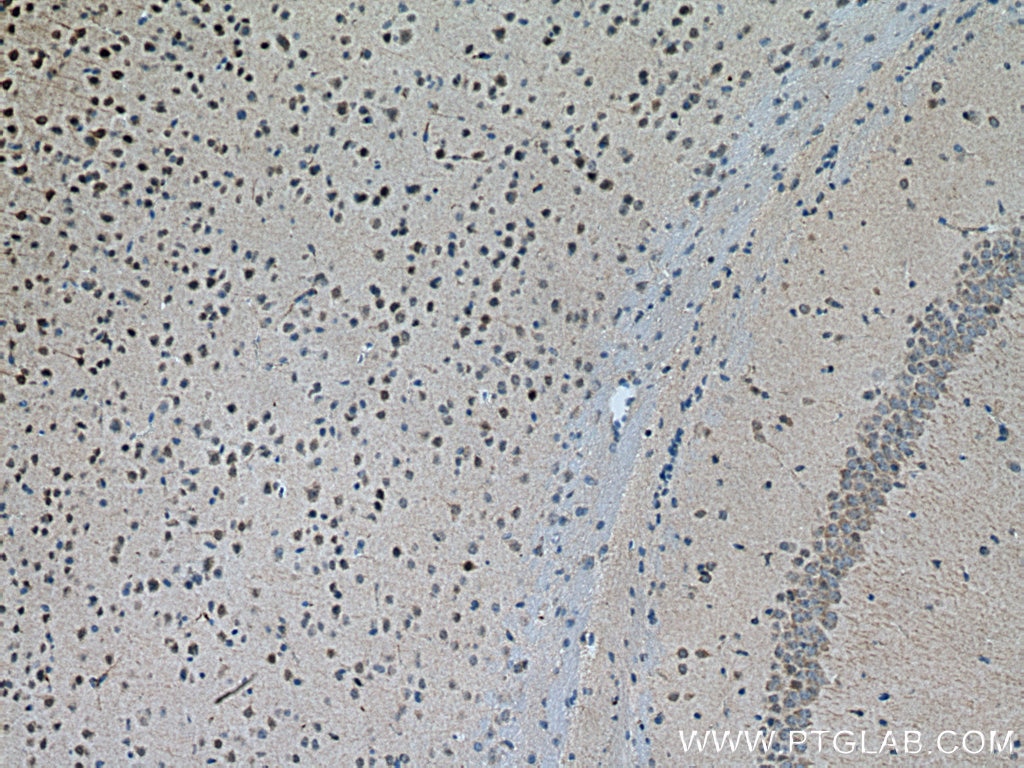
| Positive IHC detected in | human colon cancer tissue, mouse brain tissue Note: suggested antigen retrieval with TE buffer pH 9.0; (*) Alternatively, antigen retrieval may be performed with citrate buffer pH 6.0 |
Recommended dilution
| Application | Dilution |
|---|---|
| Western Blot (WB) | WB : 1:500-1:1000 |
| Immunoprecipitation (IP) | IP : 0.5-4.0 ug for 1.0-3.0 mg of total protein lysate |
| Immunohistochemistry (IHC) | IHC : 1:50-1:500 |
| It is recommended that this reagent should be titrated in each testing system to obtain optimal results. | |
| Sample-dependent, Check data in validation data gallery. | |
Product Information
10441-1-AP targets TORC1/CRTC1 in WB, IHC, IF, IP, ELISA applications and shows reactivity with human, mouse samples.
| Tested Reactivity | human, mouse |
| Cited Reactivity | human, mouse, rat |
| Host / Isotype | Rabbit / IgG |
| Class | Polyclonal |
| Type | Antibody |
| Immunogen |
CatNo: Ag0693 Product name: Recombinant human TORC1 protein Source: e coli.-derived, PGEX-4T Tag: GST Domain: 1-300 aa of BC028050 Sequence: MATSNNPRKFSEKIALHNQKQAEETAAFEEVMKDLSLTRAARLQLQKSQYLQLGPSRGQYYGGSLPNVNQIGSGTMDLPFQTPFQSSGLDTSRTTRHHGLVDRVYRERGRLGSPHRRPLSVDKHGRQADSCPYGTMYLSPPADTSWRRTNSDSALHQSTMTPTQPESFSSGSQDVHQKRVLLLTVPGMEETTSEADKNLSKQAWDTKKTGSRPKSCEVPGINIFPSADQENTTALIPATHNTGGSLPDLTNIHFPSPLPTPLDPEEPTFPALSSSSSTGNLAANLTHLGIGGAGQGMSTP Predict reactive species |
| Full Name | CREB regulated transcription coactivator 1 |
| Calculated Molecular Weight | 75 kDa |
| Observed Molecular Weight | 68-80 kDa |
| GenBank Accession Number | BC028050 |
| Gene Symbol | CRTC1 |
| Gene ID (NCBI) | 23373 |
| RRID | AB_2083835 |
| Conjugate | Unconjugated |
| Form | Liquid |
| Purification Method | Antigen affinity purification |
| UNIPROT ID | Q6UUV9 |
| Storage Buffer | PBS with 0.02% sodium azide and 50% glycerol, pH 7.3. |
| Storage Conditions | Store at -20°C. Stable for one year after shipment. Aliquoting is unnecessary for -20oC storage. 20ul sizes contain 0.1% BSA. |
Background Information
CRTC1, also named as MECT1,TORC1, and WAMTP1, belongs to the TORC family. It is a transcriptional coactivator for CREB1 which activates transcription through both consensus and variant cAMP response element (CRE) sites. CRTC1 acts as a coactivator, in the SIK/TORC signaling pathway, being active when dephosphorylated and acts independently of CREB1 'Ser-133' phosphorylation. It enhances the interaction of CREB1 with TAF4. CRTC1 regulates the expression of specific CREB-activated genes such as the steroidogenic gene, StAR. It is a potent coactivator of PGC1alpha and inducer of mitochondrial biogenesis in muscle cells. CRTC1 is also a coactivator for TAX activation of the human T-cell leukemia virus type 1 (HTLV-1) long terminal repeats (LTR). In the hippocampus, CRTC1 involved in late-phase long-term potentiation (L-LTP) maintenance at the Schaffer collateral-CA1 synapses. It may be required for dendritic growth of developing cortical neurons. This is a rabbit polyclonal antibody raised against residues near N terminus of human CRTC1. CRTC1 has some isoforms produced by alternative splicing with MW of 67 kDa, 68 kDa and 62 kDa. Sometimes it appears as a 75-80 kDa band probably due to phosphorylation (PMID: 17183642; 22770221)
Protocols
| Product Specific Protocols | |
|---|---|
| IHC protocol for TORC1/CRTC1 antibody 10441-1-AP | Download protocol |
| IP protocol for TORC1/CRTC1 antibody 10441-1-AP | Download protocol |
| WB protocol for TORC1/CRTC1 antibody 10441-1-AP | Download protocol |
| Standard Protocols | |
|---|---|
| Click here to view our Standard Protocols |
Publications
What published studies show
The TORC1/CRTC1 Polyclonal antibody (Cat# 10441-1-AP) has 14 citations published in journals including Nature Cell Biology, Molecular Cell, iScience, Scientific Reports, Neural Regeneration Research, Cellular and Molecular Neurobiology, Journal of Ethnopharmacology, Journal of Agricultural and Food Chemistry, International Immunopharmacology, Molecular Medicine Reports, Virology Sinica, and Annals of the New York Academy of Sciences. Research fields span neuroscience, metabolism, osteoporosis, inflammation, viral replication, and fibrosis.
| Species | Application | Title |
|---|---|---|
Nat Cell Biol Eosinophil extracellular traps drive asthma progression through neuro-immune signals.
| ||
Neural Regen Res Hippocampal insulin resistance and the Sirtuin 1 signaling pathway in diabetes-induced cognitive dysfunction. | ||
Cell Mol Neurobiol The Combination of Citicoline and Nicotinamide Mononucleotide Induces Neurite Outgrowth and Mitigates Vascular Cognitive Impairment via SIRT1/CREB Pathway | ||
J Ethnopharmacol Exploring the potential mechanism of Heng-Gu-Gu-Shang-Yu-He-Ji therapy for osteoporosis based on network pharmacology and transcriptomics | ||
J Agric Food Chem Fluoride Stimulates Anxiety- and Depression-like Behaviors Associated with SIK2-CRTC1 Signaling Dysfunction. |











