

Tested Applications
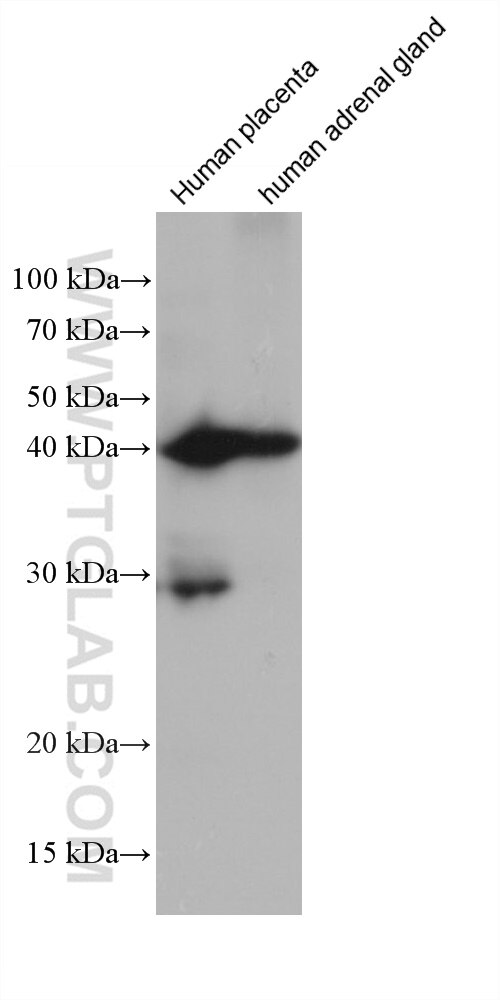
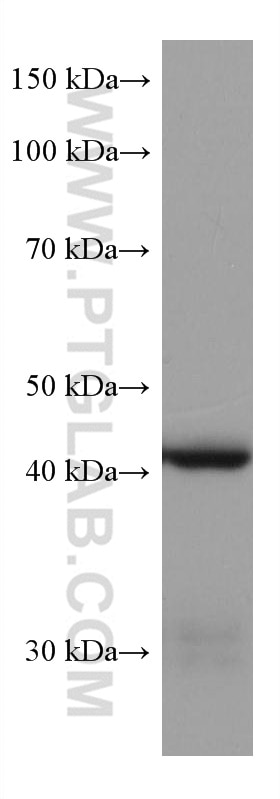
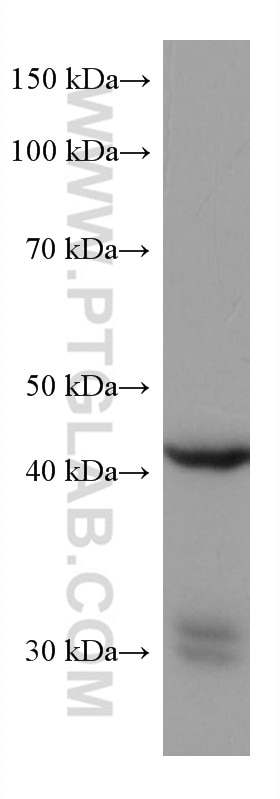
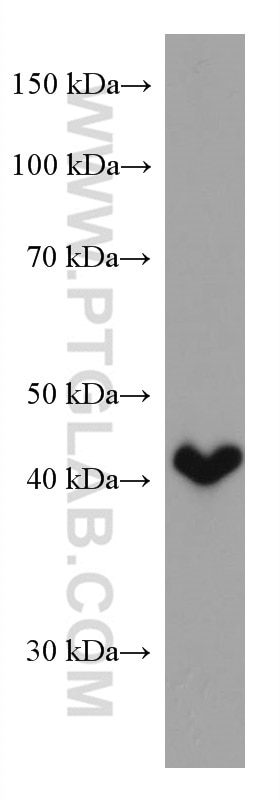
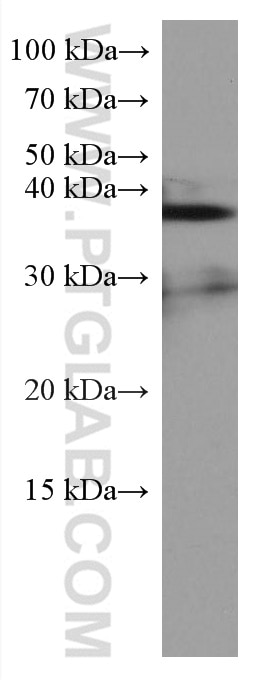
| Positive WB detected in | human placenta tissue, pig adrenal gland tissue, human adrenal gland tissue |
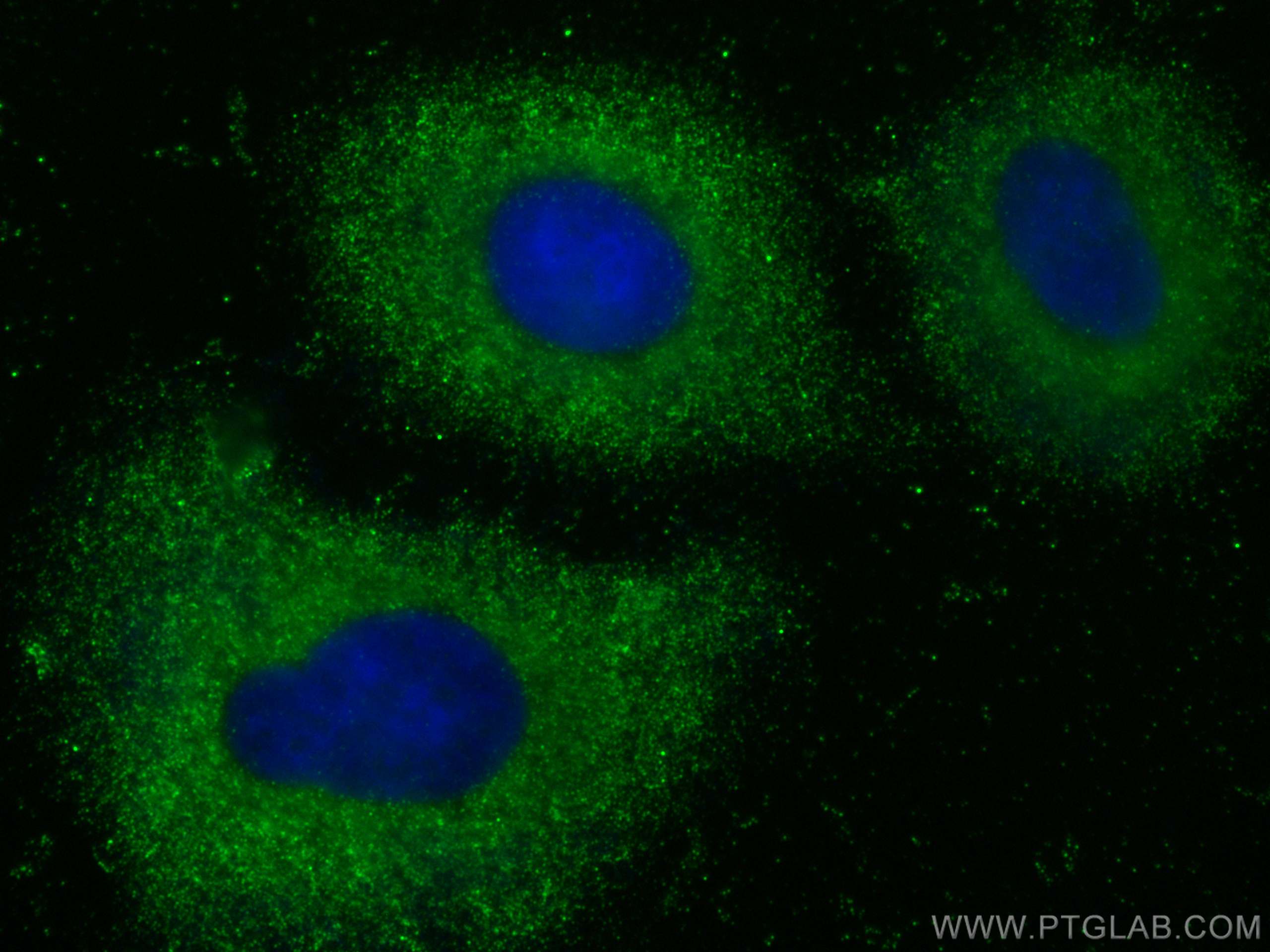
| Positive IF/ICC detected in | A549 cells |
Recommended dilution
| Application | Dilution |
|---|---|
| Western Blot (WB) | WB : 1:5000-1:50000 |
| Immunofluorescence (IF)/ICC | IF/ICC : 1:500-1:2000 |
| It is recommended that this reagent should be titrated in each testing system to obtain optimal results. | |
| Sample-dependent, Check data in validation data gallery. | |
Product Information
67572-1-Ig targets HSD3B2 in WB, IHC, IF/ICC, ELISA applications and shows reactivity with human, pig samples.
| Tested Reactivity | human, pig |
| Cited Reactivity | human, mouse |
| Host / Isotype | Mouse / IgG1 |
| Class | Monoclonal |
| Type | Antibody |
| Immunogen |
CatNo: Ag4291 Product name: Recombinant human HSD3B2 protein Source: e coli.-derived, PET28a Tag: 6*His Domain: 1-286 aa of BC038419 Sequence: MGWSCLVTGAGGLLGQRIVRLLVEEKELKEIRALDKAFRPELREEFSKLQNRTKLTVLEGDILDEPFLKRACQDVSVVIHTACIIDVFGVTHRESIMNVNVKGTQLLLEACVQASVPVFIYTSSIEVAGPNSYKEIIQNGHEEEPLENTWPTPYPYSKKLAEKAVLAANGWNLKNGDTLYTCALRPTYIYGEGGPFLSASINEALNNNGILSSVGKFSTVNPVYVGNVAWAHILALRALRDPKKAPSVRGQFYYISDDTPHQSYDNLNYILSKEFGLRLDSRWSLP Predict reactive species |
| Full Name | hydroxy-delta-5-steroid dehydrogenase, 3 beta- and steroid delta-isomerase 2 |
| Calculated Molecular Weight | 42 kDa |
| Observed Molecular Weight | 42 kDa |
| GenBank Accession Number | BC038419 |
| Gene Symbol | HSD3B2 |
| Gene ID (NCBI) | 3284 |
| RRID | AB_2882785 |
| Conjugate | Unconjugated |
| Form | Liquid |
| Purification Method | Protein G purification |
| UNIPROT ID | P26439 |
| Storage Buffer | PBS with 0.02% sodium azide and 50% glycerol, pH 7.3. |
| Storage Conditions | Store at -20°C. Stable for one year after shipment. Aliquoting is unnecessary for -20oC storage. 20ul sizes contain 0.1% BSA. |
Background Information
HSD3B2(3-beta-hydroxy-Delta(5)-steroid dehydrogenase) belongs to the 3-beta-HSD family and catalyzes the oxidation and isomerization of delta-5-3-beta-hydroxysteroid precursors into delta-4-ketosteroids, thus leading to the formation of all classes of steroid hormones.HSD3B2 is expressed almost exclusively in adrenals and gonads, whereas HSD3B1 is expressed predominantly in the placenta and skin(PMID:1682237). Defects in HSD3B2 are the cause of adrenal hyperplasia type 2 (AH2).
Protocols
| Product Specific Protocols | |
|---|---|
| IF protocol for HSD3B2 antibody 67572-1-Ig | Download protocol |
| WB protocol for HSD3B2 antibody 67572-1-Ig | Download protocol |
| Standard Protocols | |
|---|---|
| Click here to view our Standard Protocols |
Publications
What published studies show
HSD3B2 Monoclonal Antibody (67572-1-Ig) — Citation Summary
This antibody has 12 citations. It appears in journals including Metabolism, Particle and Fibre Toxicology, Biomaterials Research, Ecotoxicology and Environmental Safety, Frontiers in Endocrinology, Toxics, Pathology Research and Practice, Journal of Steroid Biochemistry and Molecular Biology, Gynecological Endocrinology, and Birth Defects Research. The associated research fields include adrenal and ovarian steroidogenesis, COVID-19 adrenocortical disruption, polycystic ovary syndrome-related hyperandrogenism, male/testicular reproductive toxicity from environmental chemicals (plasticizers, nitrite, bisphenols, tributyltin, microplastics), and endocrine-disrupting effects on steroid hormone synthesis.
| Species | Application | Title |
|---|---|---|
Metabolism Increased adrenal steroidogenesis and suppressed corticosteroid responsiveness in critical COVID-19 | ||
Part Fibre Toxicol Chronic exposure to polystyrene microplastics induced male reproductive toxicity and decreased testosterone levels via the LH-mediated LHR/cAMP/PKA/StAR pathway. | ||
Biomater Res Biomimetic Nanotechnology Overcoming the Blood-Testis Barrier for Testicular Protection in Chemotherapy. | ||
Ecotoxicol Environ Saf Biochemical mechanisms of tributyltin chloride-induced cell toxicity in Sertoli cells | ||
Ecotoxicol Environ Saf Sodium nitrite impairs reproduction in female mice by disrupting ovarian steroid hormone synthesis and lipid metabolic pathways. | ||
Front Endocrinol (Lausanne) Evaluation of 3β-hydroxysteroid dehydrogenase activity using progesterone and androgen receptors-mediated transactivation |







